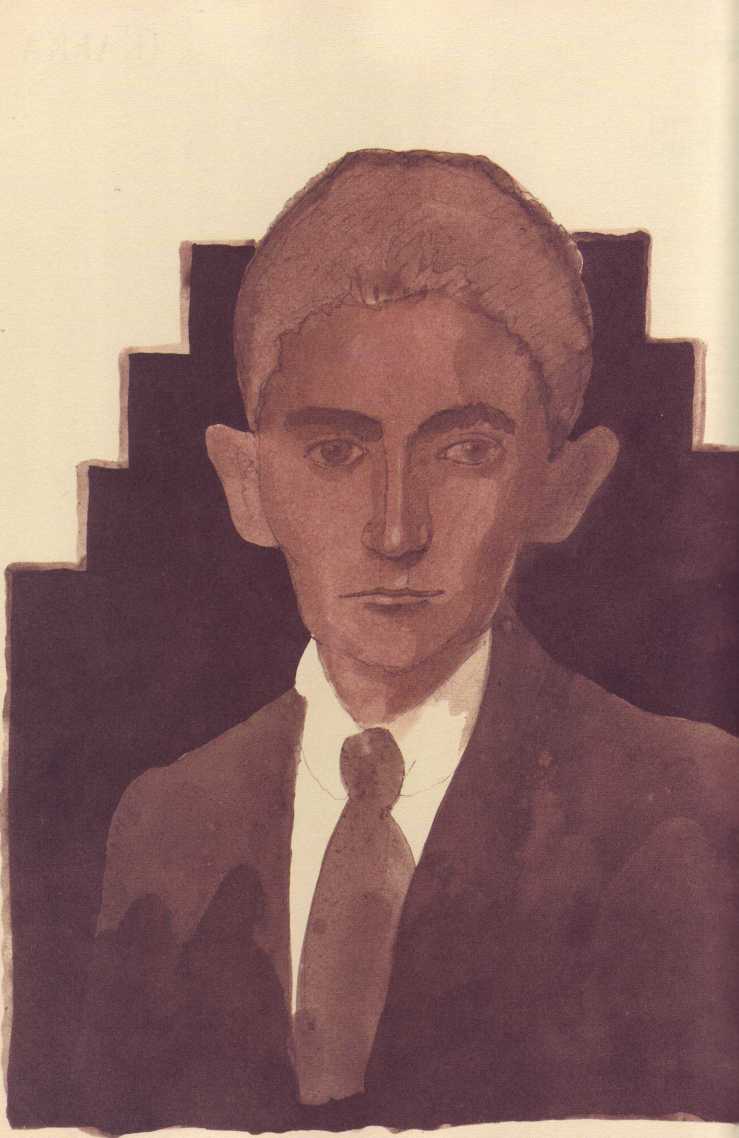
Slavoj Žižek Shows Off His Crib, Including His Bookshelves, His Stalin Poster, and His Kitchen Full of Underwear
by BibliokleptPosted in Authors, philosophy | 1 Comment »
Biblioklept Interviews Michael Wiley about His New Book, The Bad Kitty Lounge
by Edwin Turner
Michael Wiley is a mystery writer and professor of British Romantic literature and culture at the University of North Florida. He’s published academic volumes about geography and migration in Romantic literature, but we spoke to him about the latest edition in his detective series, The Bad Kitty Lounge. Dr. Wiley was kind enough to talk to us via email about ambiguity and resolution in mystery fiction, giving readers what they want, and the prospects of Wordsworth with a Glock. The Bad Kitty Lounge is available new in hardcover from Minotuar/St. Martin’s. Read more press at Michael Wiley’s website.
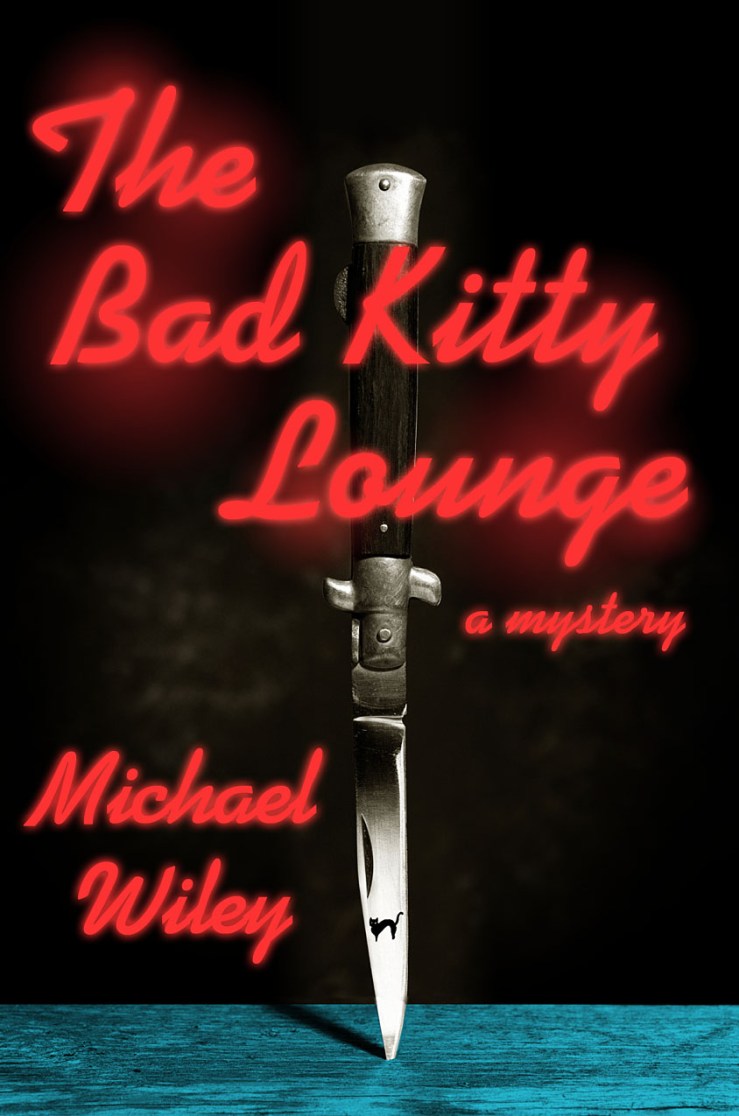
Biblioklept: Your new novel The Bad Kitty Lounge picks up with P.I. Joe Kozmarski, the protagonist from your first novel The Last Striptease; both books are set in Chicago. When you were working on Striptease did you envision it as the beginning of a series?
Michael Wiley: I did. To tell the truth, The Last Striptease catches the story already in motion. I wrote an earlier Joe Kozmarski manuscript that I called Little Girl Lost, almost got published, and then tucked into a box, where it remains. I liked the character and the settings well enough that I wrote a new manuscript, which became The Last Striptease. I had set Little Girl Lost in August and Last Striptease in September, so when I started writing The Bad Kitty Lounge I decided to set it in October and aim for a series that covers each month of the year. There’s no great logic to aiming for a twelve-book series, but it seems as good of a number as any.
B: There’s a tradition in detective fiction of recurring characters (Chandler’s Marlowe comes immediately to mind). When you are writing these books, do you consciously follow or inject tropes of mystery and crime fiction? How important is it to give mystery readers what they want?
MW: It’s always important to give readers what they want. But readers might not know what they want until a book gives it to them. In genre fiction and mysteries and thrillers in particular, conventions matter, but if a writer sticks too closely to conventions the result is cliché. The key isn’t to ignore the conventions but to finesse them, use them in new ways, invert or subvert them. The best mysteries, I think, are recognizable in form but still manage to surprise us and give us great unanticipated pleasures. Before Chandler’s Marlowe, there’s Arthur Conan Doyle’s Sherlock Holmes, and before Holmes, there’s Poe’s Dupin. Each of the greats has reinvented the form in big ways and has given readers what they’ve always wanted without knowing that they’ve wanted it. The rest of us innovate where we can.
B: Sometimes though it seems that writers who experiment too much with genre conventions can subvert, invert, or innovate in ways that trample on some of the great pleasures of mysteries and thrillers. I’m thinking explicitly about novels like Jonathan Lethem’s Gun, with Occasional Music, which weds PK Dick with hard boiled noir, or Thomas Pynchon’s recent exercise Inherent Vice. Such books prize ambiguity, which leads to a shaggy dog story. There’s certainly a pleasure in reading them but many of us read mysteries because Dupin or Sherlock Holmes or Marlowe (or whomever) actually solves the case. How important do you think it is to give mystery readers an answer or solution? What place does ambiguity have in your detective fiction?
MW: Right. Most of the best mystery writing right now includes at least some ambiguity, though. I’ve been reading and re-reading James Lee Burke’s Dave Robicheaux books lately, and while each of them solves a case at hand, we never have the sense that Robicheaux has restored a proper order to the universe. Just the opposite: we know that the universe is deeply screwed up and that Robicheaux is as much a part of the problem as he is part of the solution. Aside from that, some of Burke’s villains pop up again in later books even after we’re sure that Robicheaux has put them to rest.
My own books resolve crimes. At the end, we know who did what and when and why. But my books are also full of moral ambiguity. Some of the guilty parties don’t get punished. Some of the innocent parties do. Good people sometimes do bad things for either good or bad reasons. Bad people sometimes do good things. We get answers but we don’t necessarily like them.

B: I realize that I may have been putting carts before horses with some of these questions–can you tell us a little bit about the plot of The Bad Kitty Lounge?
MW: I like carts before horses. Here’s a synopsis that I wrote for the book flap:
Greg Samuelson, an unassuming bookkeeper, has hired Joe Kozmarski to dig up dirt on his wife and her lover Eric Stone. But now Samuelson has taken matters into his own hands. It looks like he’s torched Stone’s Mercedes, killed his boss, and then shot himself, all in the space of an hour. The police think they know how to put together this ugly puzzle. But as Kozmarski discovers, nothing’s ever simple. Eric Stone wants to hire Kozmarski to clear Samuelson. Samuelson’s dead boss, known as the Virginity Nun, has a saintly reputation but a red-hot past. And a gang led by an aging 1960s radical shows up in Kozmarski’s office with a backpack full of payoff money, warning him to turn a blind eye to murder. At the same time, Kozmarski is working things out with his ex-wife, Corrine, his new partner, Lucinda Juarez, and his live-in nephew, Jason. If the bad guys don’t do Kozmarski in, his family might.
In short, it’s a gritty hardboiled mystery set in Chicago. If your sense of humor runs the way mine does, it has some laughs. Booklist Magazine calls it “howlingly funny.” That may be overstating the case, but I appreciate the compliment.
B: Books critics must always be forgiven hyperbole, positive and negative.
You’re a professor of English literature; specifically, you’re an expert on the British Romantic poets. You might tire of this question–and forgive me if so–but do elements of British Romanticism find their way, consciously or not, into your detective fiction? It seems like a detective’s mission would be at odds with the spirit of Keats’s Negative Capability.
MW: From my perspective, it’s easier to deal with the positive hyperbolic criticism than the negative.
I once told an editor jokingly that I planned to write a mystery featuring William Wordsworth with a Glock. To my surprise, the editor was enthusiastic. I suppose there’s a market for these books. Abe Lincoln: Vampire Hunter has been doing well, and Pride and Prejudice and Zombies was a hit.
I mostly think of my day job as a British Romanticist as being separate from my night job as a writer of pulp fiction, but I know that that the two intersect and inform each other. Wordsworth and Raymond Chandler are two of the great English-language locodescriptive writers, and they’ve both influenced my handling of place. William Blake deals with ideas of innocence and experience, good and evil, and heaven and hell in ways that no noir writer has ever surpassed. And Lord Byron is great for moral ambiguity, as is S.T. Coleridge though in different ways.
So, I’ll probably get to that Wordsworth-with-a-Glock manuscript sooner or later.
B: Wordsworth with a Glock sounds great. Then you could write John Keats Vs. The Lamia; make it a graphic novel. Or just a screenplay. For now though, is the next Kozmarski book already in the works?
MW: I see a series here. My friend Kelli Stanley has set mysteries in ancient Rome. She calls them “Roman Noir.” I’ll just add a “tic” and I’ll have “Romantic Noir.” In the meantime, Joe Kozmarski will ride again. St. Martin’s Minotaur has said that they want to publish the third in the series. It’s done, it’s called A Bad Night’s Sleep, and it’s the best one yet. It should be out in 2011.
B: You teach full time and have a family–how do you make time to write? What advice could you give to young writers who want to develop that kind of discipline?
There’s never enough time in the day — or the week or the year — to write a book. There are thousands of excuses for doing something else, and nearly all of the excuses are good. I accept these facts and then write anyway. I write in the morning before breakfast if I can, or write in the evenings after the kids are in bed. I write in between. And when I’m not writing, I’m often thinking about plot, characters, and setting.
I draw from my own experience when I give advice, which is very simply (and annoyingly) this: “Just write.” Writing seems to me to be more of an act of will than of discipline. Don’t spend time worrying that you’re not writing enough; don’t spend time thinking about the act of writing (unless that’s the subject of your short story or novel) — Spend your time writing. Tell your story. Then revise it. Then think of another story and tell it. Oh, and when you’re not telling or revising or thinking of new details for your story, read other people’s stories and learn from them. That seems important too: others have told better stories than I’ll ever tell. I can learn from them. We all can.
B: Have you ever stolen a book?
MW: No. But I hope someone steals one of mine.
Posted in Authors, Books | 2 Comments »
The Only Earthly Certainty Is Oblivion
by BibliokleptCheck out this odd, possibly disturbing clip from the obscure 1986 claymation masterpiece, The Adventures of Mark Twain. Bizarre, fun stuff.
Posted in Authors | 2 Comments »
The Biblioklept Interview: Mathias Freese
by Edwin TurnerMathias Freese, author of Down to a Sunless Sea and The i Tetralogy, was kind enough to answer a few questions for us. This interview took place over the course of several emails.

Biblioklept: Have you ever stolen a book? If so, could you tell us a little bit about that?
Mathias Freese: No, I’ve never stolen a book.
B: Have you ever borrowed a book without returning it–purposefully or not?
MF: The amount of guilt for both of these questions, as a young boy, would be too much to bear; and then obsessing about it enters the picture and I’d end up in central casting auditioning for a role in The Possessed.
B: What are you currently reading?
MF: Dan Wakefield’s, New York in the Fifties. Living in Arizona, a geriatric Disneyland, I remember well Brooklyn – Brighton Beach, Manhattan Beach, and Coney Island. I grew up in the Fifties and Wakefield evokes the literary times very well – Ginsburg, Kerouac, Mailer – as well as the cultural sensibilities of the time. I was too young for all this but reading about it evokes Greenwich Village, egg creams, and a great bialy.
B: What are you writing right now?
MF: I am editing a novel, my first, written more than two decades ago. Sojourner is a philosophical tale dealing with the emigration of a young Chinese farmer to the Mountain of Gold (California) as it was called.
B: Sojourner sounds interesting. Is it research-based historical fiction? (Perhaps you hate to classify what you write into a specific genre, of course). Tell us more.
MF: Sojourner began as a 30 page short story in the years 1969 to 1972; I was working on a federal project dealing with racial-ethnic relations in the town of Freeport, on Long Island, NY. I had met a Chinese-American librarian who had written on the emigration to Gum Shan, Mountain of Gold. I researched only details that would be useful for verisimilitude, such as Gum Shan, and began a short story about the subject. The book ultimately reflects my own philosophical needs and emotional cravings for meaning. When submitted to publishers as a novel for young adults almost all of them wrote that I had made an error, and that this fiction was serious and for adults. Who knew? I do believe that the writer is the last to truly appreciate his work. The i Tetralogy which began in 1996, is a more thoroughly researched book , and it is a historical fiction on the Holocaust based on my experiences as an American Jew. I had read a significant amount of the literature on the Holocaust with no intent of being a writer. If you read my “On the Holocaust” in the Pages section of my website, you will get a rather complete statement of my point of view.
B: The Marxist critic Theodor Adorno famously declared: “To write poetry after Auschwitz is barbaric.” How do you interpret this remark?
MF: Adorno’s comment was of its time. I feel what he means, how can we allow beauty in the presence of such unspeakable evil! However, it does not make sense. When you write you metabolize feelings – all kinds – thoughts, experiences and all the rest. When the ancients passed down Homer’s Odysseus orally, the words saturated the listener with meaning and continuity. We must write about the Holocaust until the end of time, although we face psychological resistance every step of the way. I have faced this with The i Tetralogy. One of the most significant gifts of Judaism to civilization is memory. We do not forget – and most assuredly, we do not “put it behind us,” one of the more inane “truisms” in this culture – re: Mel Gibson and Jesse Jackson. Adorno is dead wrong.
B: The back of your book, Down to a Sunless Sea, mentions that you worked for over twenty-five years as a social worker and psychotherapist. Several of the stories in the book seem to explore explicitly psychoanalytical themes, yet these themes are never overstated. Is this purposeful?
MF: I have been accused of being too clinical; I think that is unfair. I use my therapeutic insights when I can while integrating them with my psychological and emotional wisdoms (if that) and try to make a story. I recall covering for a teacher in an eleventh grade class. He was teaching Oedipus Rex. I asked him if I could treat it the way I wanted to. He agreed. In class, in a small review, the students told me that they were up to where Oedipus scratches out his eyeballs, consequently the interpretation was stressed that he chose not to see – and how very symbolic that was. I asked them if they were opened to another way of looking at it. I shared that to me it was a case of displacement. Duh! In effect, he was castrating himself. Titters and titters. I went on to say that they touch their eyes now and make an observation. Finally, one student said that they felt like balls. And away we go! The next day the teacher was bent out of shape because he had heard that I said that Oedipus ripped out his eyes, in effect, his balls. I am sure some students came away believing that balls evolve from eye sockets. Why should I give up insight (no pun intended) no matter where it comes from?
B: I teach eleventh-graders, actually. You never know what weird mutation of what you discussed that they will commit to memory forever. Do you enjoy being in a classroom? Have you ever taught fiction writing? What do you think of MFA programs?
MF: I was terribly misplaced in that career. The consensus was that I was a terrific teacher but I detested the rules, the administration and the deadness. You read “Nicholas.” He has it right. So I studied to become a therapist and it worked very well for me, my craft and my self. I have taught seminars on fiction writing and if you go to the site you will see a course description and in the Pages section there are short essays all dealing with writing. Go nosh. As to MFA programs I have a simple premise: if it is organized, go elsewhere. Same feelings I have about religion, et al. I cannot think of any world class writer who has a MFA. What about good old suffering and pain as a motivator?
B: Many of the stories in Down to a Sunless Sea utilize a very tight, condensed prose style. How much do you edit out of your work?
MF: I like this question in that it touches upon something I truly believe in. Some writers secrete out paragraphs per day. I can’t handle that anality. I write, let us say, 10 pages knowing full well I cut back to maybe 4. The art of writing is revise, revise and revise. I like pruning the story tree so that new growth is inaugurated. Like poetry, which I find, of course, the most condensed of writing, I believe stories should be very tight – let the reader infer rather than I tell. Indeed, one reviewer complained she couldn’t understand the stories, at least in her first reading. Good. Get back to it and reread it. I am not fooling around here and I deserve a better reading if you feel there is more to my stories than Oprahesque fluff.
B: When you re-read “Arnold Schwarzenegger’s Father Was a Nazi” now, do you consider it prescient? How do you think Arnie turned out?
MF: I had a sense about Arnie, of that tom tom in his character, that immigrant feeling that America can be tamed and domesticated to one’s own ends. I associate to Daniel Day-Lewis [in] There Will Be Blood, that tornadic energy to succeed, ambition on speed. In many ways Arnie is an athletic Algeresque character. I was not conscious of making any predictions, but it did feel to me, on a gut level, that he had other measures and goals to achieve and one of them is to marry into a famous family and all the rest. He is a delightful social climber who has denied, at least in the media, his background. I can write about Arnie because I don’t know him and that is the freedom of the writer. Give a writer one telling detail and the rest is extrapolation; think Kafka.
B: You maintain a website, www.mathiasbfreese.com. Do you write certain pieces specifically for the site? Corollary–How does your writing change when you write specifically for hypertext publishing?
MF: Blogging is new to me and I find it frustrating that so few people respond, given that I have had over 8400 hits; something is awry. Nevertheless, I enjoy writing every few days to keep my skills sharp. I am presently sharing a memoir about a fire on Mt. Lemmon in Tucson; it is filled with reflections, moods, sadnesses, and philosophy. Who cares if the reader is bored? I like it. I think the blog is excellent for short pieces, mini essays, faction. The reader gets bored with long pieces, but who knows in this new century of the Borg.
Posted in Authors, Books, Interviews | 1 Comment »
Frank Miller Reconsidered
by Edwin TurnerDuring a horrible illness I suffered the other week, I turned to the only thing that I can digest when I’m really, really sick–comic books. I randomly chose to reread Frank Miller’s classic re-imagining of Batman, 1986‘s The Dark Knight Returns. I’ve read this comic–or “graphic novel,” if you want to sound like an asshole who’s afraid of being seen reading comic books–at least a dozen times now, I’d guess, but the last time I’d read it was after its sequel The Dark Knight Strikes Again came out in 2001.

The Dark Knight Returns didn’t disappoint; it never does. Set in a future with a very old Bruce Wayne, the story figures Gotham City as an urban dystopia, chaotic with child-gangs running rampant. The superheroes that once policed the world–including Superman–have been forced to retire by the government. The anarchy in the city prompts The Batman to return. The Joker revives his old crime career. The Soviets invade a Caribbean island. Superman and Batman fight. Batman leads a youth revolution. It’s really fucking spectacular, grim, violent, and funny–the book works at all times to satire the media-obsessed materialism of the 80s. Great stuff.
I don’t own the sequel, The Dark Knight Strikes Again, which says a lot. The story’s not great; in fact, it’s highly forgettable. The plot overreaches, eschewing the essentially frail humanity of The Batman–always the character’s most interesting facet–in favor for a plot stuffed with too many of the truly extra-human characters of the DC universe. Superman, Brainiac, and Captain Marvel are just too hyperbolic to serve as effective foils for gritty Batman. Fifteen years later, Miller’s sequel overshoots, taking Batman from the underground, from the streets, and up into the air, where he just doesn’t belong.

The Dark Knight Strikes Again also came out after Frank Miller had had tremendous success with his Sin City series, published by Dark Horse. I remember when the first Sin City comics came out: I was really disappointed. The artwork was fantastic–a new level of excellence for Miller, whose Jack Kirby-influenced lines always managed to convey energy, tension, and action. Sin City looked like no comic before it that I can think of, a chiaroscuro film noir that rippled and moved. Unfortunately, the story was basic at best and flat and one-dimensional at worst. Without thematic depth or any measure of subtlety, the Sin City stories are aesthetically pleasing but hardly essential.
When 300 came out as a film last year, I took the time to read it–at Barnes & Nobles. Again, the book, especially in its oversized format, is visually striking, but where the old Frank Miller–the guy who created Elektra and made Wolverine the coolest mutant in the world–would’ve just drawn a great story, the late nineties Miller forces the drama down the reader’s throats. On virtually every page, 300‘s narrator tells you how you should feel about what’s going on in the story; the book is probably better without any lettering at all.

Although 300 was published in 1998, as criticism of the film has shown, its themes of patriarchal violence, unabashed militarism, and outright xenophobia are amazingly prescient to America’s post 9/11 ideology (my biggest criticism is undoubtedly the film’s depictions of idealized bodies contrasted with the extreme vilification of any “othered” bodies: this is a film that hates the differently-abled at all turns). Frank Miller has been something of a spokesman for this gung-ho mentality. Consider his September 11th, 2006 contribution to NPR’s “This I Believe” series, in which he blandly recapitulates the Bush administration’s “with us or against us” (in being against them) ethos; in an interview (again on NPR) a few months later he rails the “Bush-hating” “spoiled brats” who are not on board with the Iraq war. For such comments, Miller’s become something of a hero among right-wing bloggers, and his work has been reinterpreted within this light.
I wouldn’t hold this against Miller if his work held up, but I’m not sure that it does. He hasn’t produced anything that could touch The Dark Knight Returns in the twenty-plus years since its publication, and his recent announcement that he is writing Holy Terror, Batman! a self-described “piece of propaganda” in which “Batman kicks al Qaeda’s ass” is a truly lamentable decision (even Stan Lee, of all people, described the idea as “corny” and out of touch). Miller’s aim to write a piece of “propaganda” seems dead on, actually. Divorce “propaganda” from whatever politics it’s meant to convey, for a moment, and you have exactly the kind of work Millers’ been producing for quite some time now: thoroughly one-dimensional, brutishly simple pulp that hides its vacuity under a thick veneer of stylized violence.

To come back to where this long post started: after I finished The Dark Knight Returns, I reread Ronin, Miller’s 1983 tale of a masterless samurai lost in an apocalyptic future New York. The story explores dystopic race relations, emerging technologies, telekinesis, and bioethics. There’s also a demon. Ronin is cyberpunk on par with the best of William Gibson, and certainly the best thing Miller ever produced–and possibly the most overlooked. Apparently, a film version of Ronin is planned for release in 2009, which will undoubtedly lead to future confusion connected to Frankenheimer’s 1998 car-chase opus (also titled Ronin). Miller, however, seems to have no major hand in the movie–he’s too busy adapting and directing Will Eisner’s classic strip The Spirit for a 2009 movie release. The Spirit is fantastic source material, and Samuel “I Will Act in Your Movie For Money” Jackson is playing the villain, The Octopus, so it might be good. Then again, Miller is the screenwriter responsible for both Robocop 2 and 3, movies that completely missed the tone of Verhoeven’s satirical original. And whether or not Miller’s future movies–including sequels to Sin City–are any good, the gritty and grimy tone that he established in series like Daredevil and the original Wolverine book, as well as his groundbreaking revisioning of Batman led to a new seriousness and depth to an art form that had too-long been relegated to the margins of literature. And that’s a good thing.

Posted in Authors, Comic Books, Literature | 7 Comments »
Kurt Vonnegut Reconsidered
by Edwin Turner
Kurt Vonnegut died a year ago today. Vonnegut’s death has left neither a cultural vacuum nor a pining after another great work now never to be. And why should it? He was pretty old–84–and he’d written a relatively substantial collection of novels, plays, essays, and short stories. And admittedly, he hadn’t written a truly great book in decades. Like Bob Dylan, Vonnegut produced his greatest work in the 1960s: Mother Night, Cat’s Cradle, God Bless You, Mr. Rosewater, and, of course, Slaughterhouse-Five (even 1968′s short story collection Welcome to the Monkey House–a book I proudly admit I stole from my 10th grade English teacher–is superior to Vonnegut’s later work). Yet there’s still something about his death that makes me feel a little melancholy, even now–not sad, per se, but rather–and it sounds corny–like something is missing.
See, I learned to read by reading Vonnegut. Sure, I knew how to read before I read Cat’s Cradle, but, beyond Tolkien, C.S. Lewis, and a number of classic adventure books by authors like Edgar Rice Burroughs and Mark Twain, Vonnegut was the first “literary” author I was exposed to. I learned irony. I learned detached pessimism. I was exposed to a writer who knew how to explode genre convention. And, in a short period–roughly from the ages of 12 to 16–I read everything that Vonnegut had written. Then I dismissed him as a “lesser” writer, and moved on, until I was required to re-read Slaughterhouse-Five in college. I’d forgotten how good it was. I re-read Cat’s Cradle, my first and favorite (to this day) Vonnegut novel. Again, great. I then picked up Vonnegut’s final novel, 1997′s Timequake, a shambolic wreck of semi-autobiography that is at turns drastically pessimistic, utterly depressive, and hilariously cynical. It’s really a terrible book, to be honest, but taken as a final statement, I think it works. In any case, after college I managed to get over the silly embarrassment I felt for my love of Vonnegut, an author often relegated to the second or even third tier of American letters, or, even worse, a personality reviled in the press (watch Fox News’s scandalous obituary. Or, if you prefer watching something positive, watch Vonnegut on The Daily Show.)

I suppose, when I say that Vonnegut’s death presents an absence, a feeling of something missing, I really mean to say that it marks me, it ages me: it makes me feel old. After all, we measure our own lives in part against the deaths of others, particularly against the deaths of the famous and celebrated. Vonnegut preceded me; his novels were there, waiting for me, and I was grateful. I read all of them–all of them–I don’t know if I can say that of another author (except maybe Salinger, and I don’t think that counts). But I still haven’t read A Man Without a Country, his 2005 collection of essays, and I haven’t read the posthumously published short story collection, Armageddon in Retrospect, which came out just the other week. It makes me happy to know that there’s something out there of his that I haven’t yet touched, that I can read for the first time as an adult, and not a teenager. I don’t know why I should feel this way, but I do. So it goes.
Vonnegut plays himself in an classic film:
Posted in Authors, Books, Literature | 4 Comments »


Said