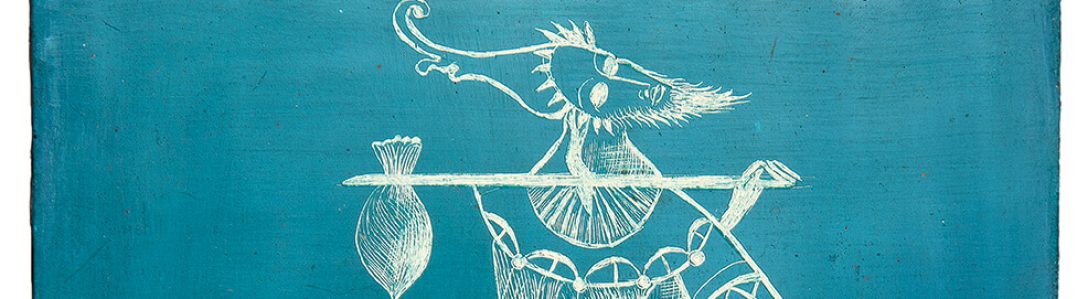
I stuck my head out the window, the postman said there was a letter for Greco. I ran down with my heart pounding. I ruled out the possibility that my parents had written to me. Was it a letter from Lila, from Nino? It was from Lila. I tore open the envelope. There were five closely written pages, and I devoured them, but I understood almost nothing of what I read. It may seem strange today, and yet it really was so: even before I was overwhelmed by the contents, what struck me was that the writing contained Lila’s voice. Not only that. From the first lines I thought of The Blue Fairy, the only text of hers that I had read, apart from our elementary-school homework, and I understood what, at the time, I had liked so much. There was, in The Blue Fairy, the same quality that struck me now: Lila was able to speak through writing; unlike me when I wrote, unlike Sarratore in his articles and poems, unlike even many writers I had read and was reading, she expressed herself in sentences that were well constructed, and without error, even though she had stopped going to school, but—further—she left no trace of effort, you weren’t aware of the artifice of the written word. I read and I saw her, I heard her. The voice set in the writing overwhelmed me, enthralled me even more than when we talked face to face: it was completely cleansed of the dross of speech, of the confusion of the oral; it had the vivid orderliness that I imagined would belong to conversation if one were so fortunate as to be born from the head of Zeus and not from the Grecos, the Cerullos. I was ashamed of the childish pages I had written to her, the overwrought tone, the frivolity, the false cheer, the false grief. Who knows what Lila had thought of me. I felt contempt and bitterness toward Professor Gerace, who had deluded me by giving me a nine in Italian. The first effect of that letter was to make me feel, at the age of fifteen, on the day of my birthday, a fraud. School, with me, had made a mistake and proof was there, in Lila’s letter.
From Elena Ferrante’s 2011 novel My Brilliant Friend. English translation by Ann Goldstein. I love this novel, and what I perhaps love most about it is how Ferrante’s narrator conveys the titular brilliance of her friend Lila. My Brilliant Friend might be summarized in one of its own sentences: “She was trying to understand, we were both trying to understand, and understanding was something that we loved to do.”

 Biblioklept