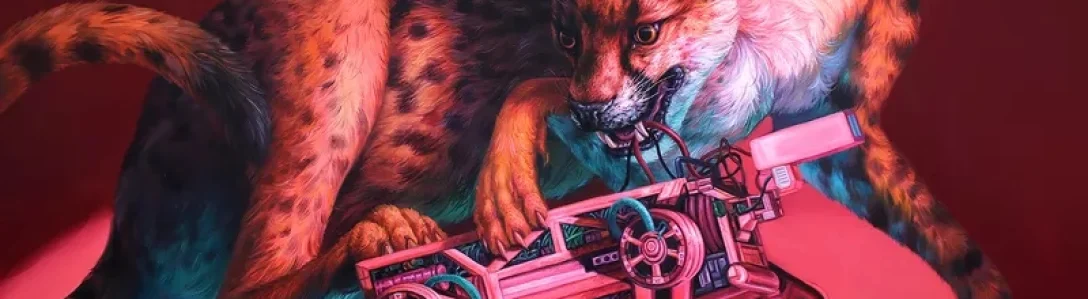
“Crates, Cynic” — Marcel Schwob

“Crates, Cynic”

by

Marcel Schwob

translated by Lorimer Hammond

from Imaginary Lives


Born at Thebes, he was a disciple of Diogenes and he also knew Alexander. From his father, a wealthy man named Ascondas, he inherited two hundred talents. Then one day, while attending a tragedy by Euripides, he beheld a vision. He saw Telephy, King of Mysia, dressed in beggar’s rags with a basket in his hand. So Crates stood up on his feet there in the theatre, declaring he would give the two hundred talents of his inheritance to all who wanted the money. Henceforth, he said, the garb of King Telephy would suffice him. Shaking with laughter, the Thebans troop before his house where they found him laughing even louder than they. After throwing all his money and furniture out of the windows he took up a plain cloak and leather sack and went away.

He went to Athens. In that city he spent his days walking the streets and his nights crouching against dirty walls. He put the doctrines of Diogenes into practice, all except the barrel. Crates thought even the barrel a superfluous dwelling. For a man, he contended, is neither a snail nor a Bernardine hermit.

He lived stark naked in the filth of the streets, filling his sack with dry crusts, rancid olives, and fish bones. He called the sack his city, a city without parasites or courtesans, he said, but a fine storehouse of thyme, garlic, figs, and bread for its king. So Crates carried his kingdom on his back and it fed him.

Though he never took part in public affairs, he never criticized them. He launched no insults nor did he approve this trait in Diogenes. Diogenes would call out, “Men, come to me!”, then rap them with his cane when they came, saying, “I called for men, not excrements!”

Crates was kind to men. He reproached them with nothing. Sores and wounds he knew, and his greatest regret was that his body were not supple like a dog’s so that he might lick them. He also deplored the necessity of nourishing himself with food and drink, for man, he thought, should be sufficient unto himself, asking no aid from the world. At any rate, he never hunted for water to wash in, being content to scratch himself against the walls after seeing how the asses did it. He seldom spoke of gods or questioned them. What difference did it make, said he, if there were gods or none, knowing as he did how little they could do for him. At first he reproached these divinities with having turned men’s faces toward heaven, thus depriving them of the faculties enjoyed by animals on all fours. Since these gods have decided that we must eat to live, thought Crates, they might better have turned our faces to the earth where food is, instead of twisting them up in the air to graze on the stars.

Life was not kind to Crates. His eyes grew bleary, exposed as they continually were to the acrid dusts of Attica, and an unknown skin plague covered his body with sores. While he scratched himself with his uncut nails he observed the twofold profit, as he called it, of wearing down these nails to their proper length while relieving his itch at the same time. He let his hair grow in a neglected mat on his head to protect him from the rain and sun.

When Alexander came to see him he flung no sharp gibes at the conqueror whom he considered merely as one with the spectators, acknowledging no difference between king and crowd. Crates no longer formed opinions about the great. Only men interested him, men and the problems of living his life as simply as possible. Diogenes with his chiding made Crates laugh no less than the pretensions of moral reformers. Holding himself infinitely above such sordid cares, he transcribed the maxim from the Delphian temple to read, “See Thyself”, and the idea of any knowledge whatsoever he thought absurd. He studied his bodily necessities, nothing more, striving always to reduce them to their simplest terms. Dog-like, Diogenes snapped at life, but Crates lived as the dogs lived.

He had a disciple named Metrocles, a wealthy young man from Marona. Hipparchia, sister of Metrocles, fell in love with Crates. Beautiful and aristocratic as she was, she was certainly the smitten one for she sought the cynic out. It seemed impossible but it was true, and nothing could turn her from him, neither his filthiness, nor his poverty, nor the horror of his public life. He warned her how he lived in the streets like a dog, scrambling for bones in the stench of gutters. He warned her further. If she came to him, he said, nothing of their life together should be hidden. He would want her publicly whenever desire prompted, as the dogs do among dogs. Hipparchia heard all. She declared she would end her own life if her parents interfered, so they let her go. She left the village of Marona with her hair unbound, a single ragged garment covering her nakedness. From that day she lived with Crates and dressed as he dressed. It has been said that she bore him one child, and that the child was named Pasicles, though nothing authentic can be found of that incident.

Hipparchia was kind to the poor. Compassionate, she soothed the sick with her hands, cleansing their bloody wounds without repugnance. To her men became as sheep are to sheep or dogs to dogs. When nights were cold she and Crates slept close to other poor folk, sharing the warmth of their bodies. From the beasts they learned the wordless kindnesses of beasts. When men approached they held no
preferences… they were men and that sufficed.

We know nothing more of Crates’ wife; we are not told when she died or how. Metrocles, her brother, admired the cynic and imitated him, but Metrocles lacked tranquillity. Troubled continually by a flatulency he could not control, he resolved upon suicide. Learning of his ailment Crates went to him after first eating a quantity of lupine. When Metrocles confessed himself no longer able to support the disgrace of his infirmity, the cynic showed his disciple how all men are submitted by nature to the same evil. Upbraiding him because he had dared to be ashamed of others, Crates led Metrocles away and they lived long together in the streets of Athens, Hipparchia undoubtedly beside them. They talked little but were ashamed of nothing. When they lapped water from a puddle with the dogs the dogs respected them. They must have fought together over scraps of food, though the biographers fail to mention it. Crates died old, we know. We know he ended his days squatting among bales of goods in a shed belonging to a shopkeeper from Pirus, and that he finally refused to move from that spot even to pick up scraps of meat. We know he was found there one day starved to death.

“Paolo Ucello, Painter” — Marcel Schwob

“Paolo Ucello, Painter”

by

Marcel Schwob

from Imaginary Lives

translated by Lorimer Hammond


His real name was Paolo di Dono, but the Florentines called him Uccelli or Paul of the Birds because of the many bird figures and painted beasts in his house, for he was too poor to feed live animals or to obtain those strange species he did not know.

At Padua he was said to have executed a fresco of the four elements, with an image of a chameleon representing the air. He had never seen one, so he made it a sort of pot bellied camel with a gaping snout (while the chameleon, explains Vasari, resembles a small dry lizard and the camel is a great humped beast). Uccello was not concerned with the reality of things but in their multiplicity and the infinity of their lines. He made fields blue, cities red, and cavaliers in black armour on ebony horses with blazing mouths, the lances of the riders radiating toward every quarter of the heavens. He had a fancy for drawing the mazocchio, a headdress made of wooden hoops so covered that th
e cloth fell down in pleats all about the wearer’s face. Uccello drew pointed ones and square ones and others in pyramids and cones, following every intricacy of their perspectives so studiously as to find a world of combinations in their folds. The sculptor Donatello used to say to him: “Ah, Paolo, you leave the substance for the shadow.”

The Bird continued his patient work, assembling circles, dividing angles, examining all creatures under all their aspects. From his friend Giovanni Manetti, the mathematician, he learned of the problems of Euclid, then shut himself up to cover panels and parchments with points and curves. Aided by Filippo Brunelleschi, he perpetually employed himself at the study of architecture, but he had no intention to build. He wanted only to know the directions of lines from foundation to cornice, the convergences of parallels together with their intersections, the manner in which vaulting turns upon its keys and the perspective of ceiling beams as they appear to unite at the ends of long rooms. He drew all beasts, all their movements and all the gestures of men, reducing these things to simple lines.

Then like an alchemist who mixes ores and metals in his furnace, watching their fusion in hope of finding the secret of gold, Uccello would throw all his forms into a crucible, mix them, mingle them and melt them, striving to transmute them into one ideal form containing all. That was why Paolo Uccello lived like an alchemist at the back of his little house. He believed he might find the knowledge to merge all lines into a single aspect; he wanted to see the universe as it should be reflected in the eye of God, all figures springing from one complex centre. Near him lived Ghiberti, della Robbia, Brunelleschi and Donatello, each one proud and a master of his art. They railed at poor Uccello for his folly of perspectives, with his house full of cobwebs empty of provisions. But Uccello was prouder than they. At each new combination of lines he imagined he had discovered the way. It was not imitation he sought, but the sovereign power to create all things, and his strange drawings of pleated hats were to him more revealing than magnificent marble figures by the great Donatello.

That was how The Bird lived: like a hermit, with his musing head wrapped in his cape, noting neither what he ate nor what he drank.

One day along a meadow, near a ring of old stones deep in the grass, he saw a laughing girl with a garland on her head. She wore a thin dress held to her hips by a pale ribbon and her movements were supple as the reeds she gathered. Her name was Selvaggia. She smiled at Uccello. Noting the flexion of her smile when she looked at him, he saw the little lines of her lashes, the patterned circles of the iris, the curve of her lids and all the minute interlacements of her hair. Considering the garland across her forehead, he described it to himself in a multitude of geometric postures, but Selvaggia knew nothing of all that, for she was only thirteen.

She took Uccello by the hand and he loved her. She was the daughter of a Florentine dyer, her mother was dead and another woman had come to her father’s house and had beaten her. Uccello took her home with him. Selvaggia used to kneel all day by the wall whereon Uccello traced his universal forms.

She never understood why he preferred to regard those straight and arched lines instead of the tender face she raised to him. At night, when Manetti or Brunelleschi came to work with Uccello, she would sleep at the foot of the scaffolding, in the circle of shadow beyond the lamplight. In the morning she arose before him, rejoicing because she was surrounded by painted birds and coloured beasts.

Uccello drew her lips, her eyes, her hair, her hands; he recorded all the attitudes of her body but he never made her portrait as did other painters when they loved a woman. For The Bird had no pleasure imitating individuals. He never dwelt in the one place – he tried to soar over all places in his flight.

So Selvaggia’s forms were tossed into his crucible along with the movements of beasts, the lines of plants and stones, rays of light, billowings of clouds above the earth and the rippling of sea waves.

Without thought for the girl, he lived in eternal meditation upon his crucible of forms.

There came a time when nothing remained to eat in Uccello’s house. Selvaggia did not speak of this to Donatello or the others; she kept her silence and died. Uccello drew the stiffening lines of her body, the union of her thin little hands, her closed eyes. He no more realized she was dead than he had ever realized she was alive. But he threw these new forms among all the others he had gathered.

The Bird grew old. His pictures were no longer understood by men, who recognized in them neither earth nor plant nor animal, seeing only a confusion of curves. For many years he had been working on his supreme masterpiece which he hid from all eyes. It was to embrace all his research and all the images he had ever conceived. The subject was Saint Thomas, incredulous, tempting the wrath of Christ. Uccello completed this work when he was eighty. Calling Donatello to his house he uncovered it piously before him and Donatello said: “Oh, Paolo, cover your picture!” Though The Bird questioned him, the great sculptor would say no more, then Uccello knew he had accomplished a miracle. But Donatello had seen only a mass of lines.

A few years later they found Paolo Uccello dead in his bed, worn out with age. His face was covered with wrinkles, his eyes fixed on some mysterious revelation. Tight in his rigid hand he clutched a little parchment disc on which a network of lines ran from the centre to the circumference and returned from the circumference to the centre.

“Burke and Hare, Assassins” — Marcel Schwob

“Burke and Hare, Assassins”

by

Marcel Schwob

from Imaginary Lives

translated by Lorimer Hammond


Mr. William Burke rose from the meanest obscurity to eternal renown. Born in Ireland, he started life as a shoemaker, later practicing his trade for several years in Edinburgh where he made the acquaintance of Mr. Hare, on whom he had the greatest influence. In the collaboration of Messrs. Burke and Hare the inventive and analytic powers belonged, no doubt, to Mr. Burke, but their two names remain inseparable in art, as inseparable as the names of Beaumont and Fletcher. Together they lived, together they worked, and they were finally taken together. Mr. Hare never protested against the popular favour particularly attached to the person of Mr. Burke. Disinterestedness so complete seldom has its recompense. It was Mr. Burke who bequeathed his name to the special process that brought the two collaborators into fame. The monosyllable “Burke” will live long on the lips of men, while even now Hare’s personality seems to have disappeared into that oblivion which spreads unjustly over obscure labours.

Into his work Mr. Burke brought the faerie fancy of the green island where he was born. His soul was evidently steeped in old tales and folklore, and there was something like a far away, musty odour of the Arabian Nights in all he did. Like a caliph pacing a nocturnal garden in Baghdad, he desired mysterious adventures, curious for the glamour of strange people and unknown things.

Like a huge black slave armed with a heavy scimitar, he found for his voluptuousness no more fitting conclusion than the death of others, but his Anglo-Saxon originality led him to succeed in drawing the most practical ends from his fanciful Celtic prowlings. When his artistic joy is sated what does the black slave do with his headless carcasses? With barbarity entirely Arab, he slices them into quarters and salts them down in the cellar. What good does he get from that? Nothing. Mr. Burke was infinitely superior.

Somehow Mr. Hare served him as a sort of Dinarzade. It seemed as if the inventive powers of Mr. Burke were especially excited by the presence of his friend. The broad illusion of their dream permitted them to lodge their most pompous visions in a garret. Mr. Hare had a small chamber on the sixth floor of a tall house filled very full of Edinburghers. A sofa, a large desk and several toilet utensils were undoubtedly all the furnishings, including a bottle of whisky with three glasses on a little table. It was Mr. Burke’s rule to invite some passerby at nightfall, but he never received more than one at a time and never twice the same. He would walk through the streets examining all faces that piqued his curiosity. Frequently he chose at random, addressing the stranger with as much politeness as one could ask of a Haroun al Raschid.

The stranger would then stumble up six flights of stairs to Mr. Hare’s garret where they gave him the sofa and offered him Scotch whisky to drink. Then Mr. Burke would ask him about the most surprising incidents of his life. He was an insatiable listener, was Mr. Burke. The stranger’s recital was always interrupted before daybreak by Mr. Hare, whose manner of interrupting was invariably the same and very impressive. He had a habit of passing behind the sofa and putting his hands over the speaker’s mouth while Mr. Burke would suddenly sit down on the gentleman’s chest at the same moment. The two of them would remain thus, motionless, imagining the conclusion they never heard. In this manner Messrs. Burke and Hare terminated a large number of histories the world has never learned. When the tale was definitely stopped with the suffocation of the teller, they would explore the mystery, stripping the unknown man, admiring his jewelry, counting his money, reading his letters. Certain items of correspondence were often not without interest. Then they would lay the corpse away to cool in Mr. Hare’s big desk.

And now Mr. Burke would demonstrate the practical force of his genius. To waste none of the adventure’s pleasure, he held that the body should be fresh but not warm.

In the first years of the nineteenth century medical students had a passion for anatomy, though religious prejudices made it difficult for them to secure subjects for dissection. Mr. Burke’s clear mind had taken note of this scientific dilemma. No one knows how he first established an alliance with that venerable and learned practitioner, Dr. Knox, of the faculty of Edinburgh. Perhaps Mr. Burke had followed his public lectures in spite of the fact that his imagination inclined rather to artistic things. It is certain, however, that he promised to aid Dr. Knox as best he could, and that Dr. Knox agreed to pay him for his pains. The scale of prices varied, declining from the choice corpses of young men to the less desirable remains of the aged. The latter interested Dr. Knox only moderately and Mr. Burke held the same opinion, for old men, he claimed, always had less imagination. Dr. Knox came to be known among his colleagues for his splendid knowledge of anatomy. This dilettante life, led so enjoyably by Messrs. Burke and Hare, brought them to what was certainly the classic period of their career.

For the power of Mr. Burke’s genius soon led him beyond rules and regulations of a tragedy in which he had always a story to listen to and a confidence to keep. Alone he progressed (it is useless to consider the influence of Mr. Hare) towards a sort of romanticism. No longer satisfied with the setting provided by Mr. Hare’s garret, he invented a procedure to make use of the nocturnal fogs.

Numerous imitators have somewhat sullied the originality of his manner, but here is the veritable tradition of the master.

Mr. Burke’s fertile imagination had grown weary of tales eternally reverting to human experiences. The result never equaled his expectation. So he came at last to value only the actual aspect of death… for him unfailingly varied.

He concentrated his drama in the dénouement. The quality of the actors no longer mattered; he trained them at random, and his only property of the theatre was a canvas mask filled with pitch. Mask in hand, he would walk out on foggy nights accompanied by Mr. Hare. Approaching the first individual who chanced to pass, he would walk a few steps in front, then turn and place the mask quickly and firmly over the subject’s face. Immediately Messrs. Burke and Hare would grasp the arms of their actor, one on each side. The mask full of pitch presented simply a genial instrument for stifling cries and strangling. It was tragic. The fog muffled the gestures of the rôle and softened them. Some of the actors seemed to mimic drunken men. This short scene over, Messrs. Burke and Hare would take a cab in which they would disrobe their guest, Mr. Hare caring for the costumes while Mr. Burke delivered the cadaver fresh and clean to Dr. Knox.

Unlike most biographers it is here I leave Messrs. Burke and Hare, at the peak of their glory.

Why destroy such an artistic effect by requiring them to languish along to the end of their lives, revealing their defects and their deceptions? We need only remember them, mask in hand, walking abroad on foggy nights. For their end was sordid like so many others. One of them, it appears, was hanged and Dr. Knox was forced to quit Edinburgh.

Mr. Burke left no other works.