
On 5 Nov. 2024, or, really, technically, it was the very early hours of 6 Nov. 2024, I found myself unable to read, the distraction I had wanted, and instead found some respite from anxiety looking again at online copies (is copies the right word? digital reproductions? images, of course, but none of it is the real thing) of Francisco Goya’s Pinturas negras, his Black Paintings. Goya painted these strange, engrossing murals on the walls of his homestead the Quinta del Sordo, outside of Madrid, his last home in Spain before his exile in France.

I’m not sure how I got there. I have an impulse to return to his depiction of Saturn chomping on his son any time I feel the pain of a modern world that is always and forever ancient.
I have never seen another painting that makes as much sense to me, which means I’m a fucken sicko—I am sure that there are nicer paintings out there (I’ve seen so many). The idea that Goya would paint such paintings on the walls of his own home captivates me. The dog painting is my favorite; all negative space, which I’ll edit out, the negative space, here:
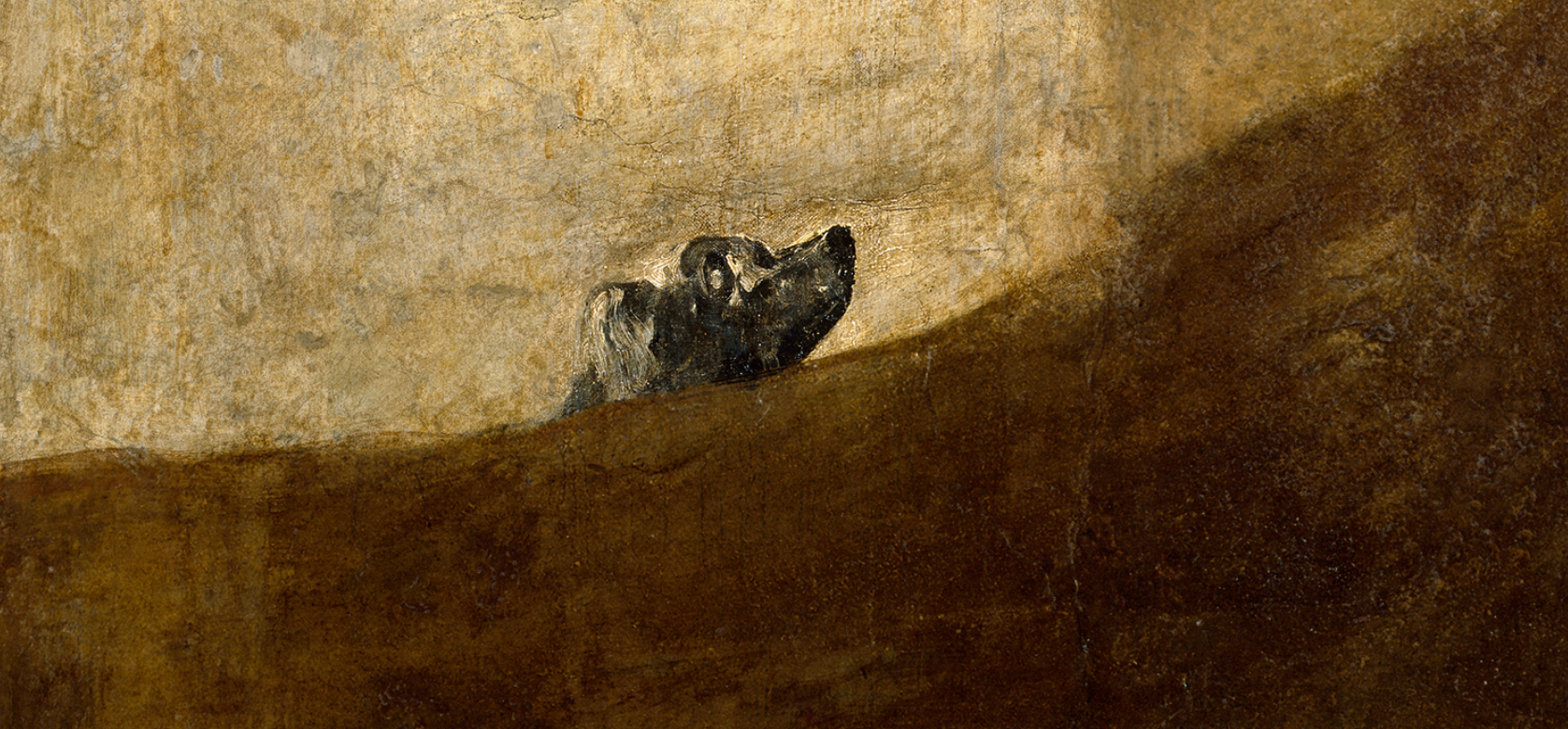
I stumbled out my bed that night to look for Robert Hughes’ wonderful biography Goya, which sheds no true light on the black paintings, as far as I can recall. Here is what he offers:
THE GREAT SERIES of paintings Goya made for his own pleasure at about the same time is equally enigmatic, and likely to remain so. These were the Pinturas negras, the so-called Black Paintings with which, in his last Madrid years, Goya was covering the walls of his farmhouse on the other side of the Manzanares outside the city, now converted into his studio and semi-solitary hermitage. Nothing, he felt, obliged him to be available to the court anymore; as for private clients, they could come to him. The new house, according to its title deed, was “beyond the Segovia bridge … on the site where the Hermitage of the Guardian Angel formerly stood.” It had twenty-two acres of arable land, and a vegetable garden. Comfortable but not palatial, and in need of some renovation, it was sturdily built of brick and adobe, with two stories divided into several rooms, two attics, a well by the garden, and another in the courtyard. Goya paid 60,000 reales for it, cash. By a peculiar coincidence, the property next door had been owned by a farmer who was deaf, and so was named the Quinta del Sordo, the Deaf Man’s House. This name passed to Goya’s own property, since he was the only notable deaf man around.
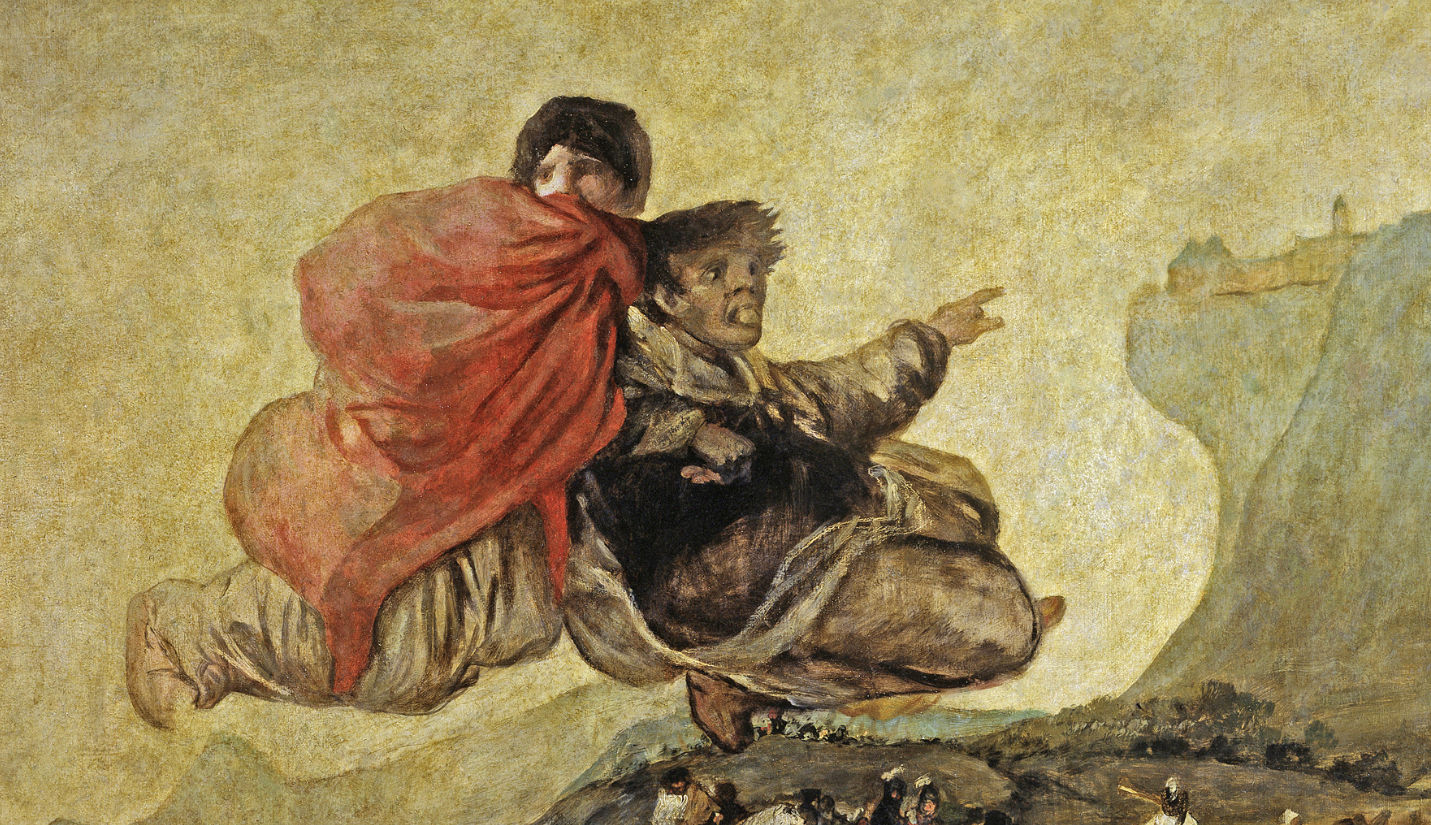
But Goya painted wild things on his walls—Judith and Holofrenes, flying mystics, a pilgrimage, a Satanic Sabbath, old people eating soup. Men hitting each other with sticks, red blood white clouds lovely blue sky:
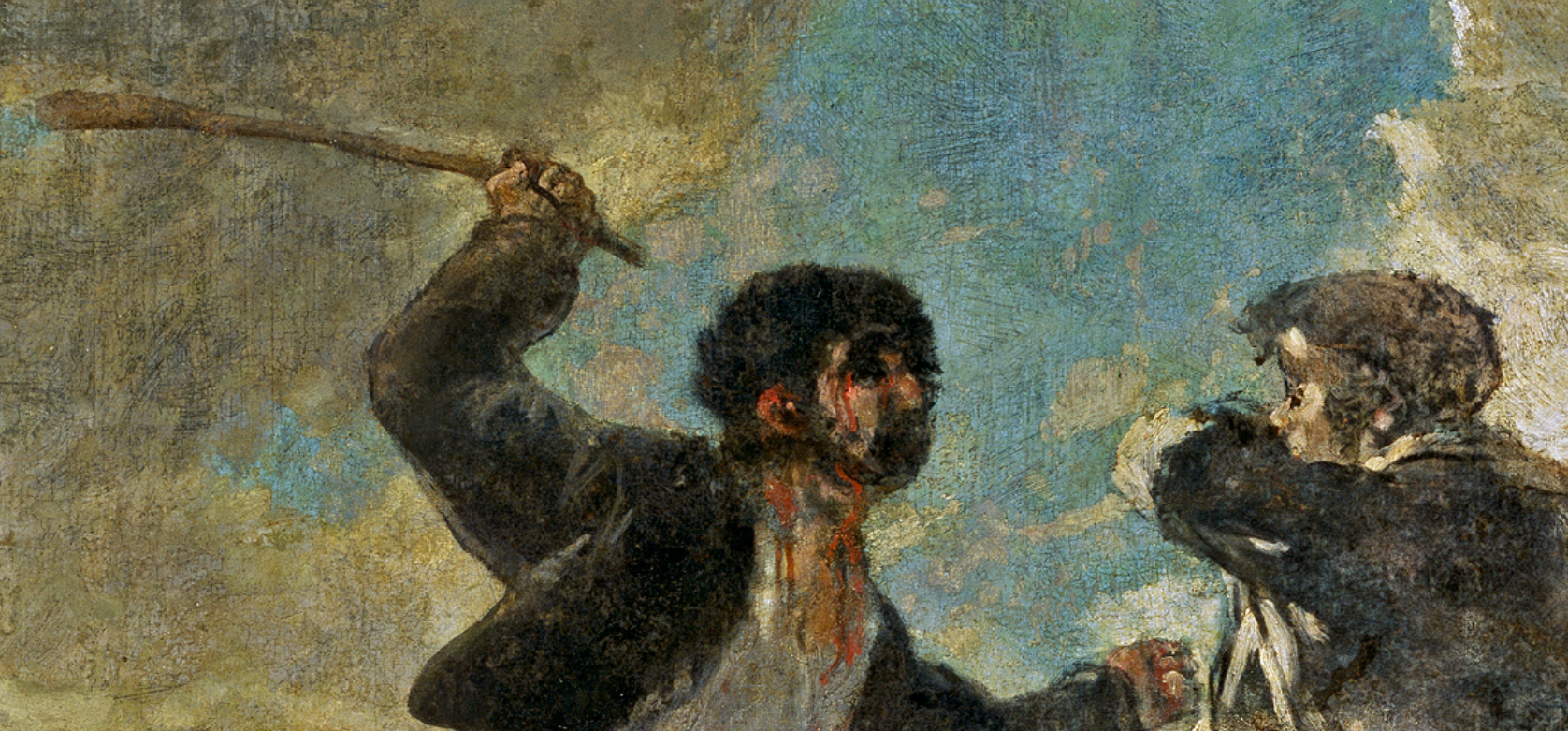
I mean I think I guess that it’s he did what he did—the gross, rough, beautiful paintings—that he, Goya, did them for himself, the so-called Black Paintings—I think that’s what makes me drawn to him, beyond their aesthetic powers, which is really what I mean to say, the images, the colors, the contours, the phantasies—

 Biblioklept
Phantasmagoria.
LikeLike