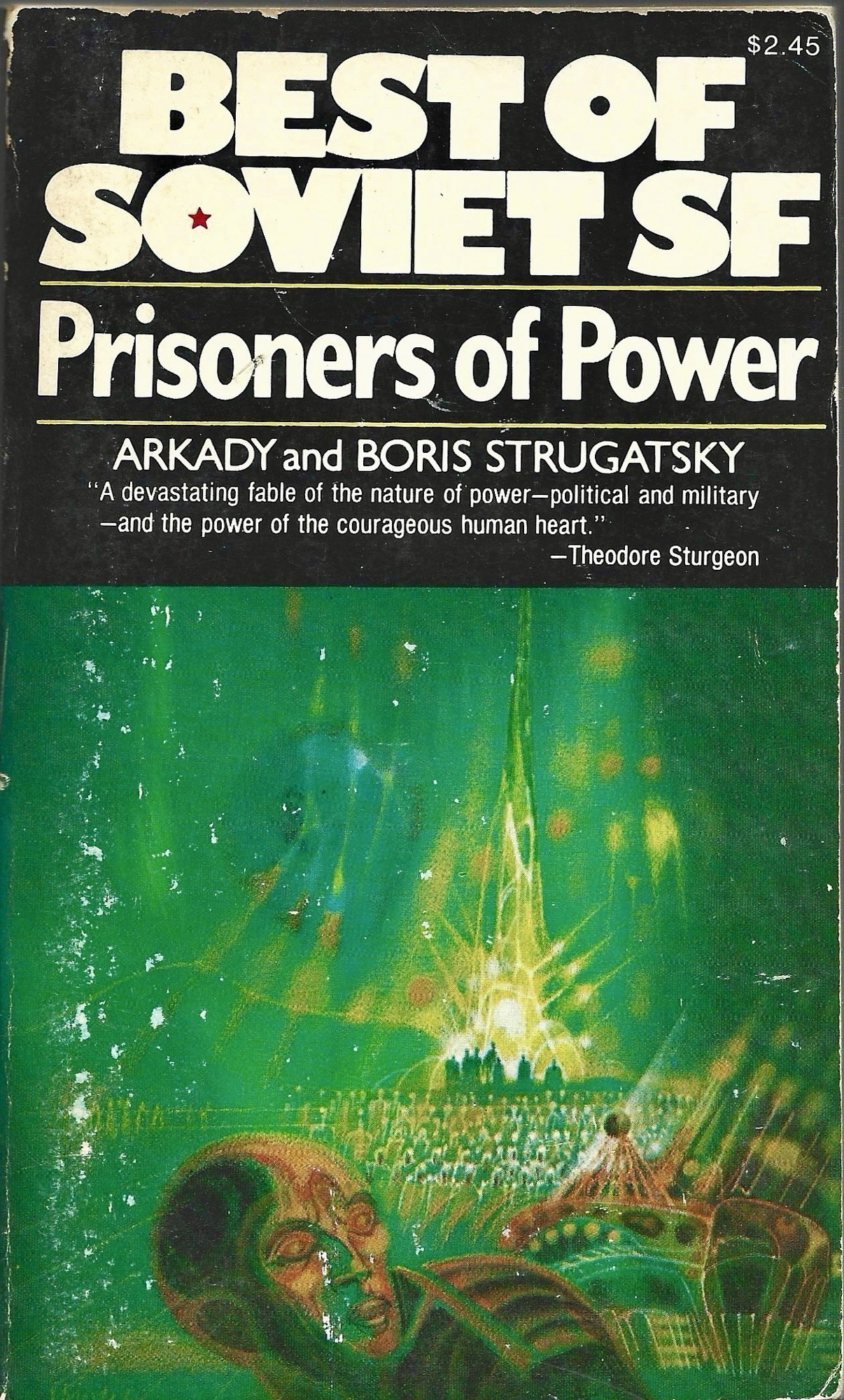
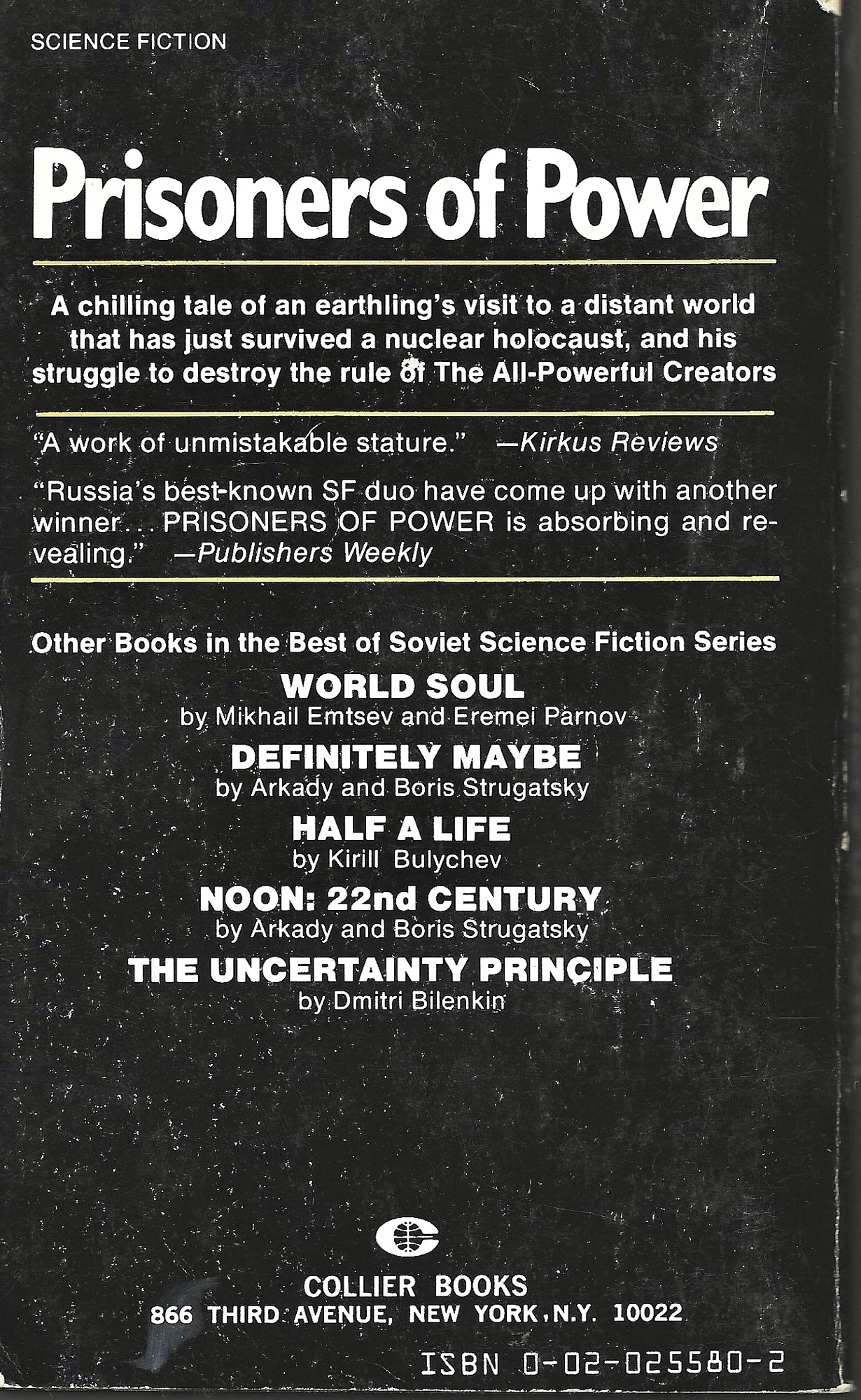
Prisoners of Power, 1971, Arkady and Boris Strugatsky. Translation by Helen Salz Jacobson. Collier Books (1978). No cover artist or designer credited. 286 pages.
The uncredited cover art is by the prolific Richard M. Powers.
Here is T. J. Lewis’s review of the novel in World Literature Today, Vol. 53, No. 2:
Prisoners of Power recounts the adventures of an earthman who finds himself stranded on a planet that is beset with nuclear war, pollution of several kinds, totalitarianism and the genetic degeneration of its humanoid population. The earthman, Maxim, undergoes at least four cycles of acceptance, enthusiastic support, disenchantment and overt opposition in his relations with different sectors of this troubled world. By the end of the novel, when Maxim believes that he has finally succeeded in discovering the sources of worldwide misery and has managed to set about destroying them, he learns that one principal source of the misery is a fellow earthman whose mission on the planet has been to save it from itself. Maxim’s unwitting but often effective interference, however, has prevented this worthy aim from being accomplished.
Prisoners of Power dramatizes a number of questions that bear no necessary relation to the science-fiction setting: can a society which does not want to be controlled be led to some end against its will; can a single individual, no matter how great an advantage he possesses over others, make any truly significant changes in the social order; can totalitarianism be eradicated by any but totalitarian methods? These are sociopolitical concerns that admit no easy solution. And the Strugatskys, rather than proposing answers, have chosen instead to depict in detail the all-too-human frustration and chaos that result from attempts to force an easy solution upon an intractable problem, a problem that may in fact not be a problem at all but a condition endemic to humankind.

 Biblioklept