Pessimus Populus: The Worst People of 2009

Ah, January of 2009 . . . those were simpler times. We were so gripped in hope and change and whatnot that the future seemed a bastion of illimitable glowing possibilities illuminated by an infinity of suns. Doing another “Worst People” list seemed antithetical to what we hoped would be a new zeitgeist. That lasted about five metaphorical minutes. So here we go:

10. Joe “You lie!” Wilson

What a dick.

9. Mark Sanford

We don’t really care that South Carolina Governor Mark Sanford is the kind of dick who cheats on his wife. That’s dickish, sure, but not of heroically-dickish enough proportions to land him on this list. And his priggish refusal to accept federal monies to ensure that SC schools didn’t tank was pretty awful too. We don’t even care that he left his post and went AWOL to hook up with his mistress (lying to his staff, his family, and his constituency in the process). We just hate his hypocrisy. Here’s Sanford in ’98 blasting Clinton. Sanford, a bastion of family values, also was a strong proponent of SC’s hateful anti-gay “Defense of Marriage” Act. What a prick–yet another in a long line of right wing politicians who love to tell others how to live their lives yet fail to live up to their own standards.

8. Glenn Beck
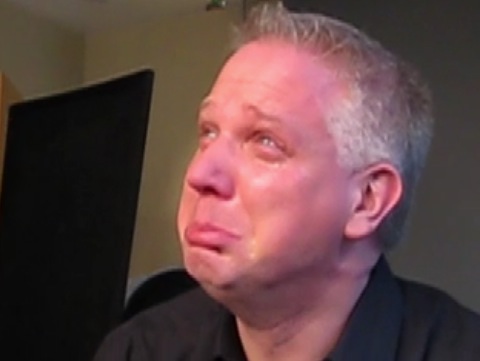
Glenn Beck is a fatty-jowled pussy of the worst order, a crying little bitch who offers up conjecture and speculation–and no real information–to a dimwitted audience. His pandering to racist, xenophobic attitudes has made him millions of course. Oh, remember when he called Obama a racist?

7. Orly Taitz and the “Birthers”

Speaking of racist, xenophobic attitudes . . . Watch Orly Taitz. Her lunacy set an example for way too many Americans overeager to reclaim “their” country from a Harvard-educated, arugula-eatin’, biracial liberal (who occasionally smokes). Jeez.

6. Teabaggers, et al.

Have you seen this video?

Kind of sums up the insanity of the summer of ’09 (fueled in part by some of the assholes on this list). It’s marvelous to watch how quickly these people melt under the simplest questions or prompts to respond with specific information. God bless America!

5. Kanye West

Asshole.

4. Pitchfork

We’ve been reading the music review site Pitchfork since the late ’90s, when it was a simple html affair with pretty bad writing. It still had a letters page, and even if the reviews were amateurish, there was also a sense of fun. In the past decade, the site has become bloated and self-serious; it’s also arguable that Pitchfork’s expansion into festival promotion is at ethical odds with its ability to criticize fairly. We’ve quibbled with Pitchfork before, but they were especially egregious in 2009. Like a giddy teenager, Pitchfork shot its load prematurely, running its “Best of the 00s” series of reviews in the summer. They also devoted two entire weeks to revisionist criticism, reviewing Radiohead albums that have been out for years and Beatles albums that have been out for decades. Telling us Abbey Road is a 10.0 is like shooting retarded fish in a barrel. It’s also bad form for a site that pretends to be forward-thinking and trendsetting. Perhaps as a reaction to the hype-backlash cycle that infested indie rock and blogdom in the late ’00s, Pitchfork devoted much of its review space to reissues and greatest hits collections and consistently began lowballing albums by new artists. Oh, and for a site that aspires to professional criticisms, theirs is full of typos and bad writing.

3. Fox News

The worst part about Fox News is that many of their viewers honestly believe that the network is “fair and balanced.” It looks like we’re gonna forget to squeeze Dick “Dick” Cheney into this list, so we’ll do so now, noting that Fox has repeatedly given that grizzled draft-dodger airtime whenever he’s elected to emerge from his cave, wipe the blood from his lips, and try to scare Americans into thinking that they are unsafe and should relinquish more freedoms.

2. Sarah Palin

Sarah!’s book tour showed us that the only major city in “real America” is Dallas, Texas (Texas is, of course, so “real” that they might secede).
1. George Bush

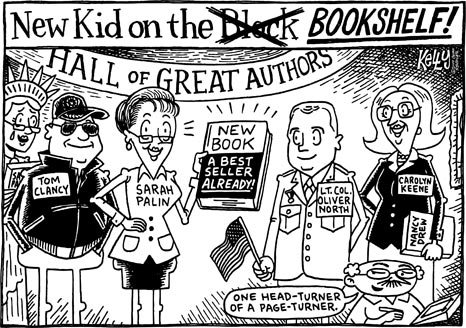
Sure. Bush didn’t do much in 2009, ‘ceptin maybe clearin’ some brush (and lots and lots of biking). So why does he rank #1? Well, maybe it’s just for old time’s sake, or maybe it’s just a way to recognize all the evil he perpetrated in the aughties. Call it a victory lap. Thanks for the giant shit sandwich!

How to Write a Review for Pitchfork

1. Brainstorm: Good writing always starts by brainstorming. You need to figure out the Official Editorial Position Pitchfork will be taking on the artist being reviewed: are they an old favorite trying something new? Are they an old favorite that are not doing something new? Were they once-loved but now no one’s sure how to feel about them? Figure out how your audience should feel about the album ahead of time, as this will make it easier to review the album when you actually listen to it. Remember, millions of kids are reading the site everyday; they need to know who to think is cool and who to think is washed-up and who to never give a chance to at all (it might be worth pointing out that the Official Editorial Position should be neatly summed up in the album’s 0.0-10 “score,” making it easier for the semi-literate to quickly figure out how they should feel about the album).

2. Research: Okay, you can go ahead and listen to the album now that you know how to feel about it. While you’re killing time, troll the internet for any juicy or salacious info on the artist in question that might come in handy: is there a gimmick or an angle to the artist? Are they fat? Black? Brother-sister team? Crazy? People nowadays want more from their indie music than just good tunes. Figure it out (conversely, maybe the fact that the artist is “trad” indie–four-on-the-floor white guys–could be your angle. Just sayin’).

3. Outline: If you don’t outline your writing, you’ll end up with an amorphous blob of a review. You probably have less than 800 words, and you don’t want to waste them on peripheral and superfluous info, like a description of the music or the lyrics. If you need help developing your outline, refer to the steps below.

4. Introduction: Normally when one writes, it’s a good idea to introduce the subject with a thesis right away, so that the reader knows what’s going on. However, Pitchfork’s Editorial Staff clearly sees itself as continuing the tradition of the Lester Bangs school of music criticism; therefore, it’s a good idea to start off your review with a tedious personal anecdote or seemingly unnecessary condensation of the band’s history up until now. You can even wax pseudo-intellectual on some of that deconstruction shit you learned in college, especially if you’re reviewing superior music that no one can understand because it’s so superior and odd and seemingly unmusical to those who just don’t get it (noise music, f’r’instance). You need to contextualize the Official Editorial Position right away. This is where that research will come in handy. It’s also good to be cryptic and vague about your position on the actual music–that’s what the album’s score is for, after all.

5. Body: Again, normally when one writes, the body of the essay should contain specific evidence that supports the thesis proposed in the introduction. However, if you’ve written your introduction properly, you shouldn’t have a clear thesis and therefore you don’t have to worry about supporting it. This frees you up to riff on whatever you feel like–social trends that are bugging you, a movie you recently saw, girl trouble, politics–whatever. It’s important to come off as cool and hip and authoritative here. If you get around to it, you can talk about a song or two, and even some of the lyrics or music. Just be careful not to go overboard describing the way the music sounds (which shouldn’t be too difficult, because describing music in words is actually not so easy).

6. Conclusion: Is it even possible to write a real conclusion in this post-modern world? Challenge your readers by finally giving them a thesis of some kind. This will insure that they’ll have to go back through the review to figure out what you were trying to say (as if that Official Editorial Position album score wasn’t enough). Or, better yet, leave them hanging–give them a question to chew on, or a quote or something. That’s some deep shit, man.

7. Diction: Remember, you’re writing for a hip internet site and your vocabulary needs to reflect that. Whenever possible use verbs that “pop”–don’t worry about how inappropriate or unfitting they may seem, if they invoke a strange action, especially one that doesn’t seem to go with listening to music, go with it. Also, don’t waste your time describing the musicality of the album when Pitchfork has already created its own lexicon to help you. Using vague adjectives like “sun-kissed” and “art-damaged” will lend authenticity to your review and make your readers nod their heads knowingly.

8. Score: As I mentioned, Pitchfork reviews score the album on a 0.0-10 scale. Although no one really understands this sliding scale, it’s important to note that most people won’t really read your review: they’ll look at the score and skim it (hence the need for all that diction that “pops”). Still, it seems like any score below a 7.0 is not passing; 8.5 or higher is reserved for the cream of the crop. Special cases may call for a 0.0, like the review of the Flaming Lips’ album Zaireeka, an album that must be played on four CD players at once (of course this album warranted a 0.0; who could possibly take the time to find three friends with CD players, share the communal experience of quadrophonic sound the Lips intended–actually listen to the album–and write a review in time for a deadline? Not possible). Save 0.0s for Big Editorial Statements (I’m reminded of the “we don’t love you anymore” message sent to Sonic Youth after NYC Ghosts & Flowers). Similarly, really high scores should be reserved for Grand Artistic Statements by new bands that no one will care about next year.

9. Parting Thoughts: Remember, have fun with it, but not too much fun–after all you’re writing for the hippest music site there is, one that even has it’s own weekend festival dealie now. So just remain calm, cool, and collected–you have the weight of the Official Editorial Position behind you, so you’re allowed to let a nasty, hipper-than-thou attitude seep into your criticism. Finally, as was elaborated repeatedly above, whatever you do, don’t focus too much on the music at hand. Got it? Now you too can earn the fame, fortune, and crazy free sex that every aspiring Pitchfork writer deserves.