The New Feminism

Yay! Girl power!

Read this hilarious article from The Onion, “Women Now Empowered By Everything A Woman Ever Does.” It neatly sums up all of my feelings on the current national/pop cultural understanding of what feminism is in America today.

Every time a discussion of feminism comes up in any of my graduate courses, I always manage to come off like a caveman jerk as I try to explain how I think that the term “feminism”–much like “punk”–has been completely co-opted by mainstream patriarchal commercial culture, and thus etiolated of life, its original power sucked dry. There is of course an easy solution for this, which involves a re-appraisal of feminist objectives and a general re-education of young girls and boys (okay, easy in theory, not in practice). The concern  in academia with gender studies over the past two decades has done a remarkable job of re-framing the problematics of identity, sexuality, culture, etc. beyond just “women’s issues,” but the trickle-down of second-wave feminism seems to be, well, diluted at best and completely misunderstood at worst . And as recent attacks on Roe v Wade show, these aren’t battles that were neatly finished thirty years ago–there is still much at stake today. Get empowered, yo.
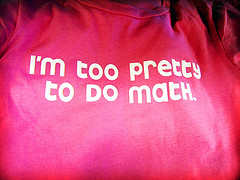
math.jpg

G is for…

G is for Gandalf the Gray (later, Gandalf the White), the archetypal wizard of Tolkien’s Middle Earth. Geeks who need to know can find an exhaustive biography of the fictional mage here (or perhaps you are a true geek who is already well versed in the lore of the Istari); however, it’s not Tolkien’s overly-detailed-to-the-point-of-insanity backgrounding that I love so much about Gandalf. It’s that Gandalf, like the hobbits of Lord of the Rings, is a complex and not-so-obvious hero. Despite his appearance as a frail old man, Gandalf is a actually a total bad-ass swordsman and magician. He’s also the mastermind behind all of the action, but it also seems evident that he’s not really sure what he’s doing at times. Repeatedly throughout LOTR, his faith in the silly little hobbits is questioned by kings and warriors and elves who don’t get why the wizard would put the fate of the world into the hands of child-sized halflings who don’t even wear shoes.

Gandalf was brought to life earlier this decade in an obscure series of low-budget film versions of LOTR; savvy readers may be able to find DVD versions of these movies from their favorite online boutiques that cater to such eccentric tastes. For the record, I thought Ian McKellen, who starred in these indie gems, was perfect as Gandalf. To learn more about Gandalf the Gay, check out this short essay from McKellen.

G is also for the Glass children, the protagonists of many of reclusive author J.D. Salinger’s short stories and novellas. The seven Glass children (Glass being the last name: the children are not made out of glass, dummy) all were recurring contestants on a radio-quiz show called It’s a Wise Child, a program which earned them both mild fame and some money. The eldest of the Glass children is Seymore, is central to many of Salinger’s stories, but my absolute favorite is “A Perfect Day for Bananafish.” It’s hard to properly describe the emotional impact of the story without spoiling the ending, but “Bananafish” contains themes that are relevant today and will probably always relevant: the psychological damage of warfare, the inability of humans to adequately express their thoughts and desires, the breakdown of the modern family. Everyone should read it–do yourself a favor and go pick up a copy of Nine Stories. You can get one mailed to your house for under five bucks. No excuses.