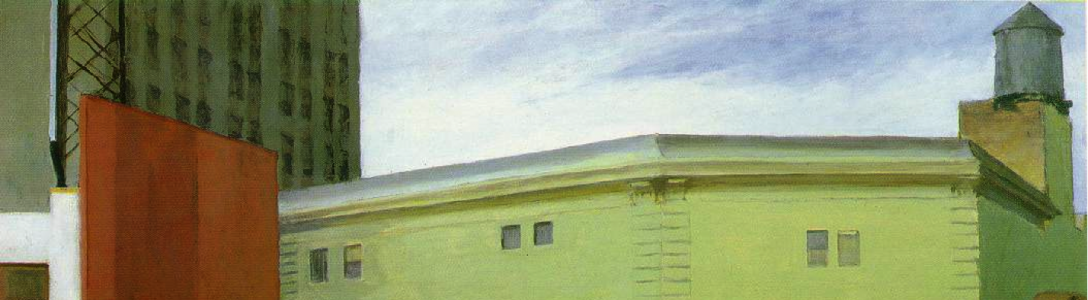
“Schrödinger’s Cat”
by Ursula K. Le Guin
As things appear to be coming to some sort of climax, I have withdrawn to this place. It is cooler here, and nothing moves fast.
On the way here I met a married couple who were coming apart. She had pretty well gone to pieces, but he seemed, at first glance, quite hearty. While he was telling me that he had no hormones of any kind, she pulled herself together and, by supporting her head in the crook of her right knee and hopping on the toes of her right foot, approached us shouting, “Well what’s wrong with a person trying to express themselves?” The left leg, the arms, and the trunk, which had remained lying in the heap, twitched and jerked in sympathy. “Great legs,” the husband pointed out, looking at the slim ankle. “My wife had great legs.”
A cat has arrived interrupting my narrative. It is a striped yellow tom with white chest and paws. He has long whiskers and yellow eyes. I never noticed before that cats had whiskers above their eyes; is that normal? There is no way to tell. As he has gone to sleep on my knee, I shall proceed.
Where?
Nowhere, evidently. Yet the impulse to narrate remains. Many things are not worth doing, but almost anything is worth telling. In any case, I have a severe congenital case of Ethica laboris puritanica,1 or Adam’s Disease. It is incurable except by total decapitation. I even like to dream when asleep, and to try and recall my dreams: it assures me that I haven’t wasted seven or eight hours just lying there. Now here I am, lying, here. Hard at it.

 Biblioklept