Plagiarism

Summer of ’99

In the summer of 1799, John Cummings, a 23-year old American sailor, crewed on a ship to France.

The Mountebank’s Nefarious Influence

Stationed there, he witnessed a mountebank pretending to swallow knives in a circus near Havre de-Grace.

An Astonishing Claim

The sailors returned to the ship after the show was over; most had had too much to drink that night.

While discussing the events of the night, particularly the knife-swallowing Frenchman, he made an astonishing claim.

Under the alcohol influence, he claimed to possess the same knife-swallowing skill.

He swallowed four knives with no obvious ill effect, although only three of the four knives were seen again.

He washed the knives down with more alcohol.

His Movements

The next morning, his bowel movements were uneventful.

However, he passed one of the knives in his stool.

Moreover, he passed two more knives in his stool the next day.

The fourth and final knife never made its way out of his bowels and also did not prove to be of any inconvenience for him.

On Not Practicing His Skill

Over the next six years, the young man did not practice this skill again.

In Boston

Six years later he was stationed in Boston.

While drinking in a gathering of sailors, he boasted about his former knife-swallowing skills.

His current shipmates did not believe his story and under the influence of grog he began again, he demanded a knife be brought to him to swallow.

He swallowed it instantly.

Throughout the evening he swallowed five more knives.

Obligations

The following morning, word had spread about his tactics the previous night.

Many visited him during the day, and he was obliged to swallow eight more!

The Tally

The tally of the total knives he had swallowed now stood at fourteen!

First Admission

He was admitted to Charleston Hospital with abdominal pain.

After a few days the knives had all passed safely through and his symptoms resolved, just in time for him to sail back with his ship to France.

Pressed on to the HMS Isis

His next ship was the Betty of Philadelphia. Early in the voyage back from France to the USA she was stopped by the Royal Navy and he was impressed into service aboard HMS Isis.

Drunk Once Again

On 4 December 1805, drunk once again, he swallowed his final twenty knives and two days later he reported to the ship’s surgeon, Benjamin Lara.

His Treatments

He was given castor oil and enemas of thick water-gruel, and opium for the pain.

When the symptoms continued, a dose of 30 or 40 drops of sulphuric acid daily was tried in an attempt to dissolve the iron.

Finally he was given murinated tincture of iron, but this made his pain worse.

When the Knives Dropped

After remaining on the sick list for three months he felt the knives drop into his bowel and felt much relieved and was discharged back to light duties.

Summer, Fall, and Winter, 1806-1807

In June 1806, he vomited one side of a knife handle.

In November and again the following February he passed more pieces.

Dr. Lara Kept Informed

Although Lara was transferred off HMS Isis in November 1806 his successor, Mr Peter Kelly, kept him informed of the patient’s progress.

Discharge

He continued to pass pieces of iron and knife handles; each ejection was accompanied by considerable pain and in one instance the vomiting of two pounds of blood. He was finally discharged from the ship, as unfit, in June 1807.

Disbelief

After leaving HMS Isis, he traveled immediately to London and presented himself to Guy’s Hospital for treatment. His admitting physician, Dr. Babbington, did not believe his story and discharged him after a few days.

Readmission and Deterioration

He was readmitted in August, however, his condition much deteriorated. Examining the patient with Sir Astley Cooper, Babbington asked for the opinion of the surgeon Mr Lucas.

What Dr. Lucas Found

Lucas performed a rectal examination and felt one of the knives in the rectum.

Under the Care of Dr. Curry

Although he was again discharged on 28 October 1807, Cummings was readmitted in September 1808, this time under the care of Dr. Curry.

He was given more acid, mucilage and opium but slowly deteriorated, suffering bouts of pain and indigestion and having difficulty eating.

Incurable

Over the course of three and a half years, he consulted several doctors and was admitted to the hospital on numerous occasions.

During this period, he vomited and defecated many knife fragments.

In his final moments, he was sent home and was deemed “incurable” by the doctors.

His Death

He finally died in March 1809 in a state of extreme emaciation.

Blog about some books acquired, other stuff

My family and I took our Florida asses to the West Coast for a wonderful week earlier this month. We flew into LA, stayed in Santa Monica for a few days and nights, riding bikes up and down the beautiful coast and visiting proximal neighborhoods. We later drove east to Joshua Tree, where we stayed in a lovely little house for a few days, visiting the National Park as well as nearby towns and sites, like Twentynine Palms, Palm Springs, and Mt. San Jacinto State Park. We saw coyotes and roadrunners and lots of little desert cottontails. Famous times.

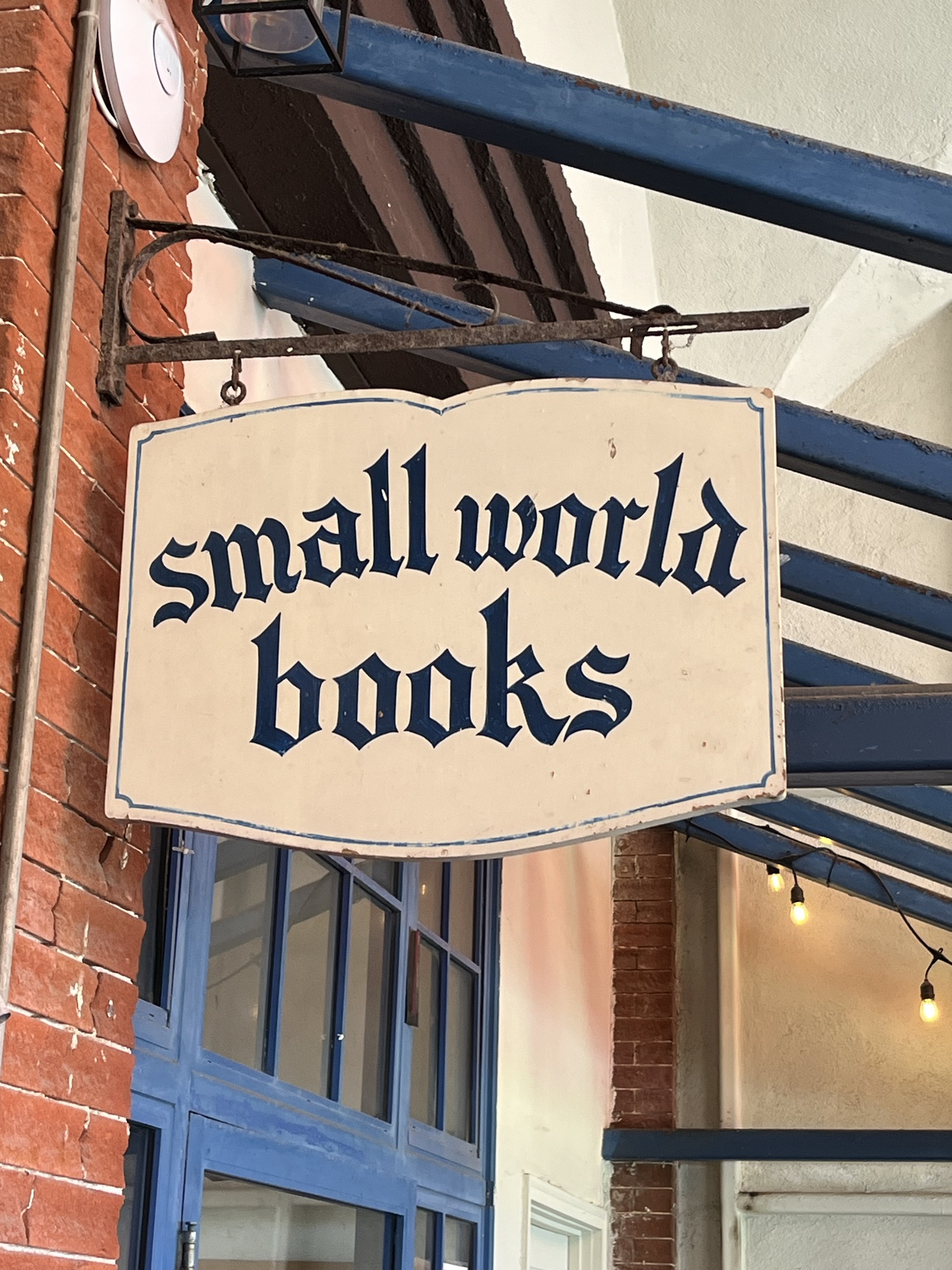
While in Santa Monica, I could not convince my family (or frankly myself) to trek the hour or so south to visit Thomas Pynchon’s old apartment in Manhattan Beach. We did, however, stop by Small World Books in Venice Beach. Small World is right across from the Venice Beach Skatepark, where we watched kids of all ages skate for almost an hour while someone blasted nineties hip-hop from a boombox (one of the nicest hours of the trip for me).

Small World is a well-stocked bookshop with an emphasis on literature and the arts; it carries plenty of indie titles and a handsome stable of standards. There was a nice cat in there too. Founded in 1969 by Mildred Gates and Mary Goodfader, Small World seems to retain some of the older vibes of Venice Beach, which is generally pretty touristy (in a fun, tacky way). It seems a bit out of place among the keychains and bad art and nasty tee shirts of Venice, what with its stock of NYRB translations, poetry zines, and novels by indie imprints like And Other Stories. But it’s clear that locals come to buy books there.

I picked up three: Lydia Davis’s Our Strangers, June-Alison Gibbons’s The Pepsi-Cola Addict, and Ann Quin’s Three. I’d been looking to buy Davis’s collection for a while now–you can buy it online, but I wanted to get it from an indie bookshop, per Davis’s intentions. Three is the only Ann Quin book I haven’t read yet; I loved her novels Berg and Passages, and I guess I wanted to leave something in the Quin take for later. The highlight purchase though for me has been Gibbons’s The Pepsi-Cola Addict, which was Small World’s featured book (I think they did a book club on it this month). I had never heard of the book or its author, but the pop art cover and goofy title caught my attention, followed by an even goofier blurb which started by describing the Pepsi-Cola Addict as the “legendary lost novel in which fourteen-year-old Preston Wildey-King must choose between his all-consuming passion for Pepsi Cola and his love for schoolmate Peggy.” The novel is not goofy though—it’s abject and odd and distressing and also very well-written, somehow naive and sophisticated, raw and refined, resoundingly truthful and plainly artificial. Here’s the full blurb:

Written by June-Alison Gibbons when she was only 16, The Pepsi Cola Addict is considered one of the great works of twentieth-century outsider literature. More than just a literary curiosity, however, this tale of a teenager whose passion for a well-known cola drink threatens to ruin his life is the uniquely vivid expression of a young woman trying to make sense of the confusing, often brutal world she in which found herself.

Published in 1982 by a vanity press who took £500 from its young author and gave her only a single book in return, it’s thought that fewer than ten original copies still exist in the world.

Shortly after its publication, June-Alison and her sister Jennifer would become infamous as “The Silent Twins” and find themselves cruelly incarcerated for over a decade in Broadmoor Hospital. This author-approved edition makes June-Alison Gibbon’s remarkable vision widely available for the first time.

I hope to have a full review to come. I read The Pepsi-Cola Addict in Joshua Tree and absolutely loved it (even though (and I guess because) it made me feel odd and ill).

Unfortunately, I didn’t make it to Angel City Books & Records in Santa Monica. I had also wanted to visit Space Cowboy Books in Joshua Tree, but didn’t realize it was closed midweek. I did drop by The Best Bookstore in Palm Springs, and was again pleasantly surprised by the rich stock of titles, which eschewed the bestseller list stuff I might have expected for a somewhat touristy area. My son conned me into buying him a Taschen volume of Michelangelo drawings and studies; he’s been copying them into his notebooks for days now.

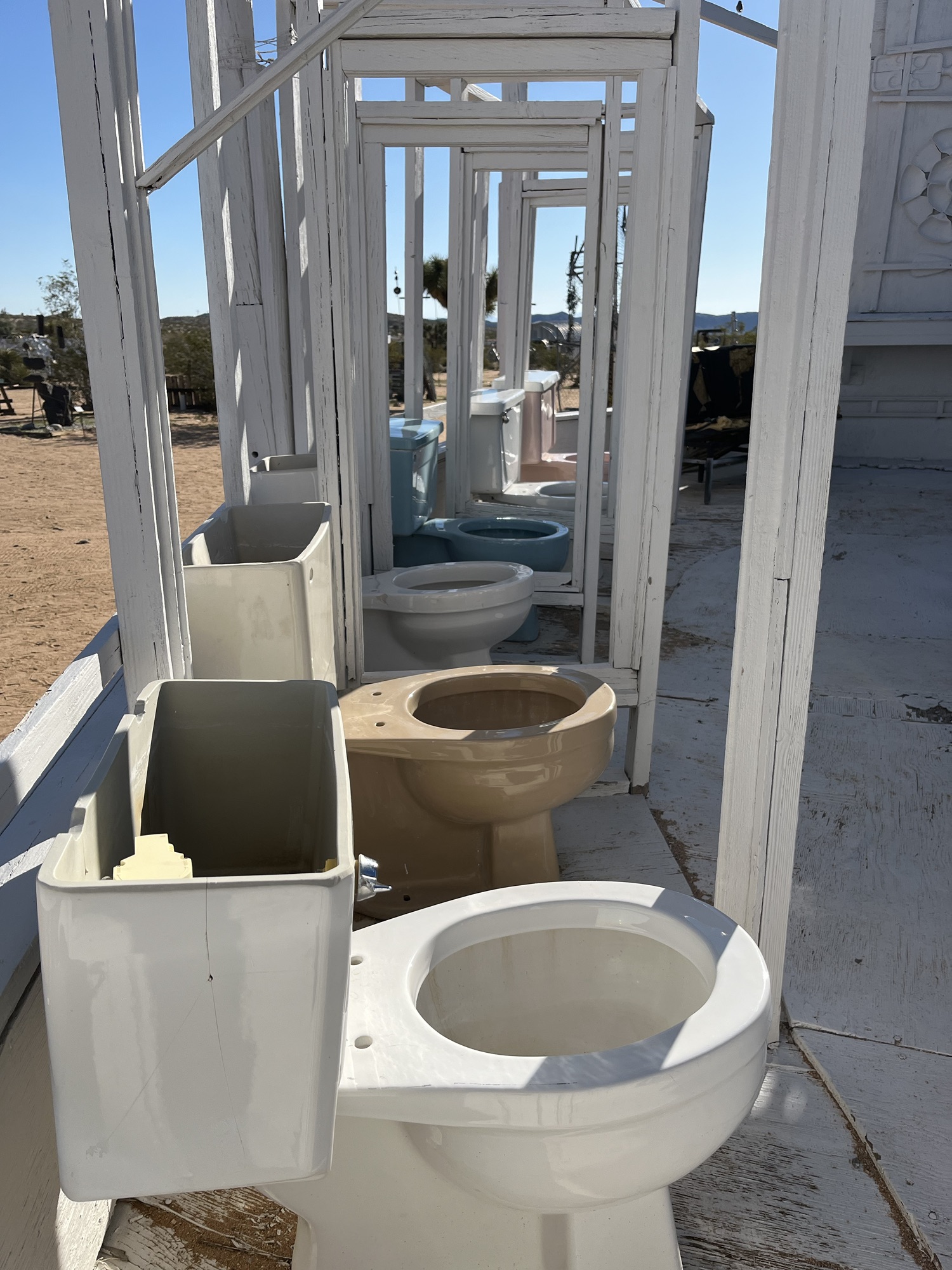
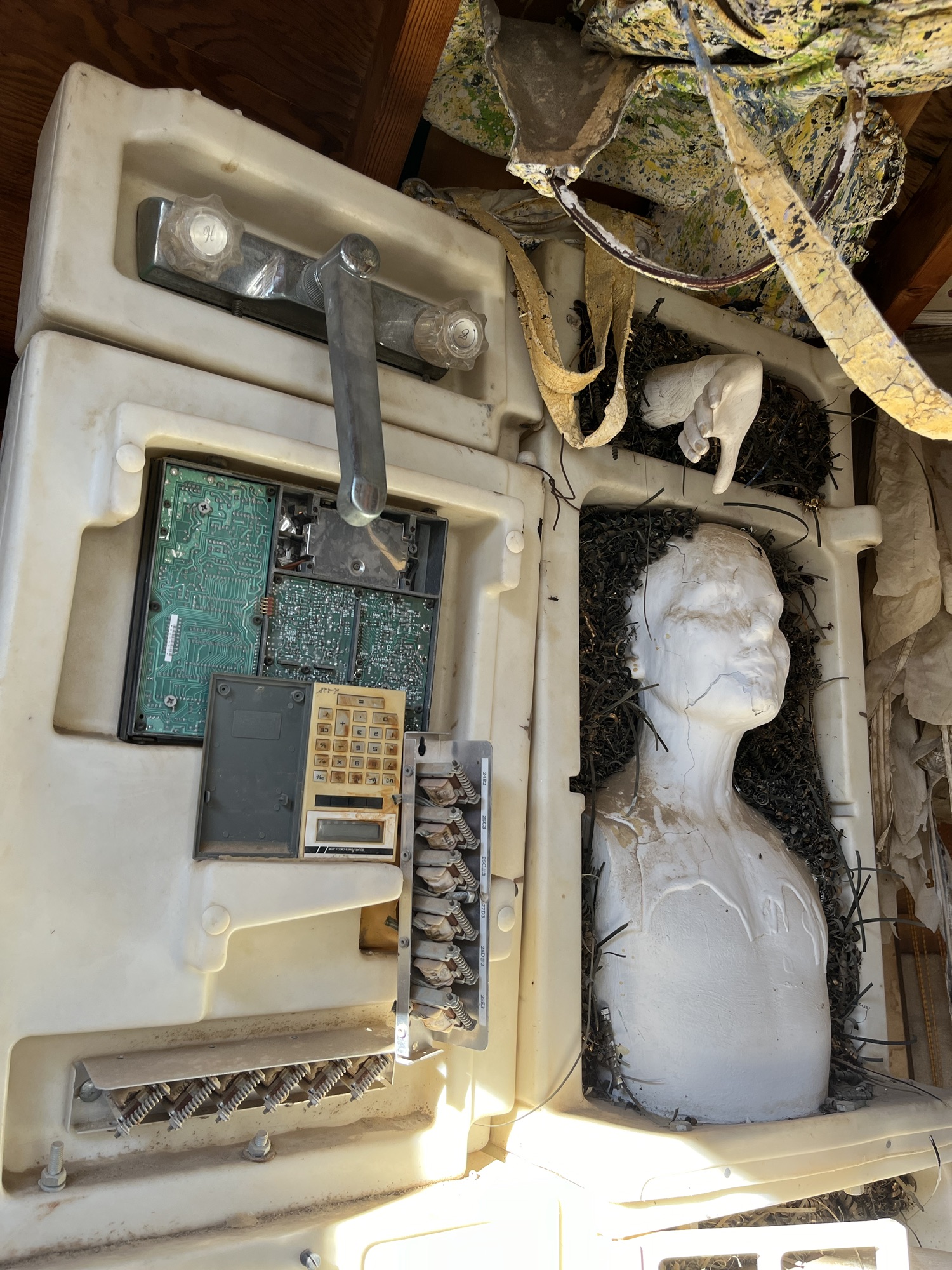
We loved Joshua Tree (park and city), and one highlight was the Noah Purifoy Outdoor Museum, a loose, sprawling collection of sculptures, installations, and buildings cobbled together out of the detritus of the twentieth century. Walking through the Museum is kind of like being on the disused set of a post-apocalyptic film, under the beautiful clear California sun filled sky. Cottontails and roadrunners hopped about as we wandered among Purifoy’s deconstructed constructions, sometimes apprehensive to enter or touch, before the sun and wind and arid sky itself reminded us that the whole tableau was naked, exposed, raw on the earth, open for contact.