
I finally made it to The Lynx bookstore this weekend while visiting some old friends in Gainesville, FL. The Lynx was opened by novelist Lauren Groff and her husband Clay Kallman last year; its inventory emphasizes challenged and banned books, BIPOC and LGBTQ authors, and Florida writers. There was a nice selection of graphic novels, children’s books, and even some zines. A fair bit of the store’s inventory seemed to be given over to the kind of YAified fiction that sells well, along with a lot of books on contemporary social issues. A lot of those titles tended to skew towards what I think of as “in this house” politics — this ain’t your local anarchist bookstore — but it’s pretty well stocked.
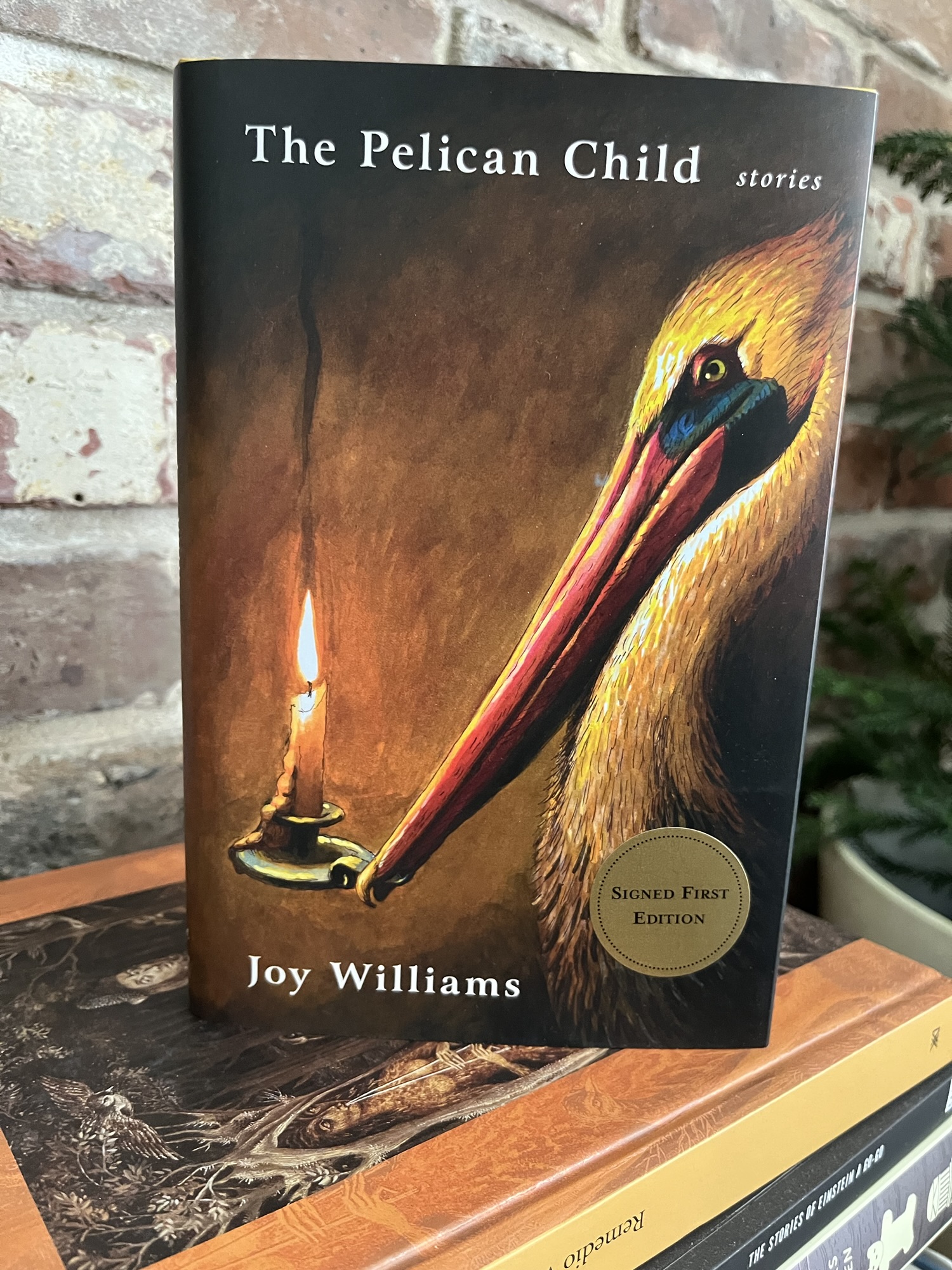
I picked up Joy Williams’ latest collection, The Pelican Child, as well as copy of Williams’ history/guidebook The Florida Keys to give to my hosts, who spend six weeks in the Keys every summer. My wife also got the newest Alison Roman cookbook.


 Biblioklept
Your share reminded me that — just a couple months ago — I was wondering-out-loud about Lauren Groff, why I sometimes / most times like her work, while other times flinching at some of her banter w editor D Treisman … made me take a closer look at her bio … then … thought you might like to skim this recent chat, published alongside The New Yorker’s November run of her story, “Mother of Men”. Basically, I just don’t really understand Florida. But, hey… Cheers. KME
 > > https://www.newyorker.com/books/this-week-in-fiction/lauren-groff-11-10-25 > > > Skip to main content https://www.newyorker.com/books/this-week-in-fiction/lauren-groff-11-10-25#main-content > This Week in Fiction https://www.newyorker.com/books/this-week-in-fiction > Lauren Groff on American Masculinity > > The author discusses her story “Mother of Men.” > By Cressida Leyshon https://www.newyorker.com/contributors/cressida-leyshonNovember 2, 2025  > Illustration by The New Yorker; Source photograph by Beowulf Sheehan > Saved > Saved > This interview was featured in the Books & Fiction newsletter, which delivers the stories behind the stories, along with our latest fiction. Sign up to receive it in your inbox. https://www.newyorker.com/newsletter/fiction > This week’s story, “Mother of Men https://www.newyorker.com/magazine/2025/11/10/mother-of-men-fiction-lauren-groff,” opens, “There are men in my house, too many men, I am being driven mad by the men who are always in my house.” The narrator of the story goes on to list her husband, four builders, and her two sons, who are no longer boy-size but man-size. How surprising is it to her—and any mother of sons—that her small boys have grown up and become men? > > I’m frequently shocked to discover that my own boys, who were squishy newborns just yesterday, have become enormous teen-age men. I was at Bread Loaf for a few days this past summer, and was sitting at dinner with the writers Carter Sickels and Emet North—both of whom have spent an enormous amount of time thinking about gender constructs and masculinity—and one of them asked me what it was like to be a feminist raising men in America. I said that I don’t think it’s possible to be anything but conflicted about it, if you’re paying any kind of attention. The first tiny seed of the story was planted then. Masculinity is a hell of a drug, served up with a heaping side of privilege and obliviousness, and I sometimes feel despair that maybe my sons aren’t really listening to me when I tell them that they have to be aware that their bodies are immediately seen as a threat by smaller, more vulnerable people; that they need to understand the insidious ways that misogyny lives in them (to be fair, it lives in all of us, unless we work hard against it); that they need to check themselves when they have the urge to immediately refute something a woman is saying because knee-jerk negging of women is built into American masculinity, even when what the women are saying is correct. They’re both good people who care about others, but I’m up against tens of thousands of years of male supremacy and normalized violence and domination. I have to keep on and hope for the best. > > The narrator is out walking the family’s dog when a man suddenly appears in her path. She realizes, with dread, that it’s a person who’s been stalking her. After initially becoming fixated on her, he moved away, but he seems to return without warning every couple of years. Did you know from the outset that the story would take this turn? > > I did know the story was going to be about a stalker, yes. When the story came to me fully, I was just fed up with men, including all the soulless, rotten men in the public sphere. I have had real experience with a stalker, though, of course, the one in the story is completely fictional. At one point this fall, I just snapped. I’m finished with being trapped inside the false narratives of malevolent men. That means I get to tell whatever story I want. It also means that the fascists in power, who feed like vampires on the fear that they instill, who have power only because they count on our compliance in advance, will be getting neither compliance nor silence from me. > > You’ve written several powerful stories in recent years about male violence, and your forthcoming collection “Brawler https://www.amazon.com/Brawler-Stories-Lauren-Groff/dp/0593418425,” which will be published next spring, gathers a number of them. What was it like to look at the stories together? Did anything surprise you? Did “Mother of Men” come in response to the collection? > > I don’t know if we still have time to put the story in the collection; I’ll leave that to my editor to decide. But, yes, seven of the stories in “Brawler” were first in The New Yorker: the editing, the fact-checking, the audio engineers, the art—my lord, what an incredible gift to be given the close attention of the New Yorker staff (thank you). I find that the way story collections come together is absolutely miraculous. I don’t intentionally write stories around a theme, or know intellectually that I’m building different modes of interrogating something large, but the human subconscious is astonishing. The stories in all three of my collections have often been woven in the darkness of the subconscious before I even sit down to put them on paper, and after I write anywhere from twelve to twenty, I stand back, read them slowly, and always see a very clear, bright thread between them all. The easiest part is deciding which stories—and in what order—can make the collection into the strongest possible argument it can be. > > In 2024, you opened a bookshop, The Lynx https://thelynxbooks.com/, in Gainesville, Florida, with your husband. What’s that been like? Has it changed your understanding of the relationship between books and readers, and the way a book might find its way into the world? > > We opened The Lynx in April, 2024, and it has been one of the most moving and difficult things I have done in my life. I had a fellowship at the American Academy in Berlin, in 2023, when Ron DeSantis, Florida’s mini-Trump, decided to allow basically anybody to challenge books in public schools and libraries. My German editor, Karsten Kredel at Hanser Berlin, looked at me and said seriously that I had to do something about it, that banning and burning books was the point of the spear of authoritarianism. When Germans talk to you sternly about authoritarianism, you sit up and listen. Not only did we design the store to be a hyper-visible lighthouse for tolerance in an increasingly dark and intolerant state—we are open nearly every day of the year, we want people who need banned and challenged books to be able to find them—but we also have a nonprofit that equitably gives away thousands of banned books to Floridians, and we do hundreds of events every year. We want challenging ideas circulating in Florida. Book-selling has changed my thinking about books entirely. On the one hand, I’m a lot less of a true believer that the great books will inevitably find their readers—more than two thousand books come out every Tuesday, and no book-seller on the planet could possibly keep up with the avalanche—and I’m amazed every single day that independent bookstores and public libraries are still clinging to life in this bleak political landscape of ours. It’s such hard work (most of which is done by my excellent managers and book-sellers), the pay isn’t as great as they deserve, but we do this work because we believe in it. All this to say, to anyone who is reading this: if you love your independent bookstores and public libraries, start fighting like hell to keep them around. ♦ > > Privacy Information
LikeLike