
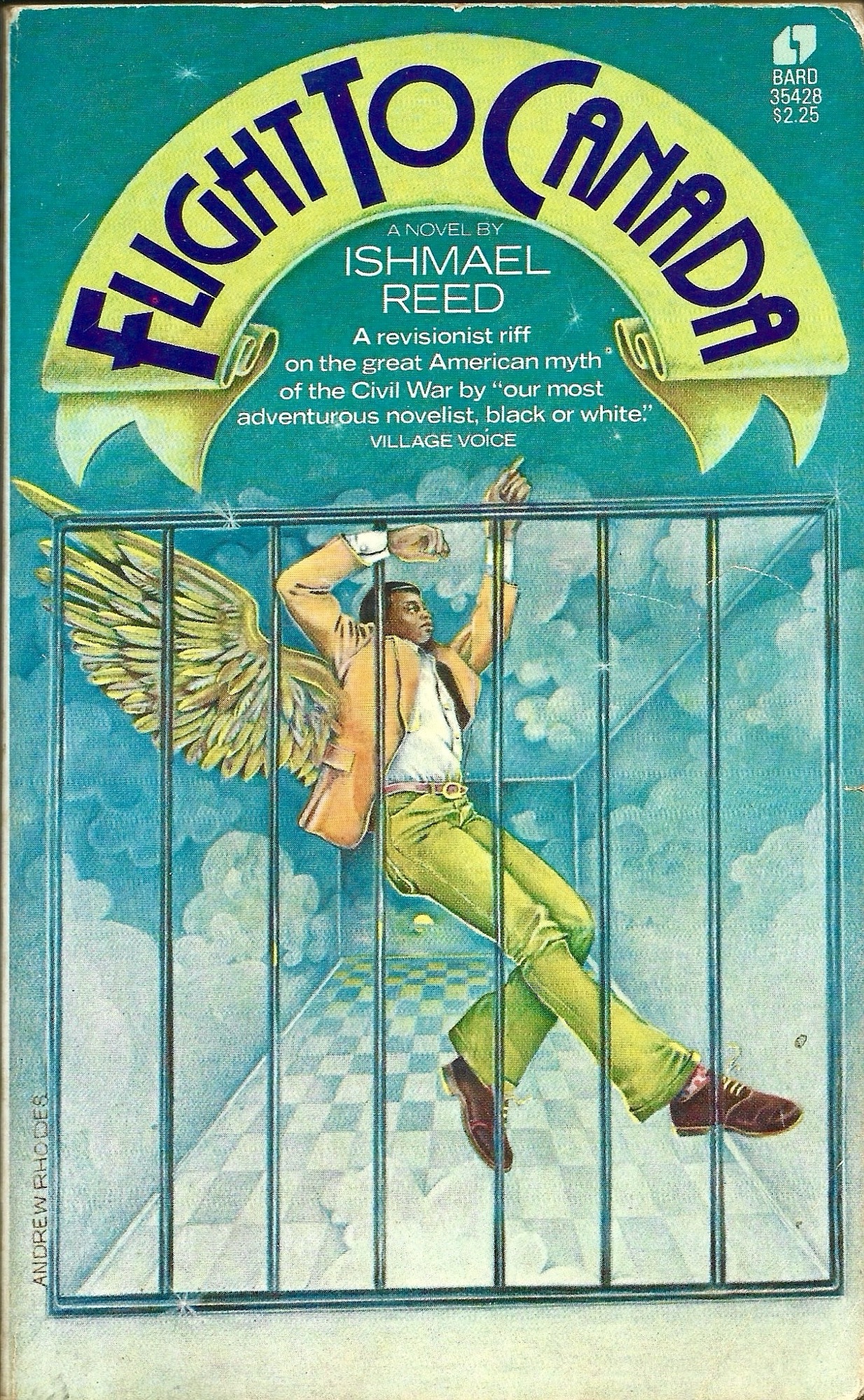
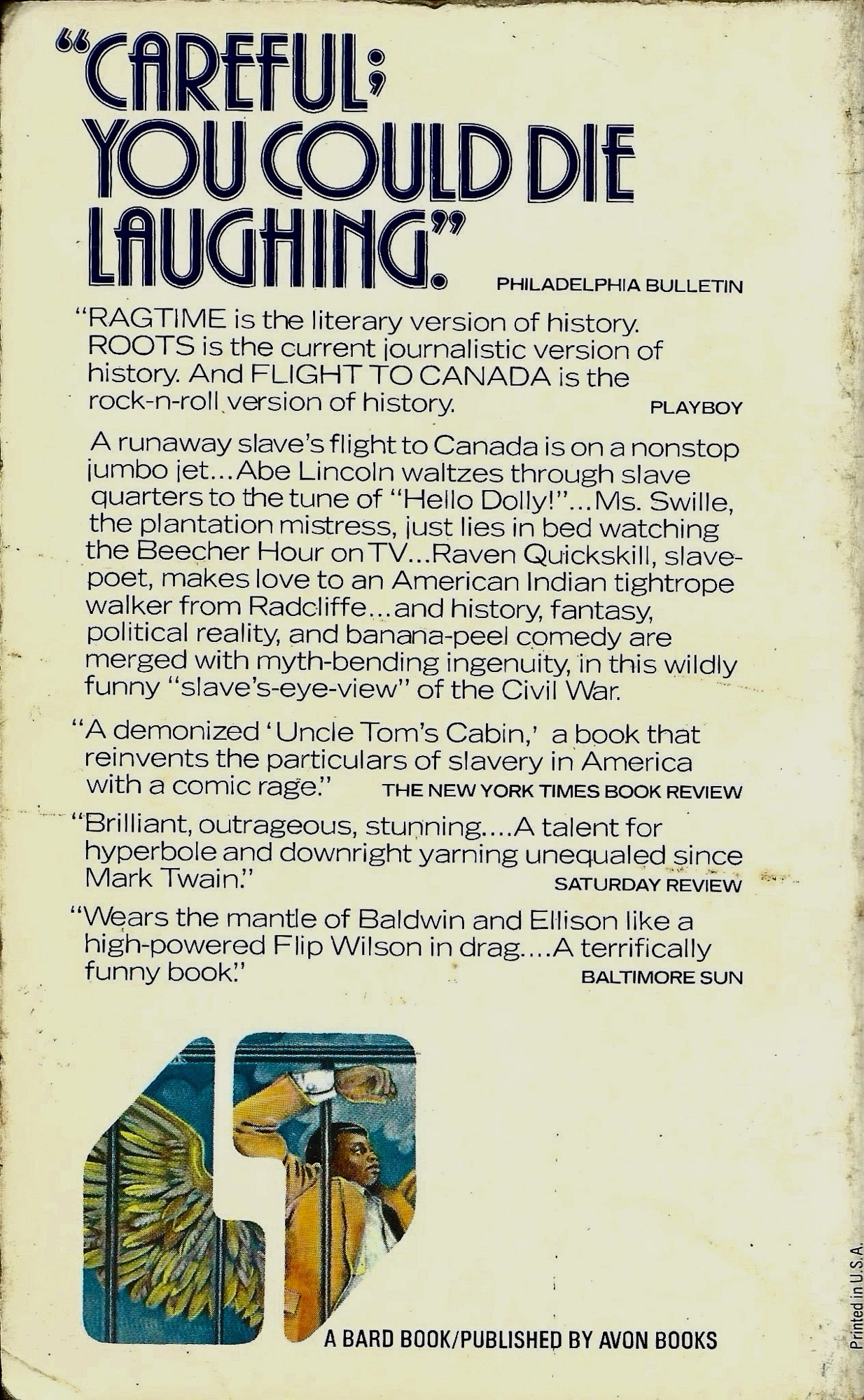
Flight to Canada, Ishmael Reed, 1976. Avon Bard Books (1977). Cover art by Andrew Rhodes; no designer credited. 192 pages.
From my 2020 review of the novel:
Flight to Canada features a number of intersecting plots. One of these plots follows the ostensible protagonist of the novel, former slave Raven Quickskill, who escapes the Swille plantation in Virginia. Along with two other former slaves of the Swille plantation, Quickskill makes his way far north to “Emancipation City” where he composes a poem called “Flight to Canada,” which expresses his desire to escape America completely. The aristocratic (and Sadean) Arthur Swille simply cannot let “his property run off with himself,” and sends trackers to find Quickskill and the other escapees, Emancipation Proclamation be damned. On the run from trackers, Quickskill jumps from misadventure to misadventure, eventually reconnecting his old flame, an Indian dancer named Quaw Quaw (as well as her husband, the pirate Yankee Jack). Back at Swille’s plantation Swine’rd, several plots twist around, including a visit by Old Abe Lincoln, a sadistic episode between Lady Swille and her attendant Mammy Barracuda, and the day-to-day rituals of Uncle Robin, a seemingly-compliant “Uncle Tom” figure who turns out to be Reed’s real hero in the end.
ReMass-market Monday | Ishmael Reed’s Mumbo Jumbo

 Biblioklept