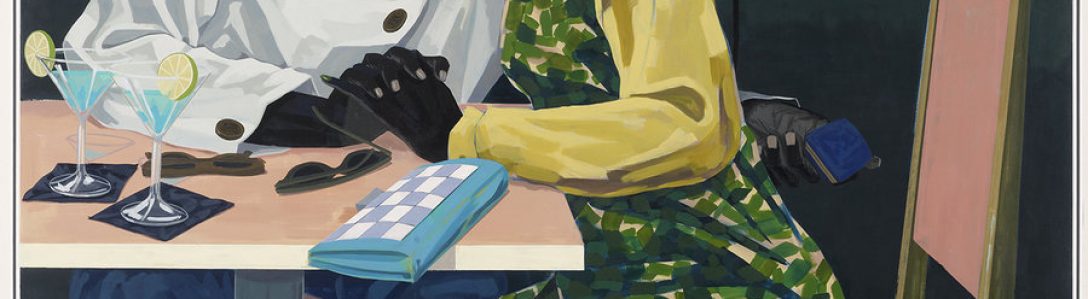
“At the End of the Mechanical Age”
by
Donald Barthelme
I went to the grocery store to buy some soap. I stood for a long time before the soaps in their attractive boxes, RUB and FAB and TUB and suchlike, I couldn’t decide so I closed my eyes and reached out blindly and when I opened my eyes I found her hand in mine.
Her name was Mrs. Davis, she said, and TUB was best for important cleaning experiences, in her opinion. So we went to lunch at a Mexican restaurant which as it happened she owned, she took me into the kitchen and showed me her stacks of handsome beige tortillas and the steam tables which were shiny-brite. I told her I wasn’t very good with women and she said it didn’t matter, few men were, and that nothing mattered, now that Jake was gone, but I would do as an interim project and sit down and have a Carta Blanca. So I sat down and had a cool Carta Blanca, God was standing in the basement reading the meters to see how much grace had been used up in the month of June. Grace is electricity, science has found, it is not like electricity, it is electricity and God was down in the basement reading the meters in His blue jump suit with the flashlight stuck in the back pocket.
“The mechanical age is drawing to a close,” I said to her.
“Or has already done so,” she replied.
“It was a good age,” I said. “I was comfortable in it, relatively. Probably I will not enjoy the age to come quite so much. I don’t like its look.”
“One must be fair. We don’t know yet what kind of an age the next one will be. Although I feel in my bones that it will be an age inimical to personal well-being and comfort, and that is what I like, personal well-being and comfort.”
“Do you suppose there is something to be done?” I asked her.
“Huddle and cling,” said Mrs. Davis. “We can huddle and cling. It will pall, of course, everything palls, in time…”
Then we went back to my house to huddle and cling, most women are two different colors when they remove their clothes especially in summer but Mrs. Davis was all one color, an ocher. She seemed to like huddling and clinging, she stayed for many days. From time to time she checked the restaurant keeping everything shiny-brite and distributing sums of money to the staff, returning with tortillas in sacks, cases of Carta Blanca, buckets of guacamole, but I paid her for it because I didn’t want to feel obligated.
There was a song I sang her, a song of great expectations.
“Ralph is coming,” I sang, “Ralph is striding in his suit of lights over moons and mountains, over parking lots and fountains, toward your silky side. Ralph is coming, he has a coat of many colors and all major credit cards and he is striding to meet you and culminate your foggy dreams in an explosion of blood and soil, at the end of the mechanical age. Ralph is coming preceded by fifty running men with spears and fifty dancing ladies who are throwing leaf spinach out of little baskets, in his path. Ralph is perfect,” I sang, “but he is also full of interesting tragic flaws, and he can drink fifty running men under the table without breaking his stride, and he can have congress with fifty dancing ladies without breaking his stride, even his socks are ironed, so natty is Ralph, but he is also right down in the mud with the rest of us, he markets the mud at high prices for specialized industrial uses and he is striding, striding, striding, toward your waiting heart. Of course you may not like him, some people are awfully picky… Ralph is coming,” I sang to her, “he is striding over dappled plains and crazy rivers and he will change your life for the better, probably you will be fainting with glee at the simple touch of his grave gentle grizzled hand although I am aware that some people can’t stand prosperity, Ralph is coming, I hear his hoofsteps on the drumhead of history, he is striding as he has been all his life toward you, you, you.”
“Yes,” Mrs. Davis said, when I had finished singing, “that is what I deserve, all right. But probably I will not get it. And in the meantime, there is you.”
God then rained for forty days and forty nights, when the water tore away the front of the house we got into the boat. Mrs. Davis liked the way I maneuvered the boat off the trailer and out of the garage, she was provoked into a memoir of Jake.
Continue reading “Read Donald Barthelme’s short story “At the End of the Mechanical Age””
 Biblioklept