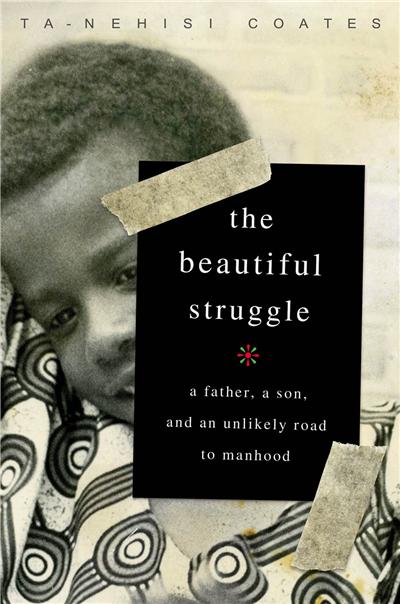
Earlier this week, The Root published a fantastic excerpt from Ta-Nehisi Coates’s recent memoir The Beautiful Struggle. In “Hip-Hop’s Daisy Age,” Coates contextualizes a Golden Age–the arcadian summer of ’88–when a new “consciousness” movement in hip-hop brought together both the discordant militarism of Chuck D’s Public enemy and the neo-hippie soul of De La Soul. Although Coates grew up African-American in an economically-depressed Baltimore and I am white, and was living in Dunedin, New Zealand in the summer of ’88, we are roughly the same age. When he writes, “I was all X-Men, polyhedral dice, and Greek myths,” it’s not hard for me to imagine that we actually probably have at least a few things in common. And while I was clearly in a different cultural place, I owned and cherished most of the albums that Coates cites in his piece. I played them repeatedly, furtively listening in secret to the alien sounds on my Sony Walkman. I can’t help thinking of 3 Feet High and Rising without a warm tinge of nostalgia coupled with a sadness that something so fresh and vital and just plain different probably won’t come out of mainstream hip-hop again–or at least any time soon. Perhaps this is hip-hop’s legacy–20 years after its Golden Age, it’s earned the right to be as shitty, conformist, and downright stupid as any other commercial genre. But I’ve digressed. Coates’s piece is no lament. Instead, it’s a loving tribute to a particular moment, which, for him at least, seemed to transcend the space he was in and extend into all “the ghettos of the world, with their merchant vultures, wig stores, sidewalk sales, sub shops, fake gold, bastard boys, and wandering girls.” In the summer of ’88, I was living comfortably in a lovely harbor town, but the sentiment Coates expresses reached me nonetheless. As corny as it sounds, hip-hop in ’88 provided a cultural education for me, not just about the African-American experience specifically, but, more generally, as an expatriate, hip-hop told me something about what was new and fresh and vital in America. Now I realize that my own early love for hip-hop simply preceded the eventual mainstreaming, commercialization, and consequent dumbing-down of hip-hop. And honestly, I could never have the same spiritual attachment that Coates describes:
“…the rhyme-pad was a spell-book, it summoned asphalt elementals, elder gods, and weeping ancestors, all of whom had your back. That summer, I beheld the greatest lesson of 88, that when under the aegis of hip-hop, you never lived alone, you never walked alone.”
Where Coates experienced soul music, I heard punk rock. But for each of us, the hip-hop in ’88 was a new kind of rebel music. Looking back, it’s hard to believe that 20 years have passed. When I get home tonight, I’ll listen to EPMD’s Strictly Business and try to forget about Soulja Boy for 45 minutes.

 Biblioklept
We saw Al Letson’s Summer at Sanctuary performance and in it he mentioned the influence the groups like Public Enemy and how that consciousness has been replaced by the Soulja Boy.
It’s strange to think that the music I considered so important and cutting edge is now just. kind of. old.
Is this what aging feels like?
LikeLike
Saying things like “the” Soulja Boy will make you sound old ;)
But, yeah…
A similar thing has happened in film, in a way (consider Lee’s analogue to Public Enemy, Do the Right Thing, read against what’s happening in African-American flimmaking today). Etc.
LikeLike
I think you guys are getting old. Backpack hip-hop is dead. The guys that are truly important are saying important things, albeit in a form that could be mistaken as trivial. Ghostface, Jay-z, Lil Wayne, Eminem, Nas, the Outkast guys, Scarface, UGK, these guys are all commenting on important social trends that impact on the lives of their friends, families, and communities.
Soulja Boy stuff is inescapable in pop music. Everyone loves stupid songs you can dance to. It would be stupid to claim that everytime a song like the Macarena or I’m Too Sexy or Lollipop rushes to the top of the charts that pop music has irrevocably changed.
Say what you want, but I don’t believe that anyone actually ever genuinely liked Public Enemy. Who can stand to listen to a dude like Chuck D hit you over the head with his guides to moral living and “revolution?” Is anyone even comfortable looking at Flava Flav anymore?
LikeLike
Uh, where to start:
“I don’t believe that anyone actually ever genuinely liked Public Enemy.”
C’mon, Dave. Plenty of people, including me, loved these guys in the late 80s, early 90s. Forget the joke that is Flava Flav.
No one here is discrediting the force of Nas or Ghostface, or even Jay-Z, etc…but most of the guys you name have been around for at least 10 or 15 years (uh, Scarface was in Geto Boys, f’r chrissakes! Old!). I quote myself, above:
“Perhaps this is hip-hop’s legacy–20 years after its Golden Age, it’s earned the right to be as shitty, conformist, and downright stupid as any other commercial genre.”
Saying that hip-hop has lost force or vitality is as dumb as saying rock is no good anymore, or that all country music sucks. The point that I’m trying to make is that hip-hop, particularly mainstream hip-hop, is no longer interested it seems in saying anything important…not that it has a duty to, but once-upon-a-time, people looked to it as something bound to counterculture, to youth movements, to paradigmatic shifts, etc (people did this, of course, with rock in the 60s, punk in the 70s…). So, yes, yr boy Lil Wayne dishing out sheer garbage like Lollipop is sorta disheartening.
Also, I’m not sure that Soulja Boy is a one-hit wonder, strictly speaking.
LikeLike
You’re right, a lot of people “liked” Public Enemy, but nobody loved them. I don’t know anyone that would be willing to fly cross-country to see them or even drive remotely out of their way to see guys that just beat you over the head with a message.
Maybe even more importantly, who cares if these guys have nothing interesting to say? Seems to me that no one really has anything important to say. Everything has been said. I truly believe that lyrics should be treated as a bonus because lyrics ruin most songs. I don’t think it matters whether it’s some bearded white dude singing about lost love or his inability to relate to society or some black dude singing about the club or shooting someone or trying to fuck some chick, its all mostly worthless. What we should do, rather than judge the message (I think this is your theory on literature), is to judge how the message is conveyed.
I think Lollipop is a fantastic song
LikeLike
Hang on– what, exactly, do you think is my “theory on literature”–judge the message or judge how the message is conveyed?
For the record, I think that the greatest literature supercedes message completely, or, perhaps that the message, or theme, or whatever is indivisible from the rhetoric, style, tropes, etc.
As far as lyrics, I guess this is just a matter of taste, an aesthetic argument that you’re not going to convince me of (although nihilistic contentions like “it’s all mostly worthless” and “Everything has been said” are highly persuasive). I like lyrics a lot, I like songs that have a meaning, or a theme, or are actually about something, or songs that paint a picture, or make a point. My favorite song last year was UGK’s “Player’s Anthem,” which, on top of being a really great piece of music, was also incredibly lyrically inventive. “Lollipop” is just a lousy track, an annoying vocal, and just generally kinda gross. Prime PE can’t be beat: “Black Steel in the Hour of Chaos”? Great stuff:
I’m not arguing that music, or rap music in particular, has to be “message” driven, but rap is awfully stale, and, not to sound like an old man, I think that the value systems it’s so currently in love with promoting are the worst kind of venality.
LikeLike
i thought that your philosophy was to judge the book by how it said what it wanted to say. Form being more important than plot.
i like lollipop. Musically, rap is reaching some sort of apex. Starting with Timbaland and the Neptunes, I think beatmakers in the last five years or so have taken hip-hop to a gorgeous and new level.
Lyrics are great, but most bands would be better off without them.
LikeLike
we all like songs that “paint a picture” but most lyricists for most bands just aren’t up to the task.
LikeLike
Sorry to have joined this discussion so late on, I just read all your posts and decided to leave a comment…
I don’t think you should conclude that no one on the entire planet loves a particular band just on the basis that you personally don’t know anyone that does.
Perhaps no one YOU know loves public Enemy but I certainly did and plenty of other people do. I was so pleased when they came back to the UK, I have seen them a few times and last time I met them after the show, they were lovely guys and they didn’t beat me over the head with messages of revolution…however, I wouldn’t have been offended if they did. At the end of the day you can still enjoy the music even if you don’t really care about the message that much.
BLACK STEEL!!! :) I am relinking the video because the other link was private. http://www.youtube.com/watch?v=VFjaO7OJaH8
and BRING THE NOISE http://www.youtube.com/watch?v=Cvy7MWjfVPE&feature=related
I don’t care what you lot think, it still does it for me :)
I am not persuaded by what Dave said about lyrics being mostly worthless and that everything has been said. Perhaps it is true that everything has already been said but that doesn’t mean that the words have lost their meaning or that artists should not bother saying what they feel. If an artist is trying to convey a message then perhaps we should judge them on how the message in conveyed but by that I mean whether they seem honest and believable and really mean what they are saying, also whether the words provoke thoughts or feelings within the listener. If there is no particular message in the lyrics then I agree with Ed “I guess this is just a matter of taste, an aesthetic argument”
It is true that mainstream music has become stale, so why give a damn about what is going on in the world of mainstream? There is so much more to the world than just mainstream. You just have to go and look for it, thankfully we have access to all sorts of bands and genres that we might have never heard before.
Suggesting that “most lyricists of most bands just aren’t up for the task” is just a lazy thing to say when you are only referring to a number of popular bands that you have heard. You will probably not find the best lyrics in the popular music industry of today, but it is absurd to suggest that there is simply nothing interesting or relevant going on in music, just step outside the box.
If you don’t like what you find outside the box then stay in the box but don’t complain about there not being anything of any relevance, and in that case perhaps it would be better to write the music you want to hear for yourself. In his first post, Dave c did mention a few names that are certainly relevant to modern music, however Ed pointed out that most of those artists have been around for a decade or more.
which brings me to my final comment.
Why is everyone so seemingly hung up about whether something is “old” or “cutting edge” or what is “in” and what is “dead”?
Why do we give a shit? We should just enjoy whatever appeals to us at the time, whether it is old or new. With the big labels mostly churning out mindless crap, I personally have found myself listening to way more music from the past. A lot of the good stuff I have heard from this decade I have had to hunt for.
I thought everyone made some interesting points here.
Cheers
LikeLike