
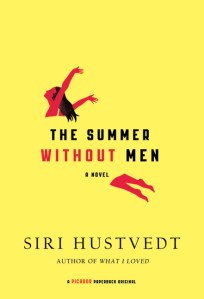
 The narrator of Siri Hustvedt’s new novel The Summer Without Men is Mia Fredrickson, a sharp but wounded poet whose husband decides to put their marriage on “pause” after thirty years so he can shtup his younger assistant. Diagnosed with Brief Psychotic Disorder (“which means that you’re genuinely crazy but not for long”), Mia finds herself confined to a psychiatric hospital. The summer after her stay, she leaves Brooklyn for the “backwater town on what used to be the prairie in Minnesota” where she grew up, where she can be closer to her mom, who lives in an assisted living facility. Mia’s plan is to fill the summer with rest and poems—and ultimately restore her sanity. She spends time with her mother and her friends, becomes involved in the lives of a neighbor with two young children, and teaches a poetry workshop for pre-adolescent girls. Here, she encounters the “Gang of Four,” mean girls who spend their summer tormenting an alienated Chicago transplant with whom Mia strongly identifies. Composed in tight vivid prose, The Summer Without Men is energetic, and handles its subjects with depth and wit, painting its characters and their complex emotions in the kind of detail that rings true to life.
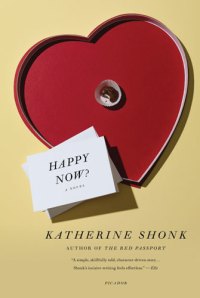 Katherine Shonk’s début novel Happy Now? also features a heroine dealing with the psychic shock caused by the end of her marriage. Claire Kessler’s husband Jay commits suicide on Valentine’s Day, leaving a book-length suicide note on the coffee table that Claire cannot bring herself to read. Claire moves in with her sister, who emotionally abandons her husband during the process. Her parents try to help too, but her overprotective father ends up trailing her every move and smothering her. Claire’s adventures in psychoanalysis become a tragicomic journey, but one handled with compassion. Shonk has an ear for dialog and the good sense not to clutter her novel with too many plots or characters.
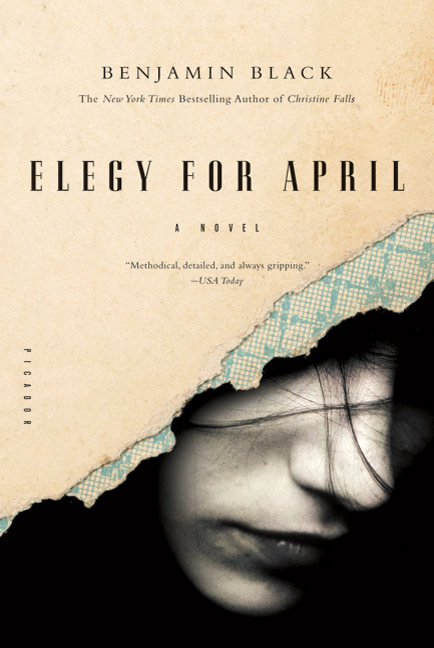 Elegy for April is the fourth novel of John Banville’s detective noir series under the pseudonym Benjamin Black. April Latimer is a doctor in conservative 1950s Dublin, whose unconventional behavior scandalizes what is essentially a big small town (her prominent Catholic family isn’t too keen that she’s dating a Nigerian man). When April disappears, her friend Phoebe Griffin enlists the help of her (sort-of) recovering alcoholic father, the brilliant pathologist Garret Quirke. Quirke’s investigation—also Phoebe’s investigation, of course—plumbs into the conservative mores of a secretive upper echelon of families, revealing hidden truths that are at times painful. Bleak, dark, and often morally ambivalent, Black’s book is best suited for those who don’t mind their mysteries delivered with ambiguity and loose ends.
The Summer Without Men, Happy Now?, and Elegy for April are all new in trade paperback this month from Picador.
 Biblioklept