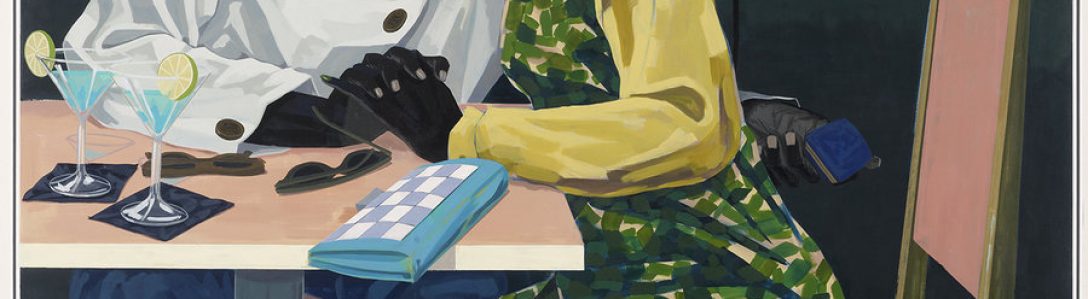
“The Magic Chalk”
by
Kobo Abe
Next door to the toilet of an apartment building on the edge of the city, in a room soggy with roof leaks and cooking vapors, lived a poor artist named Argon.
The small room, nine feet square, appeared to be larger than it was because it contained nothing but a single chair set against the wall. His desk, shelves, paint box, even his easel had been sold for bread. Now only the chair and Argon were left. But how long would these two remain?
Dinnertime drew near. “How sensitive my nose has become!” Argon thought. He was able to distinguish the colors and proximity of the complex aromas entering his room. Frying port at the butcher’s along the streetcar line: yellow ocher. A southerly wind drifting by the front of the fruit stand: emerald green. Wafting from the bakery: stimulating chrome yellow. And the fish the housewife below was broiling, probably mackerel: sad cerulean blue.
This fact is, Argon hadn’t eaten anything all day. With a pale face, a wrinkled brow, an Adam’s apple that rose and fell, a hunched back, a sunken abdomen, and trembling knees, Argon thrust both hands into his pocket and yawned three times in succession.
His fingers found a stick in his pocket.
“Hey, what’s this? Red chalk. Don’t remember it being there.”
Playing with the chalk between his fingers, he produced another yawn.
“Aah, I need something to eat.”
Without realizing it, Argon began scribbling on the wall with the chalk. First, an apple. One that looked big enough to be a meal in itself. He drew a paring knife beside it so that he could eat it right away. Next, swallowing hard as baking smells curled through the hallway and window to permeate his room, he drew bread. Jam-filled bread the size of a baseball glove. Butter-filled rolls. a loaf as large as a person’s head. He envisioned glossy browned spots on the bread. Delicious-looking cracks, dough bursting through the surface, the intoxicating aroma of yeast. Beside the bread, then, a stick of butter a large a a brick. He thought of drawing some coffee. Freshly brewed, steaming coffee. In a large jug-like cup. On a saucer, three matchbox-size sugar cubes.
“Damn it!” He ground his teeth and buried his face in his hands. “I’ve got to eat!”
Gradually, his consciousness sank into darkness. Beyond the windowpane was a bread and pastry jungle, a mountain of canned goods, a sea of milk, a beach of sugar, a beef and cheese orchard— he scampered about until, fatigued, he fell asleep.
A heavy thud on the floor and the sound of mashing crockery woke him up. The sun had already set. Pitch black. Bewildered, he glanced toward the noise and gasped. A broken cup. The spilled liquid, still steaming, was definitely a coffee, and near it where the apple, bread, butter, sugar, spoon, knife, and (luckily unbroken) the saucer. The pictures he had chalked on the wall had vanished.
“How could it…?”
Suddenly every vein in his body was wide awake and pounding. Argon stealthily crept closer.
“No, no, it can’t be. But look, it’s real. Nothing fake about smothering aroma of this coffee. And here, the bread is smooth to the touch. Be bold, taste it. Argon, don’t you believe it’s real even now? Yes, it’s real. I believe it. But frightening. To believe it is frightening. And yet, it’s real. It’s edible!”
The apple tasted like an apple (a “snow” apple). The bread tasted like bread (American flour). The butter tasted like butter (same contents as the label on the wrapper— not margarine). The sugar tasted like sugar (sweet). Ah, they all tasted like the real thing. The knife gleamed, reflecting his face.

 Biblioklept