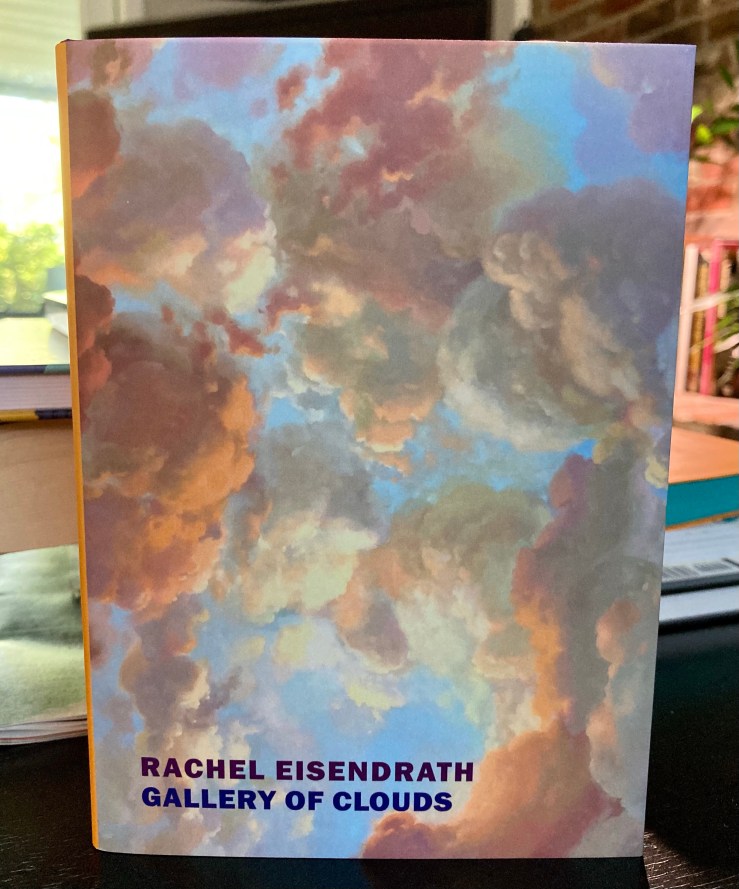
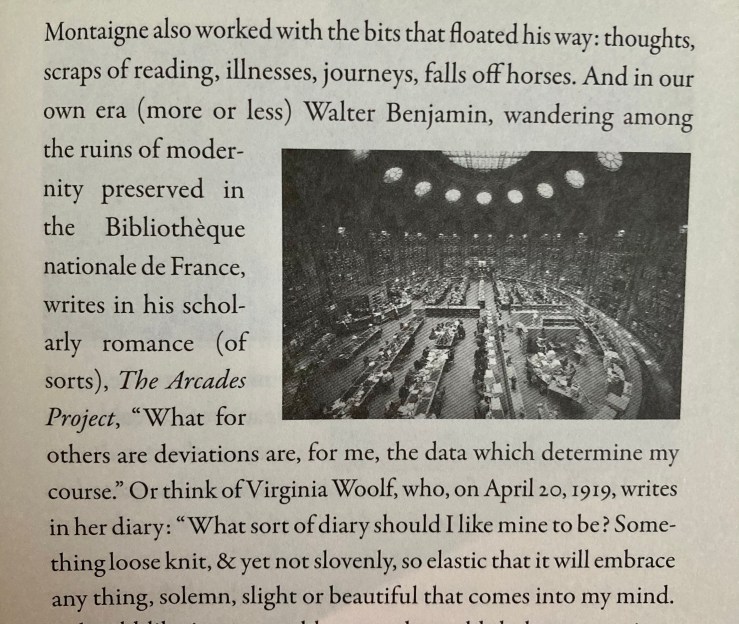
Rachel Eisendrath’s Gallery of Clouds is new in hardback (?!) from NYRB. The book showed up a few weeks ago at Biblioklept International Headquarters on a week when like six books showed up. I finally got into it the other week, and it’s cool stuff. Gallery of Clouds has a Sebaldian vibe—discursive, academic, encyclopedic, and frank, with lots of black and white photographs—but it’s also its own thing.
NYRB’s blurb:
Largely unknown to readers today, Sir Philip Sidney’s sixteenth-century pastoral romance Arcadia was long considered one of the finest works of prose fiction in the English language. Shakespeare borrowed an episode from it for King Lear; Virginia Woolf saw it as “some luminous globe” wherein “all the seeds of English fiction lie latent.” In Gallery of Clouds, the Renaissance scholar Rachel Eisendrath has written an extraordinary homage to Arcadia in the form of a book-length essay divided into passing clouds: “The clouds in my Arcadia, the one I found and the one I made, hold light and color. They take on the forms of other things: a cat, the sea, my grandmother, the gesture of a teacher I loved, a friend, a girlfriend, a ship at sail, my mother. These clouds stay still only as long as I look at them, and then they change.”
Gallery of Clouds opens in New York City with a dream, or a vision, of meeting Virginia Woolf in the afterlife. Eisendrath holds out her manuscript—an infinite moment passes—and Woolf takes it and begins to read. From here, in this act of magical reading, the book scrolls out in a series of reflective pieces linked through metaphors and ideas. Golden threadlines tie each part to the next: a rupture of time in a Pisanello painting; Montaigne’s practice of revision in his essays; a segue through Vivian Gordon Harsh, the first African American head librarian in the Chicago public library system; a brief history of prose style; a meditation on the active versus the contemplative life; the story of Sarapion, a fifth-century monk; the persistence of the pastoral; image-making and thought; reading Willa Cather to her grandmother in her Chicago apartment; the deviations of Walter Benjamin’s “scholarly romance,” The Arcades Project. Eisendrath’s wondrously woven hybrid work extols the materiality of reading, its pleasures and delights, with wild leaps and abounding grace.
 Biblioklept