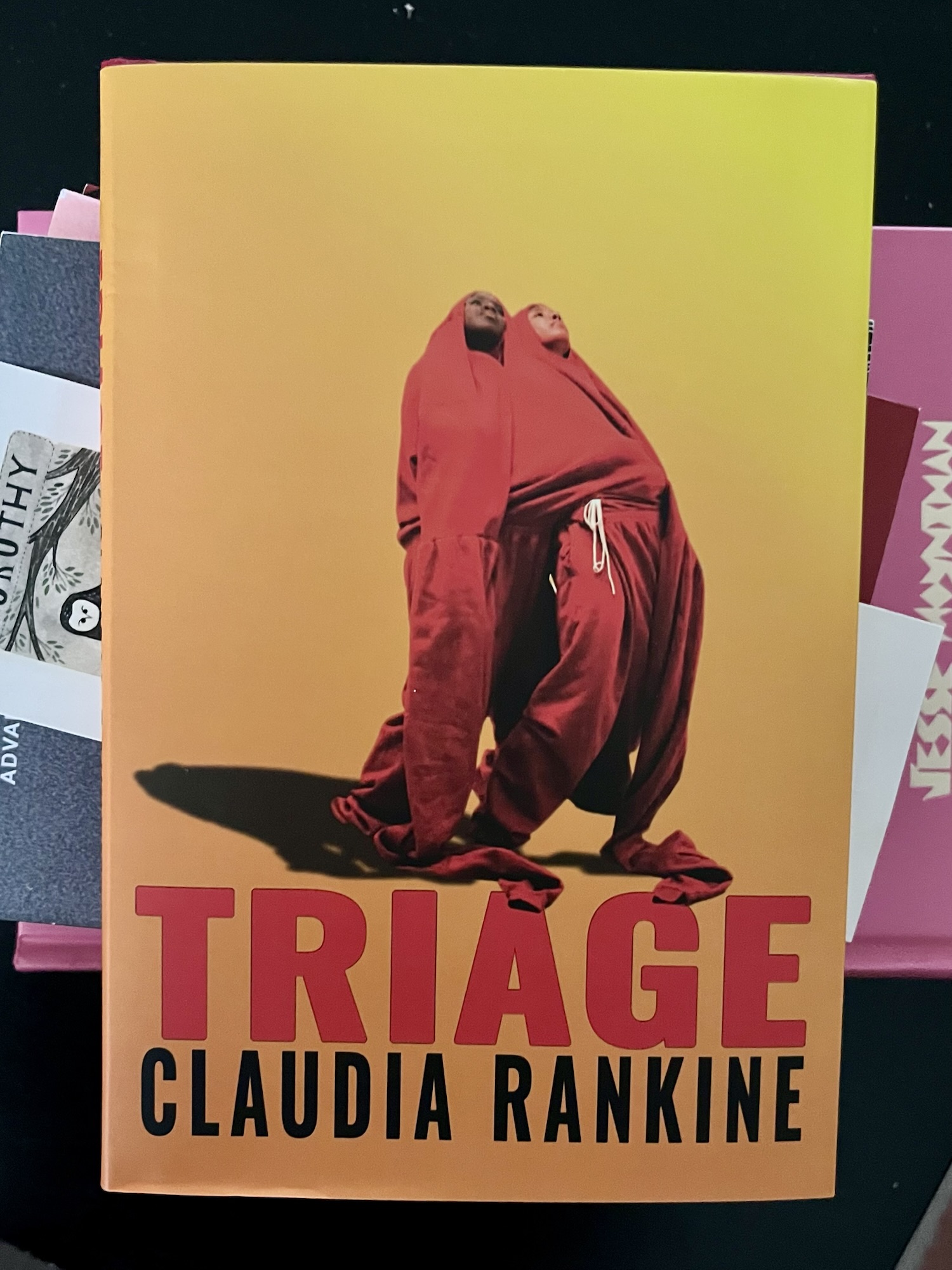
Claudia Rankine’s Triage (Book acquired, 1 Sept. 2026)

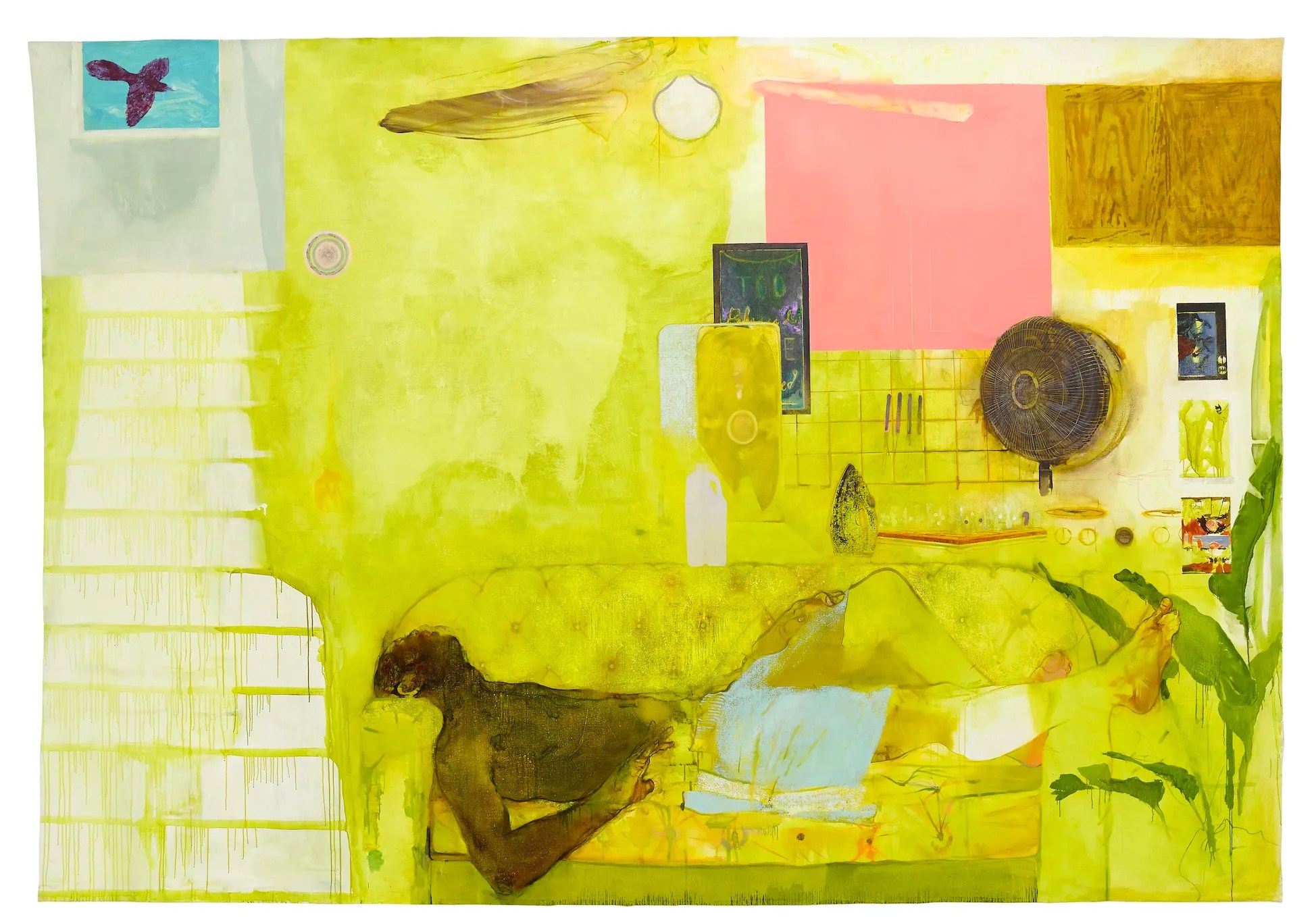
Claudia Rankine’s Triage is out now from Graywolf Press. A work of autofictive-poem-prose-essaying, Triage is larded with beautiful full-color reproductions of paintings, photographs, installations, and drawings, including this one, Jennifer Packer’s Blessed Are Those Who Mourn (Breonna! Breonna!):
Graywolf’s copy:

Claudia Rankine has widened contemporary literature with her consciousness-raising, genre-defying works. In her first book after her celebrated American trilogy, presented with full-color visuals, Rankine shifts into sustained narrative, memory, criticism, and essay to offer her most personal and emotionally resonant writing yet.

Triage follows the turbulent friendship between two composite characters, the narrator and the theorist, self-identified sisters struggling to define their wounded histories and their shared but separate lives. During college, they invent a game of collapse: Every time they see each other, they have to stop and fall to the ground. As their kinship continues off and on for decades, “collapse” takes on new meanings that are seen and felt in the violence of their pasts, artworks depicting couches where someone might ease their exhaustion, the ongoing devastation in Gaza, and the antagonism of their conversation and their love for each other.

Triage is an argument for the necessity of grieving and the demand for action in our time of relentless loss. “No matter our posture,” Rankine writes, “we are all among the rubble.” This is a book for those complicated but beautiful friendships that we come to rely on to unsettle us, to make us better.
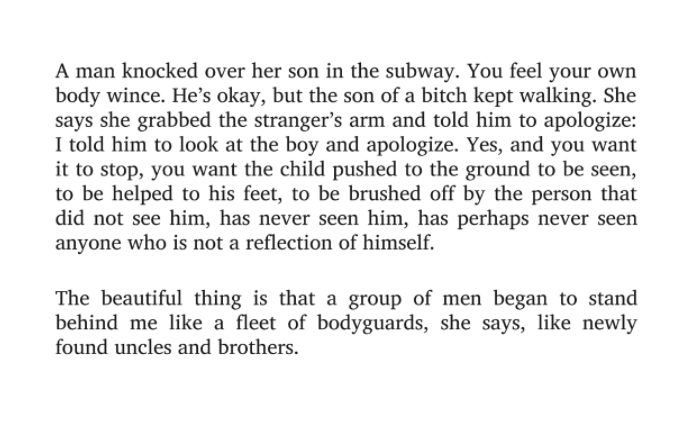
Look at the boy and apologize | Claudia Rankine

At the airport-security checkpoint on my way to visit my grandmother | Claudia Rankine

From Don’t Let Me Be Lonely

by

Claudia Rankine


At the airport-security checkpoint on my way to visit my grandmother, I am asked to drink from my water bottle.

This water bottle?

That’s right. Open it and drink from it.

/

At the airport-security checkpoint on my way to visit my grandmother, I am asked to take off my shoes.

Take off my shoes?

Yes. Both Please.

/

At the airport-security checkpoint on my way to visit my grandmother, I am asked if I have a fever.

A fever? Really?

Yes. Really.

/

My grandmother is in a nursing home. It’s not bad. It doesn’t smell like pee. It doesn’t smell like anything. When I go to see her, as I walk through the hall past the common room and the nurses’ station, old person after old person puts out his or her hand to me. Steven, one says. Ann, another calls. It’s like being in a third-world country, but instead of food or money you are what is wanted, your company. In third-world coun­tries I have felt overwhelmingly American, calcium-rich, privileged, and white. Here, I feel young, lucky, and sad. Sad is one of those words that has given up its life for our country, it’s been a martyr for the American dream, it’s been neutralized, co-opted by our culture to suggest a tinge of discomfort that lasts the time it takes for this and then for that to happen, the time it takes to change a channel. But sadness is real because once it meant something real. It meant dignified, grave; it meant trustworthy; it meant exceptionally bad, deplor­able, shameful; it meant massive, weighty, forming a compact body; it meant falling heavily; and it meant of a color: dark. It meant dark in color, to darken. It meant me. I felt sad.

Claudia Rankine reading from Citizen

The new therapist specializes in trauma counseling | Claudia Rankine

From Citizen by Claudine Rankine


/

The new therapist specializes in trauma counseling. You have only ever spoken on the phone. Her house has a side gate that leads to a back entrance she uses for patients. You walk down a path bordered on both sides with deer grass and rosemary to the gate, which turns out to be locked.

At the front door the bell is a small round disc that you press firmly. When the door finally opens, the woman standing there yells, at the top of her lungs, Get away from my house. What are you doing in my yard?

It’s as if a wounded Doberman pinscher or a German shepherd has gained the power of speech. And though you back up a few steps, you manage to tell her you have an appointment. You have an appointment? she spits back. Then she pauses. Everything pauses. Oh, she says, followed by, oh, yes, that’s right. I am sorry.

I am so sorry, so, so sorry.

/


More…