Storm Kings (Book Acquired Some Time Last Month)

20130414-153718.jpg

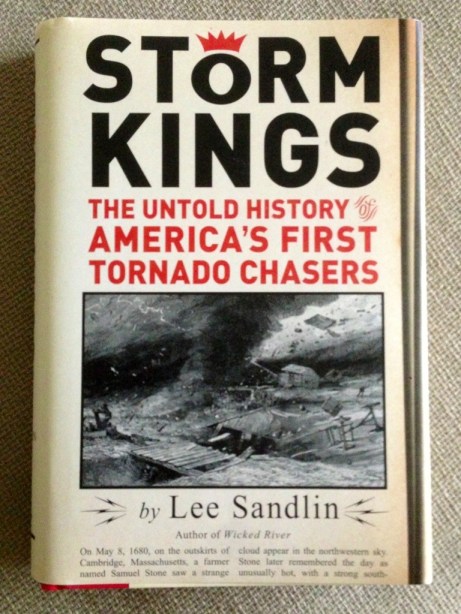
I liked Lee Sandlin’s last book Wicked River, so I took interest when a reader copy of his  new book Storm Kings: The Untold History of America’s First Tornado Chasers showed up at Biblioklept World Headquarters a few months ago. I have no special interest in tornadoes or meteorology, but so far Storm Kings has intrigued me into reading more.
20130414-153724.jpg

Publisher Random House’s blurb:

From the acclaimed author of Wicked River comes Storm Kings, a riveting tale of supercell tornadoes and the quirky, pioneering, weather-obsessed scientists whose discoveries created the science of modern meteorology.

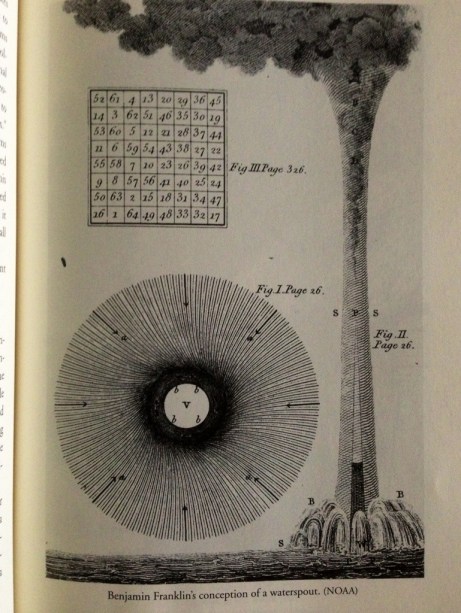
While tornadoes have occasionally been spotted elsewhere, only the central plains of North America have the perfect conditions for their creation. For the early settlers the sight of a funnel cloud was an unearthly event. They called it the “Storm King,” and their descriptions bordered on the supernatural: it glowed green or red, it whistled or moaned or sang. In Storm Kings, Lee Sandlin explores America’s fascination with and unique relationship to tornadoes. From Ben Franklin’s early experiments to the “great storm war” of the nineteenth century to heartland life in the early twentieth century, Sandlin re-creates with vivid descriptions some of the most devastating storms in America’s history, including the Tri-state Tornado of 1925 and the Peshtigo “fire tornado,” whose deadly path of destruction was left encased in glass.

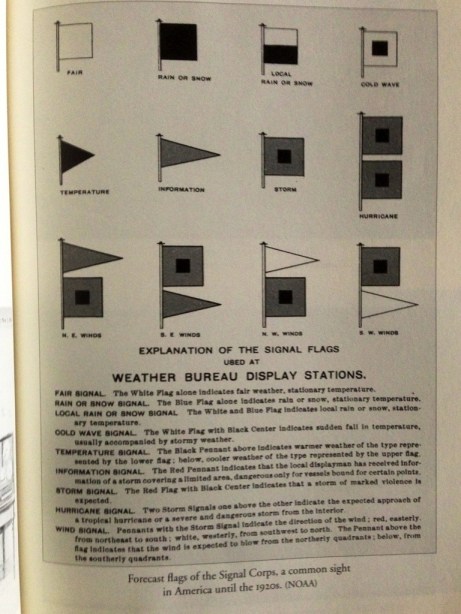
Drawing on memoirs, letters, eyewitness testimonies, and archives, Sandlin brings to life the forgotten characters and scientists who changed a nation—including James Espy, America’s first meteorologist, and Colonel John Park Finley, who helped place a network of weather “spotters” across the country. Along the way, Sandlin details the little-known but fascinating history of the National Weather Service, paints a vivid picture of the early Midwest, and shows how successive generations came to understand, and finally coexist with, the spiraling menace that could erase lives and whole towns in an instant.
20130414-153731.jpg

“…however baby man may brag of his science and skill…” (Moby-Dick)

But though, to landsmen in general, the native inhabitants of the seas have ever been regarded with emotions unspeakably unsocial and repelling; though we know the sea to be an everlasting terra incognita, so that Columbus sailed over numberless unknown worlds to discover his one superficial western one; though, by vast odds, the most terrific of all mortal disasters have immemorially and indiscriminately befallen tens and hundreds of thousands of those who have gone upon the waters; though but a moment’s consideration will teach, that however baby man may brag of his science and skill, and however much, in a flattering future, that science and skill may augment; yet for ever and for ever, to the crack of doom, the sea will insult and murder him, and pulverize the stateliest, stiffest frigate he can make; nevertheless, by the continual repetition of these very impressions, man has lost that sense of the full awfulness of the sea which aboriginally belongs to it.

The first boat we read of, floated on an ocean, that with Portuguese vengeance had whelmed a whole world without leaving so much as a widow. That same ocean rolls now; that same ocean destroyed the wrecked ships of last year. Yea, foolish mortals, Noah’s flood is not yet subsided; two thirds of the fair world it yet covers.

Wherein differ the sea and the land, that a miracle upon one is not a miracle upon the other? Preternatural terrors rested upon the Hebrews, when under the feet of Korah and his company the live ground opened and swallowed them up for ever; yet not a modern sun ever sets, but in precisely the same manner the live sea swallows up ships and crews.

But not only is the sea such a foe to man who is an alien to it, but it is also a fiend to its own off-spring; worse than the Persian host who murdered his own guests; sparing not the creatures which itself hath spawned. Like a savage tigress that tossing in the jungle overlays her own cubs, so the sea dashes even the mightiest whales against the rocks, and leaves them there side by side with the split wrecks of ships. No mercy, no power but its own controls it. Panting and snorting like a mad battle steed that has lost its rider, the masterless ocean overruns the globe.

Consider the subtleness of the sea; how its most dreaded creatures glide under water, unapparent for the most part, and treacherously hidden beneath the loveliest tints of azure. Consider also the devilish brilliance and beauty of many of its most remorseless tribes, as the dainty embellished shape of many species of sharks. Consider, once more, the universal cannibalism of the sea; all whose creatures prey upon each other, carrying on eternal war since the world began.

Consider all this; and then turn to this green, gentle, and most docile earth; consider them both, the sea and the land; and do you not find a strange analogy to something in yourself? For as this appalling ocean surrounds the verdant land, so in the soul of man there lies one insular Tahiti, full of peace and joy, but encompassed by all the horrors of the half known life. God keep thee! Push not off from that isle, thou canst never return!

From “Brit,” Chapter 58 of Herman Melville’s Moby-Dick