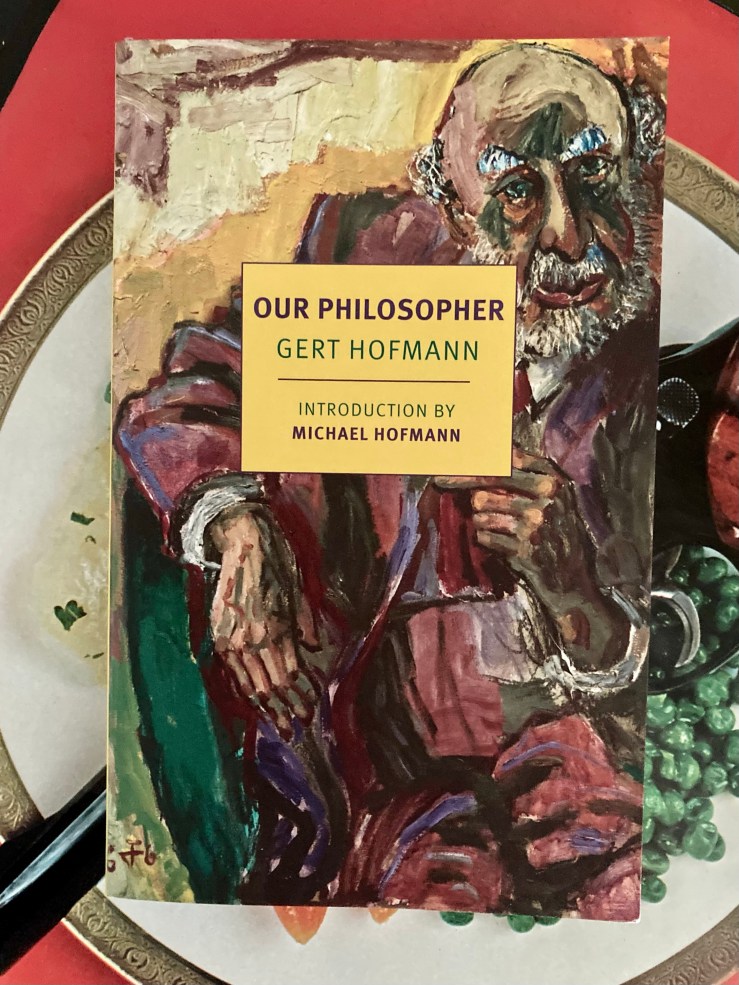
Gert Hofmann’s 1986 novel Veilchenfeld is forthcoming in the U.S. in an English translation by Eric Mace-Tessler, The new edition is from NYRB. Their back cover copy:
The time is the 1930s. Our philosopher is Herr Veilchenfeld, a renowned thinker and distinguished professor, who, after his sudden dismissal from the university, has retired to live quietly in a country town in the east of Germany. Our narrator is Hans, a clever and inquisitive boy. He relates a mix of things he witnesses himself and things he hears about from his father, the town doctor, who sees all sorts of people as he makes his rounds, even Veilchenfeld, with his troubled heart. Veilchenfeld is in decline, it’s true—he keeps ever more to himself—but the town is in ever better shape. After the defeat of the Great War and the subsequent years of poverty, things are looking up. The old, worn people are heartened to see it. The young are exhilarated. It is up to them to promote and patrol this new uplifting reality—to make it safe from the likes of Veilchenfeld, whose very existence is an affront to it. And so the doctor listens, and young Hans looks on.
And novelist Ian McEwan’s blurb:
The best novel I’ve read that describes events through the eyes of a child is little known and a minor masterpiece….Hans, the son of a small-town doctor, watches as the life of his fascinating neighbor, Professor Veilchenfeld, unravels and is then destroyed…In this learned old man, Hofmann condenses the industrialized extermination of millions…To recount it through the limited and fragmented understanding of an innocent child was an inspired authorial choice.
 Biblioklept