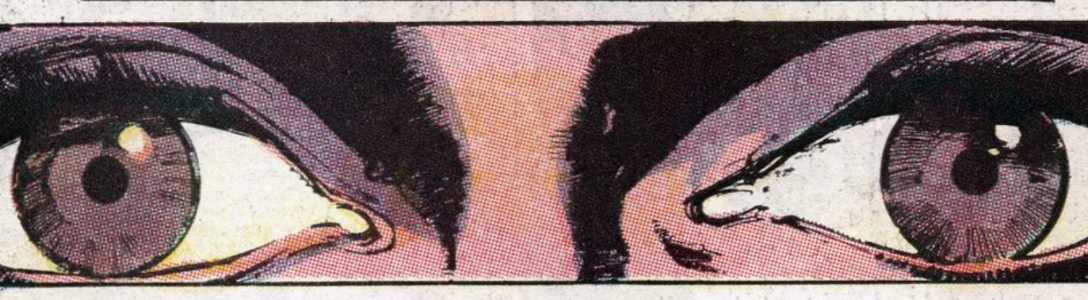
“Soliloquy on a Park Bench” by Conrad Aiken
The model for the afternoon hour was an Italian boy–about her own age, she thought. His face had a heavy beauty, sombre as that of the sleeping Medusa, particularly in profile; seen fully, it was a little stupid. But his torso was what most delighted her, and this she drew with careful strong strokes, luxuriating in a new sense of precision. Her pleasure in this was exquisite, was prolonged. “Extraordinary!” she murmured, and found herself oddly frowning at the dark beauty of the skin, the well-muscled shoulders, and arched ribs, in the April sunlight that slanted from the half. shaded window. She was sorry when the hour was over. Miss N, thrusting off her apron, paused beside her and asked if she were going “down town.” She repressed a shade of annoyance–though she liked Miss N–and replied vaguely that she “had some things to do.” This was not true, and she felt a slight contrition when she saw that Miss N was unconvinced and a little hurt. However! . . . She put on her hat and escaped into the soft afternoon.
The parkway invited her–it was vague, it was hazily green with new leaves and buds, the muddy river gleamed sleepily here and there as it curved among flat gardens and under small stone arches, and the drowsy quackings and laconic comments of waterfowls seemed only to add to the immense and melancholy stillness. She caressed affectionately, with a fugitive hand, as she walked, the low stone wall that led to a ridiculously conceited little bridge. She slid two fingers over the white flank of a birch. Further on, she touched her palm, and scratched it, against a barberry frond, on which two elfin red-peppers still hung. . . . Why had she rebuffed Miss N? . . . Well, really, one wanted, sometimes, to be alone. Particularly when one was–what? . . . Her eyes wandered from the word, she paused to watch a duck stand on his head in the still water, and then walked on absorbed. The benches here were too crowded. A nursemaid scolded a child, lifting an angry round eye from her knitting. A small boy was digging in the gravel with a bit of broken glass, murmuring “It’s like this–it’s like this.” A bored perfumed lady waited patiently for her Pomeranian; which suddenly twinkled after her as if on wire springs. . . . The bells in St Matthew’s Church began striking five, and it seemed to her that the slow deep tones hung afterwards among the trees and over the water like a mist. White and purple crocuses were sunning themselves in a corner by a wall–absurd! She felt suddenly like laughing at everything, and then, just as suddenly, for no reason, felt unhappy, as if she had a bird shut ,in her heart who wanted to escape. She found a deserted bench and sat down, at the end nearest the water. Grackles made scraping sounds in the maple tree over her head–scolding at sparrows. Cruel birds, grackles! . . . Who was it that had told her of seeing a grackle pursue a sparrow tirelessly till he had worn it out, and then stab it to death on the ground? . . . How horrible, and in April . . . There was a grackle now. He walked awkwardly by the water’s edge–a bedraggled fellow, getting on in years; but what a beautiful iridescence on his black feathers! . . . It was Fred Thomas who had told her. He always came out to smoke his pipe here after lunch. A curious, a nice thing for a man to do, an unexpected concession–as if the grackle should pause and admire a crocus! She laughed to herself, and half shut her eyes to make a picture of the water, with a round cold cloud in it, and part of the stone arch of a bridge. Continue reading ““Soliloquy on a Park Bench” — Conrad Aiken”
 Biblioklept