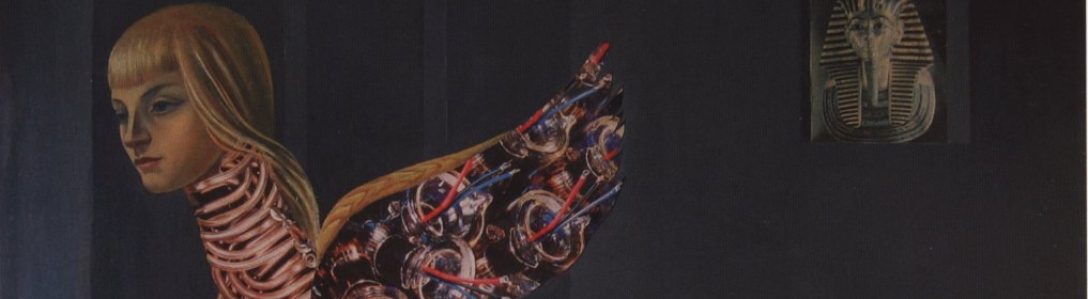
“The Priest”
by
William Faulkner
His novitiate was almost completed. Tomorrow he would be confirmed, tomorrow he would achieve that complete mystical union with the Lord, which he had so passionately desired. In his studious youth he had been led to expect it daily; he had hoped to attain it through confession, through talk with those who seemed to have it; through living a purging and a self denial until the earthly fires which troubled him had burned themselves out with time. He passionately desired a surcease and an easing of the appetites and hunger of his blood and flesh, which he had been taught to believe were
harmful: he expected something like sleep, a condition to which he would attain in which those voices in his blood would be stilled. Or rather, chastened. Not to trouble him more, at least: an exalted plane wherein the voices would be lost, sounding fainter and fainter, soon to be but a meaningless echo among the canyons and majestic heights of the glory of God.
But he had not gotten it. After talk with a father in his seminary he could return to his dormitory in a spiritual ecstasy, an emotional state in which his body was but the signboard bearing a flaming message to shake the world. His doubts were then allayed; he had neither doubt nor thought. The end of life was clear: to suffer, to use his blood and bone and flesh as a means for attaining eternal glory—a thing magnificent and astounding, forgetting that history and not the age made Savonarolas and Thomas a Beckets. To be of the chosen despite the hungers and gnawings of flesh, to attain a spiritual union with Infinite, to die—how could physical pleasure toward which his blood cried, be compared with this?
But, once with his fellow candidates, how soon was this forgotten! Their points of view, their callousness, were enigma to him. How could one be of the world and not of the world at the same time? And the dreadful doubt that perhaps he was missing something, that perhaps after all life was only what one could make of his short three score and ten of time, might be true. Who knows? who could know? There was Cardinal Bembo living in Italy in an age like silver, like an imperishable flower, creating a cult of love beyond the flesh, purged of all torturings of flesh. And was not this but an excuse, a palliation for this terrible fearing and doubting? was not the life of that long dead, passionate man such a one as his own: a fabric of fear and doubt and a passionate grasping after something beautiful and fine? Even something beautiful and fine meant to him a Virgin not calm with sorrow and fixed like a watchful benediction in the western sky; but a creature young and slender and helpless and (somehow) hurt, who had been taken by life and toyed with and tortured—a little ivory creature reft of her first born and raising her arms vainly upon a dying evening. In other words, a woman, with all of woman’s passionate grasping for today, for the hour itself; knowing that tomorrow may never come and that today alone signifies, because today alone is hers. They have taken a child and made of her a symbol of man’s old sorrows, he thought; and I too am a child reft of his childhood. Continue reading “Read “The Priest,” a very early short story by William Faulkner”
 Biblioklept