(A Very Beautiful) Book Acquired, 9.27.2011

20111004-142338.jpg

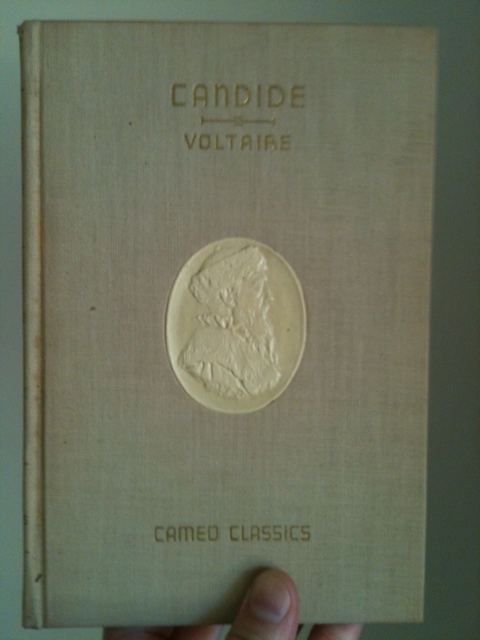
What a wonderful present: a 1930 Grosset & Dunlap edition Candide (read our review of Candide). Received it last week, but I’ve been to busy to photograph it. Has a nice slipcase (above), and the cover sports a tactile cameo of Gutenberg in profile—

20111004-142346.jpg

20111004-142354.jpg

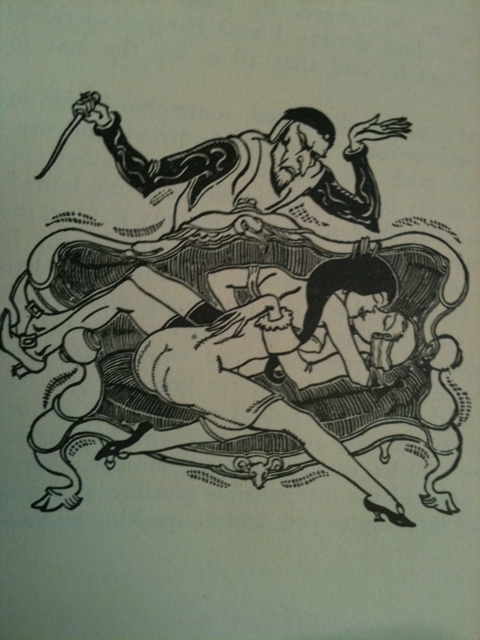
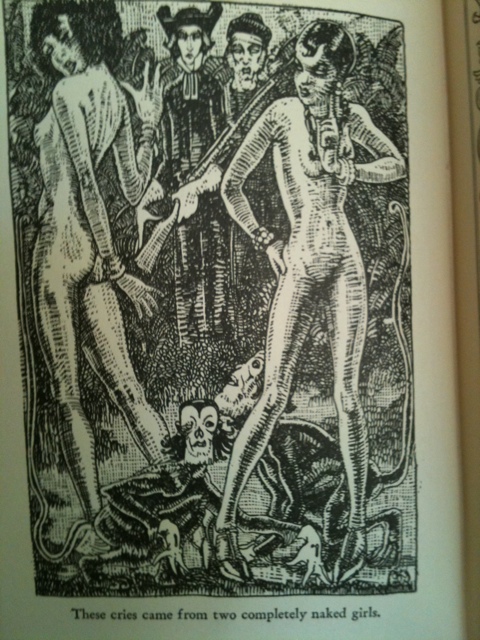
Illustrations are by Mahlon Blaine, and inevitably involve sex and/or violence—like this one below—

20111004-143419.jpg

There a number of handsome full page illustrations as well. Just lovely.

20111004-143428.jpg

Nobel Lit Odds, 10.04.2011

Via The New Yorker’s Book Bench blog, current odds (and yeah, we know, they change) from Ladbrokes for the 2011 Nobel Prize in Literature (the oddsmaker’s name is Magnus Puke, by the by).

Adonis (Syria): 4/1
Tomas Tranströmer (Sweden): 7/1
Haruki Murakami (Japan): 8/1
Bob Dylan (U.S.): 10/1
Assia Djebar (Algeria): 12/1
Peter Nadas (Hungary): 12/1
Ko Un (South Korea): 14/1
Les Murray (Australia): 16/1
Thomas Pynchon (U.S.): 20/1
Philip Roth (U.S.): 20/1
Nuruddin Farah (Somalia): 20/1

While it’s easy to dismiss literary competitions as trifling or even crass, they do much—particularly high profile ones like the Nobel or the Pulitzer—to augment the readership of these authors, cement the winner’s canonical place, and expose the winner to a larger audience. They also help writers get paid better, which is a good thing.

The odds don’t really mean that much of course—this time last year, Cormac McCarthy was the favorite with an 8:1 lead.


“We Are the Origin of Evil” — Carl Jung on Death, Nihilism, and Humanity

“Religion Would Thus Be the Universal Obsessional Neurosis of Humanity” — Sigmund Freud

From Freud’s The Future of an Illusion, which should be required reading for any thinking person—

We know that a human child cannot successfully complete its development to the civilized stage without passing through a phase of neurosis sometimes of greater and sometimes of less distinctness. This is because so many instinctual demands which will later be unserviceable cannot be suppressed by the rational operation of the child‘s intellect but have to be tamed by acts of repression, behind which, as a rule, lies the motive of anxiety. Most of these infantile neuroses are overcome spontaneously in the cause of growing up, and this is especially true of the obsessional neuroses of childhood. The remainder can be cleared up later still by psycho-analytic treatment. In just the same way, one might assume, humanity as a whole, in its development through the ages, fell into states analogous to the neuroses,‘ and for the same reasons – namely because in the times of its ignorance and intellectual weakness the instinctual renuncia­tions indispensable for man‘s communal existence had only been achieved by it by means of purely affective forces. The precipitates of these processes resembling repression which took place in prehistoric times still remained attached to civilization for long periods. Religion would thus be the universal obsessional neurosis of humanity; like the obsessional neurosis of children, it arose out of the Oedipus complex, out of the relation to the father. If this view is right, it is to be supposed that a turning-away from religion is bound to occur with the fatal inevitability of a process of growth, and that we find our­selves at this very juncture in the middle of that phase of development.