
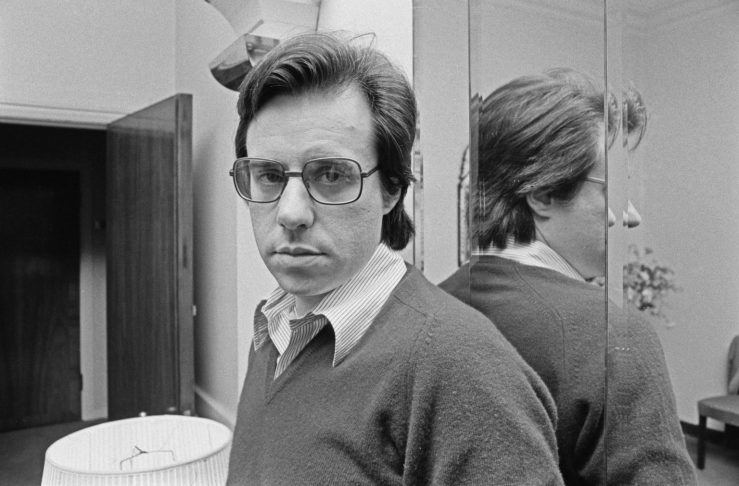
RIP Peter Bogdanovich, 1939-2022
Peter Bogdanovich died today at the age of 82.
Bogdanovich was an actor, writer, producer, and film critic, but will most likely be remembered as a film director.
The first Bogdanovich film I saw was Mask (1985) starring Eric Stoltz and Cher. I was probably eight or nine, and I did not know it was a “Peter Bogdanovich film.” Mask was one of the many films my grandfather taped from HBO, Disney, or Cinemax, and mailed to my family on VHS cassettes, little bundles of cinema my brother and I consumed repeatedly and indiscriminately in our remote village in the highlands of Papua New Guinea. Mask is one of the first films I ever saw that genuinely hurt my feelings.
Years later I’d see Bogdanovich’s most celebrated film, The Last Picture Show (1971), and it would also hurt my feelings. I was maybe eighteen or nineteen and the film just shattered my stupid heart (Cybill Shepherd as Jacy Farrow did something very particular to me, forever). This was the first time I knew I was watching a “Peter Bogdanovich film”—I’d learned about the New Hollywood guys and even seen some of the film stuff he’d written. (It would be years later until I realized that he was behind Noises Off (1992), which I’d watched as a VHS rental with my grandmother one Saturday night.)
Paper Moon (1973), starring real-life father and daughter Ryan and Tatum O’Neal is the sweetest (yet still a little heart-breaking) film I’ve seen by Bogdanovich, and maybe the best starting place for anyone interested in his work. There’s a touch of De Sica’s The Bicycle Thief in it–a kind of gritty neorealism that hums alongside the film’s tender core.
I found some of Bogdanovich’s films less successful. His adaptation of Henry James’s novel Daisy Miller (1974) doesn’t work and the screwball farce What’s Up Doc? (1972) is never as good as the films it pays homage to. (Avoid Texasville (1990), the sequel to The Last Picture Show, at all costs. It’s like The Two Jakes, by which I mean, a bad sequel to a great film, and it should never have happened.) But even his failures are far more interesting than most basic Hollywood fare.
Bogdanovich was also great in bit parts in film and TV. His perhaps most notable performance was playing Dr. Melfi’s therapist Dr. Kupferberg on The Sopranos. He was also the voice of the DJ in Tarantino’s Kill Bill films, perhaps a nod to his voiceover work in The Last Picture Show, where he also played a DJ.
For me though, Bogdanovich’s most significant acting role is that of director Brooks Otterlake in Orson Welles’ film The Other Side of the Wind (2018). I wrote “Orson Welles’ film” in the previous sentence, but that’s not quite true–The Other Side of the Wind is a bizarre beautiful mess of cinema spanning four decades. It’s a film about film (about film about film…), and Bogdanovich was instrumental in getting it finally released a few years ago.
Bogdanovich’s work in finally bringing Welles’ lost classic to screens is emblematic of his filmmaking career—a filmmaker in love with film, an artist enamored of film as art who came to prominence during the New Hollywood movement that rejected film as commerce. While so much of what makes it to theaters (and streaming platforms) today is simply “content,” or established “intellectual property” that execs know will do numbers, Bogdanovich’s spirit (and the New Hollywood DNA) inheres in current filmmakers who bear his influence, like the Safdie brothers, Sofia Coppola, Noah Baumbach, Wes Anderson, and Quentin Tarantino. That influence will continue to ripple forward, and I hope that we get more films that will disturb us, hurt our feelings, and break our hearts.
 Biblioklept