
Portrait of a Girl, c. 1938 by John Downton (1906-1991)

Portrait of a Girl, c. 1938 by John Downton (1906-1991)

, 2020 by Nicola Verlato (b. 1965)
Then, incomprehensibly, he began to make faces that in some way linked him to the wife of the writer from Mainz, to such a degree that Bubis thought they must be brother and sister and only thus could one fully understand the presence of the writer and his wife at the meal. It was also possible, thought Bubis, that they were lovers, because it was common knowledge that lovers often began to resemble each other, usually in their smiles, their opinions, their points of view, in short, the superficial trappings that all human beings are obliged to bear until their deaths, like the rock of Sisyphus, yes Sisyphus, known as the craftiest of men, son of Aeolus and Enarete, founder of the city of Ephyra, which is the old name for Corinth, a city that the good Sisyphus turned into the staging ground of his happy misdeeds, because with his characteristic nimbleness of body and intellectual inclination to see every turn of fate as a chess problem or a detective story to unravel, and his instinct for laughter and jokes and jests and cracks and quips and gags and pranks and punch lines and spoofs and stories and gibes and taunts and send-ups and satires, he turned to theft, in other words parting all passersby from their belongings, even going so far as to steal from his neighbor Autolycus, also a thief, perhaps with the remote hope that one who steals from a thief is granted one hundred years of forgiveness, and at the same time smitten by his neighbor’s daughter, Anticlea, because Anticlea was very beautiful, a treat, but the girl had an official suitor, she was promised to Laertes, of subsequent fame, which didn’t daunt Sisyphus, who could count on the complicity of the girl’s father, the thief Autolycus, whose admiration for Sisyphus had sprung up like the regard of an objective and honorable artist for another artist of superior gifts, so that even though it could be said that as a man of honor he remained true to his promise to Laertes, he didn’t look unkindly upon the romantic attentions Sisyphus lavished on his daughter or treat them as disrespect or mockery of his future son-in-law, and in the end his daughter married Laertes, or so it’s said, but only after surrendering to Sisyphus one or two or five or seven times, possibly ten or fifteen times, always with the collusion of Autolycus, who wanted his neighbor to plant the seed of a grandchild as clever as Sisyphus, and on one of these occasions Anticlea was left with child and nine months later, now the wife of Laertes, her son would be born, the son of Sisyphus, called Odysseus or Ulysses, who in fact turned out to be just as clever as his father, though Sisyphus never gave him a thought and continued to live his life, a life of excesses and parties and pleasure, during which he married Merope, the dimmest star in the Pleiades precisely because she married a mortal, a miserable mortal, a miserable thief, a miserable gangster in thrall to his excesses, blinded by his excesses, among which not least was the seduction of Tyro, the daughter of Sisyphus’s brother Salmoneus, whom Sisyphus pursued not because he was interested in Tyro, not because Tyro was particularly sexy, but because Sisyphus hated his own brother and wanted to cause him pain, and for this deed, after his death, he was condemned in hell to push a stone to the top of a hill only to watch it roll down to the bottom and then push it back up to the top of the hill and watch it roll again to the bottom, and so on eternally, a bitter punishment out of all proportion to his crimes or sins, the vengeance of Zeus, it’s said, because on a certain occasion Zeus passed through Corinth with a nymph he had kidnapped, and Sisyphus, who was smarter than a whip, seized his chance, and when Asopus, the girl’s father, came by in desperate search of his daughter, Sisyphus offered to give him the name of his daughter’s kidnapper, but only if Asopus made a fountain spring up in the city of Corinth, which shows that Sisyphus wasn’t a bad citizen or perhaps he was thirsty, to which Asopus agreed and the fountain of crystalline waters sprang up and Sisyphus betrayed Zeus, who, in a blind rage, sent him ipso facto to Thanatos, or death, but Sisyphus was too much for Thanatos, and in a masterstroke perfectly in keeping with his craftiness and sense of humor he captured Thanatos and threw him in chains, a feat within reach of very few, truly very few, and for a long time he kept Thanatos in chains and during all that time not a single human being died on the face of the earth, a golden age in which men, though still men, lived free of the anxiety of death, in other words, free of the anxiety of time, because now they had more than enough time, which is perhaps what distinguishes a democracy, spare time, surplus time, time to read and time to think, until Zeus had to intervene personally and Thanatos was freed and then Sisyphus died.
But the faces Junge was making didn’t have anything to do with Sisyphus, thought Bubis.
From “The Part About Archimboldi,” 2666, by Roberto Bolaño in translation by Natasha Wimmer.
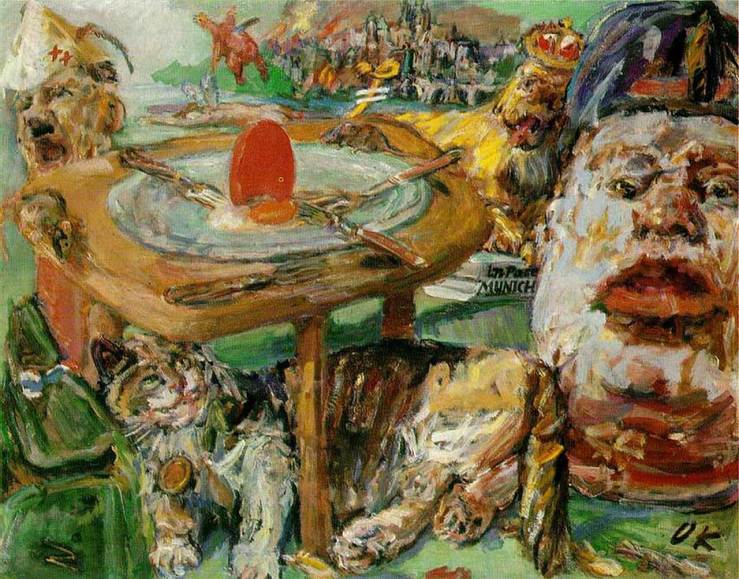
The Red Egg, 1941 by Oskar Kokoschka (1886-1980)
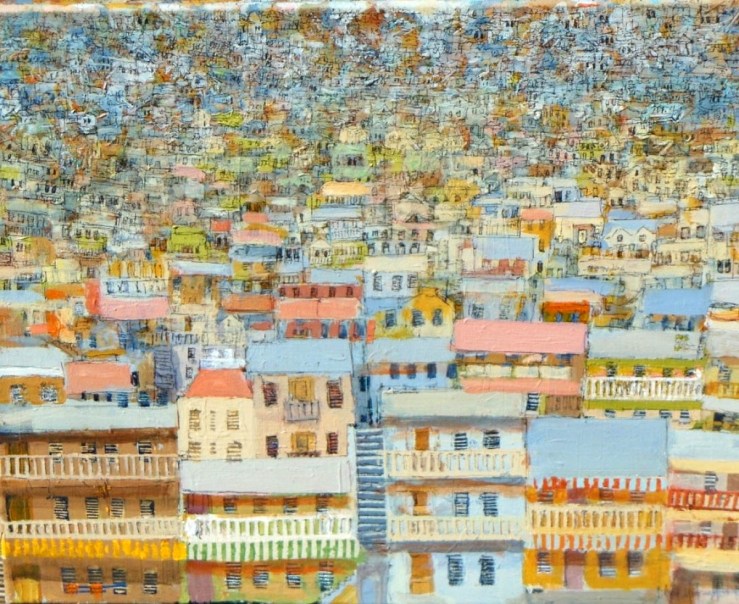
Chaos XXLIII by Michael Palmer (b. 1942)
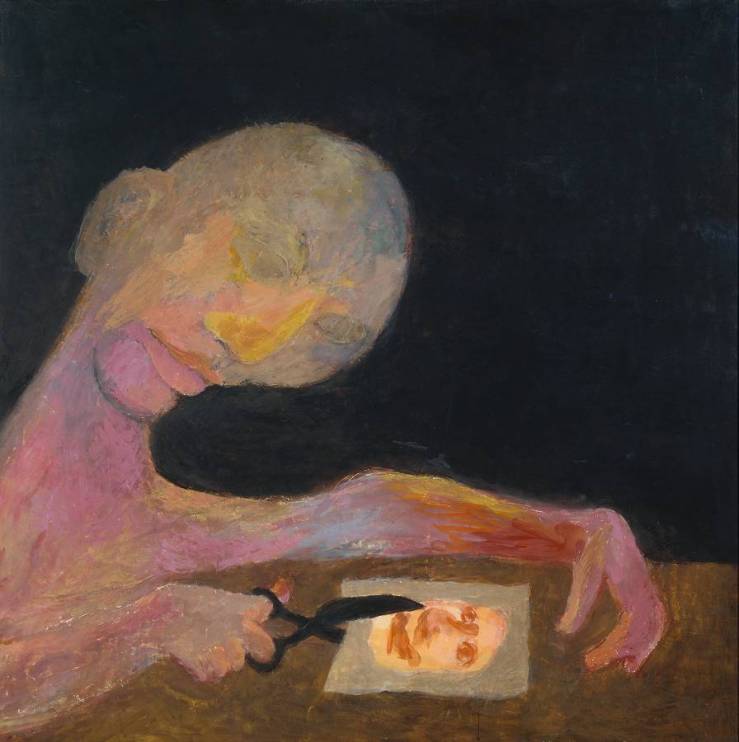
Person Cutting an Image, 1965-71 by Ken Kiff (1935-2001)
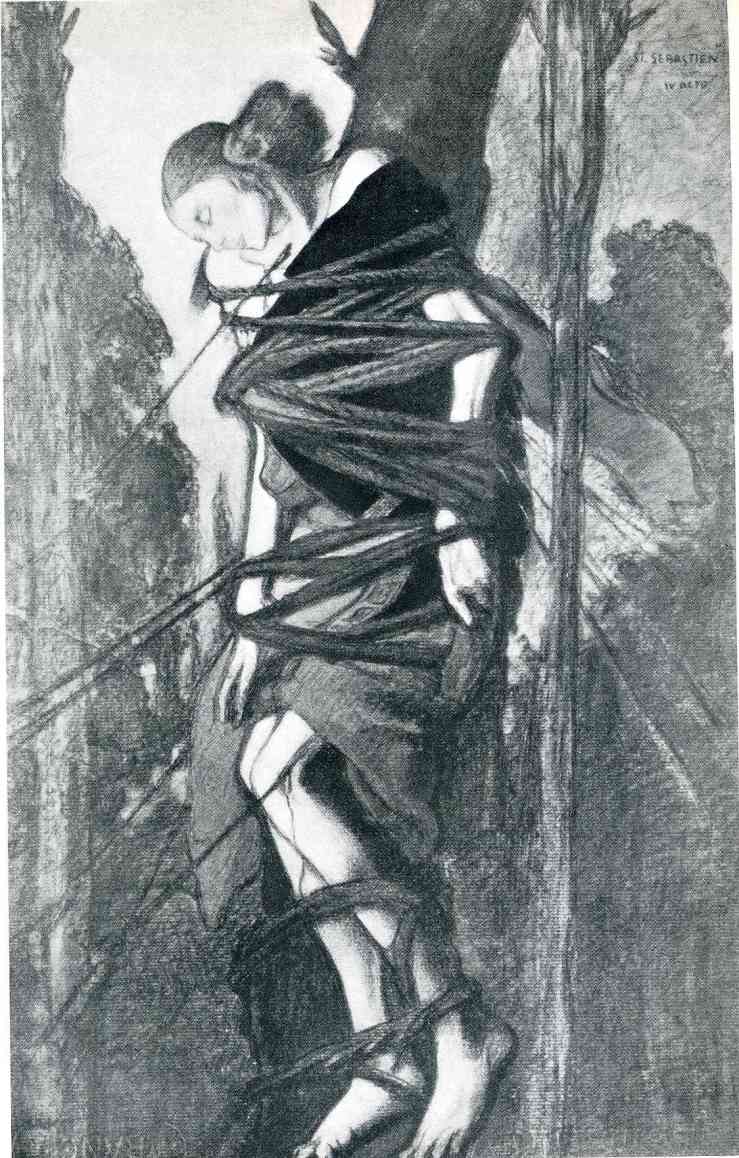
St. Sebastian by Leon Bakst (1866-1924)

Submission, 2021 by Jesse Mockrin (b. 1981)

Death by Gun (Or April 14, 1865; November 22, 1963; November 24, 1963; February 21, 1965; August 1, 1966; April 4, 1968; June 3, 1968; June 5, 1968; November 27, 1978; December 8, 1980; September 25, 1982; July 18, 1984; August 20, 1986; October 16, 1991; April 8, 1994; March 30, 1995; September 7, 1996; March 9, 1997; April 20, 1999; July 29, 1999; February 20, 2005; November 6, 2006; April 16, 2007; April 3, 2009; November 5, 2009,m; February 26, 2012; July 20, 2012; August 9, 2014; November 22, 2014; June 17, 2015; July 23, 2015; October 1, 2015; June 12, 2016; July 6, 2016; October 1, 2017; December 14, 2012; December 2, 2015; November 5, 2017; February 14, 2018), 2018 by Cynthia Daignault (b. 1978)
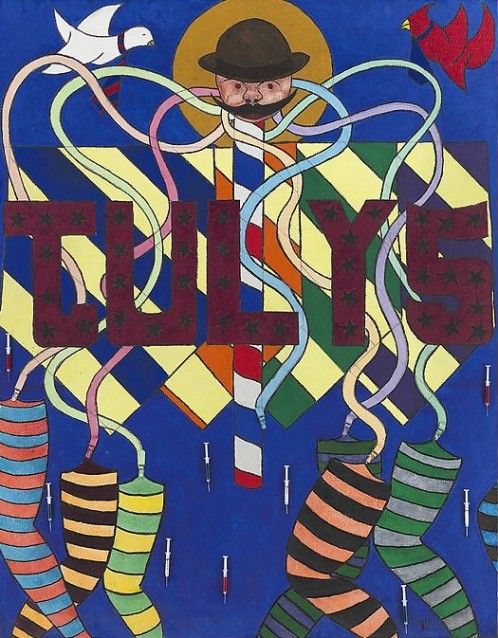
July 5th, 1982 by William N. Copley (1919-1996)
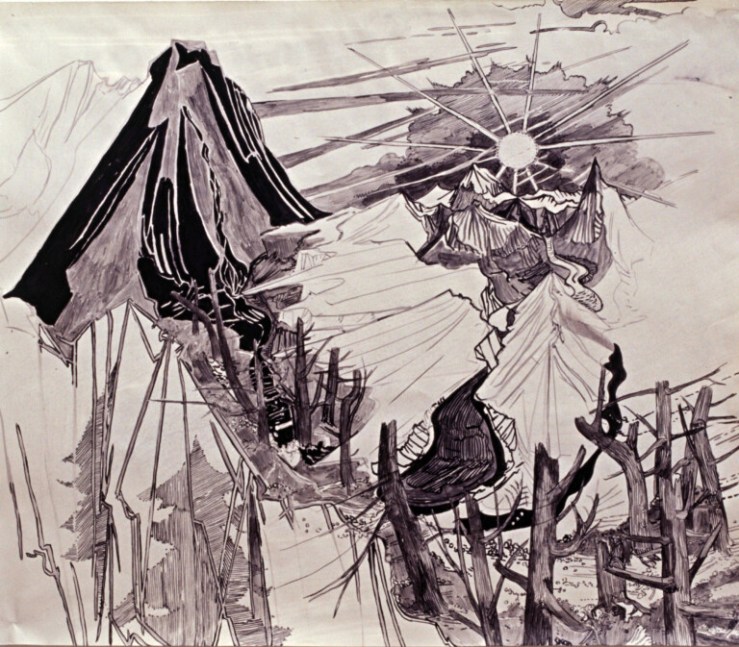
Melting, 2000 by Susanne Kühn (b. 1969)
These similes are from “The Part About Amalfitano,” the second part of 2666, a novel by Roberto Bolaño, in English translation by Natasha Wimmer.
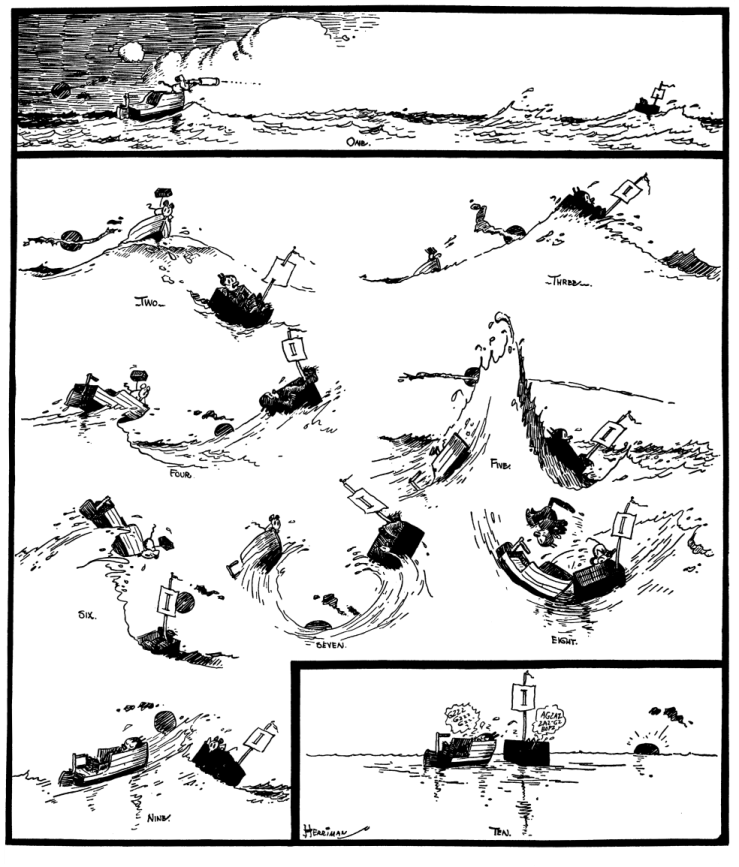
A passage from “The Part About The Crimes” from 2666 by Roberto Bolaño in translation by Natasha Wimmer
Talk to me about your family history, said the bastards. Explain your family tree, the assholes said. Self-sucking pieces of shit. Lalo Cura didn’t get angry. Faggot sons of bitches. Tell me about your coat of arms. That’s enough now. The kid’s going to blow. Stay calm. Respect the uniform. Don’t show you’re scared or back down, don’t let them think they’re getting to you. Some nights, in the dim light of the tenement, when he was done with the books on criminology (don’t lose it now, man), dizzy from all the fingerprints, blood and semen stains, principles of toxicology, investigations of thefts, breaking and entering, footprints, how to make sketches and take photographs of the crime scene, half asleep, drifting between sleep and wakefulness, he heard or remembered voices talking to him about the first Exposito, the family tree dating back to 1865, the nameless orphan, fifteen years old, raped by a Belgian soldier in a one-room adobe house outside Villaviciosa. The next day the soldier got his throat cut and nine months later a girl was born, called Maria Exposito. The orphan, the first one, said the voice, or several voices taking turns, died in childbirth and the girl grew up in the same house where she was conceived, which became the property of some peasants who took her in and treated her like another member of the family. In 1881, when Maria Exposito was fifteen, on the feast day of San Dimas, a drunk from another town carried her off on his horse, singing at the top of his lungs: Que chingaderas son estas I Dimas le dijo a Gestas. On the slope of a hill that looked like a dinosaur or a Gila monster he raped her several times and disappeared. In 1882, Maria Exposito gave birth to a child who was baptized Maria Exposito Exposito, said the voice, and the girl was the wonder of the peasants of Villaviciosa. From early on she showed herself to be clever and spirited, and although she never learned to read or write she was known as a wise woman, learned in the ways of herbs and medicinal salves. In 1898, after she had been away for seven days, Maria Exposito appeared one morning in the Villaviciosa plaza, a bare space in the center of town, with a broken arm and bruises all over her body. She would never explain what had happened to her, nor did the old women who tended to her insist that she tell. Nine months later a girl was born and given the name Maria Exposito, and her mother, who never married or had more children or lived with any man, initiated her into the secret art of healing. But the young Maria Exposito resembled her mother only in her good nature, a quality shared by all the Maria Expositos of Villaviciosa. Some were quiet and others liked to talk, but common to them all was their good nature and the fortitude to endure periods of violence or extreme poverty. But young Maria Exposito’s childhood and adolescence were more carefree than her mother’s and grandmother’s had been. In 1914, at sixteen, her thoughts and actions were still those of a girl whose only tasks were to accompany her mother once a month in search of rare herbs and to wash the clothes, not at the public washhouse, which was too far away, but behind the house, in an old wooden trough. That was the year Colonel Sabino Duque (who in 1915 would be shot to death for cowardice) came to town looking for brave men—and the men of Villaviciosa were famous for being braver than anyone—to fight for the Revolution. Continue reading “Talk to me about your family history, said the bastards | Roberto Bolaño”

To Be Without Choice, 2019 by Tatyana Fazlalizadeh (b. 1985)
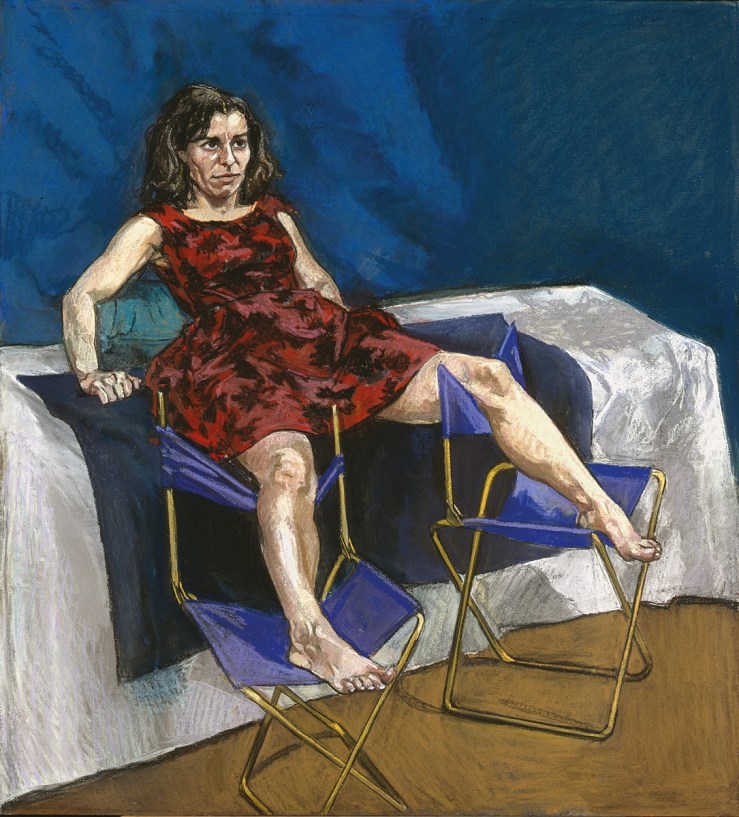
Untitled No. 5 (from the Abortion Pastels), 1998 by Paula Rego (1935-2022)
Center for Reproductive Rights
National Network of Abortion Funds
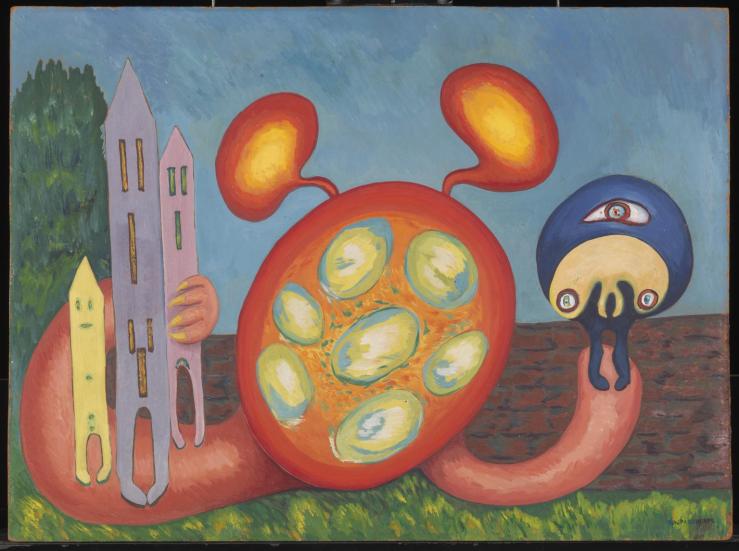
April 20, 1940 (The Blazing Infant), 1940 by Grace Pailthorpe (1883-1971)
 Biblioklept