The Tree — Thomas Hennell

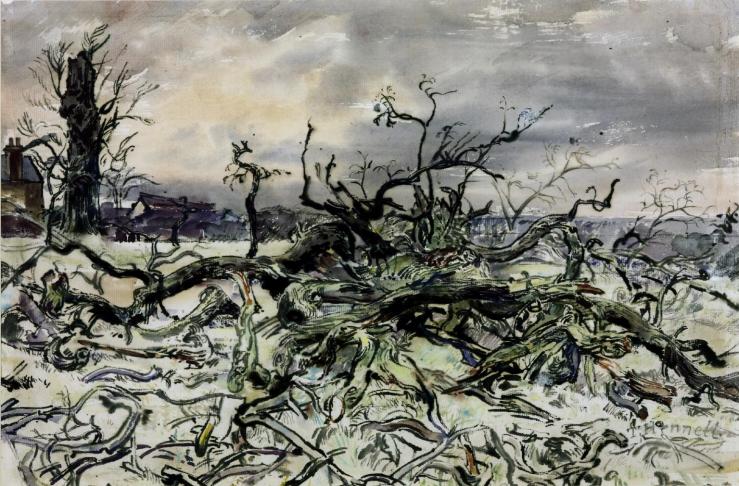
The Tree, c.1938-40 by Thomas Hennell (1903-1945)

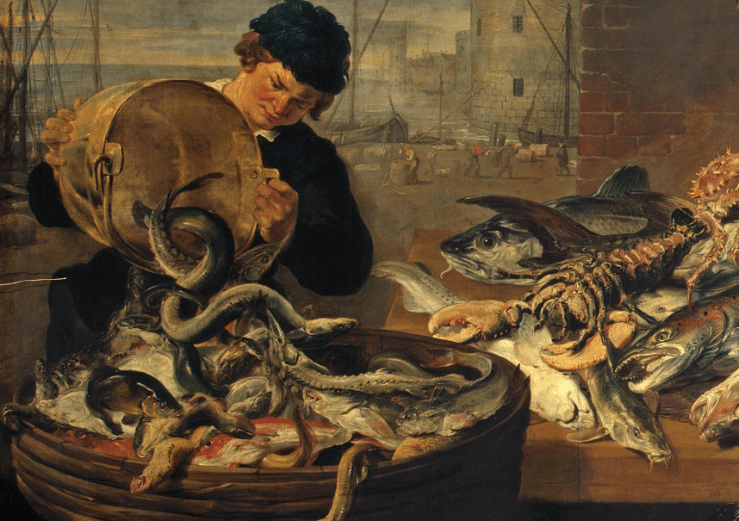
Fish Stall (Detail) — Frans Snyders

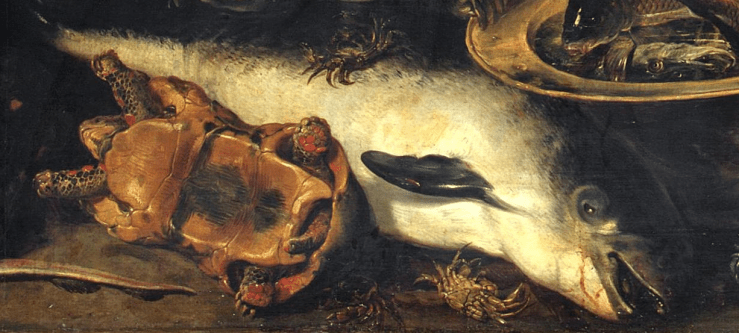
Fish Stall (Detail), c. 1620  by Frans Snyders (1579–1657)

It wasn’t so bad really, the commercial Christmas (Walker Percy)

…it all comes back, the old pleasant month-long Santy-Claus-store-window Christmas. It wasn’t so bad really, the commercial Christmas, a month of Christmas Eves, stores open every night, everyone feeling good and generous and spending money freely, handsome happy Americans making the cash registers jingle, the nice commercial carols, Holy Night, the soft-eyed pretty girls everywhere—

From Walker Percy’s 1971 dystopian speculative fiction novel Love in the Ruins. The narrator, Dr. Thomas More, a bit drunk, reflects back to the pre-revolutionary days of a commercial Christmas.

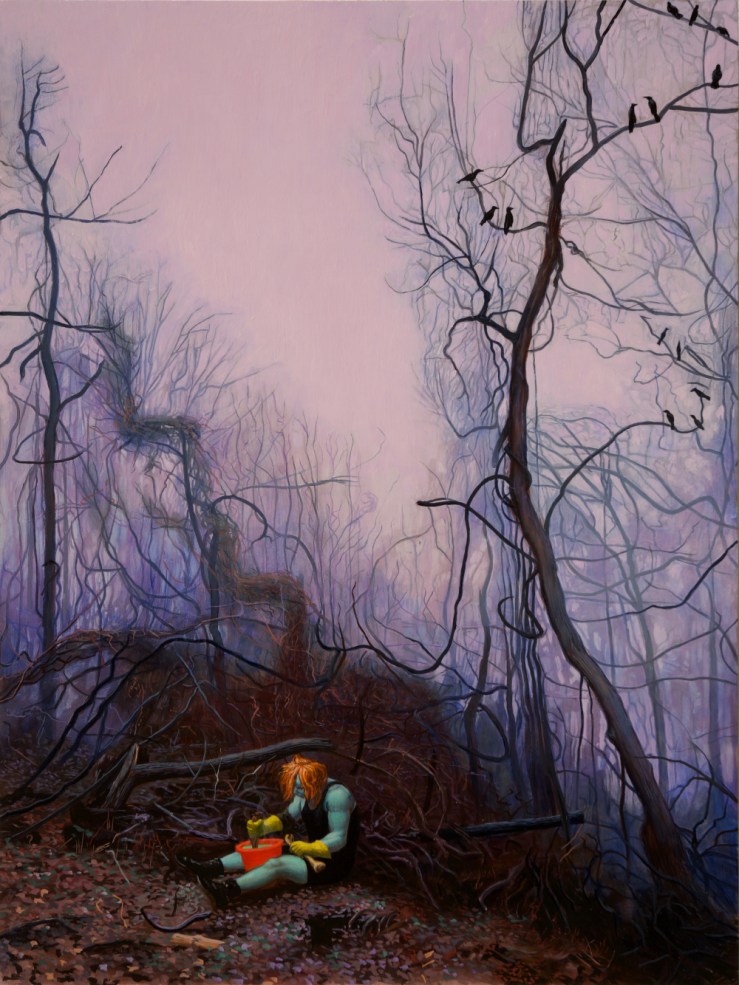
Do Electric Sheep Dream of Transgenic Flowers? — Clive Smith

Do Electric Sheep Dream of Transgenic Flowers?, 2019 by Clive Smith (b. 1967)

Rough Nights — Rosa Loy

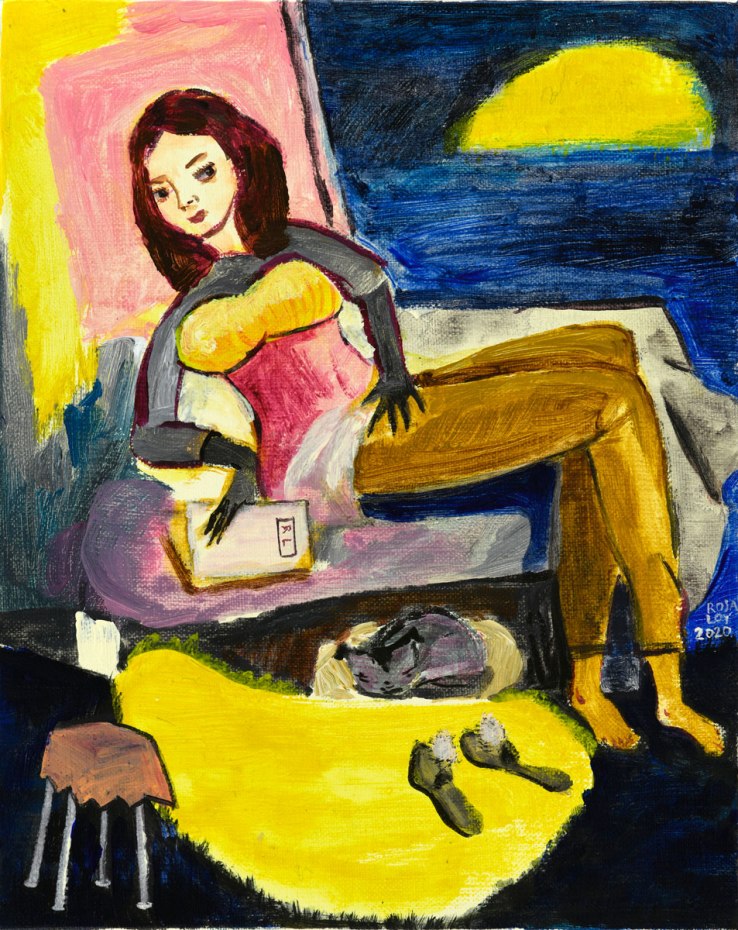
Rauhnächte (Rough Nights), 2020 by Rosa Loy (b. 1958)

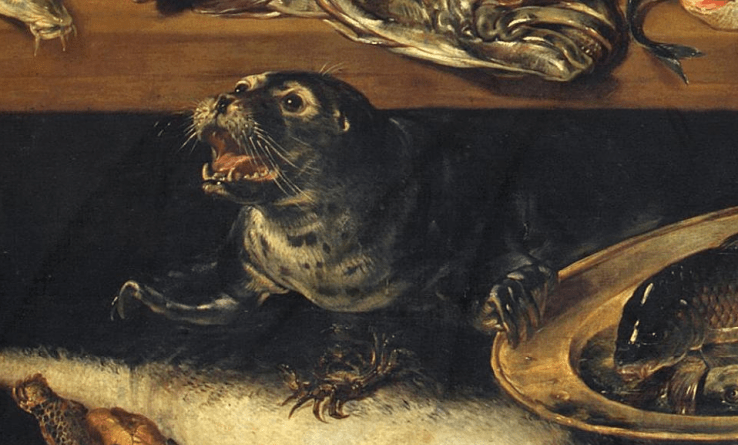
Fish Stall (Detail) — Frans Snyders

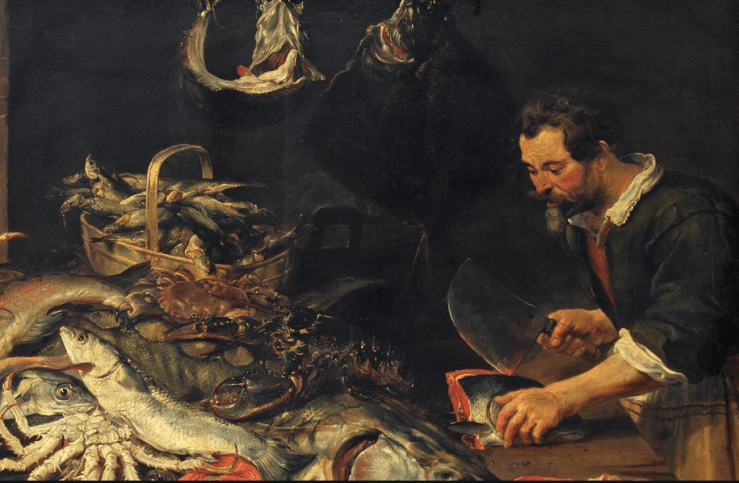
Fish Stall (Detail), c. 1620  by Frans Snyders (1579–1657)

December — Paul Jacoulet

December, 1953 by Paul Jacoulet (1896-1960)

Theory of Catastrophe — Malcolm Morley

Theory of Catastrophe, 2004 by Malcolm Morley (1931-2018)

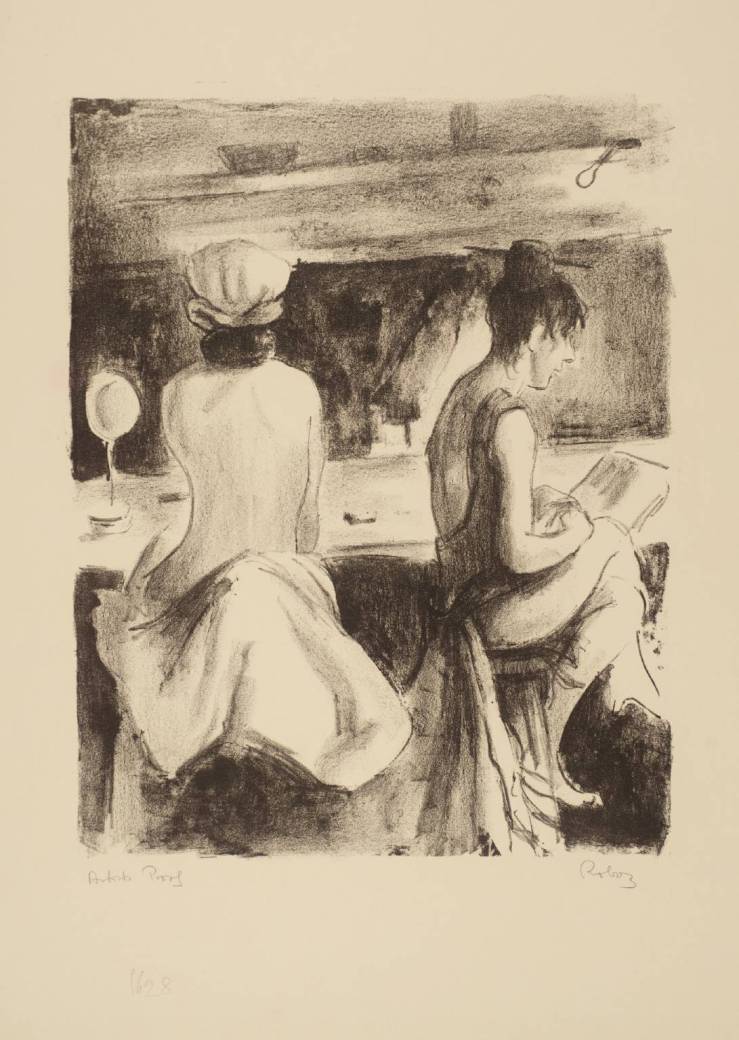
Interval — Zsuzsi Roboz

Interval, 1975 by Zsuzsi Roboz (1939–2012)

Fish Stall (Detail) — Frans Snyders

Fish Stall (Detail), c. 1620  by Frans Snyders (1579–1657)

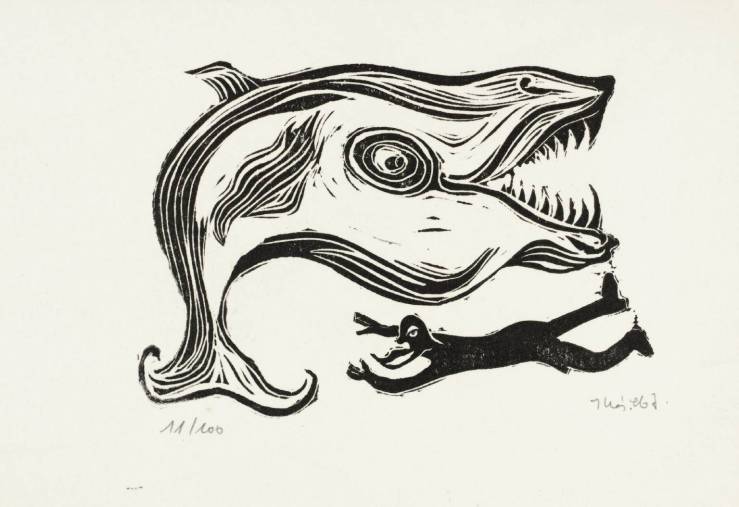
Jonah and the Whale — Arpad Illes

Jonah and the Whale, 1967 by Arpad Illes (1908–1980)

Shipmates, this book, containing only four chapters—four yarns—is one of the smallest strands in the mighty cable of the Scriptures. Yet what depths of the soul does Jonah’s deep sealine sound! what a pregnant lesson to us is this prophet! What a noble thing is that canticle in the fish’s belly! How billow-like and boisterously grand! We feel the floods surging over us; we sound with him to the kelpy bottom of the waters; sea-weed and all the slime of the sea is about us! But what is this lesson that the book of Jonah teaches? Shipmates, it is a two-stranded lesson; a lesson to us all as sinful men, and a lesson to me as a pilot of the living God. As sinful men, it is a lesson to us all, because it is a story of the sin, hard-heartedness, suddenly awakened fears, the swift punishment, repentance, prayers, and finally the deliverance and joy of Jonah. As with all sinners among men, the sin of this son of Amittai was in his wilful disobedience of the command of God—never mind now what that command was, or how conveyed—which he found a hard command. But all the things that God would have us do are hard for us to do—remember that—and hence, he oftener commands us than endeavors to persuade. And if we obey God, we must disobey ourselves; and it is in this disobeying ourselves, wherein the hardness of obeying God consists.

From “The Sermon,” Ch. 9 of Herman Melville’s Moby-Dick.
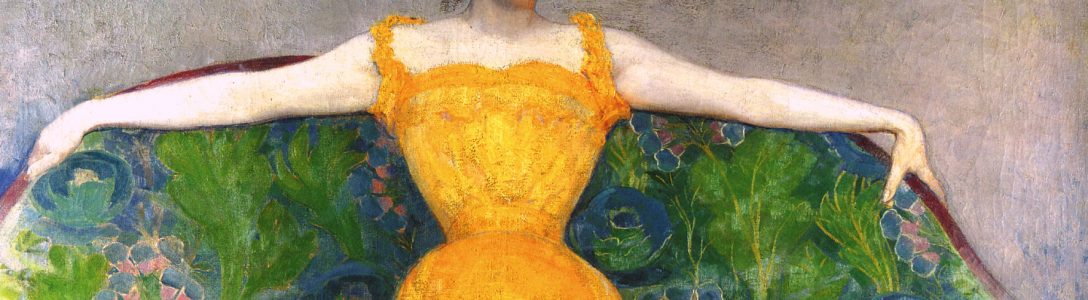
Fish Stall (Detail) — Frans Snyders

Fish Stall (Detail), c. 1620  by Frans Snyders (1579–1657)

December — Alex Colville

december-1979.jpg!Large

December, 1979 by Alex Colville (1920-2013)

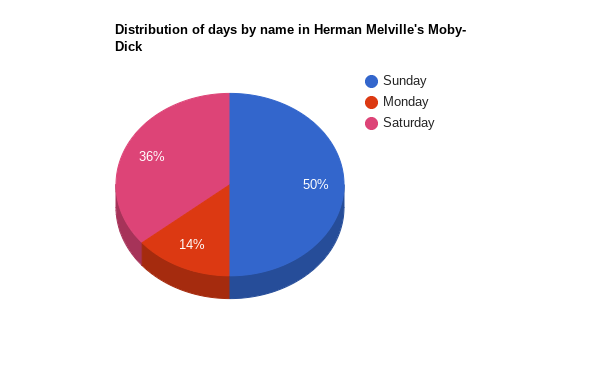
Distribution of days by name in Herman Melville’s novel Moby-Dick

SUNDAY

There are seven Sundays in Herman Melville’s novel Moby-Dick (Ch. 3 (four instances), Ch. 7, Ch. 85, and Ch. 112).

MONDAY

There are two Mondays in Herman Melville’s novel Moby-Dick (Ch. 2 and Ch. 13).

TUESDAY

There are no Tuesdays in Herman Melville’s novel Moby-Dick.

WEDNESDAY

There are no Wednesdays in Herman Melville’s novel Moby-Dick.

THURSDAY

There are no Thursdays in Herman Melville’s novel Moby-Dick.

FRIDAY

There are no Fridays in Herman Melville’s novel Moby-Dick.

SATURDAY

There are five Saturdays in Herman Melville’s novel Moby-Dick (Ch. 2, Ch. 3 (two), Ch. 65, and Ch. 67).


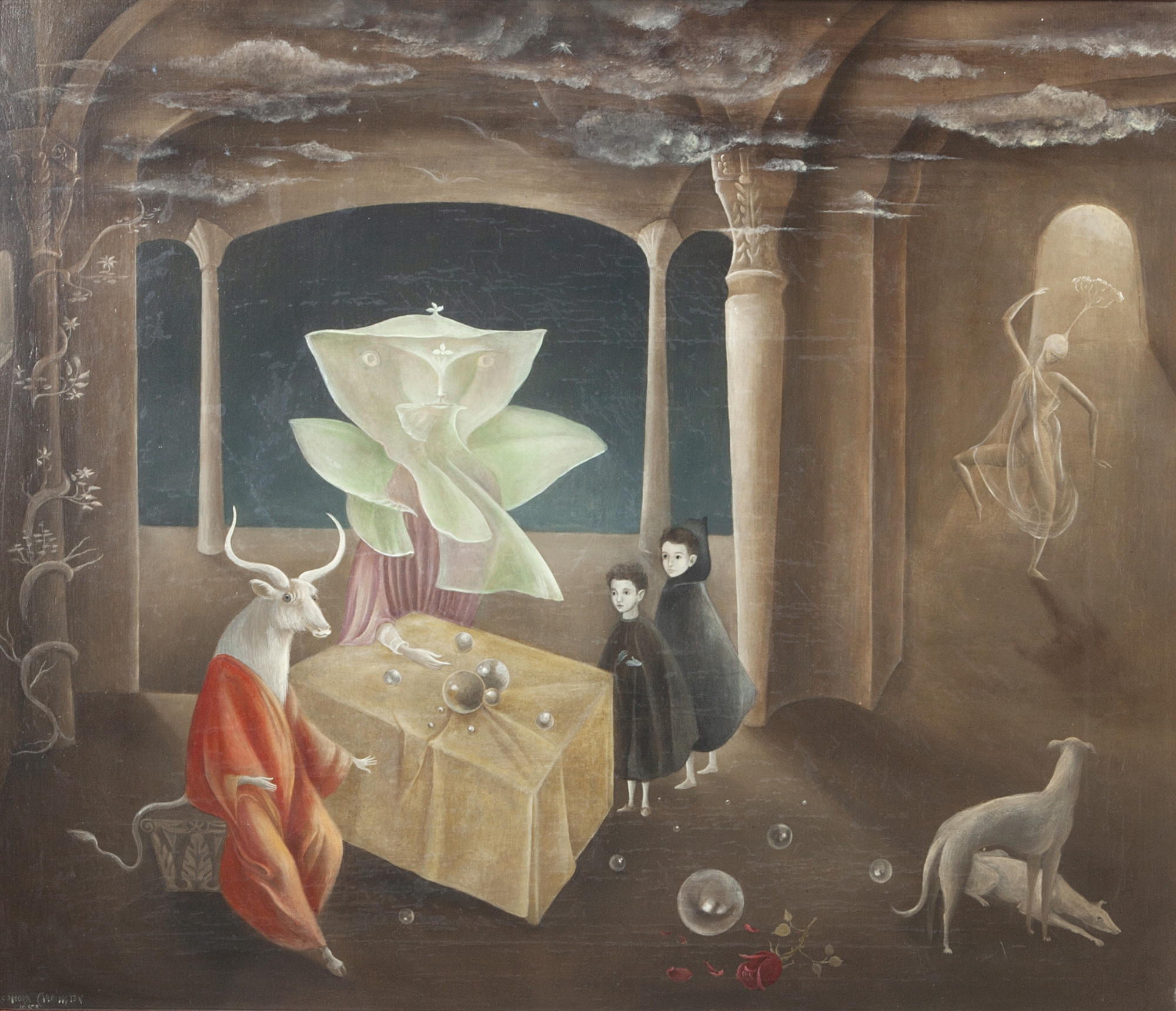
And Then We Saw the Daughter of the Minotaur — Leonora Carrington

And Then We Saw the Daughter of the Minotaur, 1953 by Leonora Carrington (1917–2011)

AnnumMMXX Phase III — John Jacobsmeyer 

AnnumMMXX Phase III, 2020 by John Jacobsmeyer (b. 1964)


The First Thanksgiving — Warrington Colescott

w1siziisijixndkzmijdlfsiccisimnvbnzlcnqilcitcmvzaxplidiwmdb4mjawmfx1mdazzsjdxq The First Thanksgiving, 1973 by Warrington Colescott (1921 – 2018) Screenshot 2018-11-19 at 3.38.36 PMScreenshot 2018-11-19 at 3.38.55 PMScreenshot 2018-11-19 at 3.39.56 PMScreenshot 2018-11-19 at 3.38.08 PM
A grave and dark-clad company!” quoth Goodman Brown. In truth, they were such. Among them, quivering to-and-fro, between gloom and splendor, appeared faces that would be seen, next day, at the council-board of the province, and others which, Sabbath after Sabbath, looked devoutly heavenward, and benignantly over the crowded pews, from the holiest pulpits in the land. Some affirm, that the lady of the governor was there. At least, there were high dames well known to her, and wives of honored husbands, and widows, a great multitude, and ancient maidens, all of excellent repute, and fair young girls, who trembled lest their mothers should espy them. Either the sudden gleams of light, flashing over the obscure field, bedazzled Goodman Brown, or he recognized a score of the church-members of Salem village, famous for their especial sanctity. Good old Deacon Gookin had arrived, and waited at the skirts of that venerable saint, his reverend pastor. But, irreverently consorting with these grave, reputable, and pious people, these elders of the church, these chaste dames and dewy virgins, there were men of dissolute lives and women of spotted fame, wretches given over to all mean and filthy vice, and suspected even of horrid crimes. It was strange to see, that the good shrank not from the wicked, nor were the sinners abashed by the saints. Scattered, also, among their pale-faced enemies, were the Indian priests, or powows, who had often scared their native forest with more hideous incantations than any known to English witchcraft.
–From “Young Goodman Brown,” Nathaniel Hawthorne (1835)