
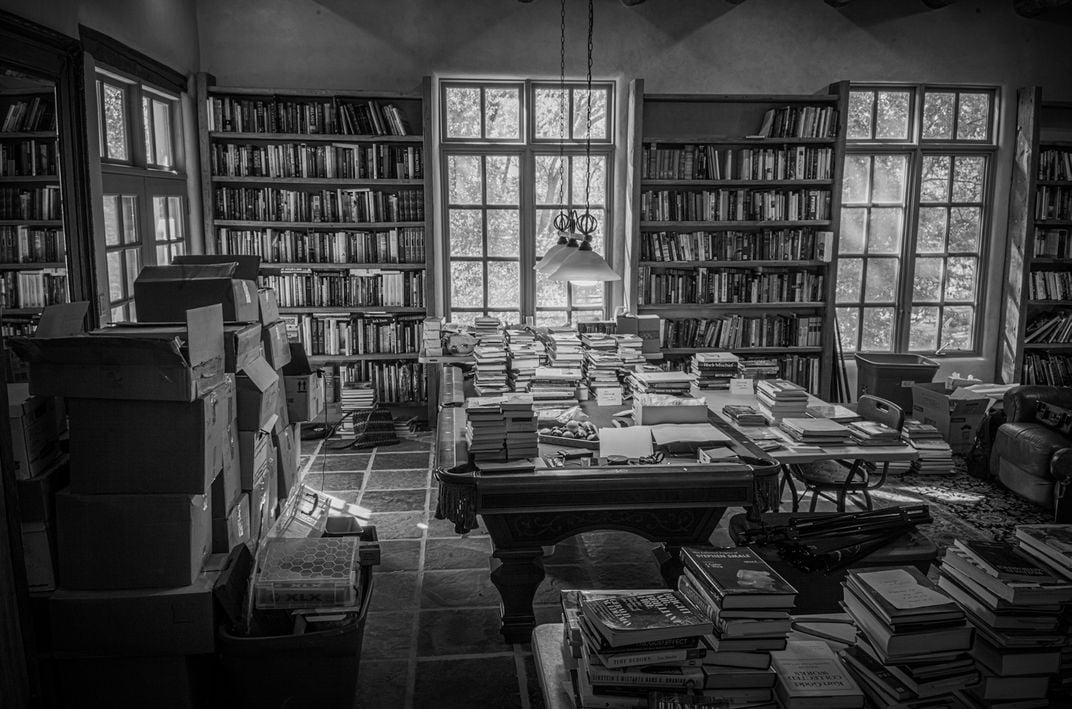
The September/October issue of Smithonian Magazine includes a visit to the late Cormac McCarthy’s house in New Mexico. The piece is by Richard Grant, who explains how the visit came about:
I was invited to the house by two McCarthy scholars who were embroiled in a herculean endeavor. Working unpaid, with help from other volunteer scholars and occasional graduate students, they had taken it upon themselves to physically examine and digitally catalog every single book in McCarthy’s enormous and chaotically disorganized personal library. They were guessing it contained upwards of 20,000 volumes. By comparison, Ernest Hemingway, considered a voracious book collector, left behind a personal library of 9,000.
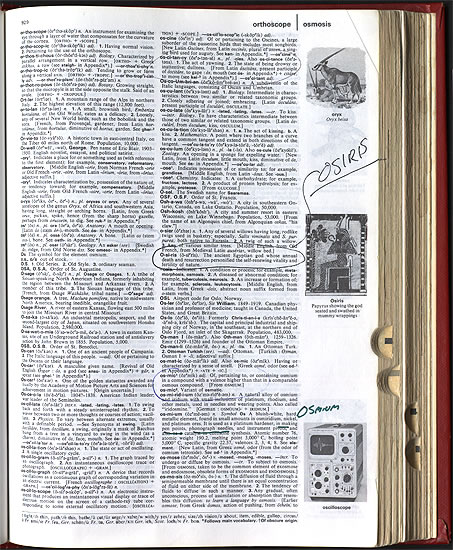
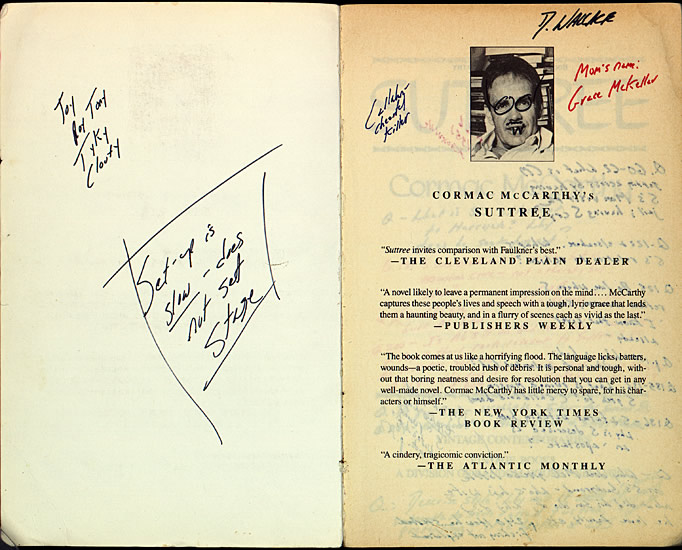
It’s a long feature and contributes more information to McCarthy’s biography than I would have thought (please, Josh Brolin, give us McCarthy’s full story about “drinking wine with André the Giant in Paris”). Grant also focuses heavily on the scholarship going into cataloging McCarthy’s library. Grant describes “looking through a batch [of books to be cataloged] about Cistercian abbeys, violin makers, metaphysics, meta-ontology, the incest taboo and the material foundations of ancient Mesopotamian civilization.” We learn that McCarthy owned at least thirteen editions of Moby-Dick. Scholars found uncashed royalty checks to the tune of ten grand bookmarking William Faulkner’s niece’s memoir. Grant also shares some of McCarthy’s annotations, like this one:
In his copy of The Suit: A Machiavellian Approach to Men’s Style, McCarthy penciled his opinion of slip-on dress shoes: ‘disgusting.’ Further down the same page, next to a sentence praising shiny-buckled monk-strap shoes, he wrote, ‘yet more horror.’
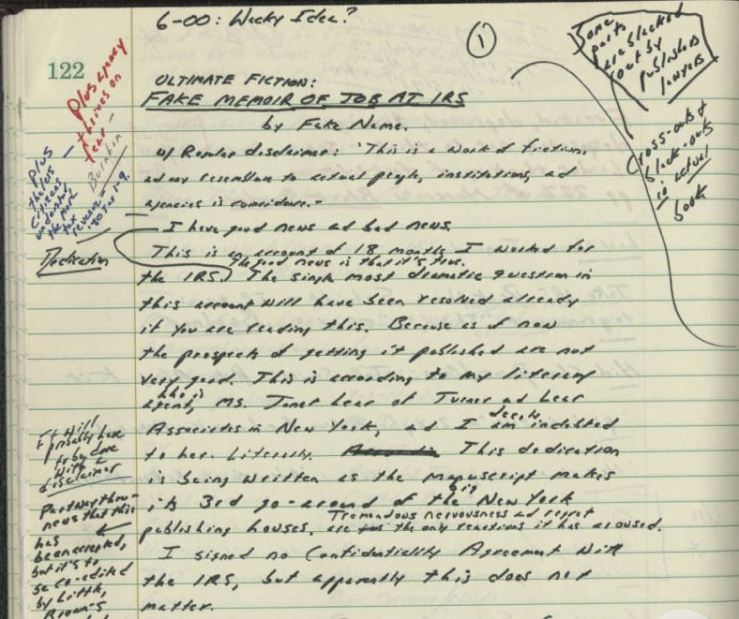
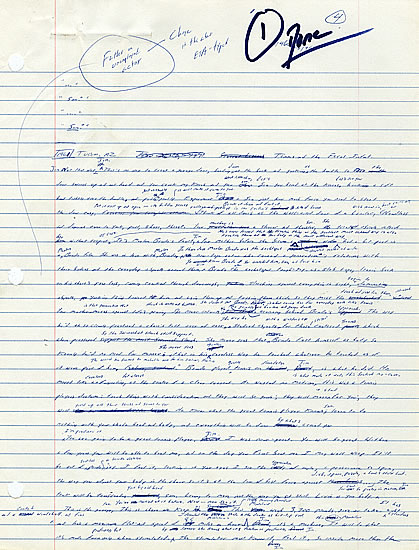
The photographs by Wayne Martin Belger are likely to particularly interest McCarthy nerds. My favorite of the batch is a slip of paper in McCarthy’s handwriting, posed atop a Wittgenstein volume. The slip includes what appears to be a rough budget, notes on “Spengler’s number,” and a short grocery list:
“TARTAR SAUCE
CELERY SALT.”
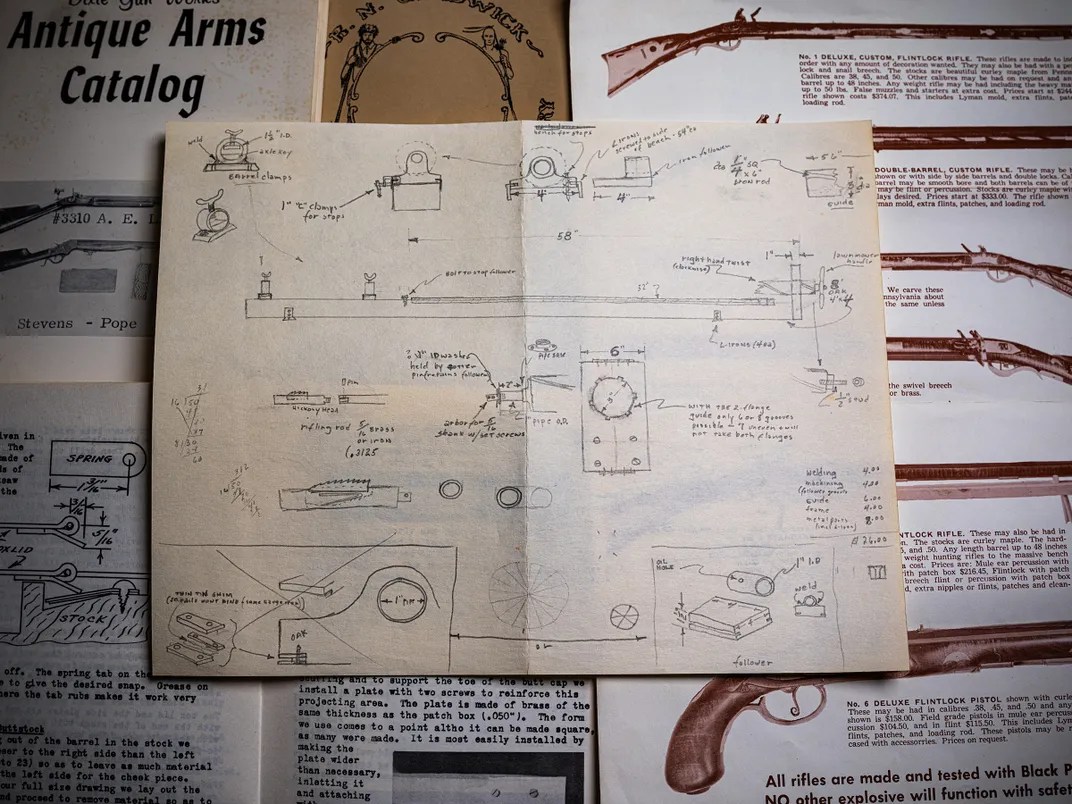
I also dig Belger’s photograph of McCarthy’s gun barrel schematic; check out the piece for more:


 Biblioklept