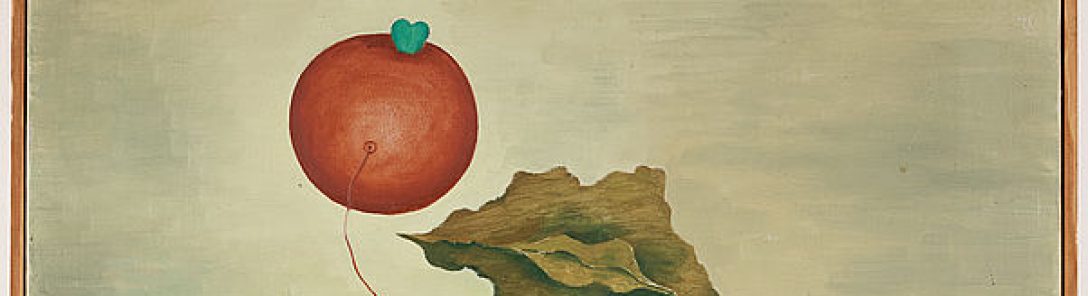
Biblioklept is twenty years old today.
I was 27 when I started the blog which I guess means I’m 47 now. The blog is older than both of my children (it is almost exactly nine months older than my oldest child).
More data:
I published 167 posts between 9 Sept. 2006 and 9 Sept. 2007, Biblioklept’s inaugural year. This was right around the time blogging went fully mainstream and right before social media platforms started to sink their claws into the zeitgeist. Two friends of mine had started blogs and they both independently suggested I start one, so I did. The early years of this blog are littered with posts referencing their blogs and other blogs, blogs long since defunct. One of those friends is now dead. The other friend I am no longer friends with for reasons I actually can’t even fully remember.
Not sure of what to post for Biblioklept’s vigintennial, I spent an afternoon this weekend browsing through that first year of posts. Biblioklept was initially, ostensibly, a blog about books I had procured, pocketed, pinched, and purloined. I described outright thefts along with tomes I never returned. I also wrote about books that people “borrowed” and never gave back to me (including many, many students). I eventually took up writing, or trying to write, real “reviews” of books. Biblioklept barely had an audience the first few months, but by the end of the year the readership had grown, in large part thanks to these longer reviews, and also, I think, because of a general brattiness to the site. I was 27, like I said; I felt much older than the millennial Brooklyn hipsters all my friends lived among far North from my Florida, and I was much younger than the established literary voices that had segued from the print into the digital world. My takes on books and film and music were often uncharitable, snotty, uninformed, or just plain mean-spirited. Perhaps more cringeworthy to me are novels and films I heaped undue praise upon. I could link to lots of specific examples, but I won’t.
Scrolling through posts from 9 Sept. 2006 to 9 Sept. 2007, I was struck by a few things — how loose and chaotic the blog was, how free it seemed, how clearly aimed at an audience of maybe 10, 15 people, and how very very very angry I was all the time. A searing hatred of the Bush regime comes through in those early posts; early Biblioklept is soaked in the post-9/11 zeitgeist. Too, those early posts emanate a strange, subtle, and unacknowledged anxiety about what I might now call early millennial (or Millennial if you prefer) hipster culture. Maybe I was afraid of losing my edge to the art-school Brooklynites in little jackets with their borrowed nostalgia (I actually remembered the eighties).
As far as I can tell, I didn’t receive any review copies or advance reader copies until around November of 2007. In just a few short years it became impossible to keep up with all the books that came in. By 2010 the audience for the blog had dramatically expanded (even as blog readership on the whole declined). I was able to monetize the blog via the WordPress ads program, but I eventually abandoned that commercial practice.
I was also posting a lot more. More unasked-for data: I published 2409 posts between 9 Sept. 2013 and 9 Sept. 2014. That’s too many posts! I picked that year — call it 2014 — because I’d say that was the last little gasp of the blogosphere’s cultural relevance. Blogs still exist, sure, but they are institutional, professional, and (to employ a term that will read as very mid-twenties ten years from now), niche.
I hope that Biblioklept is still a niche blog, dedicated loosely to art and reading and books, particularly oddballish literature. But as far as the biblioklept niche: I have of course long since run out of book theft stories to tell because I haven’t stolen a book in decades.
That last sentence is a lie; I took a small tract from a house I was renting on Anacapri in June last year, an Italian translation of Alexandre Dumas’ Capri. I would like to say I took it with the intention of returning it one day. I left a deposit, one of the two physical books I took with me to Italy that summer. The theft in question, Capri, is pictured below, nestled in a new old bookcase my father-in-law told me to take.
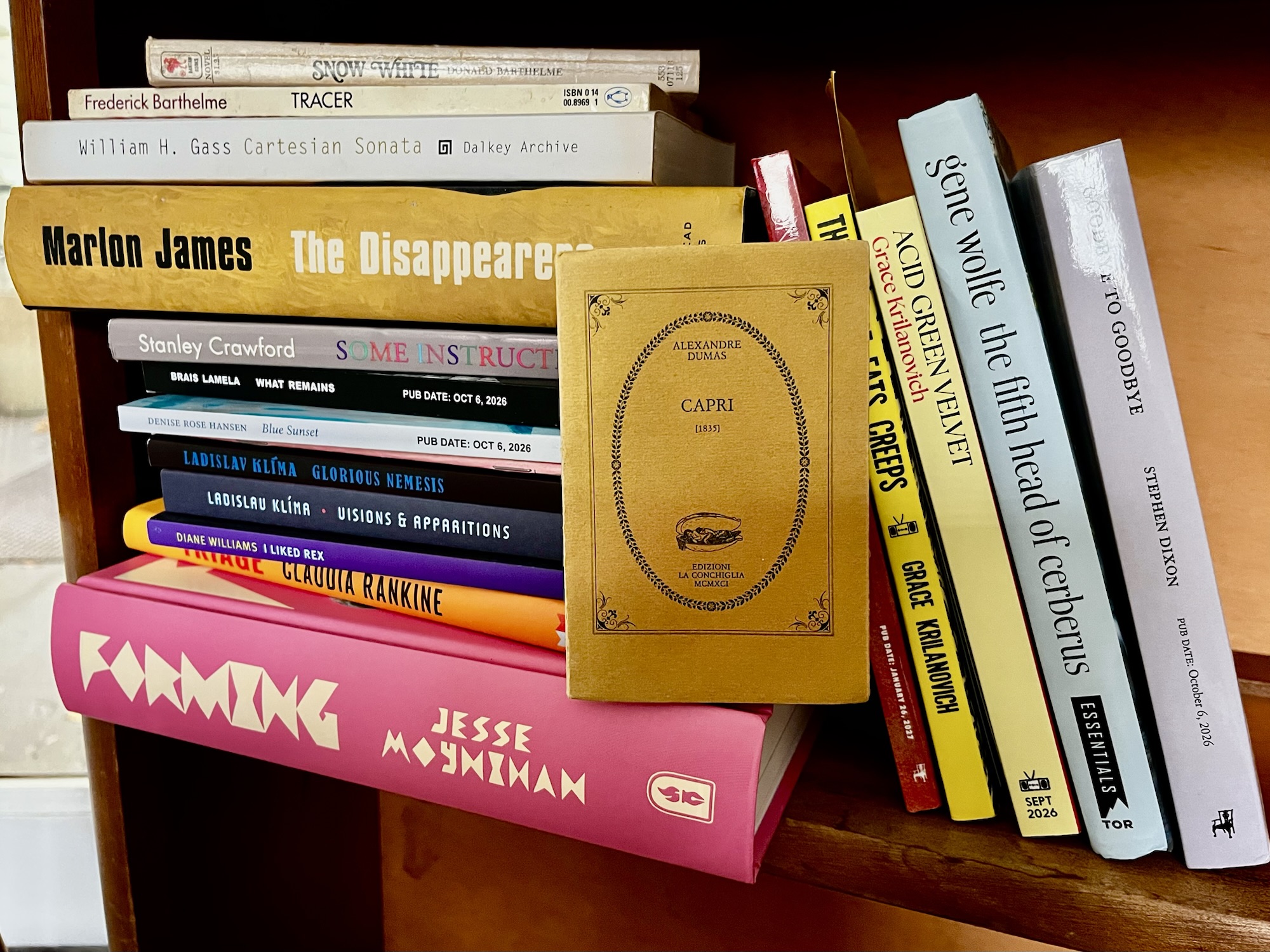
The Dumas is posed here; its natural place in the house is in a cache of small flat tracts I store horizontally in a box in a bundle. The books it sits among are seeking shelves, or reviews, or simply my tired reading eyes. They are recent acquisitions, books to be read, and occasional redundancies. They occupy roughly one sixth of the shelf’s apparent volume; more if I double stack. I’ll try to go about filling the case slowly in this next year, 9 Sept. 2026 through 9 Sept. 2027.
I will also probably post more slowly, or more sparingly, or more sporadically (I’ll find an adverb that fits). More data (last, I promise): I published about 300 posts in the last year (9 Sept. 2025-9 Sept. 2026). I think I can deflate a bit, no? Aim for something closer to that inaugural run of just over 150 posts. Let things wind down. I’ve carved this niche and I’m comfortable in it, but I can’t go on with this thing forever. Can I?

 Biblioklept