
Notes on Chapters 1-7 | Glows in the dark.
Notes on Chapters 8-14 | Halloween all the time.
Notes on Chapters 15-18 | Ghostly crawl.
Notes on Chapters 21-23 | Phantom gearbox.
Notes on Chapters 27-29 | We’re in for some dark ages, kid.
Notes on Chapters 30-32 | Some occult switchwork.
Notes on Chapters 33-34 | The dead ride fast.
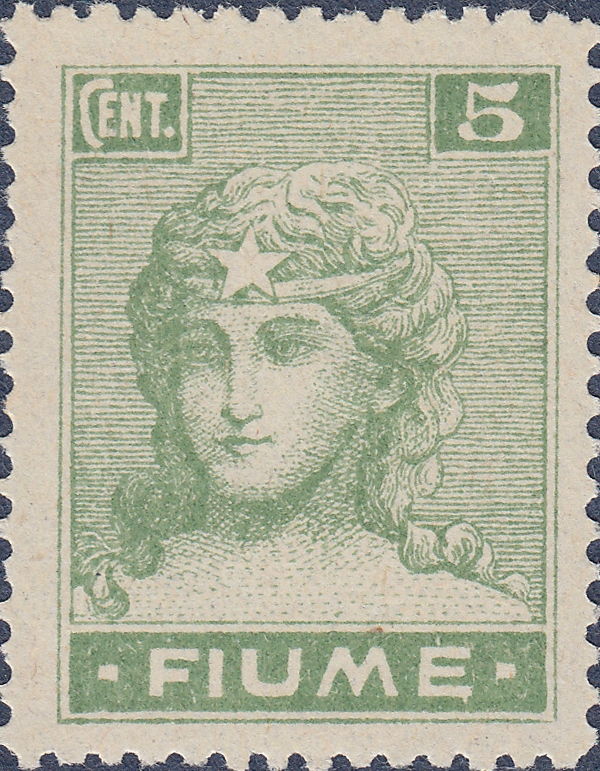
Chapter 35 commences in “Fiume…a tattered ghost city with a sordid history of secret treaties and sellouts, edging its way through what the Fascist Italian regime calls Year Ten, continuing to collapse in on itself, unlikely to be redeemed.”
There’s a lot there, as in most of Shadow Ticket’s sentences. The Italian fascist poet Gabriele D’Annunzio marched on Fiume in 1919, claiming it post-WWI in defiance of its “Free City” status. Like the Esperanto that runs through Shadow Ticket, utopian ideals won’t last long.
The spectral language invoking an unredeemed ghost city is a theme Pynchon explored throughout Gravity’s Rainbow, the first section of which, in particular, details a preterite, apocalyptic London. I think what’s notable here is again the sense of a pretender’s “utopian intellectualism” — the fascist force’s Anno X — which tries to stabilize a dehumanizing pursuit of power within the context of the humanities. It’s a ghost town, bound for collapse, bad for the soul.
The narrator notes that Fiume was once “a major port of embarkation for the New World, bright and bustling.” What’s more utopian than a capital-en-capital double-you New World? Shadow Ticket is all about movement, particularly west-east movement, with the bilocated east-west corollary (coreality?) built in. Indeed, Pynchon will end the novel a la Huckleberry Finn with Hicks’ protege Skeet Wheeler following Huck’s move to “light out for the Territory.” But I’m jumping ahead. The bigger Thing to note here, I think is that the New World is not so new anymore. Frontiers are going to be stranger, more combustible, going forward.
I’ve focused too much on setting: Our man in Fiume is Daphne Airmont, hunting Papa Cheez. She picks up a pair of Morčić, “earrings representing a black Moor’s head in a fancy white turban,” as well as a new tune, “Daleko m’ê moj Split,” (“My Split Is Far Away from Me” — here, a reference to the singer’s hometown).
A few nights later Daphne is singing this tune “at a sympathetic room in a roadhouse on the Yugoslavian side of the line, where neighborhood musicians like to get together, tonight a C-melody sax, banjo-uke, trombone, piano, an underlying beat from snare brushes and woodblock” — I let the sentence ride out because just because (lots of ukes in Shadow Ticket, yet not a single snood). In the middle of the song, Daphne’s “joined out of somewhere by a clarinet, all too immediately recognizable as who else but Hop Wingdale.” Before the erstwhile couple retreats to more private environs to catch up, Hop “reaches for a highball glass, where he’s been keeping a couple of reeds soaking in slivovitz, drinks what’s there, pours in more.” I agree with Daphne (“That’s disgusting!”), but maybe the Drunk Pynchon blog will disagree if they ever get around to “clarinet reeds soaked in slivovitz.”
I can’t help myself: Here’s Pynchon’s mise en scène one-sentence-paragraph for the Daphne-Hop intimate reunion, in which she will find out that he’s actually a spy:
“A busy echoing interior comfortably dim with all-night cigarette and kitchen smoke, young runners who never fall asleep in and out bringing seafood fresh from the Adriatic, a continuous wind outside, down from the high limestone, a theremin of uneasiness, sliding around a narrow band of notes, in which it’s said you may come to hear repeated melodies, themes and variations, which is when you know you’re going bughouse, with only a very short period of grace to try and escape before it no longer matters.”
Pynchon is an underrated prose stylist. The rhythm here might not work for all folks, but it sings to me. There’s obviously a bustling noir quality to the cramped kitchen scene, which Pynchon drapes in mystical paranoia: the Adriatic wind (and “wind” by the by, is a byword in Against the Day, a physical yet invisible force) — the Adriatic wind becomes “a theremin of uneasiness,” a phrase that recalls “the Sombrero of Uneasiness” that makes “a chill creep across Hicks’s scalp” back in Ch. 10, back in Wisconsin, back at the Nazi bowling alley. (There was also a nod to the theremin back in Ch. 24, at the Club Hypotenuse.) The last little bit of the paragraph is a parable for paranoids perhaps — when we “hear repeated melodies, themes and variations,” we know we’re “going bughouse.”
There’s a bit of business at the end of the Daphne-Hop episode that again points to Shadow Ticket’s underinflated bagginess — I’ve pointed out in these riffs that this is a much bigger novel in my imagination, a fat wedge between between Against the Day and Gravity’s Rainbow. The narrator mentions that Daphne’s supposed-one-time-not-really-fiance “G. Rodney Flaunch has recently published How to Lose a Million and a Half and Bounce Back Smiling,” opening a potential skewering of the kind of self-helpery bullshit that grifters continue to grift on as we breathe, this very minute. It’s a blip of a bit, reminding us that Daphne is far from home (as “Daleko m’ê moj Split” has already underscored), and if it’s underdeveloped, well, William Gaddis took Carnegie to task in The Recognitions (and elsewhere).
The wrapping-things-up-too-quickly motif continues as Hicks and Daphne reunite. Daphne’s headed back home; Hicks is not. She lets him off “that Chippewa hook”; no more life debt for Hicks. Our hero asks her to convey a message to April Randazzo, who is not mentioned by name, but rather alluded to as a “grown woman, married, family to raise” — the kiddie stuff is done. It’s time to grow up. The narrator infuses their stilted, terse parting with a flood of emotion:
“What one of them should have been saying was ‘We’re in the last minutes of a break that will seem so wonderful and peaceable and carefree. If anybody’s around to remember. Still trying to keep on with it before it gets too dark…'”
The break is of course the moments between the two big wars, situated as the break between Modernity and what comes after — the atom bomb and all that.
Pynchon’s narrator then domesticates the issue in his hypothetical dialogue: “Stay, or go. Two fates beginning to diverge—back to the U.S., marry, raise a family, assemble a life you can persuade yourself is free from fear, as meanwhile, over here, the other outcome continues to unfold, to roll in dark as the end of time.” Here again is the novel’s theme of bilocation, of imagining two lives; shadow/form.
It gets darker of course, as the Second World War deserves: “Those you could have saved, could’ve shifted at least somehow onto a safer stretch of track, are one by one robbed, beaten, killed, seized and taken away into the nameless, the unrecoverable.” Hicks won’t go back east, back home to the New World. Can he rise to this challenge? Can he divert some souls to a safer stretch of track and earn a crumb of redemption?

Chapter 36 is a mess.
It is a mess because it attempts to tie up loose ends; that is the wrong metaphor, tie up loose ends — in any case a cavalcade of featured players, guest stars, and even extras show up here (in Fiume, natch), to reconfigure in new teams for the coming war. We get Hicks and Terike and Ace Lomax and Porfirio del Vasto and Zoltán von Kiss and Egon Praediger (“nose merrily aglow,” the fucking cokehead).
Anyway, they’re all in Fiume, convening at Bruno Airmont’s villa, which “dates from just after the War, when d’Annunzio’s republic was young and Fiume had a reputation as a party town, fun-seekers converging from all over, whoopee of many persuasions, wide-open to nudists, vegetarians, coke snorters, tricksters, pirates and runners of contraband, orgy-goers, fighters of after-dark hand-grenade duels, astounders of the bourgeoisie…” Pynchon twins this list with new revelers at the villa, now a scene for “night owls, freeloaders, accidental walk-ins, practitioners of esoteric arts, fearers of the dark, compulsive socializers, secret police, jewel thieves, firefly girls, drug dealers, cigarette-factory workers, tobacco smugglers…” Old boy loves lists! (What is a “firefly girl”?)
The noisy, buzzing chapter ends with Hop Wingdale offering Ace Lomax (along with “that Czechoslovakian robot” Zdeněk) a job “Escorting Jews to safety, one at a time or in truckloads.” Ace was once hired muscle — like Hicks, who started his “career” as a strikebreaker. But in Shadow Ticket we see the possibility for his changing sides. Redemption is possible. As the psychic Zoltán von Kiss suggests in Ch. 22: “even the most hopelessly ill-imagined lamp deserves to belong somewhere, to have been awaited, to enact some return, to stand watch on some table, in some corner, as a place-keeper, a marker, a promise of redemption.”
This novel believes in the promise of redemption.
 Biblioklept