
 The memoir-in-food is something of a cliché at this point, but Gabrielle Hamilton’s new book Blood, Bones & Butter came with enough accolades (including a glowing blurb from Anthony Bourdain) and positive early reviews (like Kakutani’s at The NYT) for me to spend a few hours thumbing through it. Much has been made of Hamilton’s writing bona fides (an MFA in fiction writing from University of Michigan), and while she can put a sentence together without relying on the stock phrases and tropes that lard most memoirs these days, that skill wouldn’t really matter if she didn’t have a tale to tell. Blood, Bones & Butter follows a strange culinary career (it’s subtitled The Inadvertent Education of a Reluctant Chef), complete with drug abuse, theft, and, of course cooking. Only I wish there was more cooking, more time in the kitchen, the butcher’s, the market. Instead, Hamilton seems to channel her (often mean-spirited) energy on her family; her parents’ divorce hangs over the narrative like a Greek tragedy, and her own attitude toward her husband is bizarre, to say the least. The results are mixed, but fans of food-writing à la Bourdain’s Kitchen Confidential will likely enjoy Blood, Bones & Butter. New in hardback from Random House.
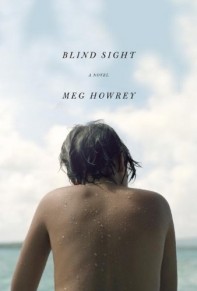 Meg Howrey’s new novel Blind Sight tells the story of Luke Prescott, a bright, introspective seventeen year old obsessed with brain biology. Raised by a hippie mother and two half-sisters, Luke gets the opportunity to the summer before college with his estranged father, a famous television star. In Los Angeles, Luke gets to know his father better, sorting out the difference between public persona and private truth; this process in turn leads Luke to re-evaluate his own sense of identity. There’s also some pot-smoking and sex. Howrey moves the narrative between Luke’s first-person voice (in the past tense) to a third person present tense narrator. At times this disjunction seems like a lazy shorthand to allow the reader to see something Luke can’t see (or doesn’t want the reader to see), but it works nicely on the whole, underlining the gaps between truth and belief that the novel seeks to explore. Blind Sight is new in hardback from Pantheon.
 In The Woman Who Shot Mussolini, Frances Stonor Saunders plays historical detective, reconstructing the story of Violet Gibson, who fired on Mussolini in April of 1926 (she grazed his nose). Gibson, the daughter of the Lord Chancellor of Ireland, was 50 when she shot Mussolini, and perhaps more than a little crazy. She was almost lynched after shooting Il Duce, but the not-so-benevolent dictator pardoned her, and she was quickly returned to England, where she spent the rest of her life in an insane asylum. Saunders’s book explores whether Gibson’s attack was the motivation of an insane woman or part of a bigger conspiracy theory, illustrating her mystery with poignant black and white photos. And although Saunders focuses on the little-known Gibson, she works to draw parallels between the would-be assassin and Mussolini. Saunders’s exploration of an otherwise unremarked upon episode balances historical scholarship with the pacing and rhythm of an historical thriller. New in trade paperback edition from Picador.
 Biblioklept