Guy Fawkes Day and V for Vendetta

“Remember, remember the 5th of November…”

I was lucky enough to live in New Zealand for a few years as a kid, so I got to experience Guy Fawkes Day. We made effigies of Guy, and then we burned them on a bonfire. There was a barbecue, and fireworks. To me it seemed a strange mixture of the Fourth of July and Halloween.

It was a few years after my last Guy Fawkes experience that I read Alan Moore’s V for Vendetta. V, an anarchist who wears a stylized Guy Fawkes mask, wages a vigilante war on a harsh authoritarian government. Along with Frank Miller’s The Dark Knight Returns, V was a first for me, something different than the stuff I was reading at the time, stuff like The Uncanny X-Men and the ill-fated Valiant Comics imprint (I actually made a small fortune selling early Valiant issues I owned).  

A film version of V for Vendetta was released in 2006; Alan Moore famously had his name removed from it. I enjoyed the film, although it certainly wasn’t as good or thought-provoking as Moore’s original story; and even though the film looked good, the passive experience of watching an action movie can’t measure up to David Lloyd’s original art work and that wonderful space between the panels of comics that engages the reader’s imagination.
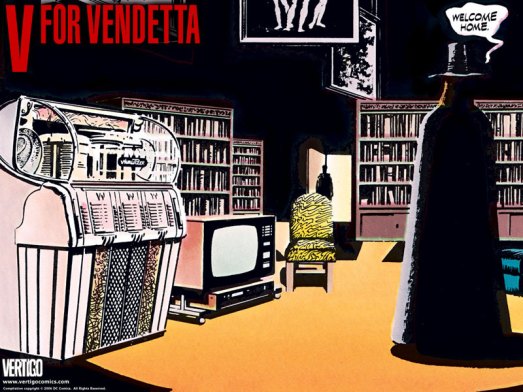
v_for_vendetta_5_800×600.jpg

This afternoon I finished the first graphic novel of Alan Moore’s  run writing Swamp Thing, and I can’t wait until my library hold on the second graphic novel comes in. I had no idea Saga of the Swamp Thing would be as good as it was, nor as beautifully illustrated; it’s actually much better than V for Vendetta or Moore’s other famed work, Watchmen (and none of these titles are even in the same league as Moore’s masterpiece, From Hell). Alan Moore and Steve Bissette’s run on the DC Comics series essentially led to DC’s creation of the edgier Vertigo imprint for their more “mature” titles, such as The Sandman. These titles helped to change the audiences of “comic books” and helped to make the graphic novel a new standard in the medium (no mean feat, considering the fanboyish culture of comic nerds, a culture that prizes rarity of print run over quality of storytelling).

V for Vendetta illustrates what happens when we don’t allow for dissent, what happens when ideas are both prescribed and proscribed, and all dialogue is muted. Authoritarian governments consolidate their power from the silencing of ideas. A healthy society requires all sorts of opinions, even ones we don’t like. The smiling Americans in this photo aren’t burning effigies of would-be revolutionaries, they are burning something much more dangerous–books.

book-burning.jpg

100 Most Frequently Challenged Books

Via bibliophil,  (links by biblioklept):

The 100 Most Frequently Challenged Books
of 1990–2000
Compiled by the Office for Intellectual Freedom, American Library Association. The ALA Office for Intellectual Freedom does not claim comprehensiveness in recording challenges.
1. Scary Stories (Series) by Alvin Schwartz
2. Daddy’s Roommate by Michael Willhoite
3. I Know Why the Caged Bird Sings by Maya Angelou
4. The Chocolate War by Robert Cormier
5. The Adventures of Huckleberry Finn by Mark Twain
6. Of Mice and Men by John Steinbeck
7. Harry Potter (Series) by J.K. Rowling
8. Forever by Judy Blume
9. Bridge to Terabithia by Katherine Paterson
10. Alice (Series) by Phyllis Reynolds Naylor
11. Heather Has Two Mommies by Leslea Newman
12. My Brother Sam is Dead by James Lincoln Collier and Christopher Collier
13. The Catcher in the Rye by J.D. Salinger
14. The Giver by Lois Lowry
15. It’s Perfectly Normal by Robie Harris
16. Goosebumps (Series) by R.L. Stine
17. A Day No Pigs Would Die by Robert Newton Peck
18. The Color Purple by Alice Walker
19. Sex by Madonna
20. Earth’s Children (Series) by Jean M. Auel
21. The Great Gilly Hopkins by Katherine Paterson
22. A Wrinkle in Time by Madeleine L’Engle
23. Go Ask Alice by Anonymous
24. Fallen Angels by Walter Dean Myers
25. In the Night Kitchen by Maurice Sendak
26. The Stupids (Series) by Harry Allard
27. The Witches by Roald Dahl
28. The New Joy of Gay Sex by Charles Silverstein
29. Anastasia Krupnik (Series) by Lois Lowry
30. The Goats by Brock Cole
31. Kaffir Boy by Mark Mathabane
32. Blubber by Judy Blume
33. Killing Mr. Griffin by Lois Duncan
34. Halloween ABC by Eve Merriam
35. We All Fall Down by Robert Cormier
36. Final Exit by Derek Humphry
37. The Handmaid’s Tale by Margaret Atwood
38. Julie of the Wolves by Jean Craighead George
39. The Bluest Eye by Toni Morrison
40. What’s Happening to my Body? Book for Girls: A Growing-Up Guide for Parents & Daughters by Lynda Madaras
41. To Kill a Mockingbird by Harper Lee
42. Beloved by Toni Morrison
43. The Outsiders by S.E. Hinton
44. The Pigman by Paul Zindel
45. Bumps in the Night by Harry Allard
46. Deenie by Judy Blume
47. Flowers for Algernon by Daniel Keyes
48. Annie on my Mind by Nancy Garden
49. The Boy Who Lost His Face by Louis Sachar
50. Cross Your Fingers, Spit in Your Hat by Alvin Schwartz
51. A Light in the Attic by Shel Silverstein
52. Brave New World by Aldous Huxley
53. Sleeping Beauty Trilogy by A.N. Roquelaure (Anne Rice)
54. Asking About Sex and Growing Up by Joanna Cole
55. Cujo by Stephen King
56. James and the Giant Peach by Roald Dahl
57. The Anarchist Cookbook by William Powell
58. Boys and Sex by Wardell Pomeroy
59. Ordinary People by Judith Guest
60. American Psycho by Bret Easton Ellis
61. What’s Happening to my Body? Book for Boys: A Growing-Up Guide for Parents & Sons by Lynda Madaras
62. Are You There, God? It’s Me, Margaret by Judy Blume
63. Crazy Lady by Jane Conly
64. Athletic Shorts by Chris Crutcher
65. Fade by Robert Cormier
66. Guess What? by Mem Fox
67. The House of Spirits by Isabel Allende
68. The Face on the Milk Carton by Caroline Cooney
69. Slaughterhouse-Five by Kurt Vonnegut
70. Lord of the Flies by William Golding
71. Native Son by Richard Wright
72. Women on Top: How Real Life Has Changed Women’s Fantasies by Nancy Friday
73. Curses, Hexes and Spells by Daniel Cohen
74. Jack by A.M. Homes
75. Bless Me, Ultima by Rudolfo A. Anaya
76. Where Did I Come From? by Peter Mayle
77. Carrie by Stephen King
78. Tiger Eyes by Judy Blume
79. On My Honor by Marion Dane Bauer
80. Arizona Kid by Ron Koertge
81. Family Secrets by Norma Klein
82. Mommy Laid An Egg by Babette Cole
83. The Dead Zone by Stephen King
84. The Adventures of Tom Sawyer by Mark Twain
85. Song of Solomon by Toni Morrison
86. Always Running by Luis Rodriguez
87. Private Parts by Howard Stern
88. Where’s Waldo? by Martin Hanford
89. Summer of My German Soldier by Bette Greene
90. Little Black Sambo by Helen Bannerman
91. Pillars of the Earth by Ken Follett
92. Running Loose by Chris Crutcher
93. Sex Education by Jenny Davis
94. The Drowning of Stephen Jones by Bette Greene
95. Girls and Sex by Wardell Pomeroy
96. How to Eat Fried Worms by Thomas Rockwell
97. View from the Cherry Tree by Willo Davis Roberts
98. The Headless Cupid by Zilpha Keatley Snyder
99. The Terrorist by Caroline Cooney
100. Jump Ship to Freedom by James Lincoln Collier and Christopher Collier

Any favorites on the list? I’ve got a few. I’ve read or at least familiar with 57 of these, including most of the top 25. What’s the beef with Where’s Waldo? Image links to a much better write up on banned books via the MPBA.

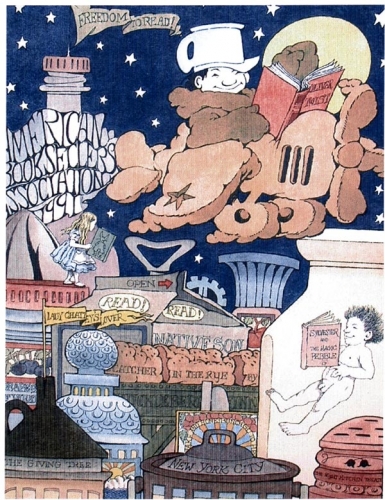
Freedom to Read

freedom-to-read.jpg

Freedom to Read, poster by Maurice Sendak. Image links to a concise history of book bannings.

Imp Elfabetical Ogre

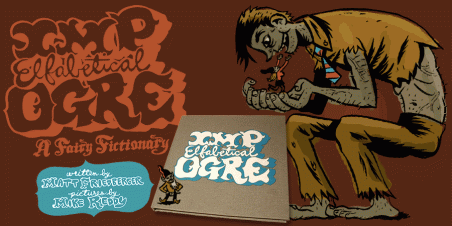
Imp Elfabetical Ogre is “A Fairy Fictionary” written by Matt Friedberger, chief songwriter/musician in my favorite working band, The Fiery Furnaces. Furnaces cover artist Mike Reddy illustrates some of Friedberger’s rhymes about ogres, pixies, elves, and gnomes.

opener21.gif

I’m not sure if this is an actual book or just an internet thing or what…it seems incomplete. The pun in the title, and the neologism “Fictionary” seem to suggest a larger, more comprehensive catalog of all things spritely. Just like the Furnaces’ lyrics, the words are highly alliterative and the tales are a little silly. Thanks to RP for sending me the link!

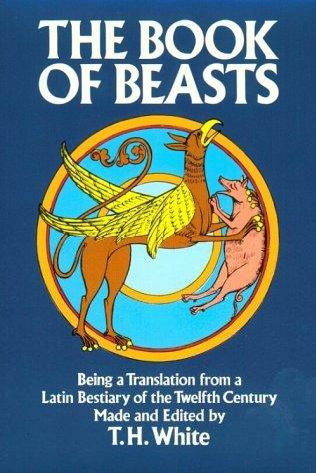
Other recommended bestiaries:

T.H. White? The Twelfth Century? Count me in!

n27697.jpg

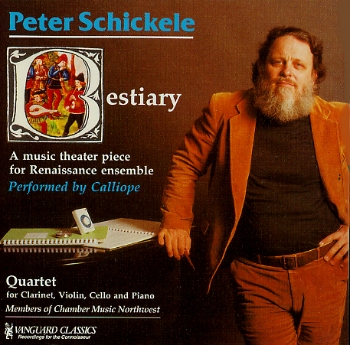
This Peter Shickele (aka PDQ Bach) record looks fantastic, you must admit. Image links to tracklisting, performers, and even some free audio samples! You can also buy this record–on cassette or vinyl only–for a mere $8 (but act fast, “supplies are limited”).

bestiary.jpg

A Wrinkle in Time

I loved this book as a kid. Madeline L’Engle’s A Wrinkle in Time explores the the intersections of space and time against a backdrop of adolescent angst. Our intrepid heroine Meg goes on a trans-dimensional quest to find her missing physicist father. Dad has disappeared due to his work on a project involving a tesseract. Go check out Tomorrowland’s brilliant write up of the tesseract.