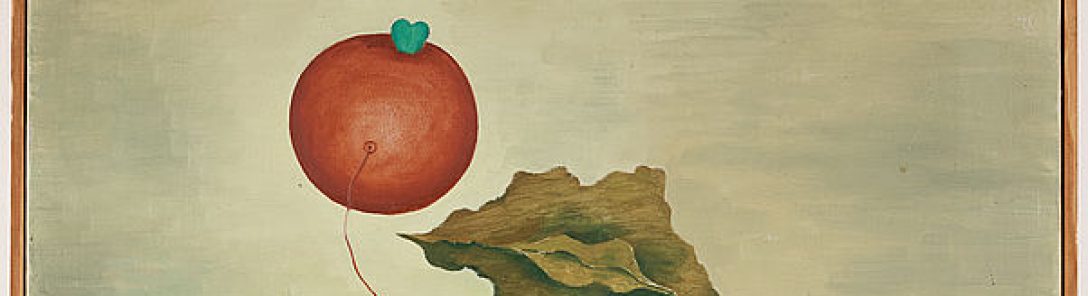
 In This Is Where We Live, Janelle Brown’s follow-up to her 2008 début All We Ever Wanted Was Everything, an artsy newly wed couple find their dreams and their marriage unraveling when the payments on their adjustable rate mortgage suddenly double. Claudia and Jeremy are happy at the novel’s outset, living comfortably in their Los Angeles bungalow. Her film Spare Parts garners a huge buzz at Sundance and he reforms a new band after the breakup of his old group The Invisible Spot; they envision their new neighborhood as a contemporary counterpart to the Laurel Canyon creative scene of the 1960s. But then their ARM adjusts and Spare Parts flops. Claudia has to take a job teaching (Gasp! Oh, the terror! In a particularly funny scene, she shows The Graduate to her film students and one of them raises her hand to declare that her father was one of the film’s executive producers). The couple soon has to take in a roommate. Complicating matters even more is the return of Aoki, Jeremy’s unstable–and now famous–ex-girlfriend, who manipulates him every chance she gets. Aoki, a cartoonishly unhinged avant-gardiste, serves as a foil to the more grounded figure of Claudia; as Claudia begins to mature into a more pragmatic, adult personality, Aoki’s siren song calls Jeremy to return to chaos. This Is Where We Live is timely, of course, and Brown takes pains to show how these two “creatives” could overlook such meaningful financial details when looking to buy a home. Some will find Brown’s sympathetic vision of the privileged L.A. art scene off-putting or even shallow, but the novel’s core exploration of a troubled young marriage will resonate with many readers. This Is Where We Live is available in hardback from Spiegel & Grau on June 15, 2010.
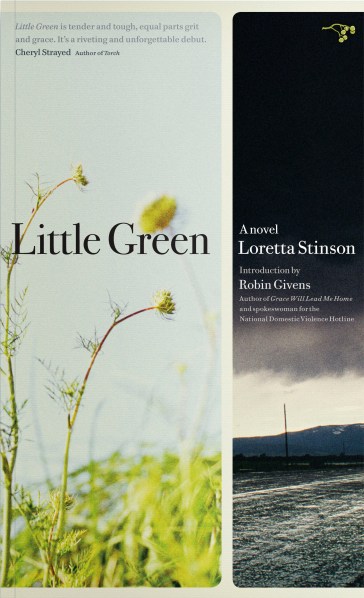 Little Green, Loretta Stinson’s début novel, tells the story of Janie, an orphan who runs away from her stepmother. Life on the road is tough, and Janie has to make money somehow, dancing in strip bars and even bartering for sex when necessary. When she meets a charmer named Paul who is ten years older than her, she feels instantly closer to him–and naturally hits the road again. Hitchhiking is never a good idea though, kids, especially in a loner’s van, and Janie is brutally beaten. She finds herself under the care of the man who owns the last bar she danced at, and in time, under the care of Paul, reiterating one of the novel’s major themes of cyclical violence and female dependence on a man. Paul is a small-time drug dealer whose habits extend beyond weed and acid into heroin and meth. As his drug addiction spirals, he tries to find some control by manipulating Janie; in time, he beats her so terribly that she has to go to the hospital. Janie leaves him but he stalks her wherever she goes, forcing her to find her own strength and self-reliance as the novel reaches its redemptive climax. Paul is probably the most interesting character in Little Green, and although it would be unfair to call Janie a flat character, she spends much of the novel as a victim. In contrast, Paul’s addiction and behaviors are studied with a psychological depth that attempts to understand–without ever rationalizing–his actions. While the novel is hardly sympathetic to him, Stinson resists painting Paul as a static monster; the payoff is a villain far-more frightening because of his authenticity. Authenticity is what keeps Little Green (for the most part) from verging into melodramatic Lifetime movie of the week territory. Stinson’s finely detailed evocation of the Pacific Northwest
  of the late 1970s explores how attitudes about gender roles, women’s rights, and drugs came to a seething breaking point a decade after the summer of love. Significantly (and sadly), the novel’s depiction of domestic violence reads with a wholly contemporary immediacy. Little Green is new in handsome trade paperback this month from Hawthorne Books, who will donate a portion of sales revenue to the National Domestic Violence Hotline.
Tracy Winn’s debut, Mrs. Somebody Somebody covers over half a century–from Korea to Iraq, in the book’s terms–in the lives of the regular folk of the mining town of Lowell, MA. The book comprises ten stories that can easily stand on their own, but combined together form a novel-in-stories, an evocative portrait of a working-class town under duress. Winn weaves blood lines through generational and political conflicts and re-examines her book’s themes through a variety of perspectives. The result is a layered, detailed reckoning with history and place, class and conflict, drawn in rich, resonant colors. Mrs. Somebody Somebody is new in trade paperback this month from Random House.

 Biblioklept
[…] Biblioklept’s review of Little Green For all things Loretta Stinson head here… […]
LikeLike