 Dinaw Menestu’s new novel How to Read the Air tells the story of a family over two generations. The novel opens in the 1970s as Mariam and Josef, a young married couple from Ethiopia, take a road trip through the American heartland. The pair has been separated for over three years–after just one year of marriage–and they hope that the trip will help renew their bonds and in some way forge their new identities as Americans. But they don’t really know each other, and perhaps they can’t; the violence they sought to escape in Ethiopia’s communist revolution recapitulates in their own marriage, eventually sundering it. Nearly 30 years later, their son Jonas–the introspective, sensitive, and inventive narrator of this novel–tries to come to terms with his own crumbling marriage, job, and identity, by re-examining the past. By literally recreating his parents’ journey, Jonas tries to convert his father’s pain and fear into a stable identity in this moving novel about family, place, and the need to move both our bodies and our souls. How to Read the Air is new in hardback from Riverhead Books.
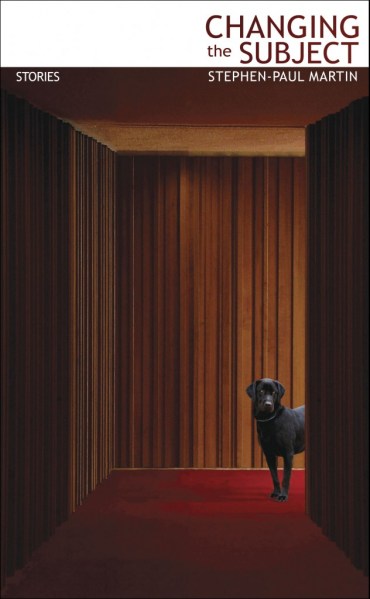 There’s a thread of vengeful anger that runs through Stephen-Paul Martin’s new collection of stories, Changing the Subject. Although a tidy portion of that anger is reserved for George W. Bush and his nefarious gang (the stories seem to have been composed under last decade’s regime), Martin’s various characters also aim their anger at scientists, whalers, cell phones, born-again Christians, college students, journalists, fast food restaurants, Americans, and all the people of the world. That anger works best when working in a reflective mode, especially when Martin blends his vitriol with humor. The opening paragraph of the first story “Safety Somewhere Else” provides a nice illustration of Martin at his finest–
The greatest mistake of all time took place thousands of years ago, when God let Noah’s family survive the flood. God’s plan was to start a new human race with a man he though he could trust, but the limits of Noah’s moral awareness were obvious right from the start. No sooner had God’s rainbow vanished into the clouds than Noah was getting drunk and cursing his grandson, declaring that Canaan’s descendants–one-third of the human race–would be the lowest of slaves, a monstrous over-reaction that would have tragic consequences for countless generations of innocent people. Clearly, Noah wasn’t the man God thought he was.
 The story then shifts into a bizarre picaresque involving revenge against a scientist who uses animals as research subjects (there’s also an attack on a whaling vessel, a fascinating reading of The Odyssey, and a woman whose son was consumed by a bear). Great stuff, but I think I would have been just as happy to hear more of Martin’s thoughts (or, his narrator’s thoughts, to be fair) on the Old Testament. Changing the Subject is new in trade paperback from Ellipsis Press.
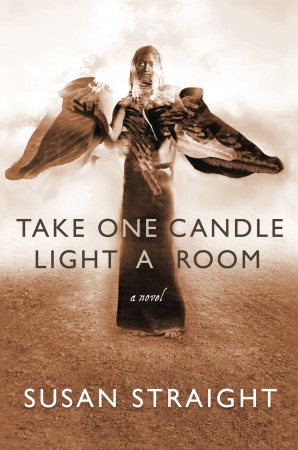
Susan Straight’s new novel Take One Candle Light a Room explores the physical and psychic traumas that evince from America’s long, painful, complicated history of race relations. FX Antoine, the novel’s narrator, is an LA-based travel writer who found herself, as a young girl, transplanted from rural Louisiana to California at the end of the fifties, in order to escape the rapes perpetrated by a local plantation owner on three of her sisters. In 2005, FX–Fantine to her friends and family–watches over Victor, her godson, a recent community college graduate. Fantine encourages Victor to expand his unlikely success (he is the son of a crack-addicted murder victim, one of Fantine’s childhood friends) by applying to four-year schools; however, after Victor is implicated in a shooting (wrong place, wrong time), he runs away to Louisiana. Fantine follows, attempting to save the young man and find some sense of personal redemption as well. The novel’s climax is set against the devastating backdrop of Hurricane Katrina. For more on Take One Candle, read Francesca Mari’s review at The New York Times. Take One Candle Light a Room is new in hardback from Pantheon Books.
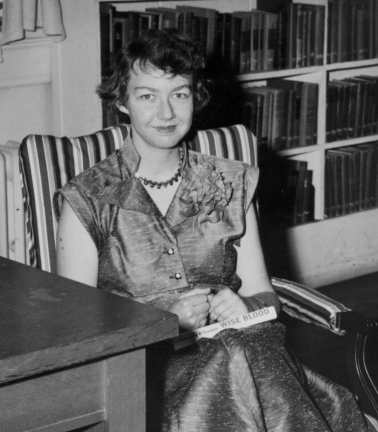 From Flannery O’Connor’s 1960 lecture, “Some Aspects of the Grotesque in Southern Fiction“—
 Biblioklept