
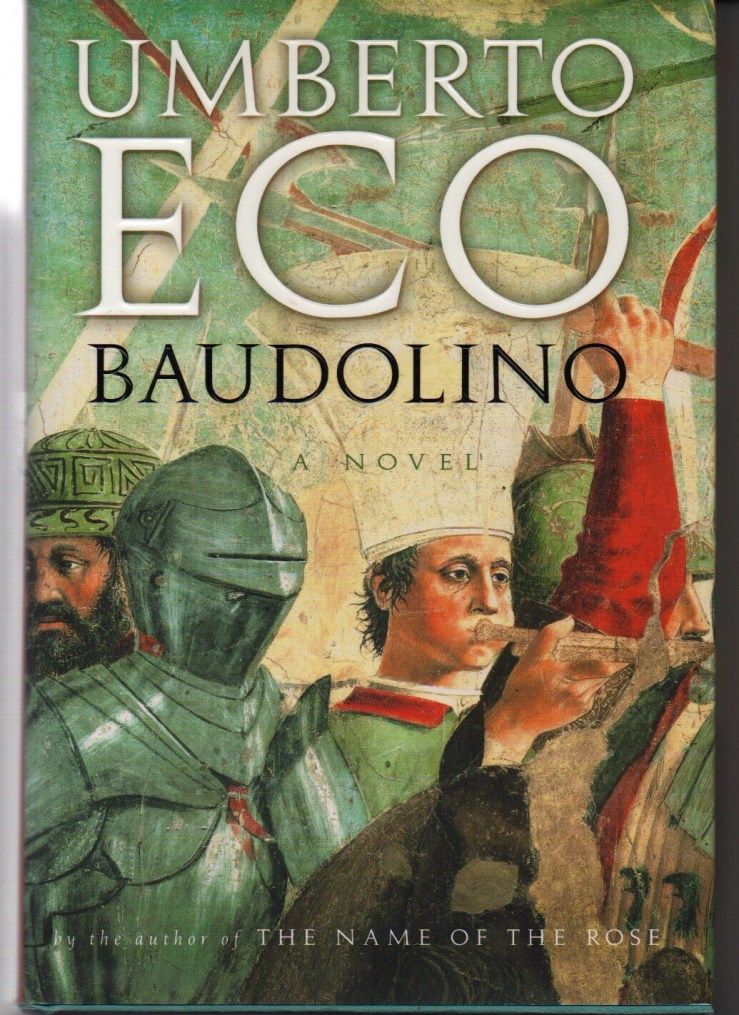
Baudolino by Umberto Eco. First edition hardback by Harcourt, 2002. English trans. by William Weaver. Jacket design by Vaughn Andrews, featuring a detail from the lefts side of Piero della Francesco’s fresco Battle between Heraclius and Chosroes.
I bought this in the last days of 2002 from the dollar table at the Barnes & Noble store near my parents house. I was 23 and had just moved home after living in Japan. I had no plans and was kind of depressed. I really can’t remember what I read around that time, but I know it wasn’t Baudolino. I didn’t get to it until the summer of 2011. It’s a fun, propulsive, sloppy quest narrative—bawdy, rich, a picaresque take on the (not-so-secret) mythological backgrounding of medieval Europe. It kind of unravels at the end.
I had initially planned this Sunday’s Three Books post to feature three Eco titles as a sort of tribute to our deceased semiotician, but alas I only have two here at the house (The Name of the Rose is the other one). I lost my copy of Foucault’s Pendulum over a decade ago, and I gave a colleague my copy of Misreadings just a few months ago (she had expressed a certain distaste for The Prague Cemetery). My copy of On Literature is in my office (although if I’m being honest, I use a samizdat digital copy more often as a reference point). Eco was a sort of gateway drug though to his spiritual brothers, Calvino and Borges. I actually read both of them before Eco, but understood them better when approached after Eco. I don’t know if that makes any sense (and I don’t think it has to make any sense).
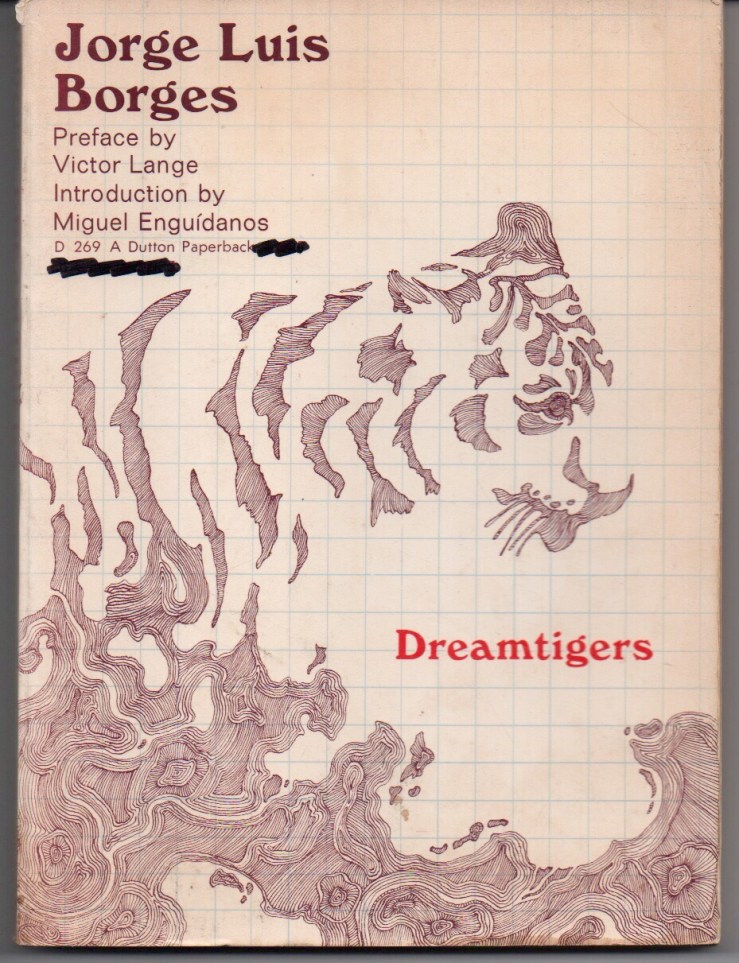
Dreamtigers by Jorge Luis Borges. An irregularly shaped trade paperback by E.P. Dutton & Co., 1970. English translation by Mildred Boyer (prose) and Harold Morland (poetry). Cover design by James McMullan. I love the cover and hate that a bookseller decided to mark out the original pricing with ugly Sharpie ink.
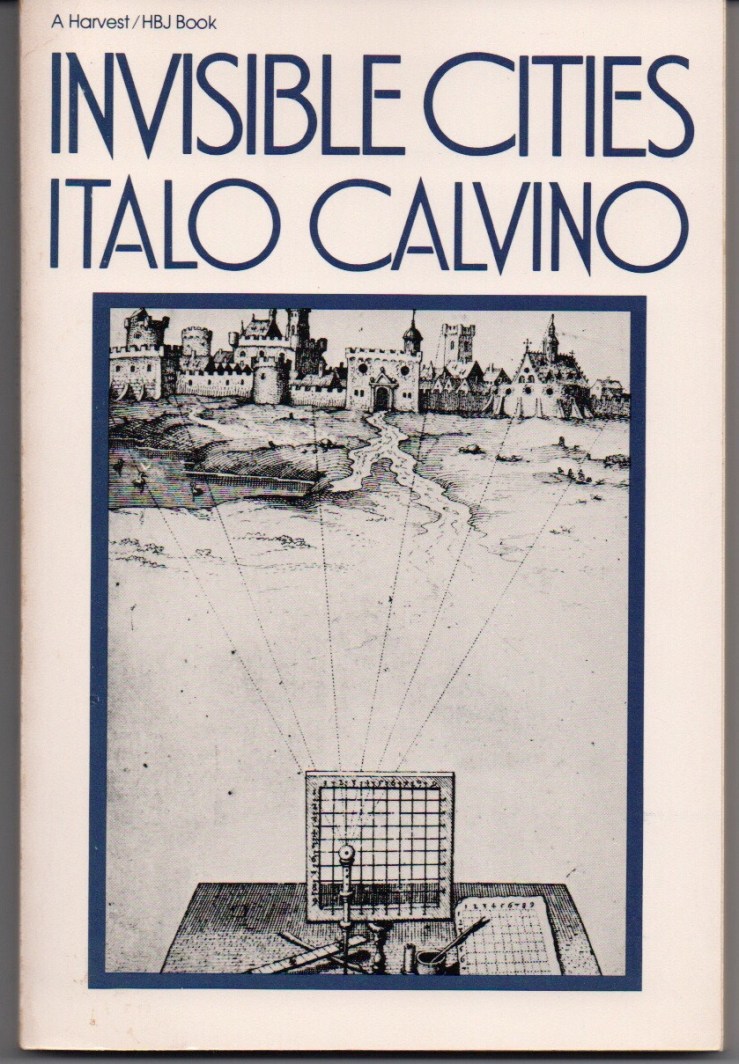
Invisible Cities by Italo Calvino. Harvest/HBJ trade paperback; no year given. English trans. by (Eco’s translator) William Weaver. Cover design by Louise Fili, employing a 17th-c. woodcut of a drawing screen. I first read Invisible Cities in 2002, in spots and places around Thailand. I read my friend’s copy; he had brought it with him to meet me there. He was the same guy who took my copy of Foucault’s Pendulum and never returned it.

 Biblioklept
Three nice finds
LikeLike
Like!
LikeLike