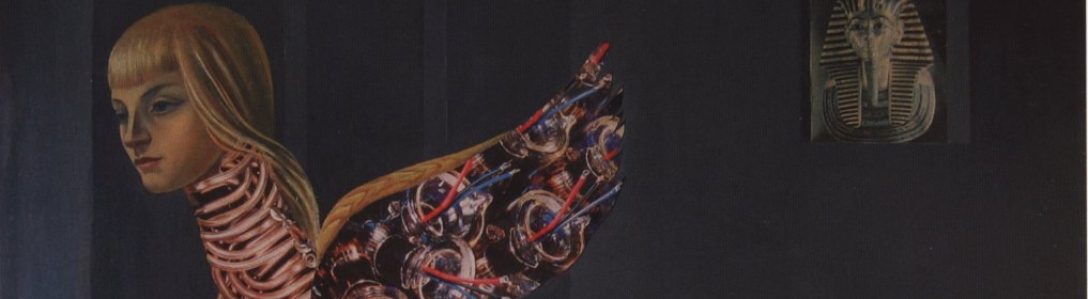

Two new collections from NYRB’s Poets imprint: On the Slaughter by Hayim Nahman Bialik, translated by Peter Cole, and Fifty Poems by Rainer Maria Rilke, translated by Geoffrey Lehmann. NYRB’s Bialik blurb:
Few poets in the history of Hebrew have possessed the power and prescience of Hayim Nahman Bialik. Born in 1873 in a small Ukrainian village, he spent his most productive years in Odessa and in his fifties made his way to British Mandatory Palestine. He died in Vienna in 1934. His body of work opened a path from the traditional Jewish world of Eastern Europe into a more expansive Jewish humanism. In a line that stretches back to the Bible and the Hebrew poetry of Muslim and Christian Spain, he stands out—in the words of Maxim Gorky—as “a modern Isaiah.” He remains to this day an iconic and shockingly relevant poet, essayist, and tutelary spirit.
Translated and introduced by MacArthur-winning poet Peter Cole, On the Slaughter presents Bialik for the first time in English as a masterful artist, someone far more politically and psychologically unsettling than his reputation as the national poet of the Jewish people might suggest. This compact collection offers readers a panoramic view of Bialik’s inner and outer landscapes—from his visionary “poems of wrath” that respond in startling fashion to the devastations of pogroms and revolutionary unrest to quietly sublime lyrics of longing and withering self-assessment. The volume also includes a sampling of slyly sophisticated verse for children, and a moving introduction that bridges Bialik’s moment and our own.
And “The Grown-up,” a poem from Rilke in Lehmann’s translation:
“The Grown-up”
All stood on her, all that has ever been
and was the world, and stood, its fears and grace,
as trees stand straight and rooted in one place, and solemn, like the memory of a race
or Ark of God, all-seeing and not seen.She carried it; knowledge of who they are,
the flyers, those who flee, the distant ones,
the monsters and the awkward, diffident sons,
casually like a brimming water jar
on her calm head. Then in the midst of play,
preparing, changing slowly, cell by cell,
she did not sense the first white veil that fell
across her open face, bland as the day,almost opaque, never to lift again.
And she forgot the answers she once knew,
leaving some vagueness she could not explain:
in you, the child who you have been, in you.

 Biblioklept