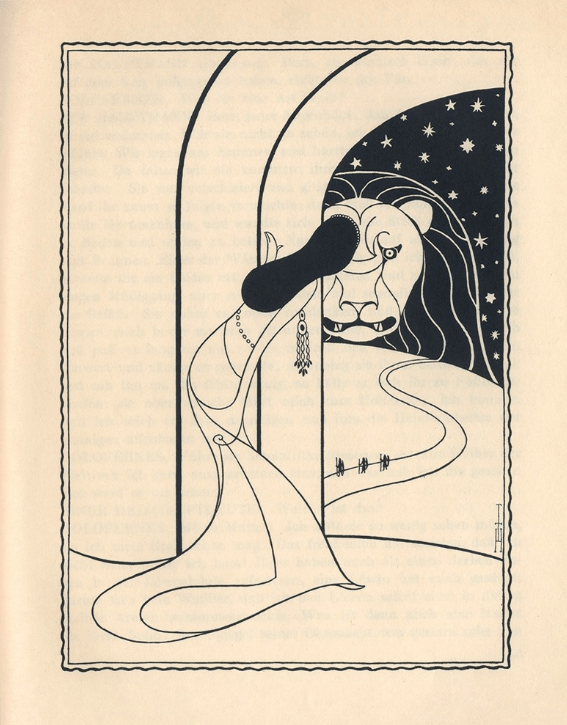
Judith sees the Head of the Lion, 1908 by Thomas Theodor Heine (1867-1948)
Judith sees the Head of the Lion, 1908 by Thomas Theodor Heine (1867-1948)

Birmingham Totem, 1964 by Charles White (1918-1979)
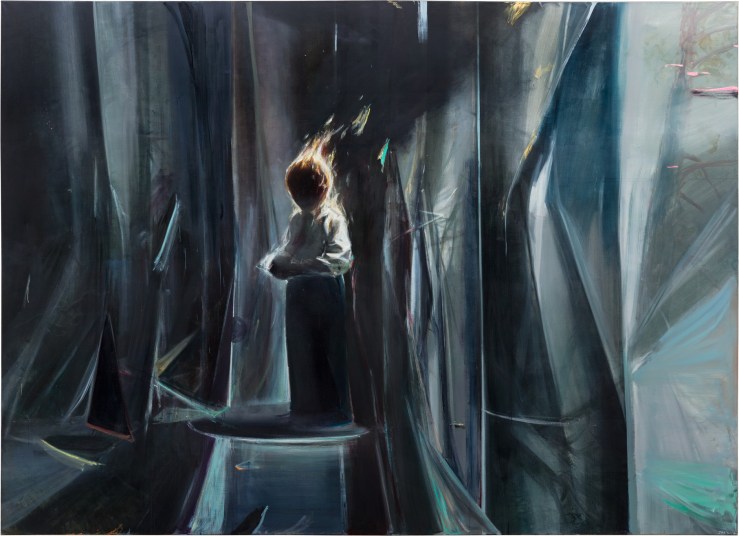
Divine State, 2012 by Jia Aili (b. 1979)
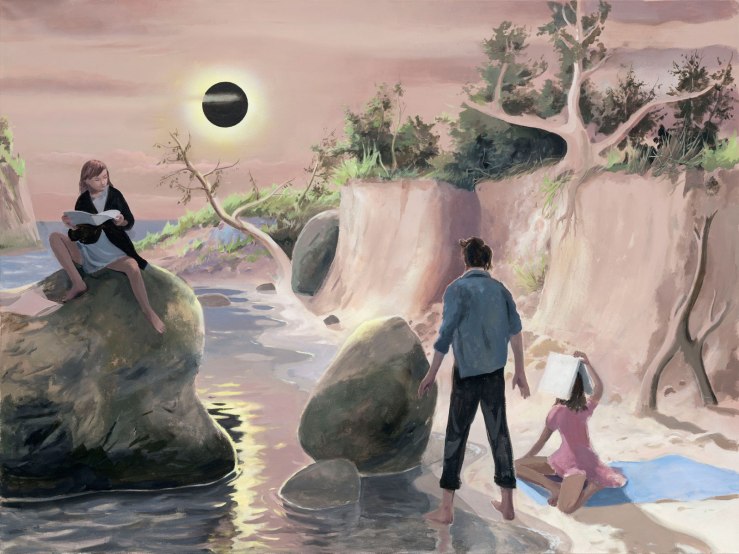

Eclipse 2, 2018 by Tilo Baumgärtel (b. 1972)
“The Witness”
by
Jorge Luis Borges
English translation by Andrew Hurley
In a stable that stands almost in the shadow of the new stone church, a man with gray eyes and gray beard, lying amid the odor of the animals, humbly tries to will himself into death, much as a man might will himself to sleep. The day, obedient to vast and secret laws, slowly shifts about and mingles the shadows in the lowly place; outside lie plowed fields, a ditch clogged with dead leaves, and the faint track of a wolf in the black clay where the line of woods begins. The man sleeps and dreams, forgotten.
The bells for orisons awaken him. Bells are now one of evening’s customs in the kingdoms of England, but as a boy the man has seen the face of Woden, the sacred horror and the exultation, the clumsy wooden idol laden with Roman coins and ponderous vestments, the sacrifice of horses, dogs, and prisoners. Before dawn he will be dead, and with him, the last eyewitness images of pagan rites will perish, never to be seen again. The world will be a little poorer when this Saxon man is dead.
Things, events, that occupy space yet come to an end when someone dies may make us stop in wonder—and yet one thing, or an infinite number of things, dies with every man’s or woman’s death, unless the universe itself has a memory, as theosophists have suggested. In the course of time there was one day that closed the last eyes that had looked on Christ; the Battle of Junin and the love of Helen died with the death of one man. What will die with me the day I die? What pathetic or frail image will be lost to the world? The voice of Macedonia Fernandez, the image of a bay horse in a vacant lot on the corner of Sarrano and Charcas, a bar of sulfur in the drawer of a mahogany desk?
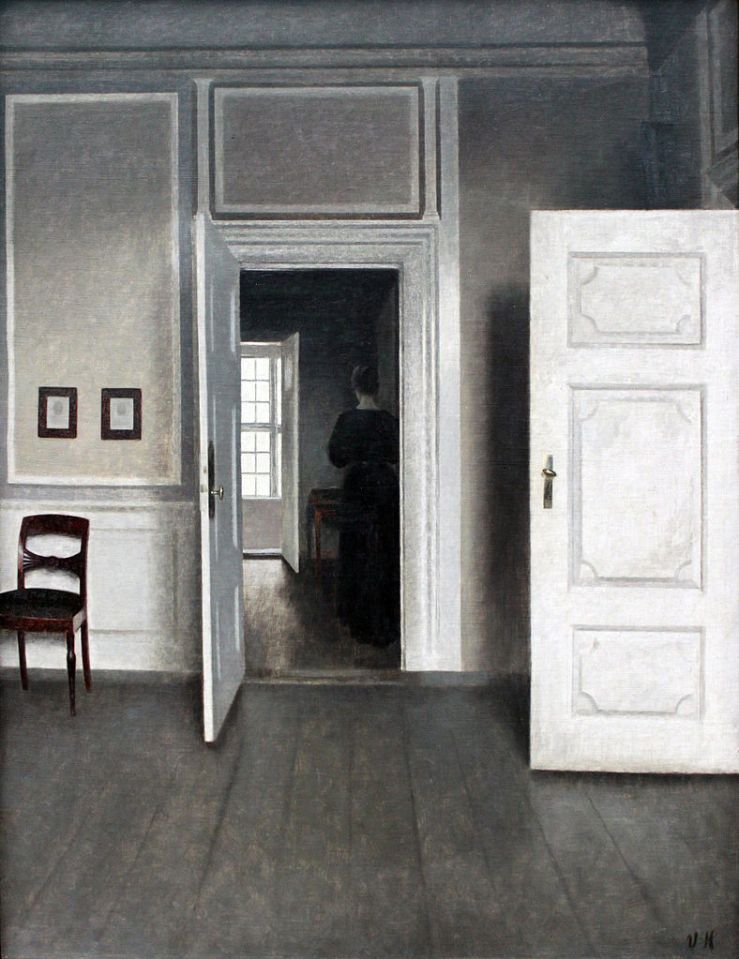
Interior Strandgade 30, 1901 by Vilhelm Hammershøi (1864-1916)
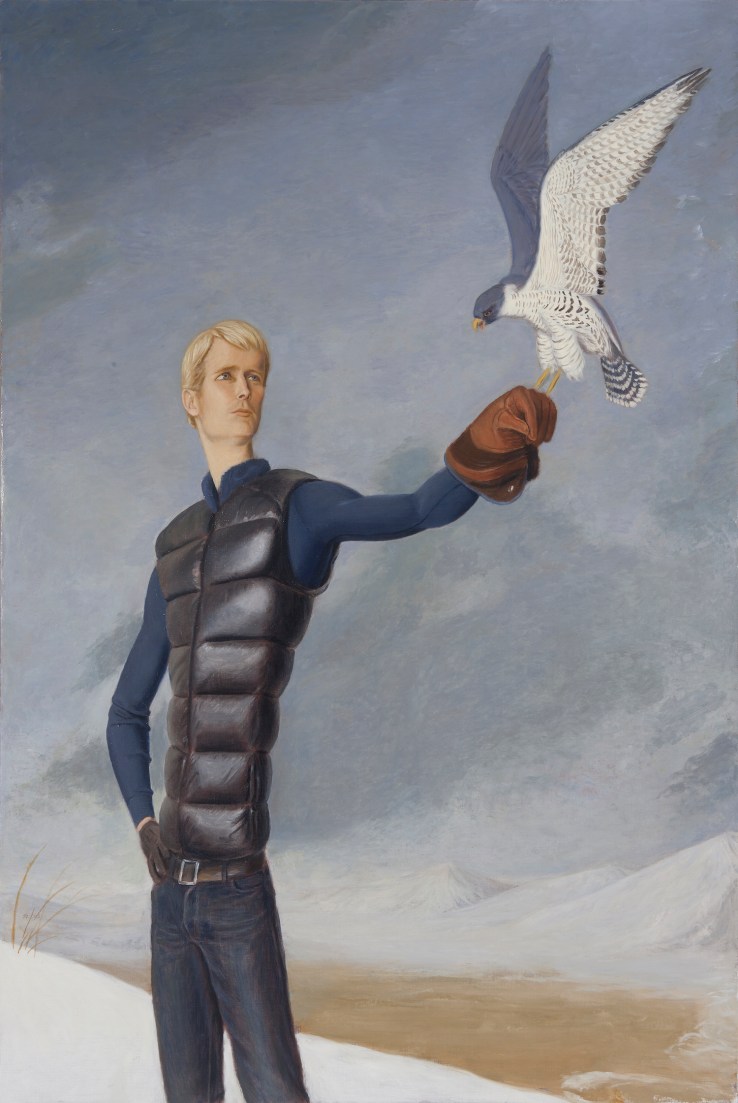
The Falconer, 2011 by Jansson Stegner (b. 1972)
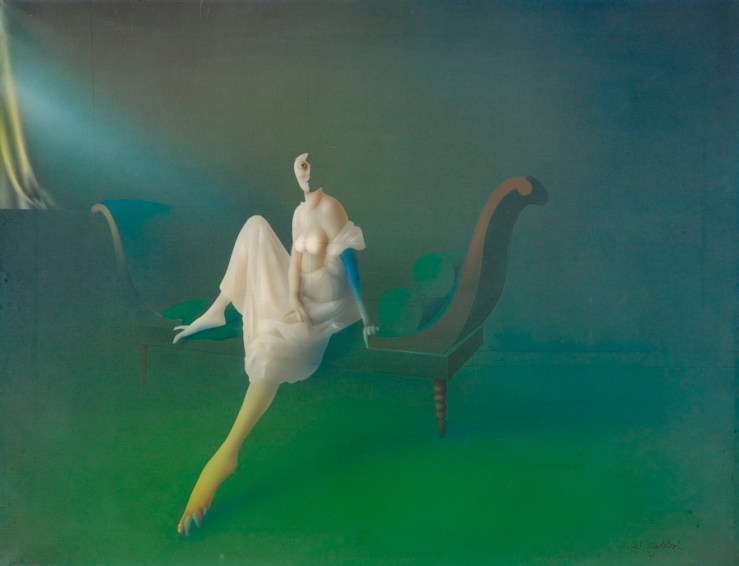
Daniela on David’s Récamière, 1974 by Paul Wunderlich (1927-2010)
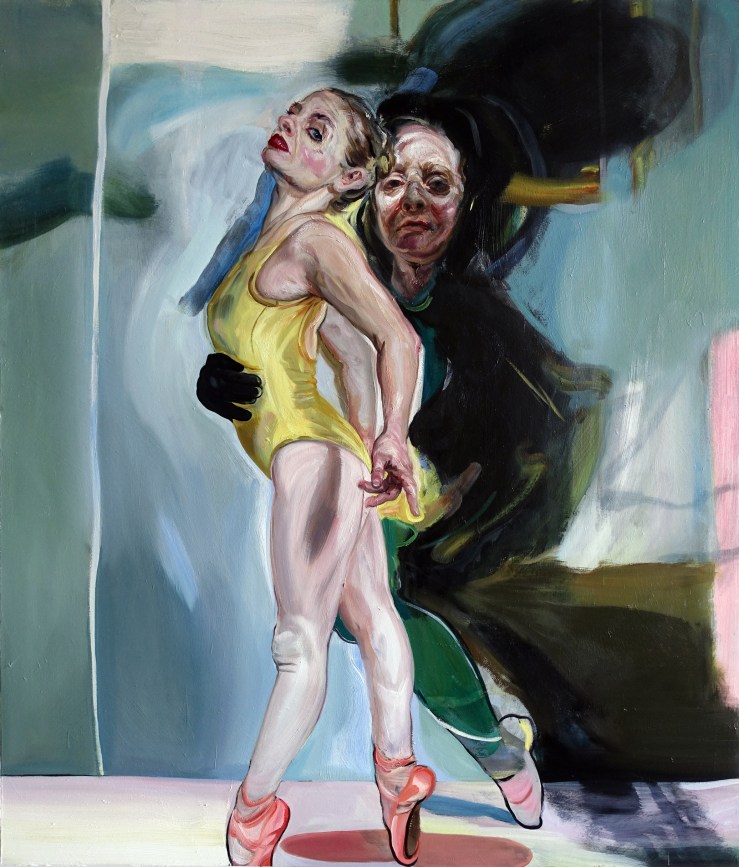
Dancer I, 2017 by Natalie Frank (b. 1980)
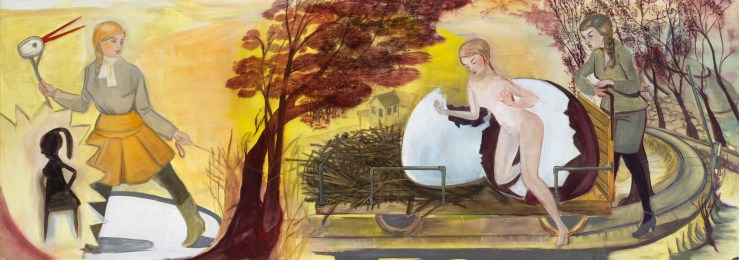
Germinal, 2013 by Rosa Loy (b. 1958)
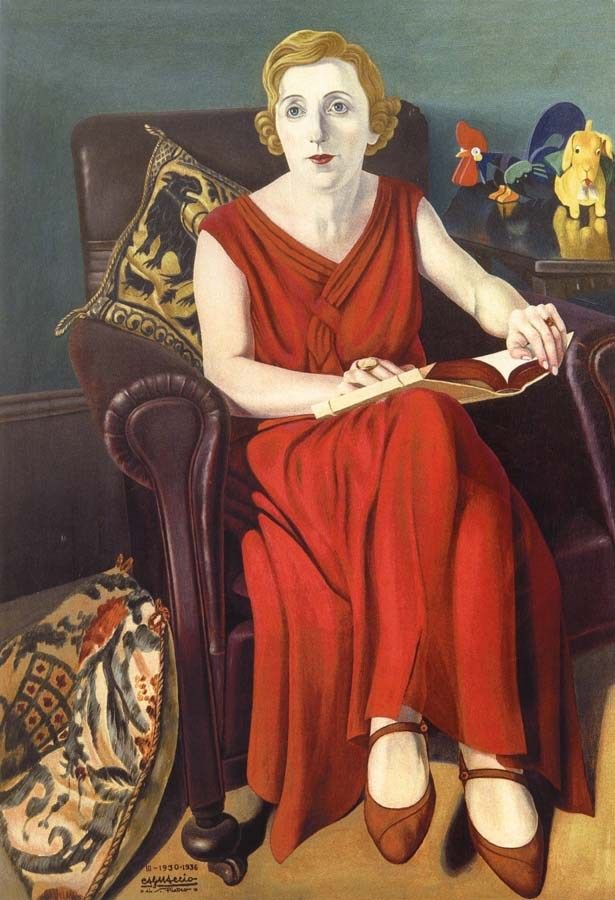
Portrait of Signora Vighi, 1930 by Cagnaccio di San Pietro (1897 – 1946)

Selene Thrown Down by Argus, 1886 by Ferdinand Keller (1842–1922)
Keller’s painting depicts the following scene in Georg Ebers’ 1880 novel The Emperor (English translation by Clara Bell):
In order to reach this fountain, Selene had to go along the corridor where lay the rooms occupied by the Emperor and his followers. She only knew that an architect from Rome had taken up his quarters at Lochias, for, some time after midnight, she had been to get out meat and salt for him, but in what rooms the strangers had been lodged no one had told her. But this morning as she followed the path she was accustomed to tread day by day at the same hour, she felt an anxious shiver. She felt as if everything were not quite the same as usual, and just as she had set her foot on the cop step of the flight leading to the corridor, she raised her lamp to discover whence came the sound she thought she could hear, she perceived in the gloom a fearful something which as she approached it resembled a dog, and which was larger—much larger—than a dog should be.
Her blood ran cold with terror; for a few moments she stood as if spellbound, and was only conscious that the growling and snarling that she heard meant mischief and threatening to herself. At last she found strength to turn to fly, but at the same instant a loud and furious bark echoed behind her and she heard the monster’s quick leaps as he flew after her along the stone pavement.
She felt a violent shock, the pitcher flew out of her hand and was shattered into a thousand fragments, and she sank to the ground under the weight of a warm, rough, heavy mass. Her loud cries of alarm resounded from the hard bare walls, and roused the sleepers and brought them to her side.

Three Girls in a Wood, 2018 by Kehinde Wiley (b. 1977)

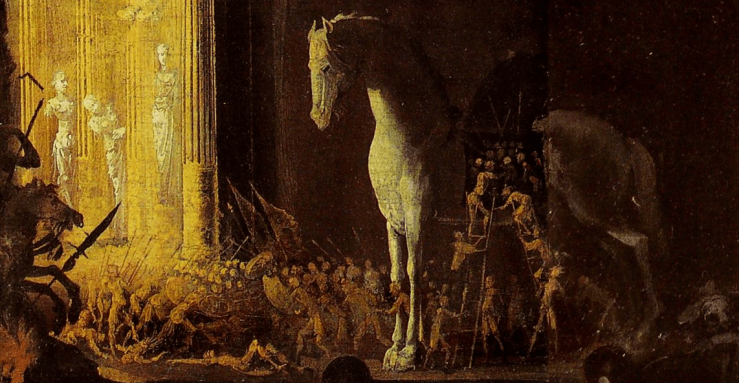
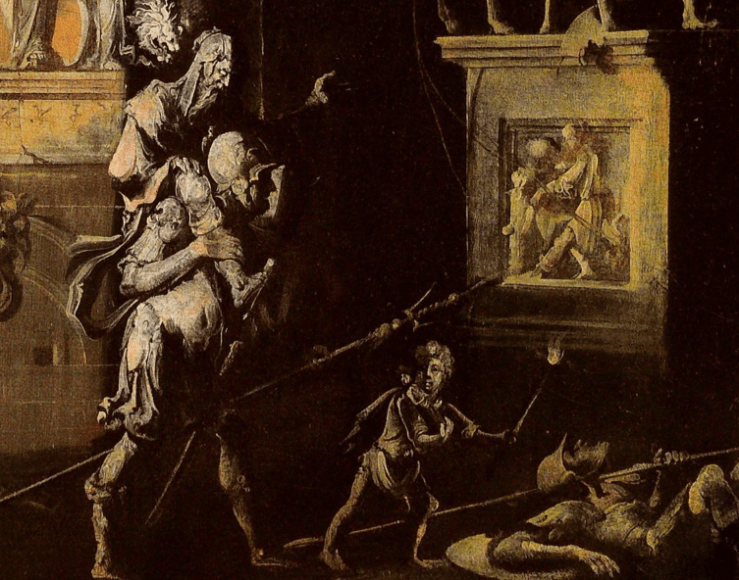
The Burning of Troy with the Flight of Aeneas, by François de Nomé (1593 – after 1620)
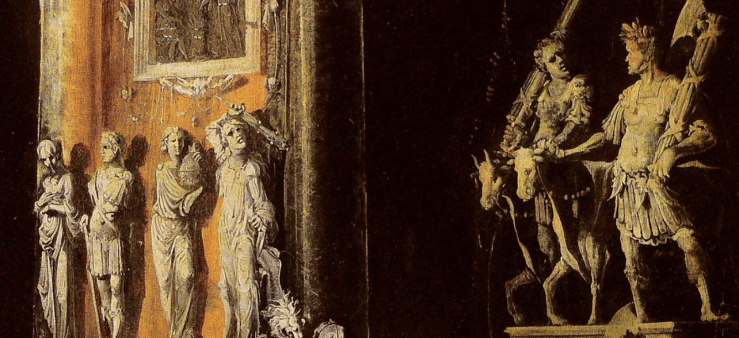
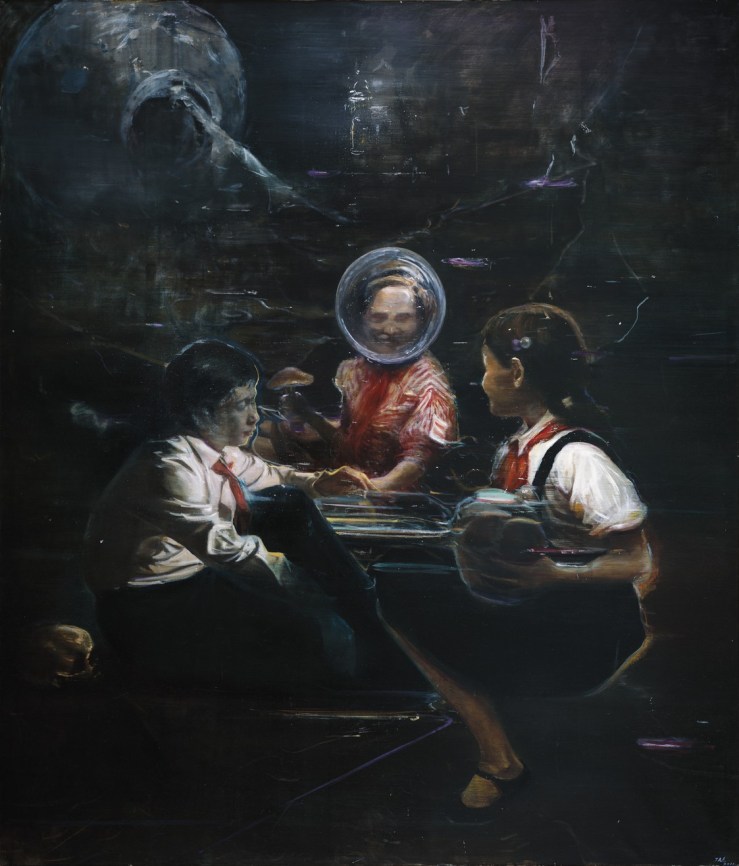
Untitled, 2012 by Jia Aili (b. 1979)
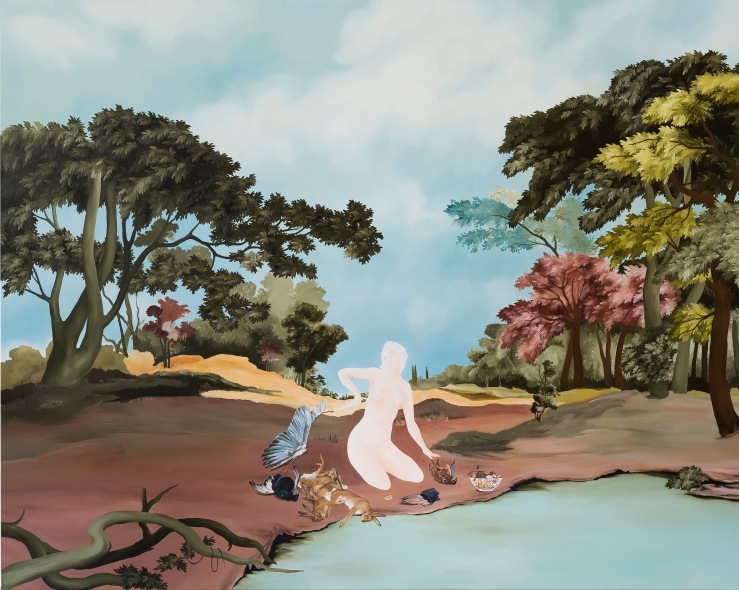
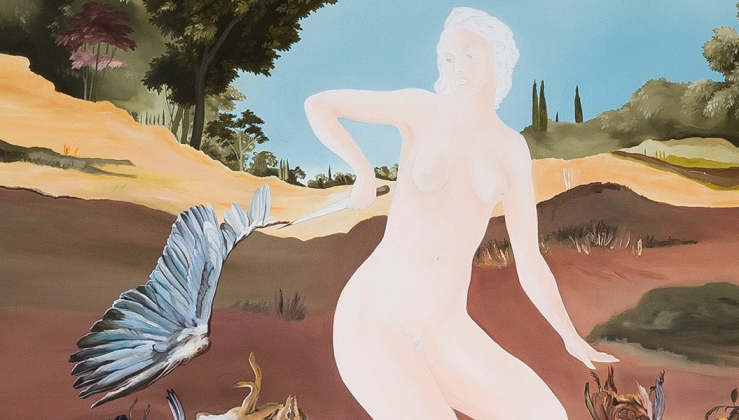


 Biblioklept