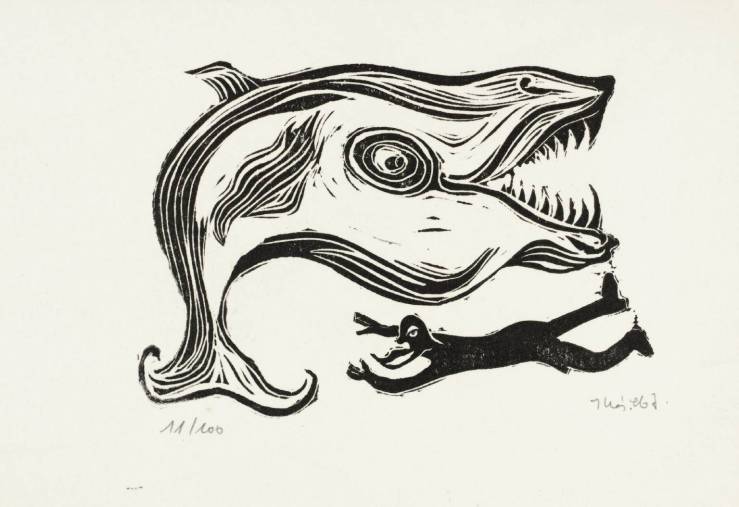
Jonah and the Whale — Arpad Illes

Jonah and the Whale, 1967 by Arpad Illes (1908–1980)

Shipmates, this book, containing only four chapters—four yarns—is one of the smallest strands in the mighty cable of the Scriptures. Yet what depths of the soul does Jonah’s deep sealine sound! what a pregnant lesson to us is this prophet! What a noble thing is that canticle in the fish’s belly! How billow-like and boisterously grand! We feel the floods surging over us; we sound with him to the kelpy bottom of the waters; sea-weed and all the slime of the sea is about us! But what is this lesson that the book of Jonah teaches? Shipmates, it is a two-stranded lesson; a lesson to us all as sinful men, and a lesson to me as a pilot of the living God. As sinful men, it is a lesson to us all, because it is a story of the sin, hard-heartedness, suddenly awakened fears, the swift punishment, repentance, prayers, and finally the deliverance and joy of Jonah. As with all sinners among men, the sin of this son of Amittai was in his wilful disobedience of the command of God—never mind now what that command was, or how conveyed—which he found a hard command. But all the things that God would have us do are hard for us to do—remember that—and hence, he oftener commands us than endeavors to persuade. And if we obey God, we must disobey ourselves; and it is in this disobeying ourselves, wherein the hardness of obeying God consists.
From “The Sermon,” Ch. 9 of Herman Melville’s Moby-Dick.

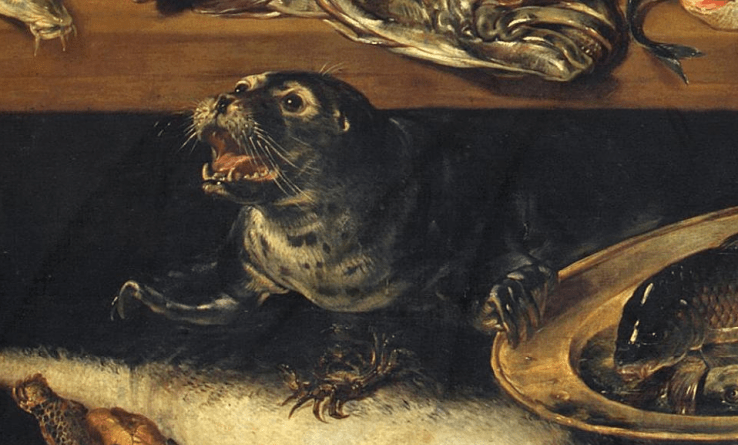
Fish Stall (Detail) — Frans Snyders

Fish Stall (Detail), c. 1620  by Frans Snyders (1579–1657)

December — Alex Colville

december-1979.jpg!Large

December, 1979 by Alex Colville (1920-2013)

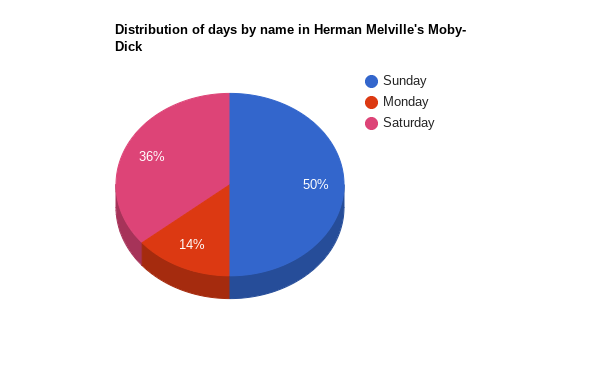
Distribution of days by name in Herman Melville’s novel Moby-Dick

SUNDAY

There are seven Sundays in Herman Melville’s novel Moby-Dick (Ch. 3 (four instances), Ch. 7, Ch. 85, and Ch. 112).

MONDAY

There are two Mondays in Herman Melville’s novel Moby-Dick (Ch. 2 and Ch. 13).

TUESDAY

There are no Tuesdays in Herman Melville’s novel Moby-Dick.

WEDNESDAY

There are no Wednesdays in Herman Melville’s novel Moby-Dick.

THURSDAY

There are no Thursdays in Herman Melville’s novel Moby-Dick.

FRIDAY

There are no Fridays in Herman Melville’s novel Moby-Dick.

SATURDAY

There are five Saturdays in Herman Melville’s novel Moby-Dick (Ch. 2, Ch. 3 (two), Ch. 65, and Ch. 67).


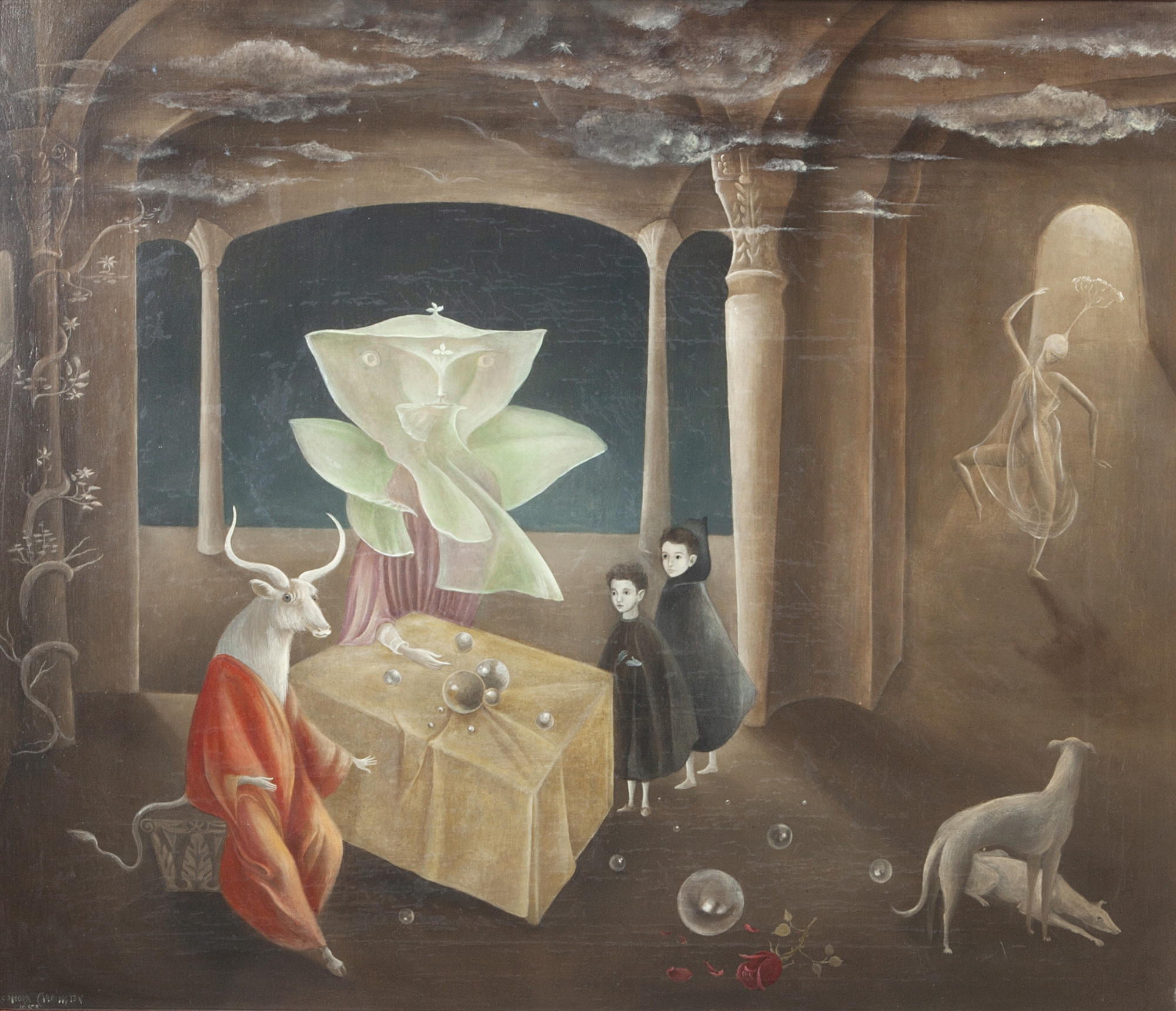
And Then We Saw the Daughter of the Minotaur — Leonora Carrington

And Then We Saw the Daughter of the Minotaur, 1953 by Leonora Carrington (1917–2011)

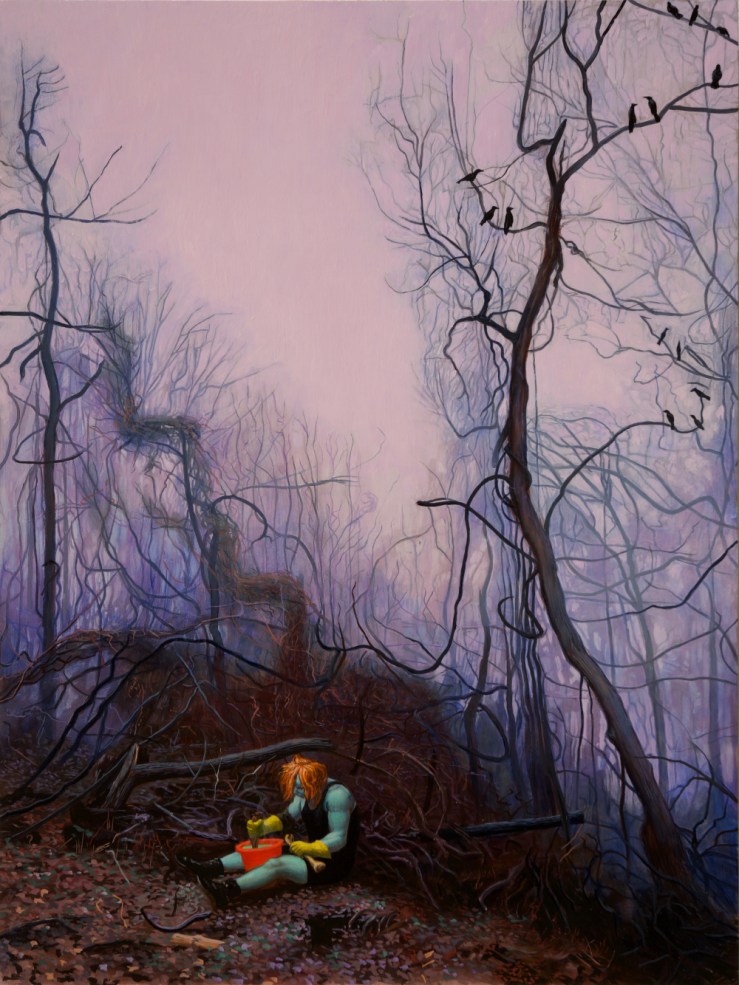
AnnumMMXX Phase III — John Jacobsmeyer 

AnnumMMXX Phase III, 2020 by John Jacobsmeyer (b. 1964)


The First Thanksgiving — Warrington Colescott

w1siziisijixndkzmijdlfsiccisimnvbnzlcnqilcitcmvzaxplidiwmdb4mjawmfx1mdazzsjdxq The First Thanksgiving, 1973 by Warrington Colescott (1921 – 2018) Screenshot 2018-11-19 at 3.38.36 PMScreenshot 2018-11-19 at 3.38.55 PMScreenshot 2018-11-19 at 3.39.56 PMScreenshot 2018-11-19 at 3.38.08 PM
A grave and dark-clad company!” quoth Goodman Brown. In truth, they were such. Among them, quivering to-and-fro, between gloom and splendor, appeared faces that would be seen, next day, at the council-board of the province, and others which, Sabbath after Sabbath, looked devoutly heavenward, and benignantly over the crowded pews, from the holiest pulpits in the land. Some affirm, that the lady of the governor was there. At least, there were high dames well known to her, and wives of honored husbands, and widows, a great multitude, and ancient maidens, all of excellent repute, and fair young girls, who trembled lest their mothers should espy them. Either the sudden gleams of light, flashing over the obscure field, bedazzled Goodman Brown, or he recognized a score of the church-members of Salem village, famous for their especial sanctity. Good old Deacon Gookin had arrived, and waited at the skirts of that venerable saint, his reverend pastor. But, irreverently consorting with these grave, reputable, and pious people, these elders of the church, these chaste dames and dewy virgins, there were men of dissolute lives and women of spotted fame, wretches given over to all mean and filthy vice, and suspected even of horrid crimes. It was strange to see, that the good shrank not from the wicked, nor were the sinners abashed by the saints. Scattered, also, among their pale-faced enemies, were the Indian priests, or powows, who had often scared their native forest with more hideous incantations than any known to English witchcraft.
–From “Young Goodman Brown,” Nathaniel Hawthorne (1835)

Then there you lie like the one warm spark in the heart of an arctic crystal | Moby-Dick

Yes, we became very wakeful; so much so that our recumbent position began to grow wearisome, and by little and little we found ourselves sitting up; the clothes well tucked around us, leaning against the head-board with our four knees drawn up close together, and our two noses bending over them, as if our kneepans were warming-pans. We felt very nice and snug, the more so since it was so chilly out of doors; indeed out of bed-clothes too, seeing that there was no fire in the room. The more so, I say, because truly to enjoy bodily warmth, some small part of you must be cold, for there is no quality in this world that is not what it is merely by contrast. Nothing exists in itself. If you flatter yourself that you are all over comfortable, and have been so a long time, then you cannot be said to be comfortable any more. But if, like Queequeg and me in the bed, the tip of your nose or the crown of your head be slightly chilled, why then, indeed, in the general consciousness you feel most delightfully and unmistakably warm. For this reason a sleeping apartment should never be furnished with a fire, which is one of the luxurious discomforts of the rich. For the height of this sort of deliciousness is to have nothing but the blanket between you and your snugness and the cold of the outer air. Then there you lie like the one warm spark in the heart of an arctic crystal.

From Chapter 11 of Herman Melville’s Moby-Dick.

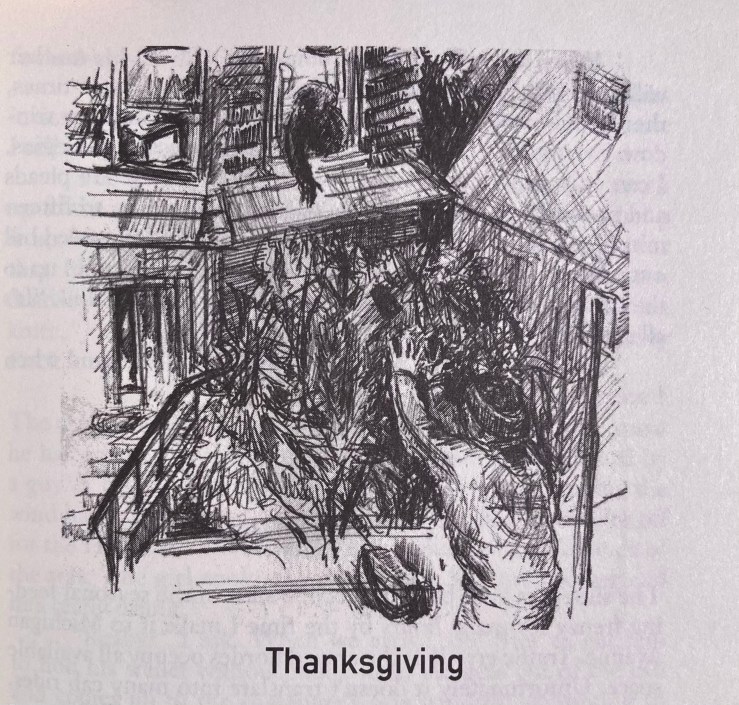
“Thanksgiving,” an excerpt from Dmitry Samarov’s cab memoir Hack

I’m on way to a traditional Thanksgiving meal of pot-stickers and spicy pan-fried pork at Lao Sze Chuan when flags me down. A young guy in a tracksuit and expensive basketball shoes. He says his car broke down, which typically a scam. But it’s Thanksgiving, so I give him the benefit of the doubt and he directs to an address on the South Side.

He tells me about going to an event with Chicago Bulls players, proudly showing the autographs he collected. He is excited like a kid would be, which makes me think the broken-down car might actually exist. He asks if I’d had my Thanksgiving meal.

When we pull up to his house, he tells me his mother will have the $25 for the cab. He has me honk a few times then goes into the yard and hollers up the second-floor window. Eventually a dark form appears and a negotiation begins. I can only make out what my passenger is saying. He pleads and promises to pay it all back. It goes on for close to fifteen minutes. Then the figure in the window tosses a crumpled bill out past the overgrown shrubbery of the yard. He comes up to the driver’s side, sheepishly offering a twenty-dollar bill. “It’s all sh has.”

He says his name is Dwayne and shakes my hand when I accept it.

From Dmitry Samarov’s illustrated cab memoir All Hack.

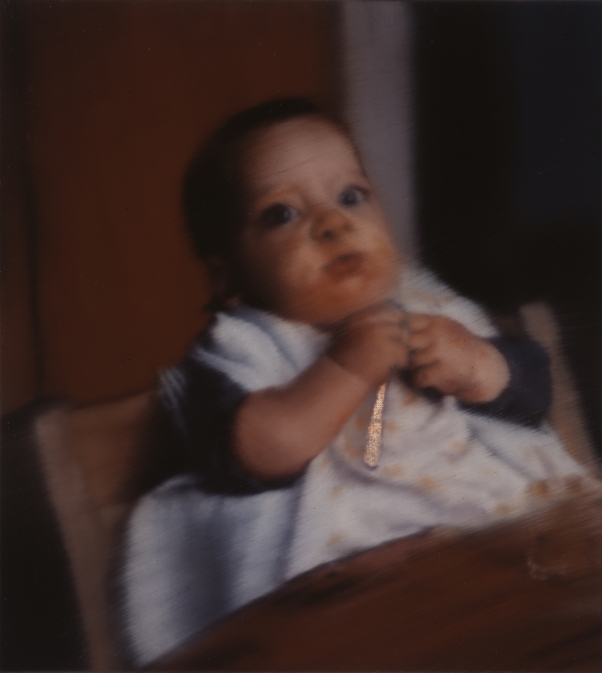
Moritz — Gerhard Richter

Moritz, 2000 by  Gerhard Richter (b. 1932)

Orca — Angela Gram

Orca, 2020 by Angela Gram (b. 1985)

Vast practical joke | Moby-Dick

There are certain queer times and occasions in this strange mixed affair we call life when a man takes this whole universe for a vast practical joke, though the wit thereof he but dimly discerns, and more than suspects that the joke is at nobody’s expense but his own. However, nothing dispirits, and nothing seems worth while disputing. He bolts down all events, all creeds, and beliefs, and persuasions, all hard things visible and invisible, never mind how knobby; as an ostrich of potent digestion gobbles down bullets and gun flints. And as for small difficulties and worryings, prospects of sudden disaster, peril of life and limb; all these, and death itself, seem to him only sly, good-natured hits, and jolly punches in the side bestowed by the unseen and unaccountable old joker. That odd sort of wayward mood I am speaking of, comes over a man only in some time of extreme tribulation; it comes in the very midst of his earnestness, so that what just before might have seemed to him a thing most momentous, now seems but a part of the general joke.

From Ch. 49 of Moby-Dick by Herman Melville.

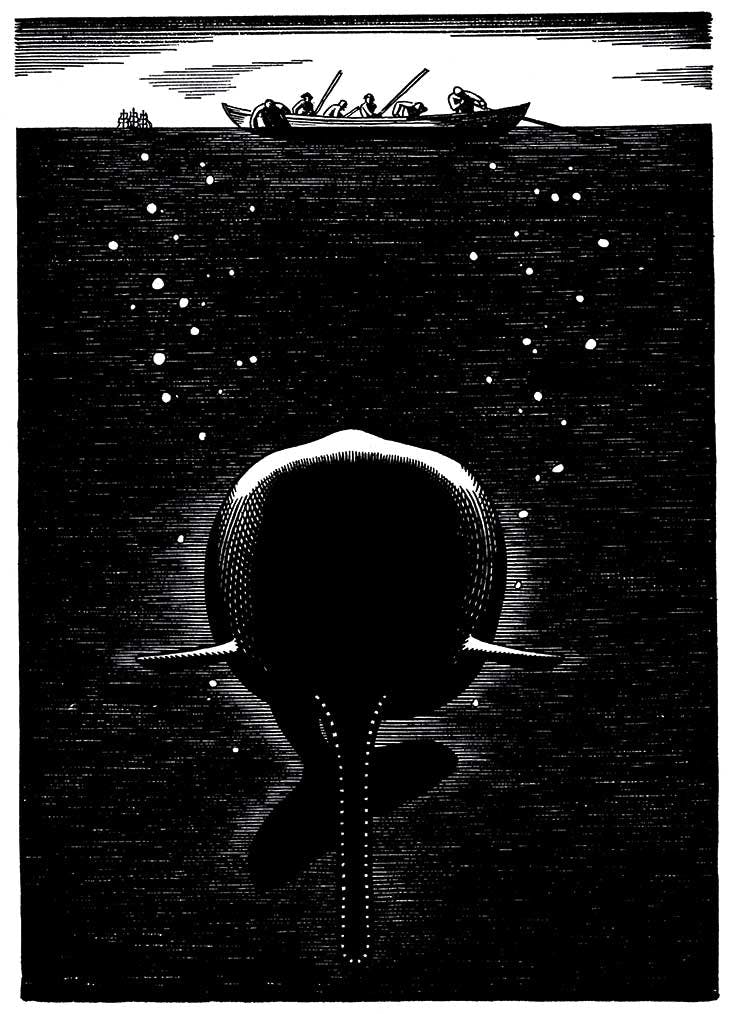
Whale beneath the Sea — Rockwell Kent

Whale beneath the Sea,1930 by Rockwell Kent (1882–1971)

Self-Portrait — Christian Schad

Self-Portrait, 1927 by Christian Schad (1894-1982)

To the Last Syllable of Recorded Time — Sanam Khatibi

To the Last Syllable of Recorded Time, 2019 by Sanam Khatibi (b. 1979)

Seated Woman — Rik Wouters

MSKG – Zittende vrouw bij het venster of Portret van Nel Duerinc

Seated Woman, 1915 by Rik Wouters (1882-1916)

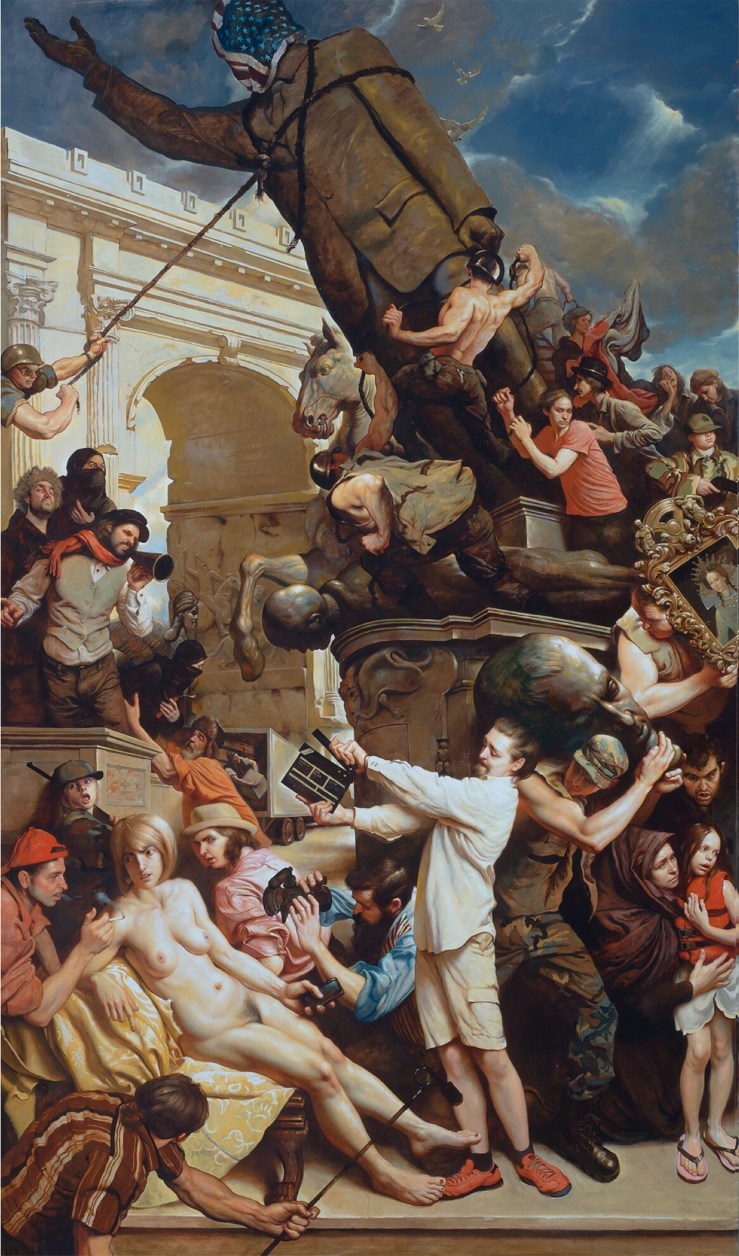
The Fall of Troy — Adam Miller

The Fall of Troy, 2019 by Adam Miller (b. 1979)