







Summer lovin’: have a blast. You don’t have to read harlequin schlock to get romantically fulfilled on the beach this year.
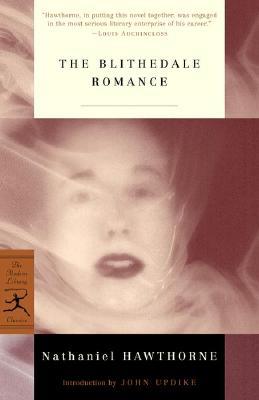
Why not start with an overlooked, under-read classic from American Renaissance master Nathaniel Hawthorne. The Blithedale Romance is a fictionalized account of Hawthorne’s time on Brooke Farm–here called Blithedale–an attempt at a utopian commune founded by artists and free-thinkers. Free lovin’, amorous passions, and, uh, farming. Great stuff–and romance is right in the title.
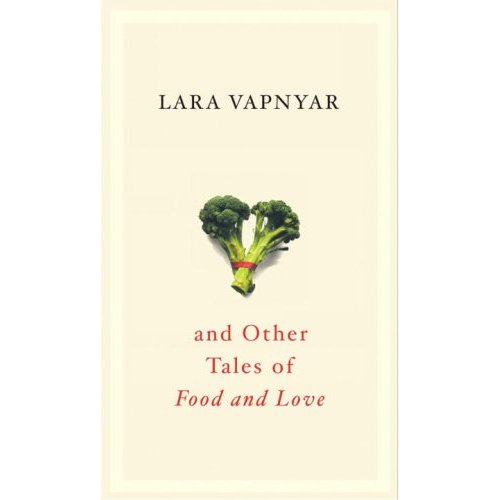
For lighter yet still substantial fare, check out Lara Vapnyar’s Broccoli and Other Tales of Food and Love, a delicious collection of snack-sized short stories (please, please, please forgive this awful extended metaphor). Sly, smart, and occasionally sexy, Vapnyar’s tales of dislocated immigrants continue to linger on the palate long after they’ve been digested (sorry!). The recipe section at the end is the sweetest dessert (ok, I swear I’m done now).
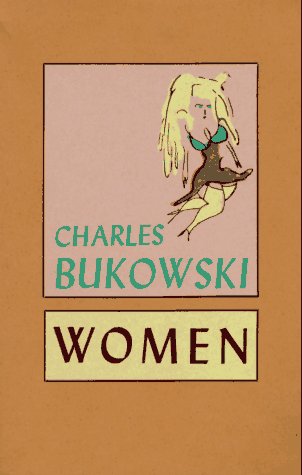
If you like your love stories rougher around the edges, check out Charles Bukowski’s only masterpiece, Women. This rambling novel follows alter-ego Henry Chinaski’s late-in-life successful turn with the ladies. Ugly, unforgiving, honest, and hilarious, Women is one of my favorite books. Also, unlike Henry Miller’s Tropic books, you’ll actually finish this one.
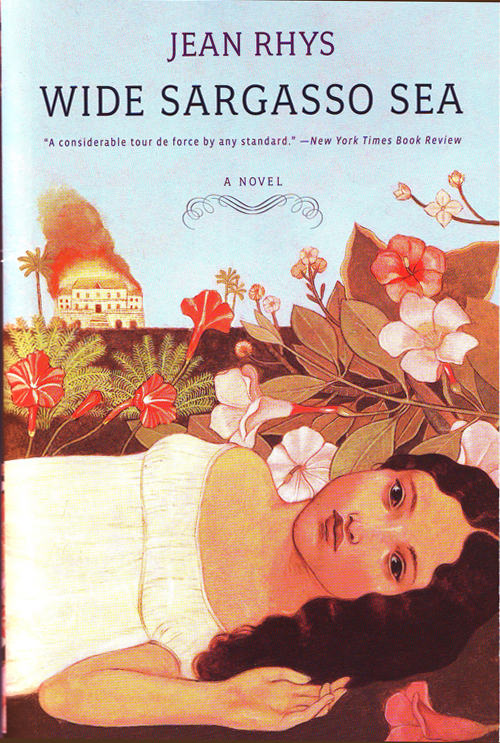
We finally read Charlotte Brontë’s Jane Eyre last summer, and believe it or not, the book is pretty great. Truly a romantic classic, but also a fine comment on gender, class, and social mores in general. And if you like it, check out Jean Rhys’s Wide Sargasso Sea, which tackles the back-story of a certain crazy lady in the attic who didn’t exactly get a voice in Jane Eyre.
Finally, if you want to get very specific, don’t hesitate to search the Romantic Circles website. Plenty of resources and lots of electronic texts: your source for all things Blake, Wordsworth, Coleridge, Shelley, Keats, and more. Good stuff.
A is for Antigone, the incestuous product of Oedipus and his mama Jocasta. In Sophocles’ play of the same name, Antigone is punished for burying the body of her exiled brother Polynices. Like her papa Oedipus, Antigone pushes the limits of cultural boundaries and the conflicts that duty to one’s family and the gods present to social order. Good, tragic stuff.
A is also for Alice, the heroine of not one but two Lewis Carroll classics, Alice’s Adventures in Wonderland and Through the Looking-Glass, and What Alice Found There. Full of logic puzzles, cryptic satire, and good old fashioned nonsense, Alice’s adventures work on a range of levels that appeal to both children and adults. She explores altered states and missing signifiers while flirting with death and madness in a surreal dreamworld. (Fans of Carroll’s twisty logic will surely delight in Douglas Hofstadter’s Gödel, Escher, Bach: an Eternal Golden Braid).
B is for Bartleby the scrivener, the eponymous non-hero of my favorite Herman Melville short story. Bartleby is hired by a wealthy lawyer to copy texts, a job at which he excels. But whenever Bartleby is asked to do something other than copy letters, he always replies “I would prefer not to.” This answer incenses the other employs and bewilders the lawyer. Eventually Bartleby stops doing any task, but somehow always remains around the office, almost like a ghost. Just what exactly Bartleby is meant to symbolize is up for grabs–Melville’s text is rich with possible interpretations. Every time I read this one, I get a new perspective. Read the full text here.
B is also for Billy Budd, yet another Melville character. Maybe you read Billy Budd in high school (it made me scratch my head quite a bit my Junior year). Billy Budd is a foundling who grows into the type of man admired by all. When he joins the crew of a ship, he is lovingly called “Baby Budd” by his fellow sailors. However, when he encounters his embittered superior Claggart, his innocence is put to the test; Claggart accuses young Budd of plotting mutiny. Billy is literally struck dumb by the accusation, and he responds by striking Claggart, inadvertently killing him. For this crime he is put to death and revered as a Christ-like figure by the crew. Like the story of Bartleby, Billy Budd resists easy decoding. Simply put, this is a great novella to come back to more than once.
C is for Chinaski. Henry Chinaski was the alter-ego Charles Bukowski used to represent himself in his books. Chinaski was a macho coward, a drunken gambler who was always chasing ladies and losing jobs. Chinaski was (bizarrely) the ideal imagined self for Bukowski, full of faults and shortcomings and egotistical brutality. I recently watched the documentary Bukowski: Born into This. One memorable scene goes something like this: the filmmaker (this is in the early 70s, when the filmmaker first begins shooting the footage that becomes Born into This) follows Bukowski from L.A. to San Francisco, where he’s giving a poetry reading. Bukowski gets drunk on the plane, makes an ass of himself, is a moron at the reading, is a bumbling idiot, etc, etc. However Bukowski writes up the whole event very differently in his Open City column, “Notes of a Dirty Old Man”–he paints a picture of himself having to help this idiot camera guy out; he says the filmmaker is a lost fool. When the filmmaker runs into Bukowski, he’s upset; he says: “Don’t you realize that I have film of the whole thing? I’ve got you drunk on film, looking like a fool!” Bukowski replies: “Fuck you! When I write, I’m the hero of my shit!” So that’s Chinaski: the hero of Bukowski’s shit.
C is also for Calliope, the protagonist of Jeffrey Eugenides’ 2002 novel Middlesex. To be honest, I thought the second half of the novel was weak (in fact I thought the end was downright awful), and Eugenides’ writing was surprisingly rote, even hackneyed at times (I use the adverb “surprisingly” as I was under the impression that he was something different based on friends’ reviews of The Virgin Suicides, which I never read). Nevertheless, poor cursed Calliope is a complex and at times enthralling character to follow. No one realizes Calliope is a hermaphrodite until she (Cal is raised as a girl) turns fourteen and shit gets weird. The gender study implications are interesting here, but what I found truly fascinating about the novel was the way that Eugenides used Calliope as a muse for genetic history; the character is essentially a complex and conflicting comment on the clashing paradigms of different ages and different spaces. Boys and girls, Turks and Greeks, blacks and whites, rich and poor, hippies and squares–as the name of the novel implies, there is never a definite and simple space where identity can rest.
 Biblioklept