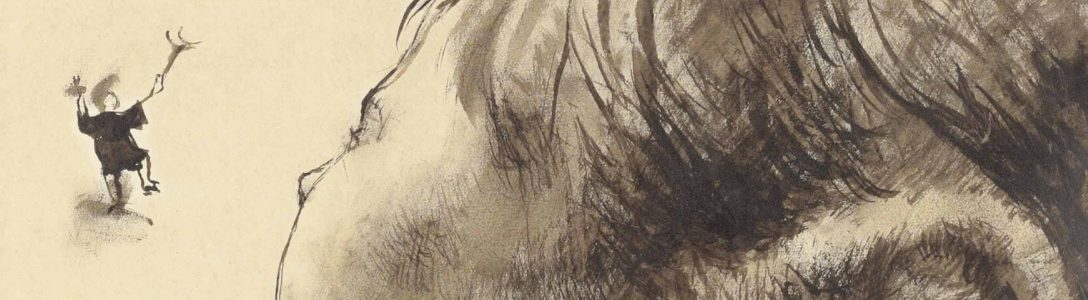
Italo Calvino on Charles Dickens’s last novel Our Mutual Friend. Essay from Why Read the Classics?:
The Thames at nightfall, dark and muddy, with the tide rising up the piers of the bridges: against this backdrop, which this year’s news stories have brought to our attention in the most lugubrious light, a boat approaches, almost touching the floating logs, barges and rubbish. At its prow stands a man staring with vulture-like eyes at the current as though looking for something; at the oars, half-hidden by the hood of her cheap cloak, is a girl with an angelic face. What are they looking for? We soon learn that the man recovers the corpses of suicides or murder victims who have been flung into the river: the waters of the Thames seem to contain every day a rich catch for this particular fisherman. As soon as he sees a corpse floating on the water’s surface, the man removes the gold coins from his pockets, and then drags him with a rope to a riverside police station, where he will receive a reward. The angelic girl, the daughter of the boatman, tries not to look at this macabre booty: she is terrified, but continues to row.
The openings of Dickens’ novels are often memorable, but none is better than the first chapter of Our Mutual Friend, the second last novel he wrote, and the last one he completed. Carried along on the corpse-fisher’s boat, we seem to enter the dark side of the world.
In the second chapter everything changes. We are now surrounded by characters out of a comedy of manners, attending a dinner-party at the house of parvenus where everyone pretends to be old friends but in fact they barely know each other. However, before the chapter ends the guests’ conversation suddenly turns to the mystery of a man who drowned just as he was about to inherit a vast fortune, and this takes us back to the suspense of the opening chapter.
 Biblioklept