From this darkness packs of mad dogs will emerge, vipers, scorpions, enormous sea serpents (From Ferrante’s The Story of a New Name)

I made the dark descent. Now the moon was visible amid scattered pale-edged clouds; the evening was very fragrant, and you could hear the hypnotic rhythm of the waves. On the beach I took off my shoes, the sand was cold, a gray-blue light extended as far as the sea and then spread over its tremulous expanse. I thought: yes, Lila is right, the beauty of things is a trick, the sky is the throne of fear; I’m alive, now, here, ten steps from the water, and it is not at all beautiful, it’s terrifying; along with this beach, the sea, the swarm of animal forms, I am part of the universal terror; at this moment I’m the infinitesimal particle through which the fear of every thing becomes conscious of itself; I; I who listen to the sound of the sea, who feel the dampness and the cold sand; I who imagine all Ischia, the entwined bodies of Nino and Lila, Stefano sleeping by himself in the new house that is increasingly not so new, the furies who indulge the happiness of today to feed the violence of tomorrow. Ah, it’s true, my fear is too great and so I hope that everything will end soon, that the figures of the nightmares will consume my soul. I hope that from this darkness packs of mad dogs will emerge, vipers, scorpions, enormous sea serpents. I hope that while I’m sitting here, on the edge of the sea, assassins will arrive out of the night and torture my body. Yes, yes, let me be punished for my insufficiency, let the worst happen, something so devastating that it will prevent me from facing tonight, tomorrow, the hours and days to come, reminding me with always more crushing evidence of my unsuitable constitution. Thoughts like that I had, the frenzied thoughts of girlish discouragement. I gave myself up to them, for I don’t know how long.

From Elena Ferrante’s 2012 novel The Story of a New Name. English translation by Ann Goldstein.

Beckett critique (From Elena Ferrante’s novel The Story of a New Name)

“Have you ever been to the theater?”

“A few times.”

“Did you like it?”

“It was all right.”

“I’ve never been, but I’ve seen it on television.”

“It’s not the same thing.”

“I know, but better than nothing.”

And at that point she took out of her bag the book I had given her, the volume of Beckett’s plays, and showed it to him.

“Have you read this?”

Nino took the book, examined it, admitted uneasily, “No.”

“So there is something you haven’t read.”

“Yes.”

“You should read it.”

Lila began to talk to us about the book. To my surprise she was very deliberate, she talked the way she used to, choosing the words so as to make us see people and things, and also the emotion she gave them, portraying them anew keeping them there, present, alive. She said that we didn’t have to wait for nuclear war, in the book it was as if it had already happened. She told us at length about a woman named Winnie who at a certain point announced, another happy day, and she herself declaimed the phrase, becoming so upset that, in uttering it, her voice trembled slightly: another happy day, words that were insupportable, because nothing, nothing, she explained, in Winnie’s life, nothing in her gestures, nothing in her head, was happy, not that day or the preceding days. But, she added, the biggest impression had been made on her by a Dan Rooney. Dan Rooney, she said, is blind but he’s not bitter about it, because he believes that life is better without sight, and in fact he wonders whether, if one became deaf and mute, life would not be still more life, life without anything but life.

“Why did you like it?” Nino asked.

“I don’t know yet if I liked it.”

“But it made you curious.”

“It made me think. What does it mean that life is more life without sight, without hearing, even without words?”

“Maybe it’s just a gimmick.”

“No, what gimmick. There’s a thing here that suggests a thousand others, it’s not a gimmick.”

From Elena Ferrante’s 2012 novel The Story of a New Name. English translation by Ann Goldstein.

Ferrante’s so-called Neapolitan Novels do at least two things successfully that so many contemporary novels of “literary” fiction attempt and fail to do:

One, Ferrante harnesses and demonstrates the intellectual force of her two protagonists/antagonists. Many contemporary novelists insist on the brilliance of a particular character, but fail to capture and convey any sense of brilliance.

Two, Ferrante uses metatextual literary references adroitly and meaningfully, where other contemporary writers often clunkily throw in references to greater works of literature as a means to offer ballast to an otherwise-lite offering.

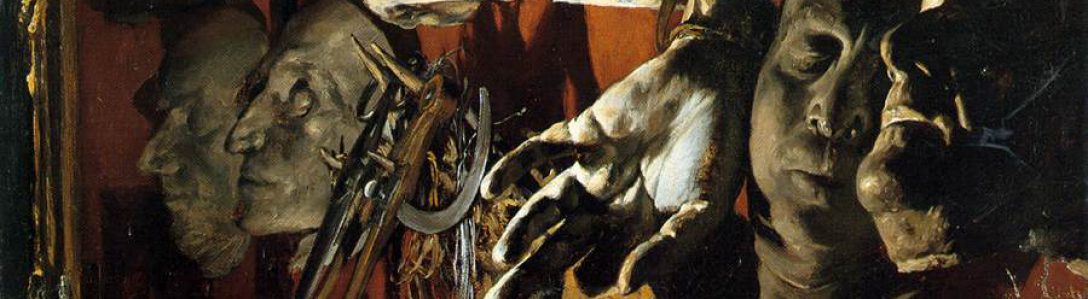
The body of the bride Lila appeared cruelly shredded (From Elena Ferrante’s novel The Story of a New Name)

It was a beautiful warm evening; the brilliant lights of the shop’s interior spread their glow into the square. The gigantic image of Lila in her wedding dress could be seen at a distance, leaning against the center wall. Stefano parked, we went in, making our way among the boxes of shoes, piled up haphazardly, cans of paint, ladders. Marcello, Rino, Gigliola, and Pinuccia were visibly irritated: for varying reasons they had no wish to submit yet again to Lila’s caprices. The only one who greeted us cordially was Michele, who turned to my friend with a mocking laugh. “Lovely signora, will you let us know, at last, what you have in mind or do you just want to ruin the evening?”

Lila looked at the panel leaning against the wall, asked them to lay it on the floor. Marcello said cautiously, with the dark timidity that he always showed toward Lila, “What for?”

“I’ll show you.”

Rino interrupted: “Don’t be an idiot, Lina. You know how much this thing cost? If you ruin it, you’re in trouble.”

The Solaras laid the image on the floor. Lila looked around, with her brow furrowed, her eyes narrowed. She was looking for something that she knew was there, that perhaps she had bought herself. In a corner she spied a roll of black paper, and she took a pair of big scissors and a box of drawing pins from a shelf. Then, with that expression of extreme concentration which enabled her to isolate herself from everything around her, she went back to the panel. Before our astonished and, in the cases of some, openly hostile eyes, she cut strips of black paper, with the manual precision she had always possessed, and pinned them here and there to the photograph, asking for my help with slight gestures or quick glances.

I joined in with the devotion that I had felt ever since we were children. Those moments were thrilling, it was a pleasure to be beside her, slipping inside her intentions, to the point of anticipating her. I felt that she was seeing something that wasn’t there, and that she was struggling to make us see it, too. I was suddenly happy, feeling the intensity that invested her, that flowed through her fingers as they grasped the scissors, as they pinned the black paper.

Finally, she tried to lift the canvas, as if she were alone in that space, but she couldn’t. Marcello readily intervened, I intervened, we leaned it against the wall. Then we all backed up toward the door, some sneering, some grim, some appalled. The body of the bride Lila appeared cruelly shredded. Much of the head had disappeared, as had the stomach. There remained an eye, the hand on which the chin rested, the brilliant stain of the mouth, the diagonal stripe of the bust, the line of the crossed legs, the shoes.

Gigliola began, scarcely containing her rage: “I cannot put a thing like that in my shop.”

“I agree,” Pinuccia exploded. “We have to sell here, and with that grotesque thing people will run away. Rino, say something to your sister, please.”

Rino pretended to ignore her, but he turned to Stefano as if his brother-in-law were to blame for what was happening. “I told you, you can’t reason with her. You have to say yes, no, and that’s it, or you see what happens? It’s a waste of time.”

Stefano didn’t answer, he stared at the panel leaning against the wall and it was evident that he was looking for a way out. He asked me, “What do you think, Lenù?”

I said in Italian, “To me it seems very beautiful. Of course, I wouldn’t want it in the neighborhood, that’s not the right place for it. But here it’s something else, it will attract attention, it will please. In Confidenze just last week I saw that in Rossano Brazzi’s house there is a painting like this.”

Hearing that, Gigliola got even angrier. “What do you mean? That Rossano Brazzi knows what’s what, that you two know everything, and Pinuccia and I don’t?”

At that point I felt the danger. I had only to glance at Lila to realize that, if when we arrived at the shop she had really felt willing to give in should the attempt prove fruitless, now that the attempt had been made and had produced that image of disfigurement she wouldn’t yield an inch. Those minutes of work on the picture had broken ties: at that moment she was overwhelmed by an exaggerated sense of herself, and it would take time for her to retreat into the dimension of the grocer’s wife, she wouldn’t accept a sigh of dissent. In fact, while Gigliola was speaking, she was already muttering: Like this or not at all. And she wanted to quarrel, she wanted to break, shatter, she would have happily hurled herself at Gigliola with the scissors.
From Elena Ferrante’s 2012 novel The Story of a New Name. English translation by Ann Goldstein. I’m not sure how well the passage stands free of any context—I know there are a lot of characters here with backgrounds that won’t be clear to anyone who hasn’t read Ferrante’s novel (read it!)—but I love this passage, where brilliant friends Lila and Lenù collaborate to turn advertising into art, to artistically—and violently, perhaps—erase Lila’s body from the patriarchal order into which she has been inscribed.