Writers on The Simpsons

In tonights episode of The Simpsons, Lisa and Moe go to a writer’s seminar called “Wordloaf” in Vermont. Is this a real thing? I googled, but I found nothing.

Moe has been invitedto Wordloaf by Tom Wolfe, who loves Moe’s book of poetry, Howling at a Concrete Moon. What Wolfe and the other writers at Wordloaf don’t realize is that Lisa has engineered Moe’s book, editing it together from Moe’s fragmented notes of despair, and giving it its title. Disappointment, betrayal, and humiliation ensues. Also, I think Homer might’ve eaten a donut or something.

Authors Jonathan Franzen (The Corrections) and Michael Chabon (Wonder Boys, The Amazing Adventures of Kavalier & Clay) also guest star. By the way, biblioklept is coming down here, officially, in complete disagreement with Jonathan Franzen’s opinions on “difficult writing.”
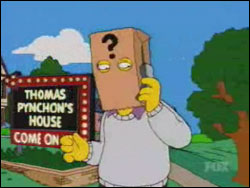
pynchon_simpsons.jpg

Thomas Pynchon’s non-image makes a brief cameo. By my count this is his third appearance on the show.

Overall, despite jokes about grading papers and grad school and several obscure literary references–all things so dear to my heart–this episode was not so funny.
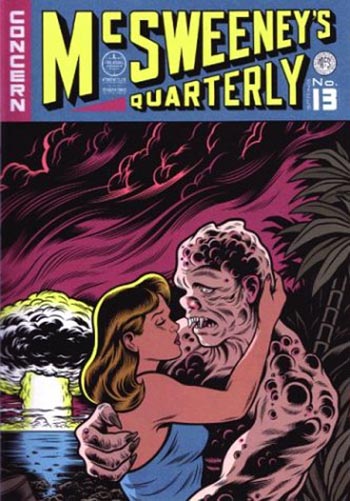
McSweeney’s Issue 13 (Chris Ware)

McSweeney’s Issue 13

Charles Burns’s gorgeous title page for McSweeney’s Issue 13 captures the bizarre mix of romance, abject horror, and mutually assured destruction present in the horror comics of the 1950’s.

I love all things McSweeney’s–Dave Eggers, The Believer, etc–but Issue 13 of McSweeney’s Quarterly Concern is particularly excellent, and is easily the most beautiful, most aesthetically pleasing book I own. Designer and editor Chris Ware (author of the sad and dense graphic novel Jimmy Corrigan, Smartest Kid on Earth) offers a concise but thorough history of cartooning. Ware places Robert Crumb, the Hernandez brothers, Art Spiegelman, Daniel Clowes, and other great artists into a tradition initiated by Rodolphe Töpffer and Krazy Kat, and perfected by Charles Schulz. This richly-colored book comes wrapped in an old fashioned broadsheet comics page, and includes work from some of the best artists and cartoonists from the past 100 years. Despite the wide range of cartoonists represented, Ware unifies the issue in a theme of despair and depression. Imagine this famous moment in cartooning–Lucy pulls the football away from Charlie Brown’s wishful kick at the last minute, tripping him and humiliating him and betraying him: that pretty much somes up Ware’s theme. But even though it’s sad, it’s funny and somehow beautiful–and real.

If you are a bibliophile, you must buy this book. You won’t be disappointed.