Early 2007

If you come to this blog regularly, chances are you’re killing a few minutes from what may or may not be a dreary day. So sorry if Biblioklept hasn’t been posting regularly enough to satisfy your cubicle boredom. Early 2007 has been very busy around here, what with bathroom renovations (books, even Time-Life books, will not lay new tile or replumb your corroded pipes), a new school year, and a baby on the way. Between philosophical treatises in graduate school, AP essays to grade, and the self-induced Ontology 101 reading list (“Week 4” begins…uhm…later this week?), I’ve had little time to read anything, let alone get anything decent written.

So well and hence, before January is officially over, The Biblioklept will attempt an assessment of 2007 so far. With one-twelfth of the year already gone, where do we stand?

Books: Okay, I still haven’t made it through David Foster Wallace’s Oblivion, which was published waaaaay back in 2004.  Actually, in the interest of full disclosure, I’ve been attempting the same story repeatedly. My mistake is that I start reading right before I go to sleep–and then I go to sleep immediately. At this rate, I will probably finish anything published in 2007 in late 2011.

Magazines: TodayI got the February issue of The Believer. I still haven’t finished the Dec/Jan issue. A sorry state of affairs for someone who claims to love to read.

Movies: Why have you still not gone to see Children of Men? Go see it in the theater while you still have the chance. This weekend, if time permits, Pan’s Labyrinth. Has anyone seen this one yet?

Music: Lots of great stuff has dropped in 2007. Current favorites–Panda Bear’s Person Pitch, Bobby Conn’s King for a Day, Apostle of Hustle’s National Anthem of Nowhere, Menomena’s Friend or Foe. All of these are great listening and deserve more in-depth reviews, possibly at a later time. Also, Deerhoof’s Friend Opportunity dropped legal style.

TV: I must admit that I love the American Idol auditions (after the schadenfreude of watching losers have their illusions painfully revoked in front of millions, the show turns into pure drivel of course). It was also nice to see Jewel join the judges (do you remember when Jewel was like, alternative?)

Politics: My rage-fatigue has mellowed into a nice warm apathy. Does it matter that the Democrats are “in control”?  

Furniture: I regret passing up an ottoman offered by my uncle.

Wine: I still advocate boxed wines, screwtops will be all the rage in 07.

Pets: As of now, our cat is still alive.

Shining

Last week we caught Children of Men at the lovely San Marco Theater. You should go see this movie posthaste. One of the best movies I’ve seen in a long, long time. Babies are special.

Before the movie, SMT ran a trailer for The Shining, their midnight movie that night. This trailer is brilliant–check it out!

Ontology 101

1939


Cobra commander.jpg


Word of the Week

Thaumaturge

From the OED:

“A worker of marvels or miracles; a wonder-worker.

1715 M. DAVIES Athen. Brit. I. 125 Petavius..attainted..Origen’s wonder-working Scholar Gregory the Thaumaturg, with Præarianisme. 1760 WESLEY Jrnl. 20 Dec., You throw out a hard word,..Thaumaturg. 1826 SOUTHEY Vind. Eccl. Angl. 479 The Thaumaturge..knelt before the Image to intercede for them. 1860 Sat. Rev. X. 269/2 The half-maudlin, half-cheating thaumaturg. 1881 Athenæum 12 Mar. 363/2 Pious mythologists have made out that she [St. Frideswide] was a thaumaturge of the first order.”

Famous thaumaturges (alternate orthographies: thaumaturgist, thaumaturgus) include:

— Aleister Crowley

Anne Sullivan

David Copperfield (the magician, not the book)

Dr. Strange

Albus Dumbledore

Jesus Christ

Mythologies–Roland Barthes

“Myth is a language”–Roland Barthes

Everyone should own a copy of Roland BarthesMythologies. Published over 50 years ago, the book seems more relevant than ever. Barthes wields his sense of ironic humor like a scalpel, dissecting the ideological abuse of the post-war spectacle society. In this collection of short essays, Barthes examines the ways in which societies create, use and mediate myths–particularly the way that the “elite,” monied crust of society create new myths–whole systems of myths, really–to control cultural perceptions of “reality.” Barthes uses the language and tools of linguistics in his meditations to examine the malleable space between the signifier and the signified.  Barthes analyzes a range of disparate topics: amateur wrestling, plastic, advertisements for milk and wine, the face of Greta Garbo, children’s toys, and modern film’s conception of the ancient Roman haircut are all considered in relation to how these “everyday” things support the dominant cultural/economic ideology. The methods put forth in  Mythologies are certainly a precursor to what we now call popular culture studies; Barthes is certainly one of the first writers I can think of to dissect mass-mediated, popular culture. And even though it was published half a century ago, Barthes’ keenly ironic style and short-essay format comes across as thoroughly contemporary.

In the final essay of the collection, “Myth Today,” Barthes warns us that the myths we uphold to protect our culture can ultimately destroy the culture. What are the contemporary myth-systems of the United States? What ideology do these myths uphold? Do these myths hold the potential to harm the culture of our great country?

Ontology 101


gunsncuties_24.jpg


clipboard.jpg


 chicks-with-guns-0.png

zpage292.gif

barbietargetb72.jpg


baby.jpg


amy76.jpg


ao_assise.jpg


herkids0557.jpg

ripleynewtgrp2.jpg

0325-05.jpg

Ways of Seeing

In Ways of Seeing, John Berger riffs off of Walter Benjamin’s famous essay, “The Work of Art in the Age of Mechanical Reproduction,” calling into question how and why images are used and disseminated; in particular, Berger discusses capitalism, the female body, and “fine art.” The internet is clearly the next step in a series of progressions of how information is transmitted, and has been held up as a bastion of information democracy. The personal computer has revolutionized how we view, read, and create images and documents.

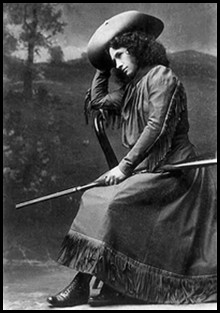
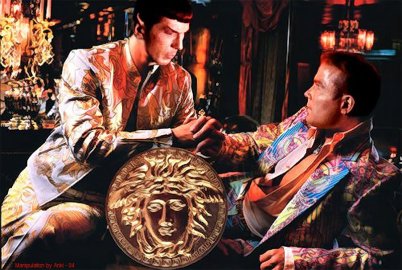
Look at the following images. What authority, if any, is present in each image? Who authors the picture? How do history, original context, and cultural paradigms play into how the viewer “reads” the image? What questions do these images provoke?

friends-and-lovers-anki.jpg


dscn1172.JPG

Ontology 101: Ways of Seeing

“The relation between what we see and what we know is never settled.”

This quote from the cover/first page of John Berger’s Ways of Seeing addresses one of the problems that ontology seeks to solve. If you were an art major, art history major, or English major, chances are high that you’ve encountered this book before. Berger’s collection of essays–some are completely made of images–questions the way that we see–and consequently name–things (I’m happy with this oh-so vague term). I think that this book is an essential starting point in freeing up one’s ideological framework such that one can question why one values what one thinks one values. Berger’s work has seemingly unlimited applications, from gender studies to economics to linguistics, but I’m primarily interested in how Ways of Seeing–originally published in the early 70s to compliment a BBC series–can be read against a media that didn’t exist when the book was published, namely, the internet.

I suggest diving into Ways of Seeing in any order that strikes your fancy (or for extra fun, abandon order completely). Later in the week I’ll post a few specific questions for discussion, but for now, try to keep in mind the dramatic ways that media–and the ways that we interface with media–have changed since the book’s publication over 30 years ago.

Every Book Art Garfunkel Has Read over the Past 38 Years

Because you demanded it! We’ve all been dying to know what Art Garfunkel’s been reading over the past 38 years: luckily, when he wasn’t busy starring in Nic Roeg films or walking across America, Art was thoughtful enough to record a list of every book he’s ever read. Link via the AVClub Blog, who always do such a great job digging up such treasure.

Ontology 101: Today’s Class is Cancelled

Today’s class is cancelled. Celebrate!

Ontology 101: So What and Who Cares?

Hopefully you’ve had time to sift through and absorb some of the primer. So and well so now you’re probably saying to yourself: “Okay sure, Aristotle, fabulous, Occam’s razor, I’m down, cogito ergo sum, fine, I get it, but so what?”

“So what?” and “Who cares?” are the most fundamental questions in any intellectual pursuit. Asking difficult questions doesn’t necessarily put food on the table or make us more attractive to the opposite sex or give us ten extra years of life.

So what do we gain when we ask: “What is?” and “What is it to exist?” and “What is real?”

Watch the following clip of Deepak Chopra on The Colbert Report. What is Chopra’s ontological position? What applications (political, social, cultural, etc) might his position entail?

Ontology 101: Introduction, Reading List, and Primer

Yes–now you too can better understand the way we conceptualize all that exists–from the comfort of your own home! It’s simple, free, and best of all, it’s fun! Biblioklept’s Ontology 101 is a course designed for working professionals who wish to approach the logic and philosophy of ontology, but don’t want to get bogged down in stodgy applications like taxonomy or geography. The different texts that comprise Biblioklept’s Ontology 101 course are contemporary, entertaining, highly visual, and applicable to modern social discourse.

Prerequisites: working knowledge of basic internet use. Adult level English language literacy. A few spare hours a week. A relatively open mind. A library card would be helpful. You’ll need a DVD player or VCR. If you can’t meet these requirements, you will need Biblioklept’s permission to join the class (you may have Biblioklept’s permission to join the class).

Credit hours: unfortunately, at this time Biblioklept remains an unaccredited (but nonetheless cherished) institution. However, all those who take the course are permitted a sense of smug self-satisfaction, a sharpened awareness of true irony, and existential crises galore.

Readings:

Week 1: Introduction, course overview, primer (below)

Week 2: Ways of Seeing, John Berger. Bertrand Russell overview.

Week 3: Mythologies, Roland Barthes. Baruch Spinoza overview.

Week 4: Persepolis, Marjane Satrapi, Understanding Comics, Scott McCloud. Martin Heidegger overview.

Week 5: Viewing–Rear Window, Alfred Hitchcock. Primer: Laura Mulvey’s theory of “the gaze” (forthcoming). “Feminist Cinema and Visual Pain,” John Haber. Gilles Deleuze overview.

Week 6: Viewing–various TV commercials. “Visual Semiotics and the Production of Meaning in Advertising”. Mythologies (Roland Barthes) revisited. Michel Foucault overview.

Week 7:  Viewing: Blade Runner (Ridley Scott). “Johnny Mnemonic,” William Gibson. “Simulacra and Simulations,” Jeanne Baudrillard. Georg Wilhelm Friedrich Hegel overview.

Week 8: Viewing: A Scanner Darkly (Richard Linklater). “We Can Remember It for You Wholesale,” Philip K. Dick. “The Second Coming of Philip K. Dick,” Frank Rose. Existentialism overview.

Week 9: Selections from Lost in the Funhouse, John Barth. Selections from Girl with Curious Hair, David Foster Wallace. Postmodernism overview.

Week 10: Excerpts from The Gay Science, Friedrich Nietzsche. Course summary and evaluation (primer revisited).

Primer: Before beginning John Berger’s Ways of Seeing, you’ll need a little background info about the history of philosophy. Biblioklept encourages you to go beyond the narrow confines of the following primer, but some of the ideas/thinkers presented here are essential building blocks for what will follow.

What is ontology? What better way to start an unaccredited online course from a flaky blog than to use Wikipedia as a beginning point! At the end of the course, we’ll revisit Wiki’s page and see if we can help it out–that would be meeting the true spirit of this endeavor. After you’ve perused the free encyclopedia that anyone can edit, treat yourself to SUNY’s own primer to ontology (follow the link “History of Ontology” at the top of the page to the “History of Ontology” link at the bottom of the page), which will make you like, at least ten times smarter.

Read up on Aristotle (follow the link “History of Ontology” at the top of the page to the “Aristotle” link). As far as we know, Aristotle seems to have initiated philosophical thinking. 

Are you familiar with Occam’s Razor? If not, read on!

Surely you’ve come across Descartes’ ridiculous proof of existence–cogito ergo sum–but it couldn’t hurt to brush up on why you may actually exist.

Once you’ve perused the above, no doubt you’ll be primed for all kinds of mad knowledge. Feel free to post comments and questions, or to email me at biblioklept.ed@gmail.com. And if you’re a real go-getter, get a jump start on next week’s assignment, Ways of Seeing.

The New Year

In the Chinese zodiac, 2007 is the Year of the Pig (or the Year of the Boar if you prefer). Persons born in the Year of the Pig are honest and straightforward, patient and caring. Some famous pigs include David Letterman, Henry Ford, Jack Ruby, Tupac Shakur, and The Ultimate Warrior.

The Year of the Pig, the Chinese New Year, begins on February 18th. The Hebrew calendar begins with Rosh Hashana, which won’t happen until September 13th-14th of 2007 (or 5768, if you prefer).  The Islamic New Year begins on January 20th–it will be the year 1428.

Even within the Gregorian calendar that we now use, the actual date of the new year has changed. The first day of the year has been celebrated on Christmas Day, Easter, and March 25th, Annunciation (celebrating the New Year on January 1st is known as Circumcision Style–I suggest googling this term for more info). The date seems arbitrary (although I don’t think arbitrary is the right word: read the history of different calendars here), but no matter: celebrating the end of one year and the beginning of another is vital. We reflect, assess, and plan anew. We toast our past triumphs and errors, and look forward to a fresh start. We make resolutions; we resolve to do the impossible (or at least improbable) on this day. We all get a chance at new life–if we choose to take it, that is, for it is always an option to cynically reject the possibility inherent in a new year. But just as we can reject Our Own Personal New Year on January 1st, we can just as easily embrace a new start on January 2nd, or January 3rd, or April 1st, or June 8th. A New Year is always accessible, if one so chooses.