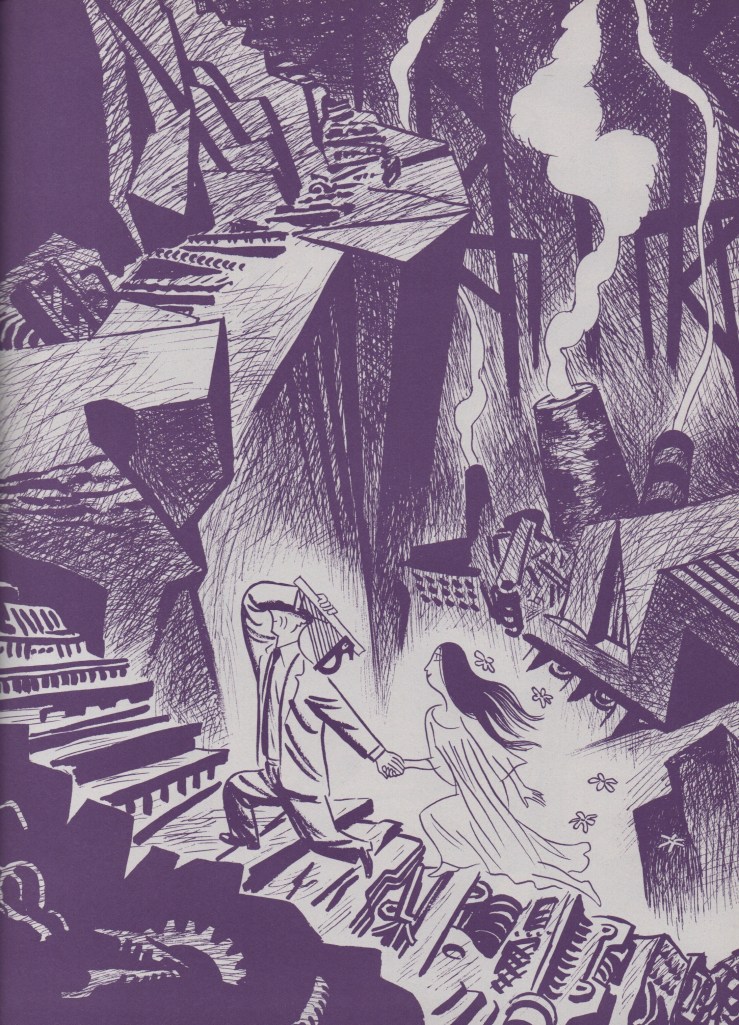
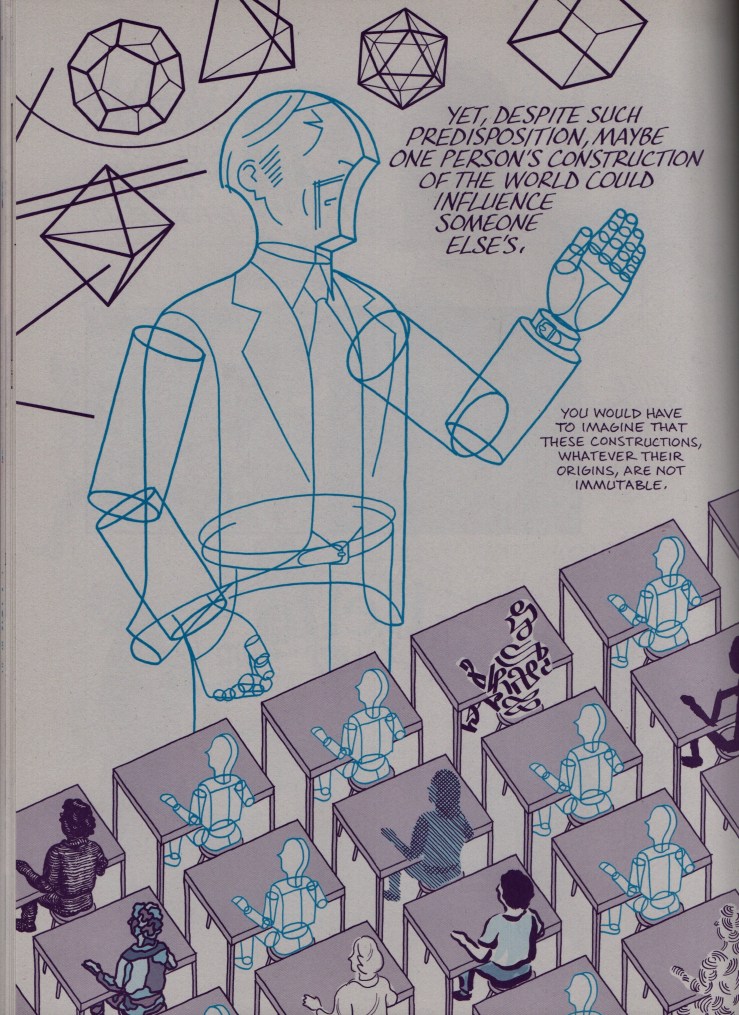
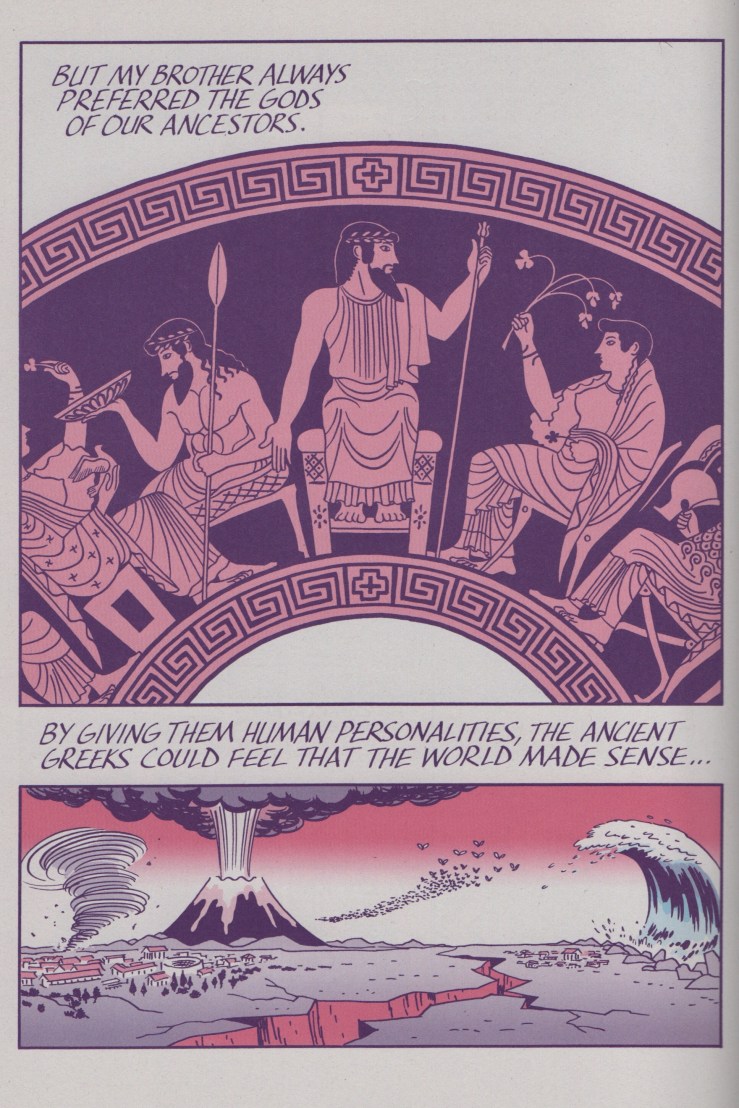
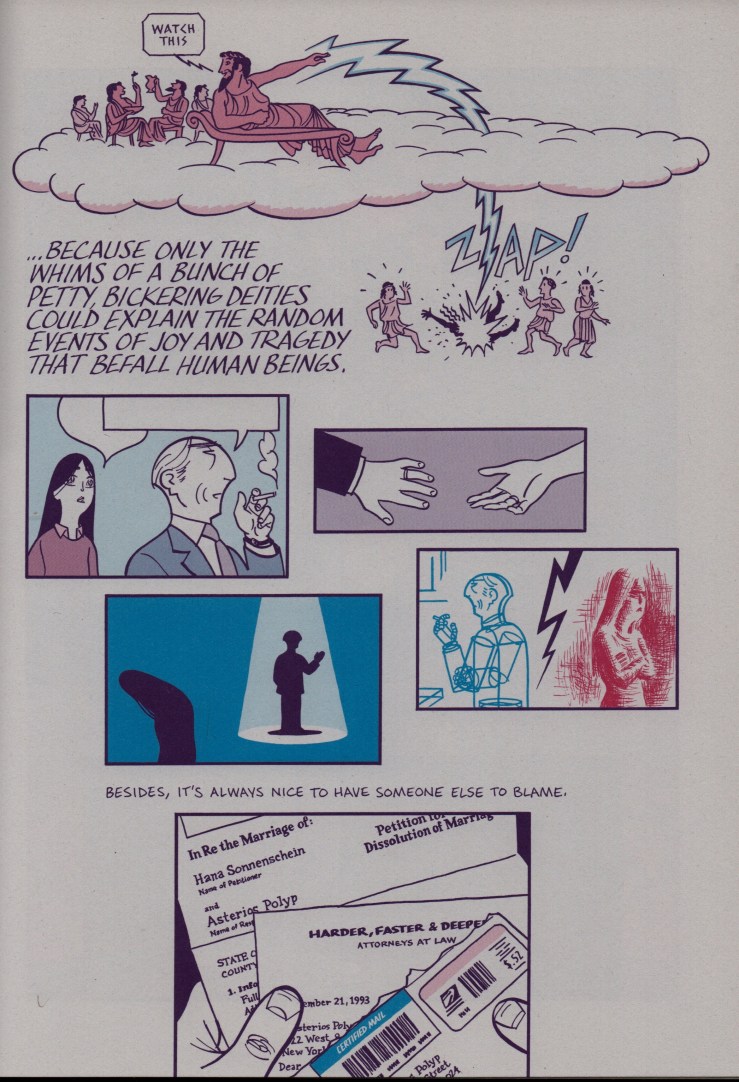
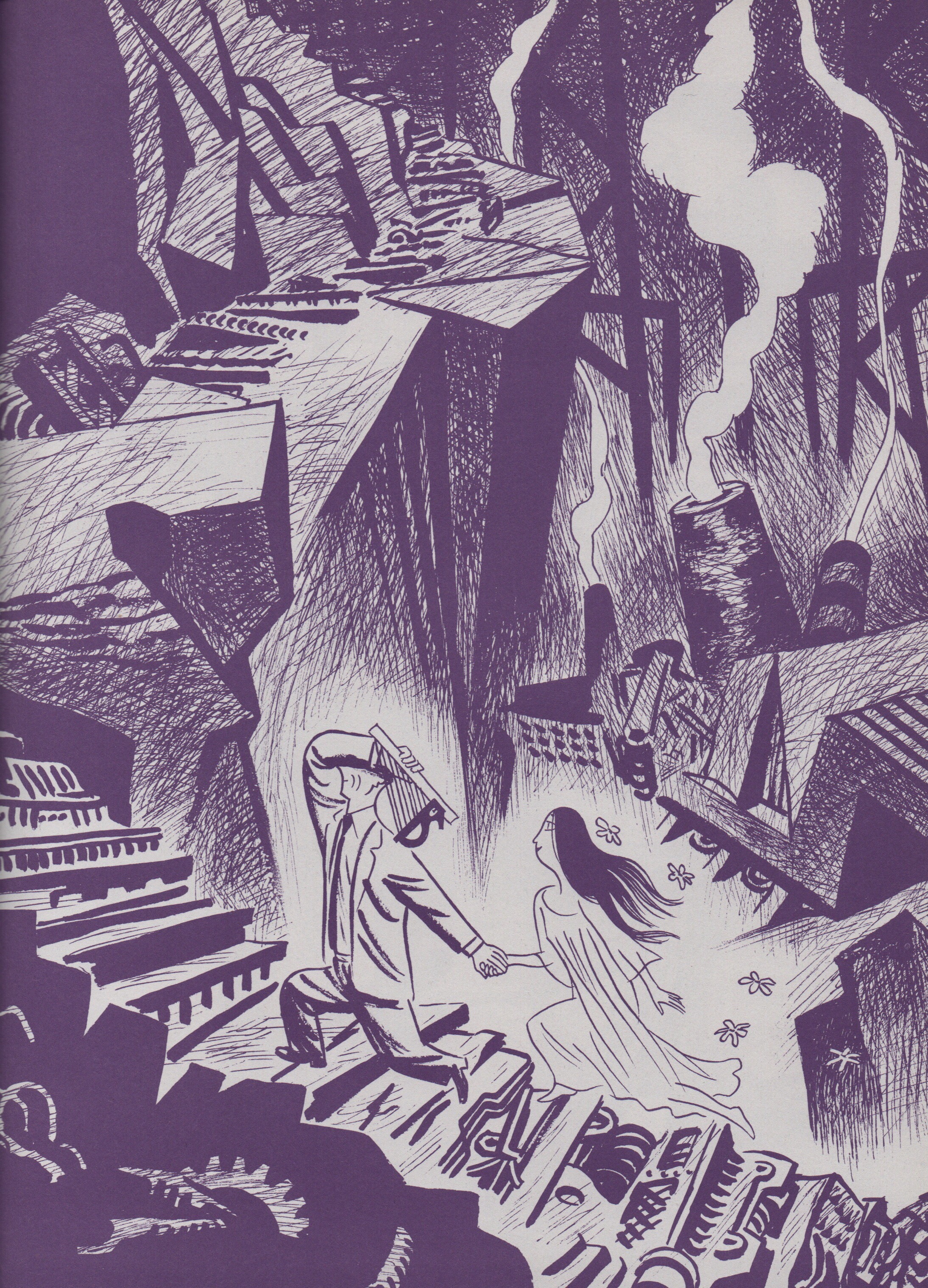
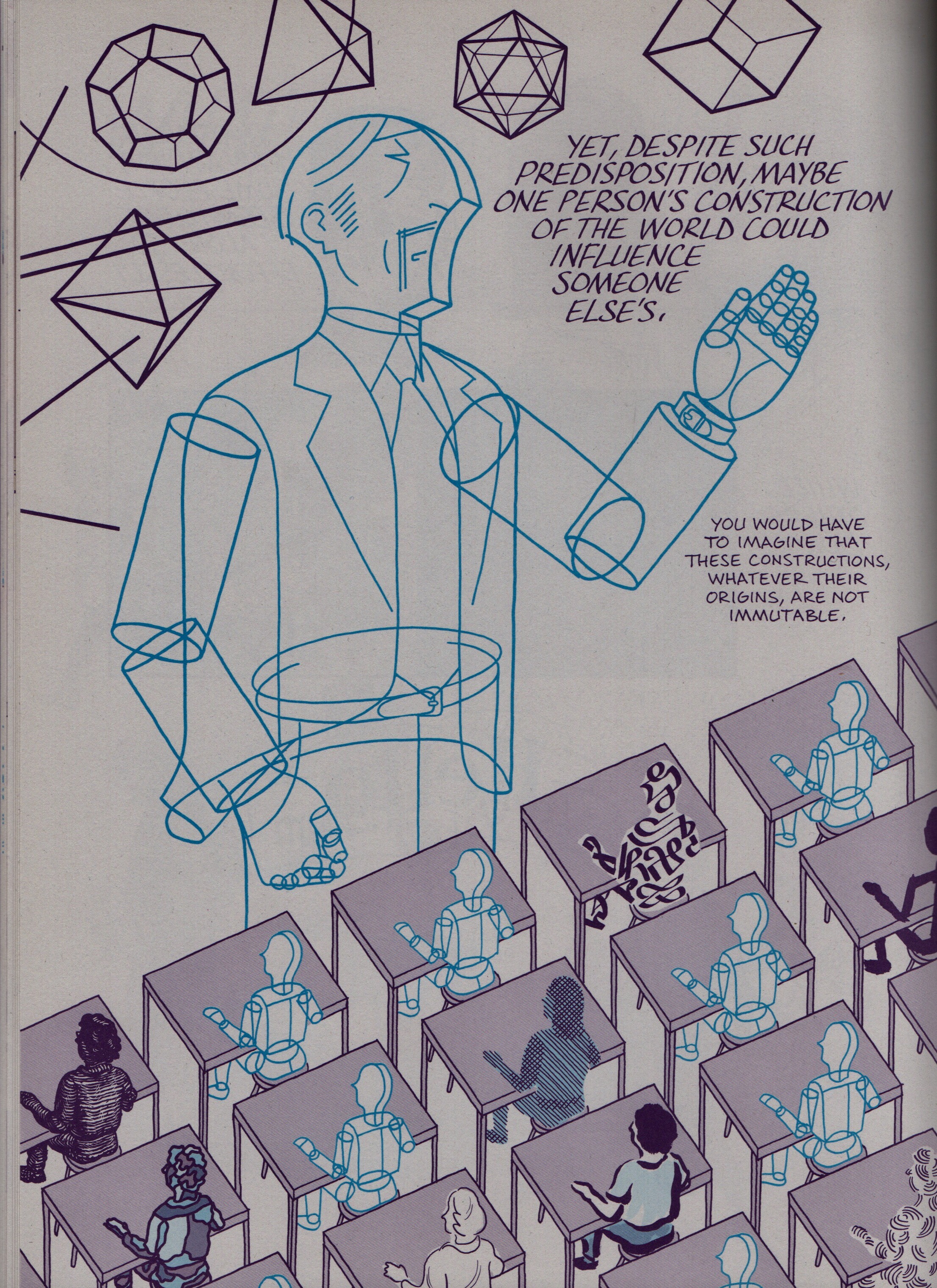
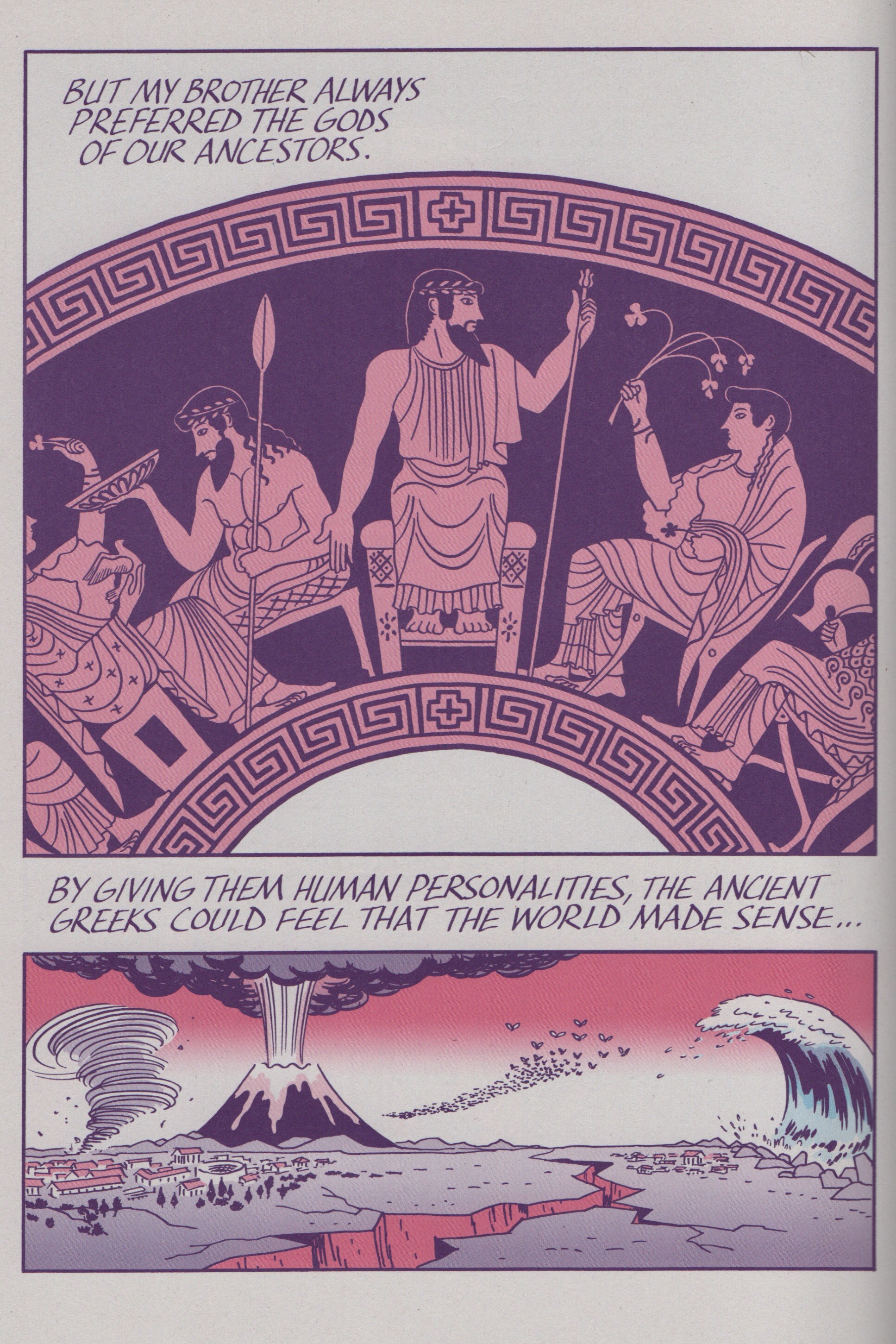
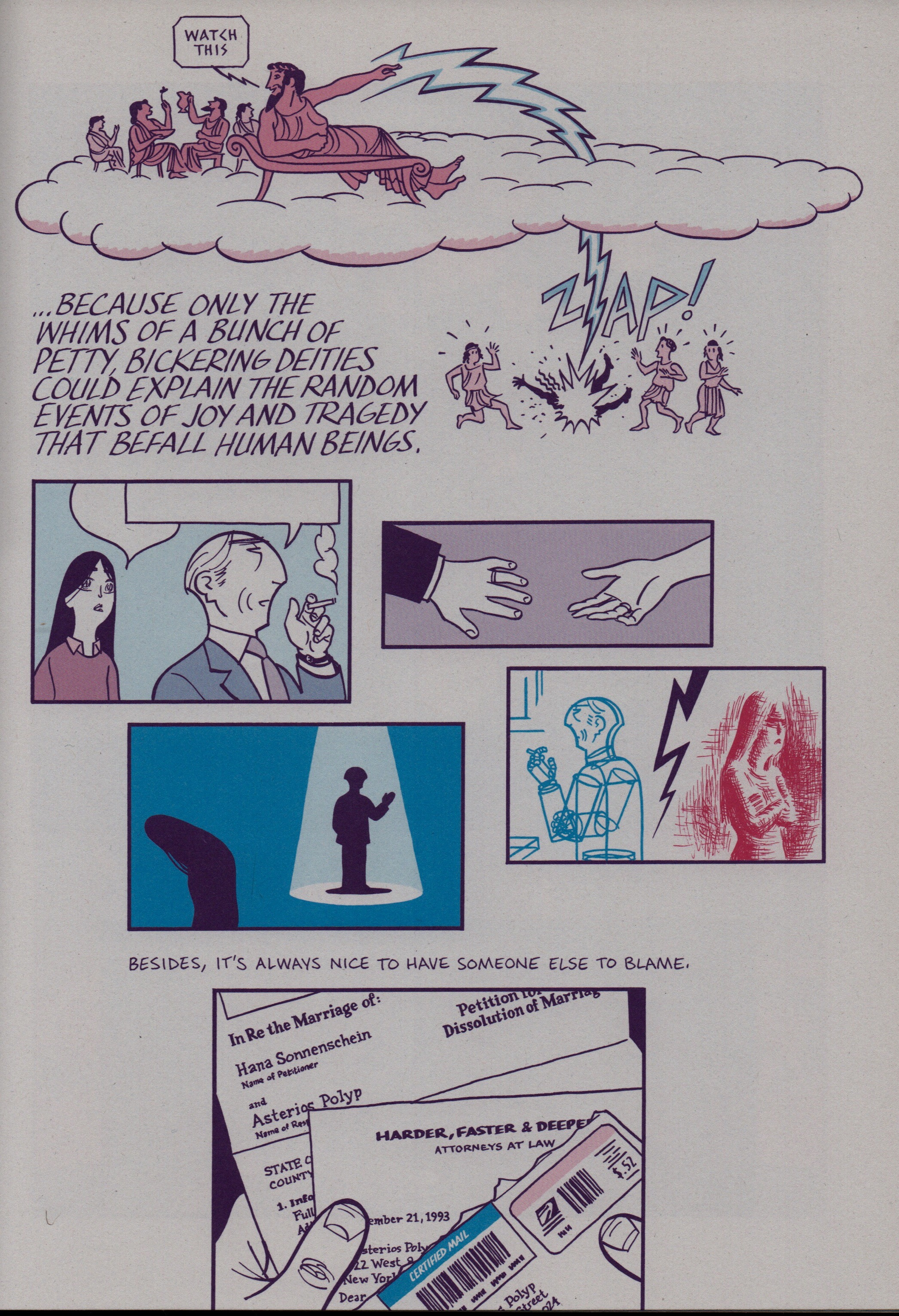
Pages from David Mazzuchelli’s novel Asterios Polyp (Pantheon, 2009).
I reviewed the novel in October of 2009. Here is that review in full:
Let’s get a few things straight from the get-go: David Mazzuchelli’s graphic novel Asterios Polyp is a masterpiece, an unequivocal advancement of its medium, and an unqualified joy to read. It’s also not only one of the best books we’ve read this year, but also this decade. While such breathless enthusiasm might seem suspect, even a cursory look over Asterios Polyp will reveal that Mazzucchelli has produced a fully-realized work, one that fundamentally reimagines what a graphic novel is, and how it might be read.
Asterios Polyp is a boorish, solipsistic “paper architect” and tenured professor (none of his designs have ever actually been built) whose life goes to shambles after his sensitive wife Hana leaves him. The novel opens with a lightning strike that literally destroys everything that Asterios owns. He grabs three key items–his father’s old lighter, a magnetically-powered watch he bought as a child, and a Swiss Army knife he found on the beach–and hits the road, heading into the great, normal Midwest, where he takes a job as an auto mechanic (in a lovely scene, Asterios the autodidact, after accepting his new job, heads to the library to learn auto repair in an hour). Asterios’s kindly boss Stiff and his hippie wife Ursula take in the poor soul/arrogant prick. As the plot unfolds, Mazzucchelli contrasts Asterios’s past, full of faculty cocktail parties, affairs with grad students, and highbrow conversations, with his incremental rebirth into a more concrete world. “Be not simply good; be good for something,” said Henry David Thoreau–a lesson that Asterios slowly learns as he finally applies his skill and genius to real-world applications, like building a tree house for the couple’s son and creating a solar-powered Cadillac. Asterios’s emergence as a fully-realized human being contrasts sharply with hist past. Although he clearly loved his wife Hana, he was unable to appreciate her as anything other than a prop in relation to himself–how she complimented him, added to him, reflected on him. The flashback scenes with Hana are keenly realistic and loaded with genuine pathos. They are the heart of the novel. Continue reading “Sunday Comics” →

 Biblioklept