
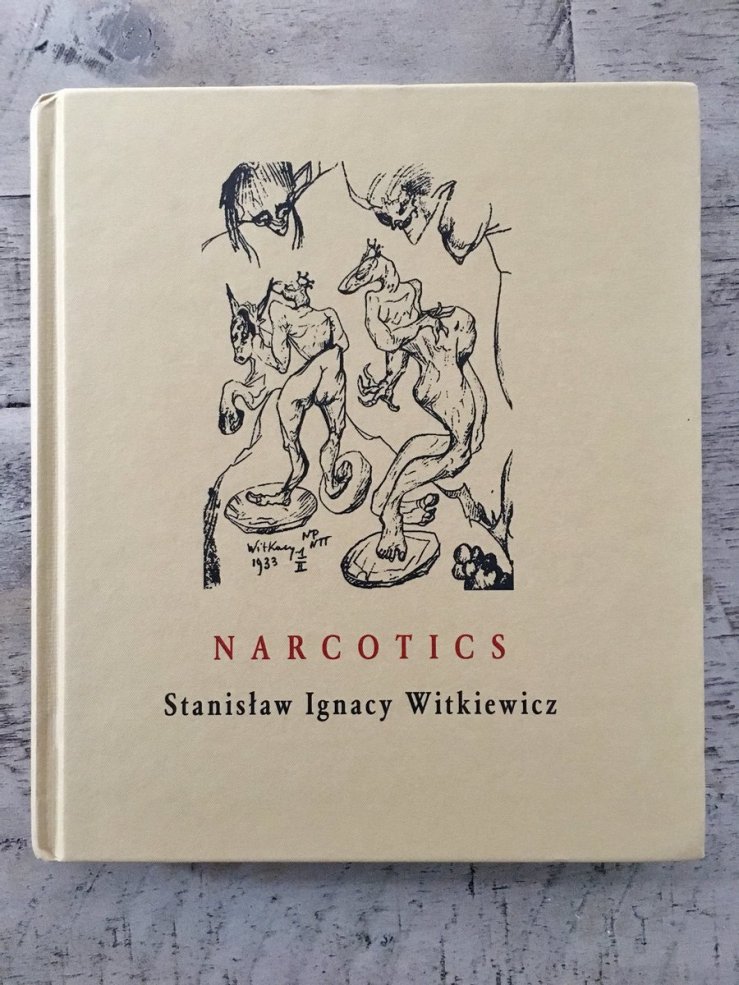
Stanisław I. Witkiewicz’s Narcotics (Book acquired, 5 Feb. 2018)

dvsfm7rvwaaoolo

Stanisław I. Witkiewicz’s Narcotics is forthcoming in full-color hardback from Twisted Spoon PressSubtitled “Nicotine, Alcohol, Cocaine, Peyote, Morphine, Ether + Appendices,” the volume consists of Witkiewicz’s musings on his intake of these substances, both in his creative and personal life, as well as the various portraits he composed while taking those substances. Narcotics is translated by Soren Gauger, who also authors a helpful afterword that contextualizes Witkiewicz’s volume. Narcotics was written and published in Poland in the 1930s, and was apparently quite a big hit. I read Witkiewicz’s foreword last night (as well as the section on, um, peyote). In its strange moralizing, the foreword—an apologia really–reminded me a bit of Henri Michaux’s similar exercise, Miserable Miracle, which also strikes a defensive tone at the outset.
dvsfm7qvqaa8cwv

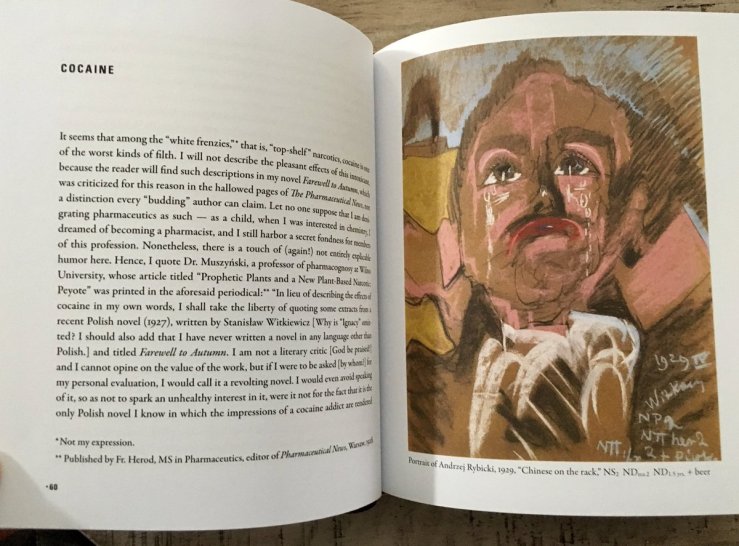
The book, like Witkiewicz’s portraits, is gorgeous. Here is Twisted Spoon’s blurb; full review forthcoming—

For his “portrait painting firm,” established rules and types for his portrait work, marking the paintings and pastels with corresponding symbols and abbreviations of the substances he had either taken or, in the case of alcohol and nicotine, not taken at the time. Type C were created under the influence of alcohol and “narcotics of a superior grade” to produce abstract compositions he called “Pure Form.” A variety of drugs and their combinations were taken to produce a variety of distortions and effects, and often this would be the portrait subject’s choice. And in some instances a given portrait might be marked with symbols denoting how many days he had gone without smoking or without drinking (and type D were executed to achieve the same results without any artificial means). Different substances resulted in different color combinations or brought out different aspects of the subject’s features or psyche. One stunning series of self-portraits, for example, was executed while on a combination of moderate amounts of beer and cocaine.

In the vein of the well-known drug writings of De Quincey and Baudelaire from a century earlier and those of his contemporaries Walter Benjamin and Jean Cocteau – and foreshadowing the later writings of Aldous Huxley and Carlos Castaneda on psychoactive drugs – Witkacy composed Narcotics in 1930 to discuss and document not only his own experimentation with different substances but the nature of addiction itself and the prevailing social attitude toward drugs, particularly those that were considered “acceptable.” As life became increasingly mechanized, Witkacy felt that a sense of the metaphysical could only be achieved by artificial means, and like Henri Michaux, he produced an extensive oeuvre of singular visual art while under the influence of a variety of substances.

Meandering, acerbic, and burlesque, rife with neologisms and expressions from German, French, English, and Russian, Witkacy dissects Polish society and the art world as well as himself via the hypocrisy surrounding drug use. Since it was first published in the 1930s, Narcotics has achieved a cult status in Poland where it is considered both a modernist classic and a paragon of Witkiewiczian madness. This edition, the first complete translation in English, includes a second appendix written later, passages from the novel Farewell to Autumn, and 34 color reproductions of a cross section of portraits to show how various substances impacted Witkacy’s art.
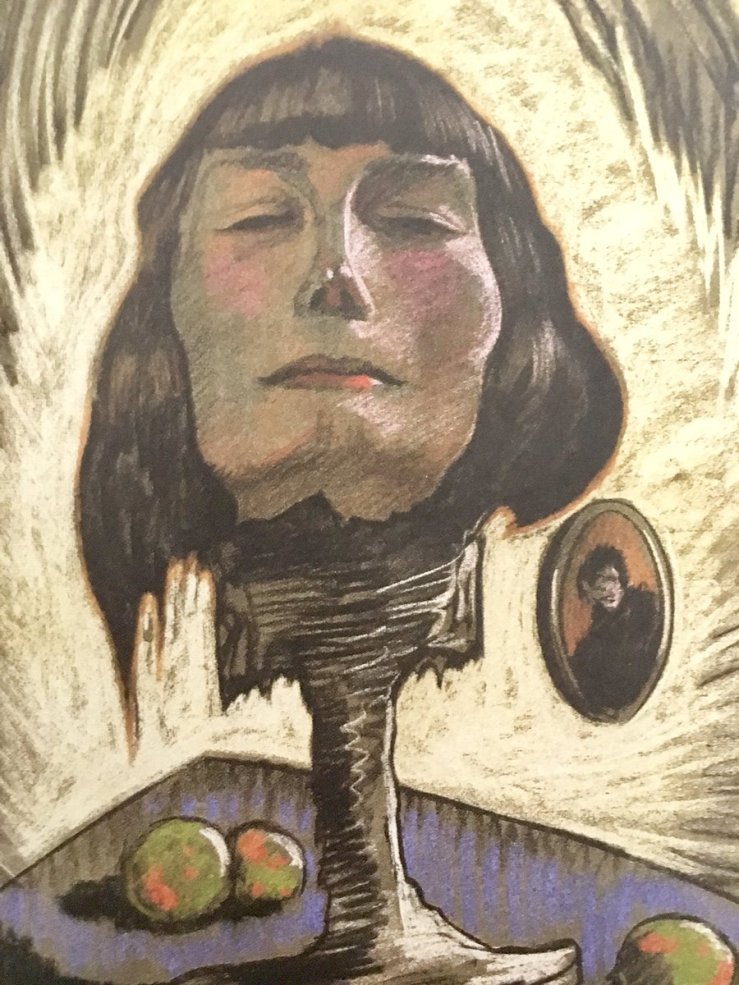
dvsfm7svoau9vvg

“Karintha” — Jean Toomer

“Karintha”

by

Jean Toomer

from Cane


Her skin is like dusk on the eastern horizon,

O can’t you see it,

O can’t you see it,

Her skin is like dusk on the eastern horizon

. . . When the sun goes down.

Men had always wanted her, this Karintha, even as a child, Karintha carrying beauty, perfect as dusk when the sun goes down. Old men rode her hobby-horse upon their knees. Young men danced with her at frolics when they should have been dancing with their grown-up girls. God grant us youth, secretly prayed the old men. The younger fellows counted the time to pass before she would be old enough to mate with them. This interest of the male, that wishes to ripen a growing thing too soon, could mean no good to her.

Karintha, at twelve, was a wild flash that told the other folks just what it was to live. At sunset, when there was no wind, and the pinesmoke from over by the saw-mill hugged the earth, and you couldn’t see more than a few feet in front, her sudden darting past you was a bit of vivid color, like a black bird that flashes in the light. With the other children one could hear, some distance away, their feet flopping in the two inch dust. Karintha’s running was a whir. It had the sound of the red dust that sometimes makes a spiral in the road. At dusk, during the hush just after the mill had closed down, and before any of the women had started their supper-getting-ready songs, her voice, Wgh-pitched, shrill, would put one’s ears to itching. But no one ever thought to make her stop because of it. She stoned the cows, and beat her dog, and fought the other children . . . Even the preacher, who caught her at mischief, told himself that she was as innocently lovely as a November cotton-flower. Already, rumors were out about her. Homes in Georgia are most often built on the two-room plan. In one, you cook and eat, in the other is where you sit and sleep, and where love goes on. Karintha had seen or heard, perhaps she had felt her parents loving. One could but imitate one’s parents, for to follow them was the way of God. She played home’ with a small boy who was not afraid to do her bidding. That started the whole thing. Old men could 110 longer ride her hobby-horse upon their knees. But young men counted faster.

Her skin is like dusk,

O can’t you see it,

Her skin is like dusk

When the sun goes down.

Karintha is a woman. She who carries beauty, perfect as dusk when the sun goes down. She has been married many times. Old men remind her that a few years back they rode her hobby-horse upon their knees. Karintha smiles, and indulges them when she is in the mood for it. She has contempt for them. Karintha is a woman. Young men run stills to make her money. Young men gamble to make her money. Young men go to the large cities and run on the road. Young men go away to college. They all want to bring her money. These are the young men who thought that all they had to do was to count time. But Karintha is a woman, and she has had a child. A child fell out of her womb onto a bed of pine-needles in the forest. Pine-needles are smooth and sweet. They are elastic to the feet of rabbits . . . A saw-mill was nearby. Its pyramidal saw-dust pile smouldered. It is a year before one completely burns. Meanwhile, the smoke curls up and hangs in odd wraiths about the forest, curls up, and spreads itself out over the valley. . .  Weeks after Karintha returned home, the smoke was so heavy you tasted it in water. Someone made a song:

Smoke is on the hills. Rise up.

Smoke is on the hills, O rise

And take my soul away to Jesus

Karintha is a woman. Men do not know that the soul of her was a growing thing ripened too soon. They will bring their money; they will die not having found it out . . . Karintha at twenty, carrying beauty, perfect as dusk when the sun goes down. Karintha . . .

Her skin is like dusk on the eastern horizon,

O can’t you see it, O can’t you see it,

Her skin is like dusk on the eastern horizon

. . . When the sun goes down.

Goes down . . .

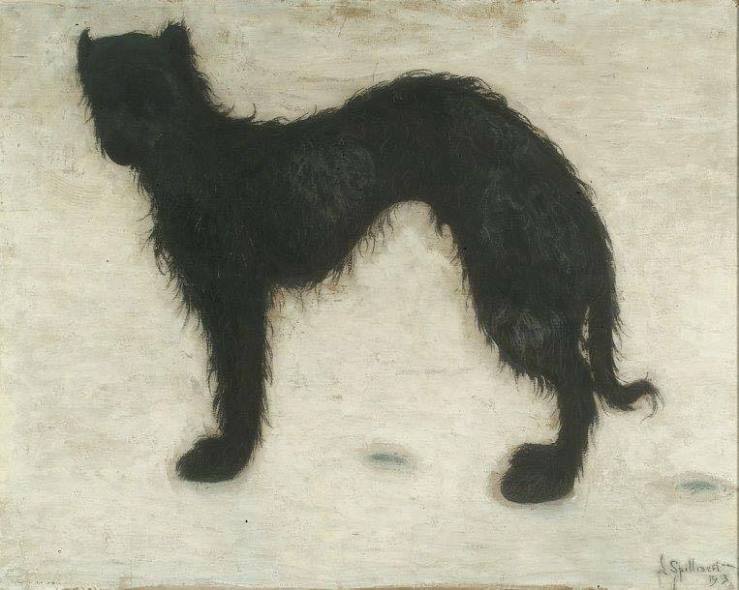
Dog in the Snow — Leon Spilliaert

tumblr_p2eukw6ad81sji0i4o1_1280

Dog in the Snow, by Leon Spilliaert (1881-1946)