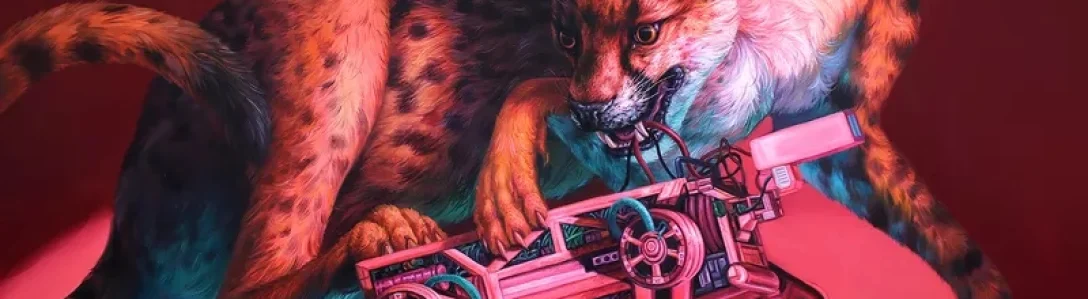
“In the Tules”
by
Bret Harte

He had never seen a steamboat in his life. Born and reared in one of the Western Territories, far from a navigable river, he had only known the “dugout” or canoe as a means of conveyance across the scant streams whose fordable waters made even those scarcely a necessity. The long, narrow, hooded wagon, drawn by swaying oxen, known familiarly as a “prairie schooner,” in which he journeyed across the plains to California in ’53, did not help his conception by that nautical figure. And when at last he dropped upon the land of promise through one of the Southern mountain passes he halted all unconsciously upon the low banks of a great yellow river amidst a tangled brake of strange, reed-like grasses that were unknown to him. The river, broadening as it debouched through many channels into a lordly bay, seemed to him the ULTIMA THULE of his journeyings. Unyoking his oxen on the edge of the luxuriant meadows which blended with scarcely any line of demarcation into the great stream itself, he found the prospect “good” according to his lights and prairial experiences, and, converting his halted wagon into a temporary cabin, he resolved to rest here and “settle.”
There was little difficulty in so doing. The cultivated clearings he had passed were few and far between; the land would be his by discovery and occupation; his habits of loneliness and self- reliance made him independent of neighbors. He took his first meal in his new solitude under a spreading willow, but so near his natural boundary that the waters gurgled and oozed in the reeds but a few feet from him. The sun sank, deepening the gold of the river until it might have been the stream of Pactolus itself. But Martin Morse had no imagination; he was not even a gold-seeker; he had simply obeyed the roving instincts of the frontiersman in coming hither. The land was virgin and unoccupied; it was his; he was alone. These questions settled, he smoked his pipe with less concern over his three thousand miles’ transference of habitation than the man of cities who had moved into a next street. When the sun sank, he rolled himself in his blankets in the wagon bed and went quietly to sleep.
But he was presently awakened by something which at first he could not determine to be a noise or an intangible sensation. It was a deep throbbing through the silence of the night–a pulsation that seemed even to be communicated to the rude bed whereon he lay. As it came nearer it separated itself into a labored, monotonous panting, continuous, but distinct from an equally monotonous but fainter beating of the waters, as if the whole track of the river were being coursed and trodden by a multitude of swiftly trampling feet. A strange feeling took possession of him–half of fear, half of curious expectation. It was coming nearer. He rose, leaped hurriedly from the wagon, and ran to the bank. The night was dark; at first he saw nothing before him but the steel-black sky pierced with far-spaced, irregularly scattered stars. Then there seemed to be approaching him, from the left, another and more symmetrical constellation–a few red and blue stars high above the river, with three compact lines of larger planetary lights flashing towards him and apparently on his own level. It was almost upon him; he involuntarily drew back as the strange phenomenon swept abreast of where he stood, and resolved itself into a dark yet airy bulk, whose vagueness, topped by enormous towers, was yet illuminated by those open squares of light that he had taken for stars, but which he saw now were brilliantly lit windows. Continue reading ““In the Tules,” a short story by Bret Harte”

 Biblioklept