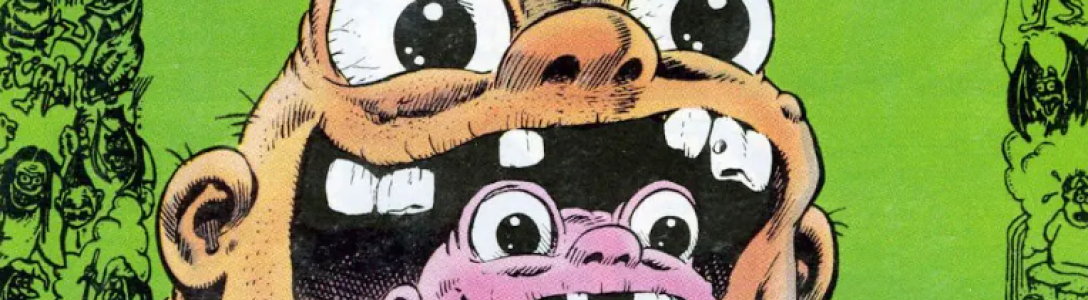
Read Edna St. Vincent Millay’s one-act play, Two Slatterns and a King

Two Slatterns and a King

A Moral Interlude

by

Edna St. Vincent Millay


PERSONS

The King
Chance the Vice
Tidy the false Slattern
Slut the true Slattern

The Prologue and the Epilogue Spoken by Chance


Two Slatterns and a King

PROLOGUE

I am that cunning infidel
By men called CHANCE,—you know me well.
It is through me you met your wives;
Through me your harvest blights or thrives;
And one and all, through me, to-day
Hither you came to see the play,
Which if your favor still you lend,
As now, so on until the end,
You shall be taught what way a King
Though a sublime and awful thing
And even wise, may come to be
A laughing-stock,—and all through me!
(Exit)
(enter King)
King:
I am the King of all this land:
I hold a sceptre in my hand;
Upon my head I wear a crown;
Everybody stands when I sit down. (Sits)
Chance (Appearing to audience; he is invisible
throughout the play to the other players in it.
):
Excepting me,—please bear in mind
I sit whenever I feel inclined. (Sits)
King:
Although my lands are wide and long,
My walls right thick, my armies strong,
I am not wholly satisfied.
Chance:
That is because you have no bride.
King:
Who speaks?—Come forth and, if you dare,
Say once again what causes my care!
Why I am discontent with life!
Chance:
It is because you have no wife.
King:
A woman in my royal house!
A woman! A wife! A bride! A spouse!
Bold stranger, this is not the cure,
For a woman I could never endure!
Chance:
Per-CHANCE to-morrow you will find
You have altered your imperial mind.
(Exeunt King and Chance severally)
(Enter Tidy)
Tidy:
I am TIDY, I have been
All my life both neat and clean.
From my outside to my in
Clean am I unto my skin.
Every day into a bucket
My hands I dip, my head I duck it;
And if the water plenty be
I sometimes wet some more of me.
This is my kitchen, where you will find
All things pleasant and to your mind;
Against the wall in orderly pairs—
One, two,—one, two,—observe my chairs
In the middle of the room my table stands:
I would not move it for many lands.
My basins and bowls are all in their places;
The bottoms of my pots are as clean as your faces.
My kettle boils so cheerily,
It is like a friendly voice to me;
About my work I merrily sing,
And I brush my hearth with a white duck’s wing.
Oh, full is every cupboard, sharp is every knife!—
My bright, sunny kitchen is the pride of my life!
(Exit Tidy)
(Enter Slut)
Slut:
I am SLUT; I am a slattern,
You must not take me for your pattern.
I spend my days in slovenly ease;
I sleep when I like and I wake when I please.
My manners, they are indolent;
In clutter and filth I am quite content.
Here is my kitchen, where I stir up my messes,
And wear out my old shoes and soiled silk dresses.
My table sags beneath the weight
Of stale food and unwashed plate;
The cat has tipped the pitcher o’er,—
The greasy stream drips onto the floor;
Under the table is a broken cup—
I am too tired to pick it up.
(Exit Slut)
(Enter King)

Continue reading “Read Edna St. Vincent Millay’s one-act play, Two Slatterns and a King” →
Posted in Art

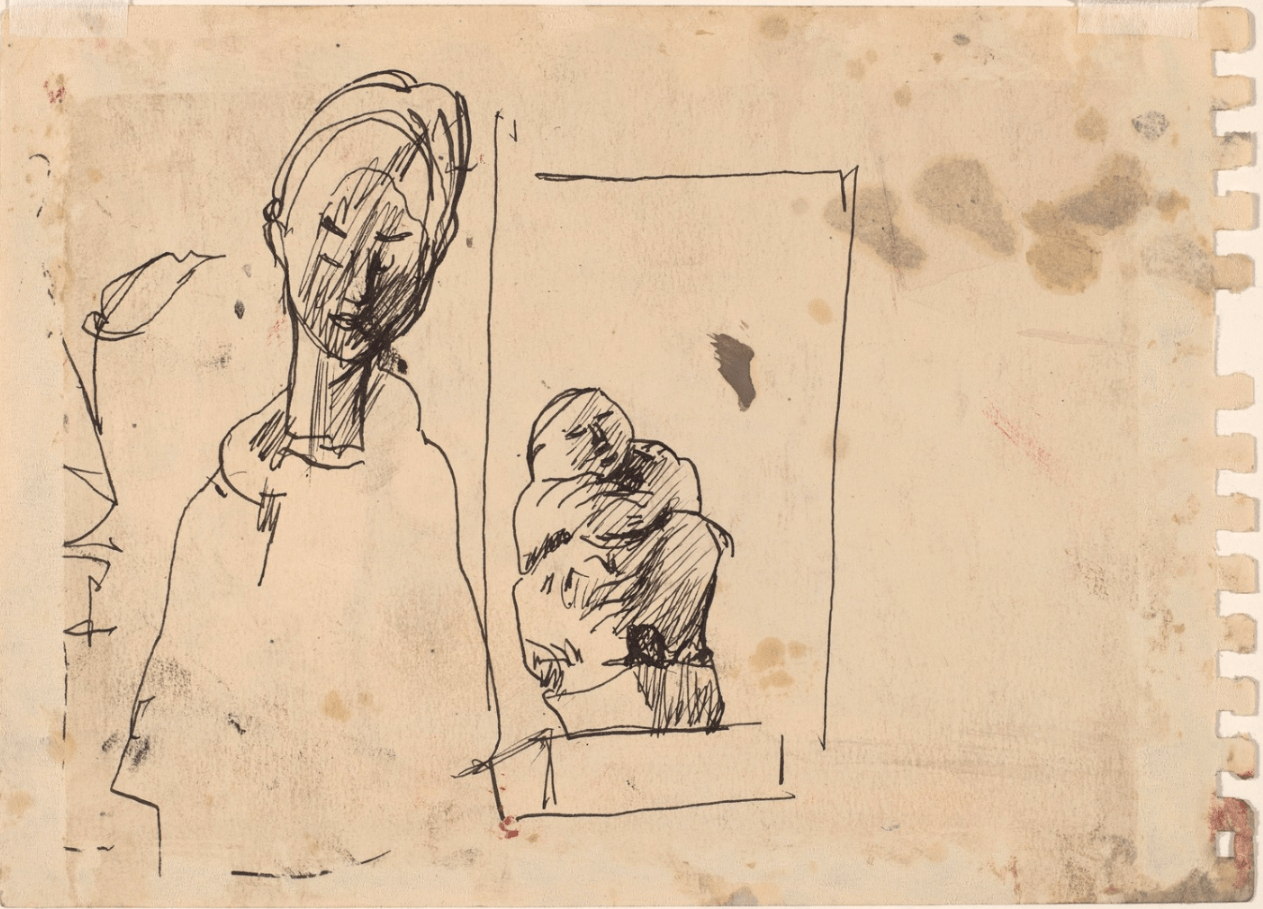
Untitled — Mark Rothko

Untitled [Verso], c. 1940 by Mark Rothko (1903-1970)

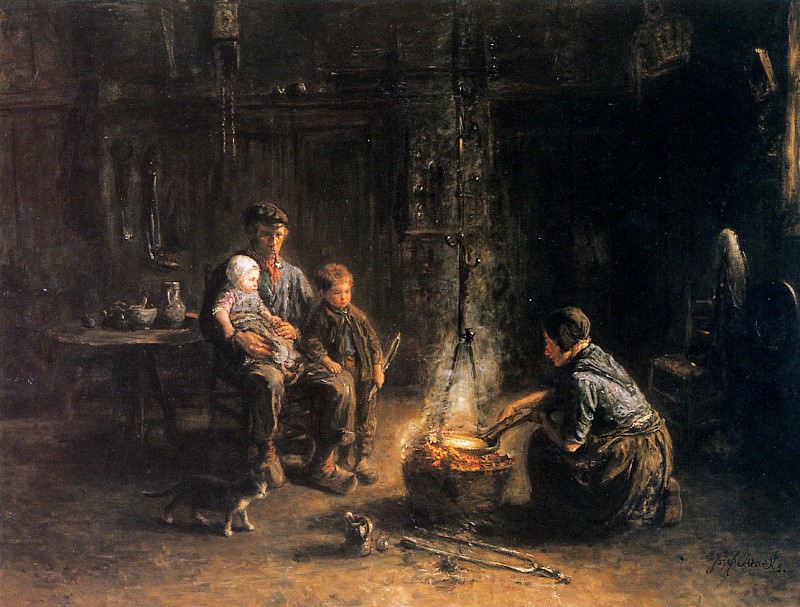
Pancake Day — Jozef Israëls

Pancake Day, c. 1885 by Jozef Israëls (1824-1911)

Home in Bed — Shannon Cartier Lucy 

Home in Bed, 2018 by Shannon Cartier Lucy (b. 1977)

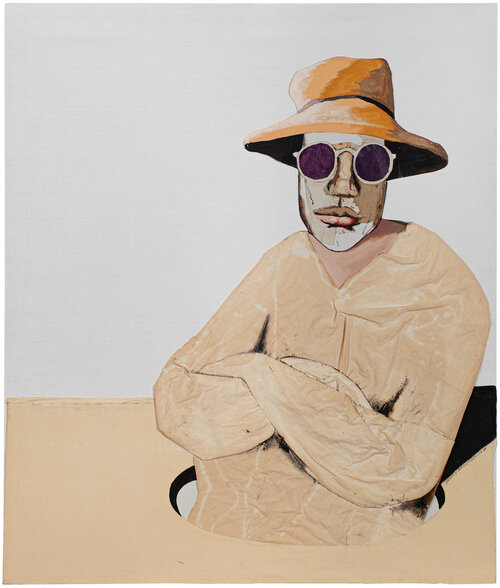
Untitled — Kerry James Marshall

Untitled, 2003 by Kerry James Marshall (b. 1955)

Posted in Art

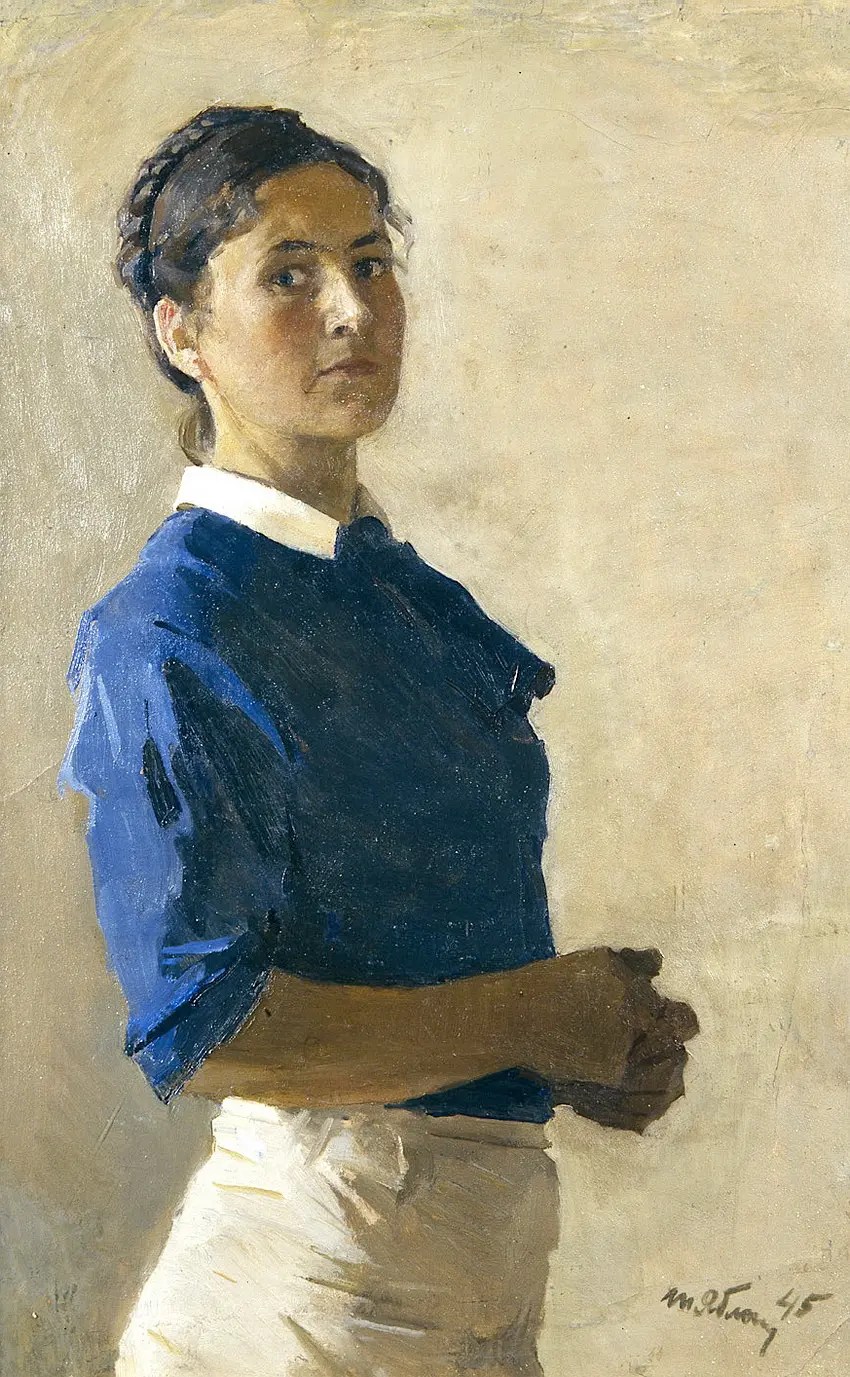
Self-Portrait — Tetyana Yablonska

Self-Portrait, 1945 by Tetyana Yablonska (1917-2005)

Malice — Benny Andrews

Malice, 1978 by Benny Andrews (1930-2006)

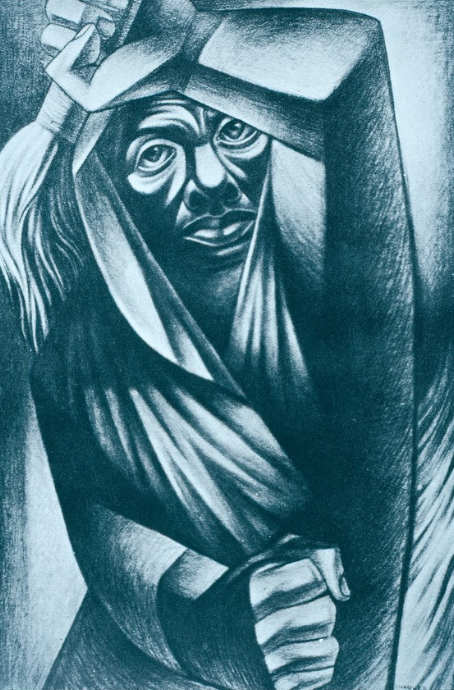
Sojourner — Charles White

Sojourner, 1948 by Charles White (1918-1979)

First Lady Michelle Obama — Amy Sherald

First Lady Michelle Obama, 2017 by Amy Sherald (b. 1973)

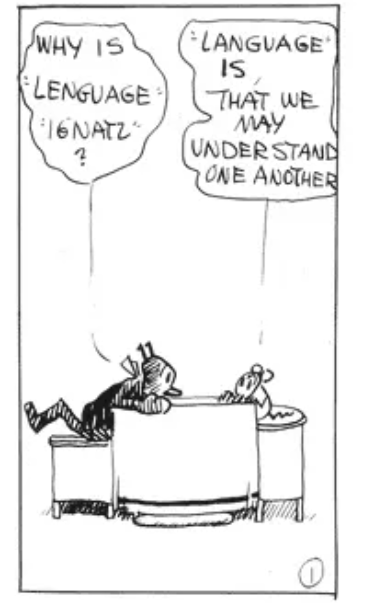
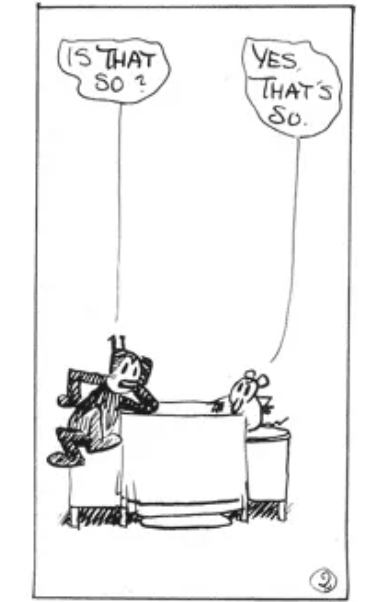
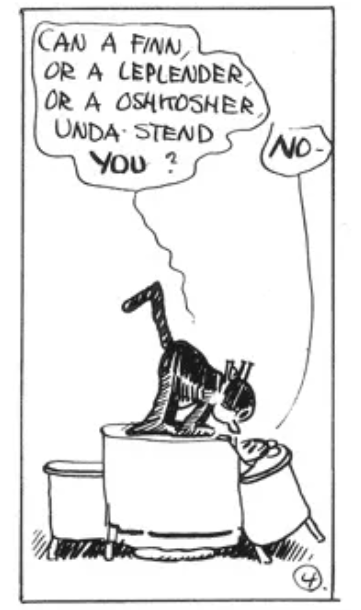
Why is lenguage/Language is (George Herriman)

“Art vs. Trade” — James Weldon Johnson

“Art vs. Trade”
by
James Weldon Johnson

Trade, Trade versus Art,
Brain, Brain versus Heart;
Oh, the earthiness of these hard-hearted times,
When clinking dollars, and jingling dimes,
Drown all the finer music of the soul.
Life as an Octopus with but this creed,
That all the world was made to serve his greed;
Trade has spread out his mighty myriad claw,
And drawn into his foul polluted maw,
The brightest and the best,
Well nigh,
Has he drained dry,
The sacred fount of Truth;
And if, forsooth,
He has left yet some struggling streams from it to go,
He has contaminated so their flow,
That Truth, scarce is it true.
Poor Art with struggling gasp,
Lies strangled, dying in his mighty grasp;
He locks his grimy fingers ’bout her snowy throat so tender.
Is there no power to rescue her, protect, defend her?
Shall Art be left to perish?
Shall all the images her shrines cherish
Be left to this iconoclast, to vulgar Trade?
Oh, that mankind had less of Brain and more of Heart,
Oh, that the world had less of Trade and more of Art;
Then would there be less grinding down the poor,
Then would men learn to love each other more;
For Trade stalks like a giant through the land,
Bearing aloft the rich in his high hand,
While down beneath his mighty ponderous tread,
He crushes those who cry for daily bread.

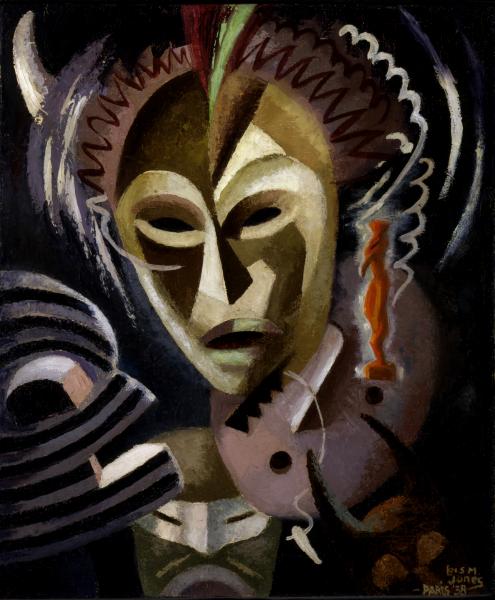
Les Fétiches — Loïs Mailou Jones

Les Fétiches, 1938 by Loïs Mailou Jones (1905–1998)

Trash — Benny Andrews

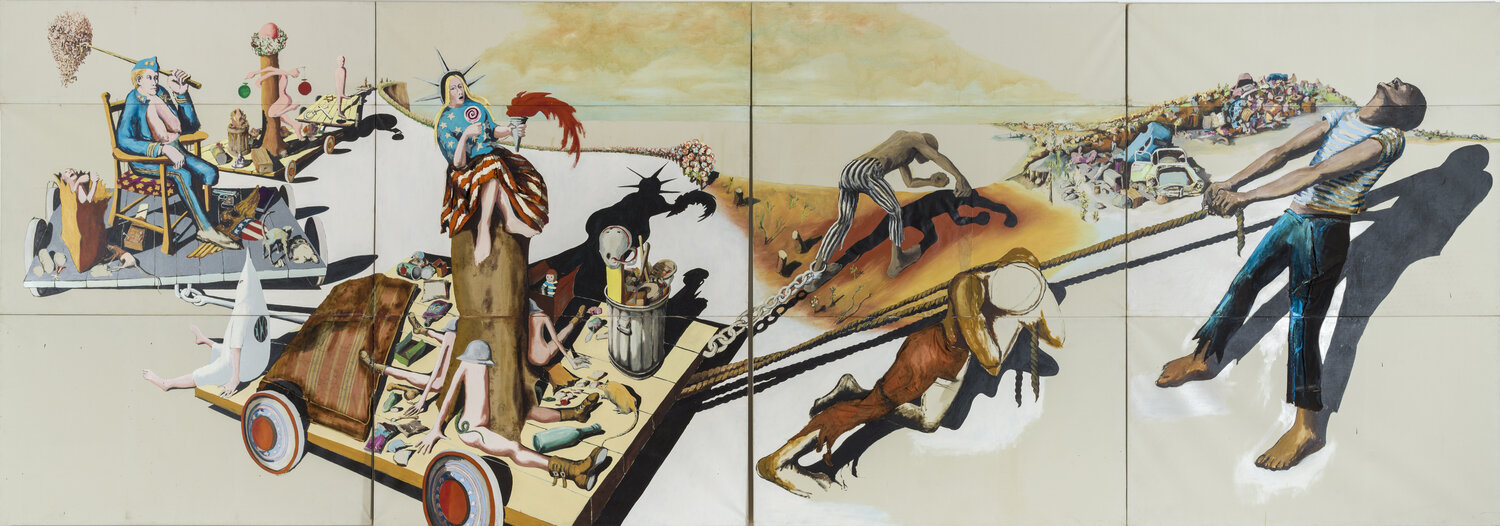
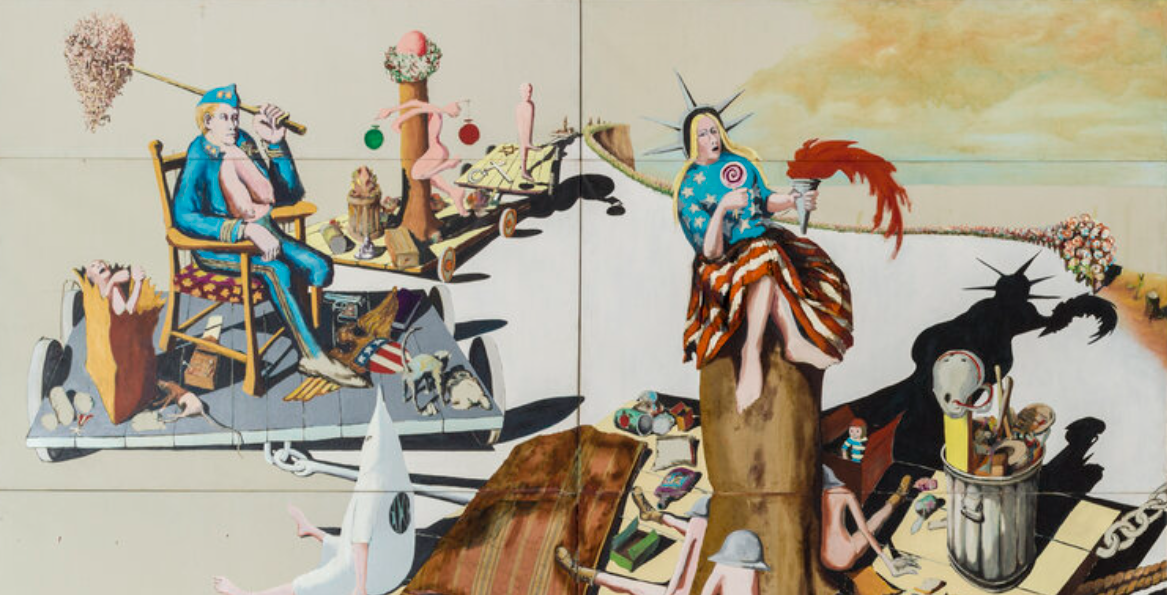
Trash, 1971 by Benny Andrews (1930-2006)

Mother and Son — Lamar Peterson

Mother and Son, 2004 by Lamar Peterson (b. 1974)

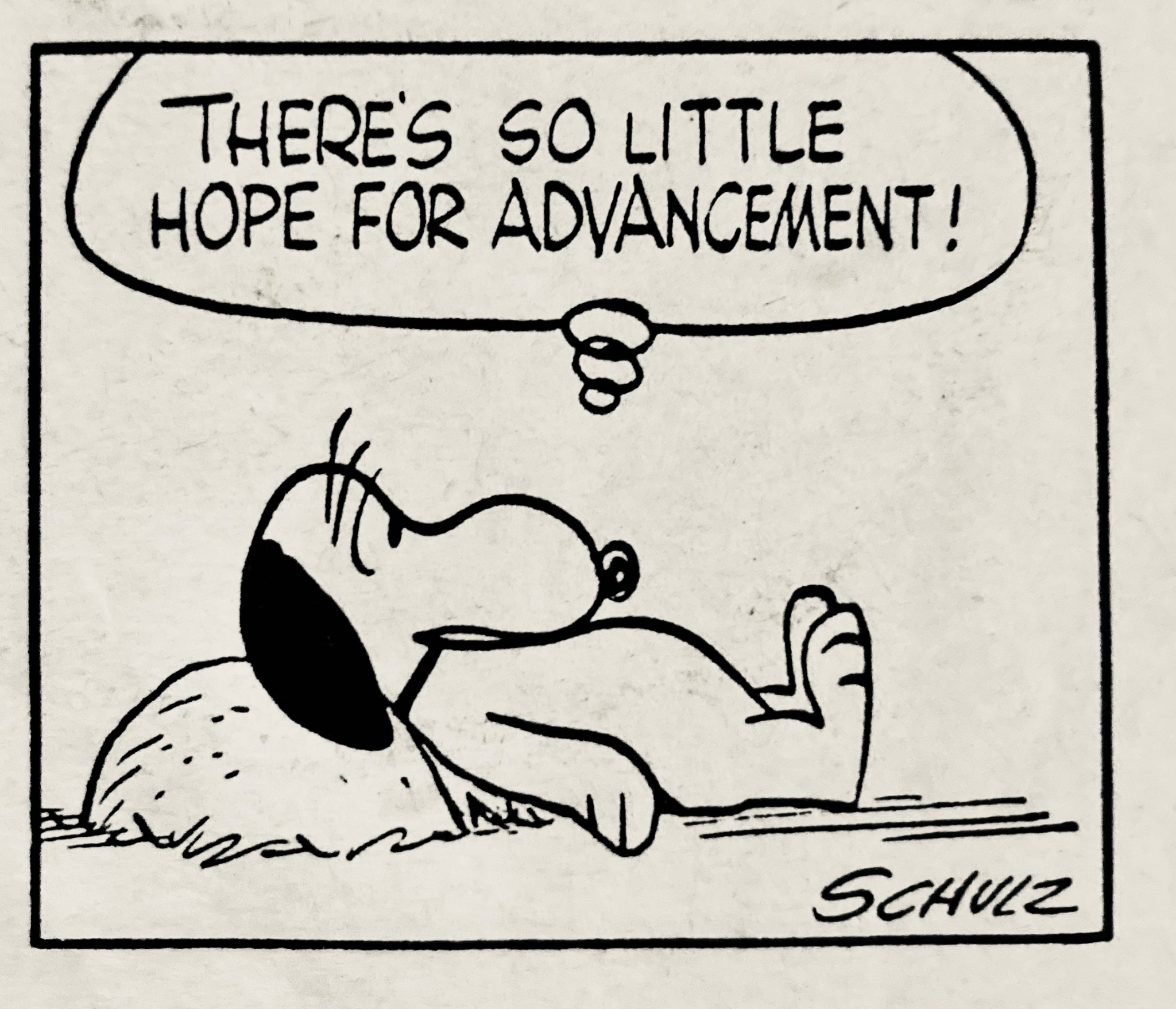
Little hope (Peanuts)

SOB, SOB — Kerry James Marshall

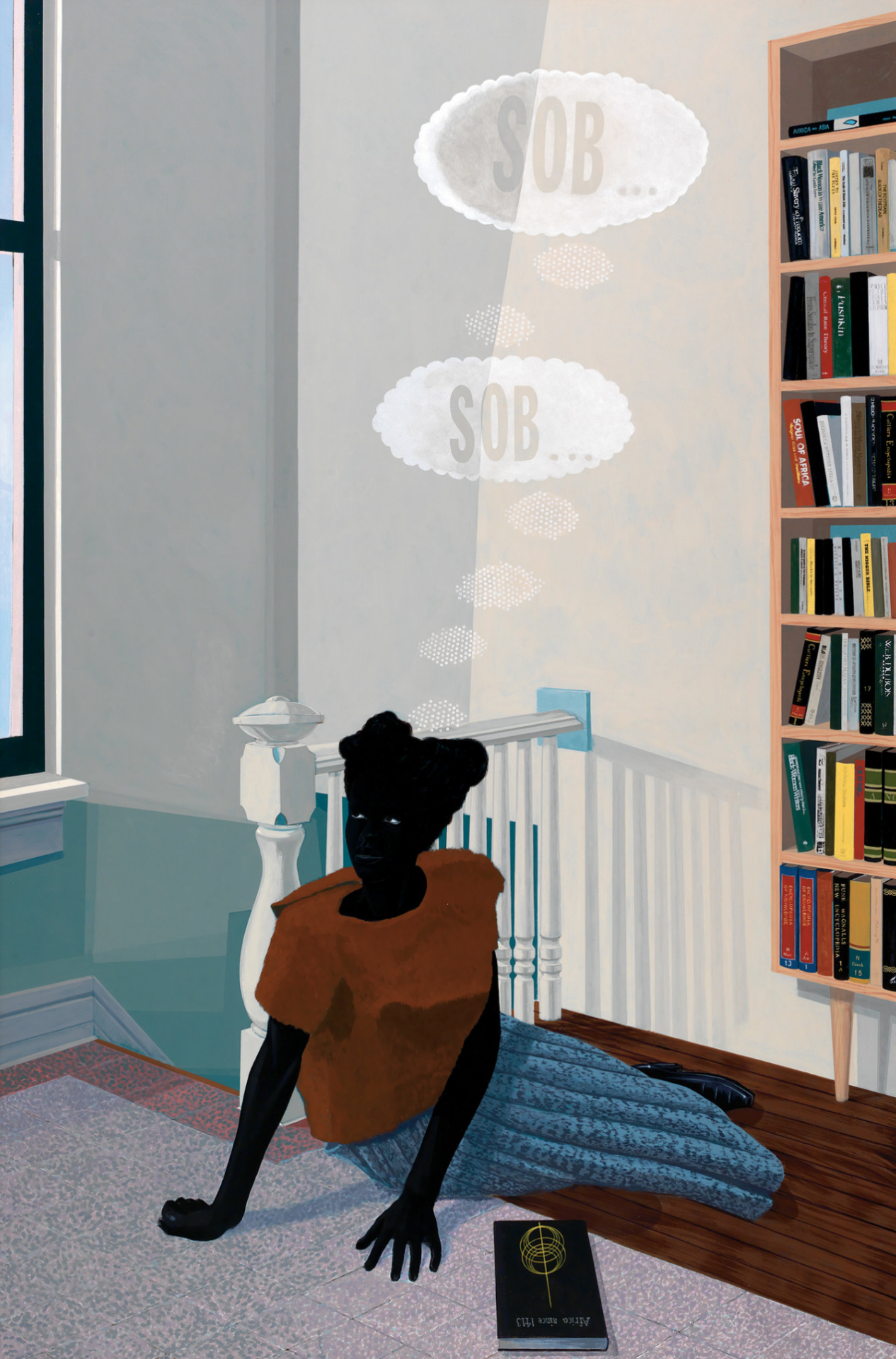
SOB, SOB, 2003 by Kerry James Marshall (b. 1955)

“Basil Valentine, Last of the Alchemists, First of the Chemists” — James J. Walsh

Th

by

James J. Walsh, K.C.St.G., M.D. Ph.D., LL.D., Litt.D., Sc.D.

from

Old Time Makers of Medicine, 1911


“Fieri enim potest ut operator erret et a via regia deflectat, sed ut erret natura quando recte tractatur fieri non potest.”

“For it is quite possible that the physician should err and be turned aside from the straight (royal) road, but that nature when she is rightly treated should err is quite impossible.”

This is one of the preliminary maxims of a treatise on medicine written by a physician born not later than the first half of the fifteenth century, and who may have lived even somewhat earlier. We are so prone to think of the men of that time as utterly dependent on authority, not daring to follow their own observation, suspecting nature, and almost sure to be convinced that only by going counter to her could success in the treatment of disease be obtained, that it is a surprise to most people to find how completely the attitude of mind, that is supposed to be so typically modern in this regard, was anticipated full four centuries ago. There are other expressions of this same great physician and medical writer, Basil Valentine, which serve to show how faithfully he strove with the lights that he had to work out the treatment of patients, just as we do now, by trying to find out nature’s way, so as to imitate her beneficent processes and purposes. It is quite clear that he is but one of many faithful, patient observers and experimenters—true scientists in the best sense of the word—who lived in all the centuries of the Middle Ages.

Speculations and experiments with regard to the elixir of life, the philosopher’s stone, and the transmutation of metals, are presumed to have filled up all the serious interests of the alchemists, supposed to be almost the only scientists of those days. As a matter of fact, however, men were making original observations of profound significance, and these were considered so valuable by their contemporaries that, though printing had not yet been invented, even the immense labor involved in the manifold copying of large folio volumes by the slow hand process did not suffice to deter them from multiplying the writings of these men so numerously that they were preserved in many copies for future generations, until the printing press came to perpetuate them.

Of this there is abundant evidence in the preceding pages as regards medicine, and, above all, surgery, while a summary of accomplishments of workers in other departments will be found in Appendix II, “Science at the Medieval Universities.”

At the beginning of the twentieth century, with some of the supposed foundations of modern chemistry crumbling to pieces under the influence of the peculiarly active light thrown upon our nineteenth century chemical theories by the discovery of radium, and our observations on radio-active elements generally, there is a reawakening of interest in some of the old-time chemical observers, whose work used to be laughed at as so unscientific, or, at most, but a caricature of real science, and whose theory of the transmutation of elements into one another was considered so absurd. It is interesting in the light of this to recall that the idea that the elementary substances were essentially distinct from each other, and that it would be impossible under any circumstances to convert one element into another, belongs entirely to the nineteenth century. Even so deeply scientific a mind as that of Newton, in the preceding century, could not bring itself to acknowledge the tradition, that came to be accepted subsequent to his time, of the absurdity of metallic transformation. On the contrary, he believed quite formally in transmutation as a basic chemical principle, and declared that it might be expected to occur at any time. He had seen specimens of gold ores in connection with metallic copper, and concluded that this was a manifestation of the natural transformation of one of these yellow metals into the other.

With the discovery that radium transforms itself into helium, and that, indeed, all the so-called radioactivities of the heavy metals are probably due to a natural transmutation process constantly at work, the ideas of the older chemists cease entirely to be a subject for amusement. The physical chemists of the present day are very ready to admit that the old teaching of the absolute independence of something over seventy elements is no longer tenable, except as a working hypothesis. The doctrine of “matter and form,” taught for so many centuries by the scholastic philosophers, which proclaimed that all matter is composed of two principles, an underlying material substratum, and a dynamic or informing principle, has now more acknowledged verisimilitude, or lies at least closer to the generally accepted ideas of the most progressive scientists, than it has at any time for the last two or three centuries. Not only the great physicists, but also the great chemists, are speculating along lines that suggest the existence of but one form of matter, modified according to the energies that it possesses under a varying physical and chemical environment. This is, after all, only a restatement in modern times of the teaching of St. Thomas of Aquin, in the thirteenth century.

It is not surprising, then, that there should be a reawakening of interest in the lives of some of the men, who, dominated by some of the earlier scholastic ideas, by the tradition of the possibility of finding the philosopher’s stone, which would transmute the baser metals into the precious metals, devoted themselves with quite as much zeal as any modern chemist to the observation of chemical phenomena. One of the most interesting of these—indeed, he might well be said to be the greatest of the alchemists—is the man whose only name that we know is that which appears on a series of manuscripts written in the High German dialect of the end of the fifteenth and the beginning of the sixteenth century. That name is Basil Valentine, and the writer, according to the best historical traditions, was a Benedictine monk. The name Basil Valentine may only have been a pseudonym, for it has been impossible to trace it among the records of the monasteries of the time. That the writer was a monk, however, there seems to be no room for doubt, for his writings give abundant evidence of it, and, besides, in printed form they began to have their vogue at a time when there was little likelihood of their being attributed to a monastic source, unless an indubitable tradition connected them with some monastery. Continue reading ““Basil Valentine, Last of the Alchemists, First of the Chemists” — James J. Walsh” →