“The Preacher Addresses the Seminarians” — Christian Wiman

“The Preacher Addresses the Seminarians”

by

Christian Wiman


I tell you it’s a bitch existence some Sundays
and it’s no good pretending you don’t have to pretend,

don’t have to hitch up those gluefutured nags Hope and Help
and whip the sorry chariot of yourself

toward whatever hell your heaven is on days like these.
I tell you it takes some hunger heaven itself won’t slake

to be so twitchingly intent on the pretty organist’s pedaling,
so lizardly alert to the curvelessness of her choir robe.

Here it comes, brothers and sisters, the confession of sins,
hominy hominy, dipstick doxology, one more churchcurdled hymn

we don’t so much sing as haunt: grounded altos, gear-grinding tenors,
two score and ten gently bewildered men lip-synching along.

You’re up, Pastor. Bring on the unthunder. Some trickle-piss tangent
to reality. Some bit of the Gospel grueling out of you.

I tell you sometimes mercy means nothing
but release from this homiletic hologram, a little fleshstep

sideways, as it were, setting passion on autopilot (as if it weren’t!)
to gaze out in peace at your peaceless parishioners:

boozeglazes and facelifts, bad mortgages, bored marriages,
a masonry of faces at once specific and generic,

and here and there that rapt famished look that leaps
from person to person, year to year, like a holy flu.

All these little crevices into which you’ve crawled
like a chubby plumber with useless tools:

Here, have a verse for your wife’s death.
Here, have a death for your life’s curse.

I tell you some Sundays even the children’s sermon
— maybe especially this — sharks your gut

like a bite of tin some beer-guzzling goat
either drunkenly or mistakenly decides to sample.

I know what you’re thinking. Christ’s in this.
He’ll get to it, the old cunner, somewhere somehow

there’s the miracle meat, the aurora borealis blood,
every last atom compacted to a grave

and the one thing that every man must lose to save.
Well, friends, I’m here to tell you two things today.

First, though this is not, for me, one of those bilious abrading days,
though in fact I stand before you in a rage of faith

and have all good hope that you will all go help
untold souls back into their bodies,

ease the annihilating No above which they float,
the truth is our only savior is failure.

Which brings me to the second thing: that goat.
It was real. It is, as is usually the case, the displacement of agency

that is the lie. It was long ago, Mexico, my demon days:
It was a wager whose stakes I failed to appreciate.

He tottered. He flowered. He writhed time to a fraught quiet,
and kicked occasionally, and lay there twitching, watching me die.

“The Beach in August” — Weldon Kees

“The Beach in August”

by

Weldon Kees


The day the fat woman
In the bright blue bathing suit
Walked into the water and died,
I thought about the human
Condition. Pieces of old fruit
Came in and were left by the tide.

What I thought about the human
Condition was this: old fruit
Comes in and is left, and dries
In the sun. Another fat woman
In a dull green bathing suit
Dives into the water and dies.
The pulmotors glisten. It is noon.

We dry and die in the sun
While the seascape arranges old fruit,
Coming in and the tide, glistening
At noon. A woman, moderately stout,
In a nondescript bathing suit,
Swims to a pier. A tall woman
Steps toward the sea. One thinks about the human
Condition. The tide goes in and goes out.

At the airport-security checkpoint on my way to visit my grandmother | Claudia Rankine

From Don’t Let Me Be Lonely

by

Claudia Rankine


At the airport-security checkpoint on my way to visit my grandmother, I am asked to drink from my water bottle.

This water bottle?

That’s right. Open it and drink from it.

/

At the airport-security checkpoint on my way to visit my grandmother, I am asked to take off my shoes.

Take off my shoes?

Yes. Both Please.

/

At the airport-security checkpoint on my way to visit my grandmother, I am asked if I have a fever.

A fever? Really?

Yes. Really.

/

My grandmother is in a nursing home. It’s not bad. It doesn’t smell like pee. It doesn’t smell like anything. When I go to see her, as I walk through the hall past the common room and the nurses’ station, old person after old person puts out his or her hand to me. Steven, one says. Ann, another calls. It’s like being in a third-world country, but instead of food or money you are what is wanted, your company. In third-world coun­tries I have felt overwhelmingly American, calcium-rich, privileged, and white. Here, I feel young, lucky, and sad. Sad is one of those words that has given up its life for our country, it’s been a martyr for the American dream, it’s been neutralized, co-opted by our culture to suggest a tinge of discomfort that lasts the time it takes for this and then for that to happen, the time it takes to change a channel. But sadness is real because once it meant something real. It meant dignified, grave; it meant trustworthy; it meant exceptionally bad, deplor­able, shameful; it meant massive, weighty, forming a compact body; it meant falling heavily; and it meant of a color: dark. It meant dark in color, to darken. It meant me. I felt sad.

“A Poem to Read in August” — Gilbert Sorrentino

IMG_3021

“August” — Mary Oliver

“August”

by

Mary Oliver


Our neighbor, tall and blonde and vigorous, the mother
of many children, is sick. We did not know she was sick,
but she has come to the fence, walking like a woman
who is balancing a sword inside of her body, and besides
that her long hair is gone, it is short and, suddenly, gray.
I don’t recognize her. It even occurs to me that it might
be her mother. But it’s her own laughter-edged voice,
we have heard it for years over the hedges.

All summer the children, grown now and some of them
with children of their own, come to visit. They swim,
they go for long walks at the harbor, they make
dinner for twelve, for fifteen, for twenty. In the early
morning two daughters come to the garden and slowly
go through the precise and silent gestures of T’ai Chi.

They all smile. Their father smiles too, and builds
castles on the shore with the children, and drives back to
the city, and drives back to the country. A carpenter is
hired—a roof repaired, a porch rebuilt. Everything that
can be fixed.

June, July, August. Every day, we hear their laughter. I
think of the painting by van Gogh, the man in the chair.
Everything wrong, and nowhere to go. His hands over
his eyes.


800px-van_gogh_-_trauernder_alter_mann

“Epitaph” — Edna St. Vincent Millay

Screenshot 2020-07-27 at 10.49.39 AM

“Photograph of a Gathering of People Waving” — Clarence Major

“Photograph of a Gathering of People Waving”

by

Clarence Major


based on an old photograph bought in a
shop at Half Moon Bay, summer, 1999

No sound, the whole thing.
Unknown folk. People waving from a hillside of ripple grass
to people below in an ongoing meadow.

Side rows of trees waving in a tide of wind,
and because what is moving is not moving,
you catch a state of stasis.

Opposite of this inactivity
you imagine distant music and buzzing and crickets
and that special hot smell of summer.

To the garden past the Bay to the meadow,
cliff sheltered with low clouds, offset by nodding thistle.
Tatter-wort and Stinking Tommy along footpath
worn down by locals. But who and why?

In the photograph itself you’re now looking the other way
to unknown clusters of houses.
Where forces are balanced to near perfection.

Who could live
in such a great swollen silence and solitude?
You hear church bells
from Our Lady’s Tears breaking that silence nicely
but just in the right way so silence continues
as though nothing else matters day after day.

And anyway, each face seems so familiar.

What do you do when you wave back?
You wave vigorously.
You remember your own meadow,
your cliffside and town,
photographs forgotten,
the halfhearted motion of your hand,
your grandmother’s church-folk
gathering on a Sunday afternoon in saintly quietness.

You name the people
whose names are not written on the back.
You forgive them for wrapping themselves in silence.

You enter house after house and open top-floor windows
and you wave down to future generations like this.

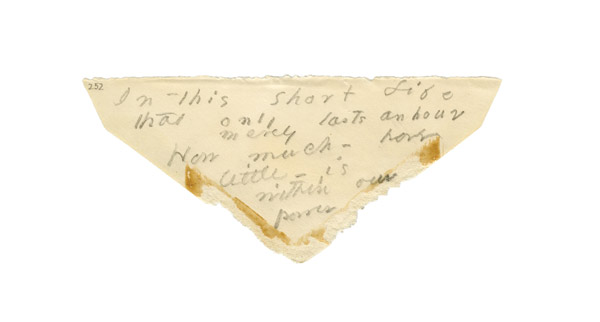
much/little (Emily Dickinson)

In this short Life that only lasts an hour
How much – how little – is within our power

Emily Dickinson (poem 1287)

3-1

“July 4th” — May Swenson

Screenshot 2020-07-03 at 12.35.51 PM

Claudia Rankine reading from Citizen

The new therapist specializes in trauma counseling | Claudia Rankine

From Citizen by Claudine Rankine


/

The new therapist specializes in trauma counseling. You have only ever spoken on the phone. Her house has a side gate that leads to a back entrance she uses for patients. You walk down a path bordered on both sides with deer grass and rosemary to the gate, which turns out to be locked.

At the front door the bell is a small round disc that you press firmly. When the door finally opens, the woman standing there yells, at the top of her lungs, Get away from my house. What are you doing in my yard?

It’s as if a wounded Doberman pinscher or a German shepherd has gained the power of speech. And though you back up a few steps, you manage to tell her you have an appointment. You have an appointment? she spits back. Then she pauses. Everything pauses. Oh, she says, followed by, oh, yes, that’s right. I am sorry.

I am so sorry, so, so sorry.

/


More…

“I am, outside. Incredible panic rules.” (Dream Song 46) — John Berryman

2020-06-19_174036

“The Painting after Lunch” — Clarence Major

“The Painting after Lunch”

by

Clarence Major


It wasn’t working. Didn’t look back. Needed something else. So
I went out. After lunch I saw it in a different light, like a thing
emerging from behind a fever bush, something reaching the
senses with the smell of seaweed boiling, and as visible as yellow
snowdrops on black earth. Tasted it too, on the tongue Jamaica
pepper. To the touch, a velvet flower. Dragging and scumming, I
gave myself to it stroke after stroke. It kept coming in bits and fits,
fragments and snags. I even heard it singing but in the wrong key
like a deranged bird in wild cherries, having the time of its life.

“If My Enemy Is a Clown, a Natural Born Clown” — Ishmael Reed

“If My Enemy Is a Clown, a Natural Born Clown”

by

Ishmael Reed

i tore down my thoughts
roped in my nightmares
remembered a thousand curses
made blasphemous vows to demons
choked on the blood of hosts
    ate my hat
threw fits in the street
got up bitchy each day
told off the mailman
lost many friends
left parties in a huff
dry fucked a dozen juke boxes
made anarchist speeches in brad
the falcon’s 55 (but was never
thrown out)
drank 10 martinis a minute
until 1 day the book was finished

my unspeakable terror between the
covers, on you i said to the
enemies of the souls

well lorca, pushkin i tried
but in this place they assassinate
you with pussy or pats on
the back, lemon chiffon between
the cheeks or 2 weeks on a mile
long beach.

i have been the only negro
on the plane 10 times this year
and its only the 2nd month

i am removing my blindfold and
leaving the dock. the judge
giggles constantly and the prosecutor
invited me to dinner

no forwarding address please

i called it pin the tail on the devil
they called it avant garde
they just can’t be serious
these big turkeys

“Medusa at Her Vanity” — Tom Disch

“Sather Tower Mystery” — Ishmael Reed

“Sather Tower Mystery”

by

Ishmael Reed


Seems there was this Professor
a member of what should be called
The Good German Department

Must have signed his name to
5,000 petitions in front of
the Co-Op on Cedar
and bought two tons of benefit
cookies
Blames Texas for the sorry
state of the oceans
Rode a Greyhound bus “Civil
Rights,” Alabama, 1960
Found the long yellow war
“deplorable”
Believes John “Duke” Wayne’s
values to be inferior to his

He said, “Ishmael, I’d
love to do the right thing
for as you know I’m all for
the right thing and against
the wrong thing, but
these plaster of paris busts
of deceased Europeans
Our secret ways
Our sacred fears
“These books, leather-bound ‘copyright 1789’
All of these things, precious
to me, gleaming like the
stainless steel coffee urn in
the faculty club, an original
Maybeck, 1902

“I’d stand up for Camelot
by golly, even if it meant
shooting all the infidels in
the world,” he said
reaching into his desk drawer

“Why, I might even have to
shoot you, Ishmael”

Staring down the cold
tunnel of a hard .38
I thought

Most people are to the right
when it comes to where they must
eat and lay their heads!

“May” — Tom Disch

Screenshot 2020-03-12 at 7.15.07 PM