Let us admit that there is no hope of ever rivalling the dead

One can’t study the masters too much—I mean, from the amateur’s view-point; in the case of an artist it depends on the receptivity of his temperament. Velasquez didn’t like Raphael, and it was Boucher who warned Fragonard, when he went to Rome, not to take the Italian painters too seriously. Imitation may be the sincerest form of flattery, but it sometimes stifles individuality. I think it is probably the belief that never again will this planet have another golden age of painting and sculpture that arouses in me the melancholy I mention. Music has passed its prime and is now entering the twilight of perfections past for ever. So is it with the Seven Arts. Nevertheless, there is no need of pessimism. Even if we could, it would not be well to repeat the formulas of art accomplished, born as they were of certain conditions, social as well as technical. Other days, other plays. And that is the blight on all academic art. “Traditional art,” says Frank Rutter, “is the art of respectable plagiarism,” a slight variation on Paul Gauguin’s more revolutionary axiom. No fear of any artist being too original. “There is no isolated truth,” exclaimed Millet; but Constable wrote: “A good thing is never done twice.” Best of all, it was R. A. M. Stevenson who said in effect that after studying Velasquez at the Prado he had modified his opinions as to the originality of modern art. Let us admit that there is no hope of ever rivalling the dead; yet a new beauty may be born, a new vision, and with it necessarily new technical procedures. When I say “new,” I mean a new variation on the past. To-day the Chinese and Assyrian are revived. It is the denial of these very obvious truths that makes academic critics slightly ridiculous. They obstinately refuse to see the sunlight on the canvases of the Impressionists just as they deny the sincerity and power of the so-called post-Impressionists. The transvaluation of critical values must follow in the trail of revolutions.

From James Huneker’s “The Melancholy of Masterpieces.” Collected in Ivory, Apes and Peacocks (1915).

Velázquez_–_Bufón_don_Sebastián_de_Morra_(Museo_del_Prado,_c._1645)
Portrait of Sebastián de Morra, Diego Velázquez


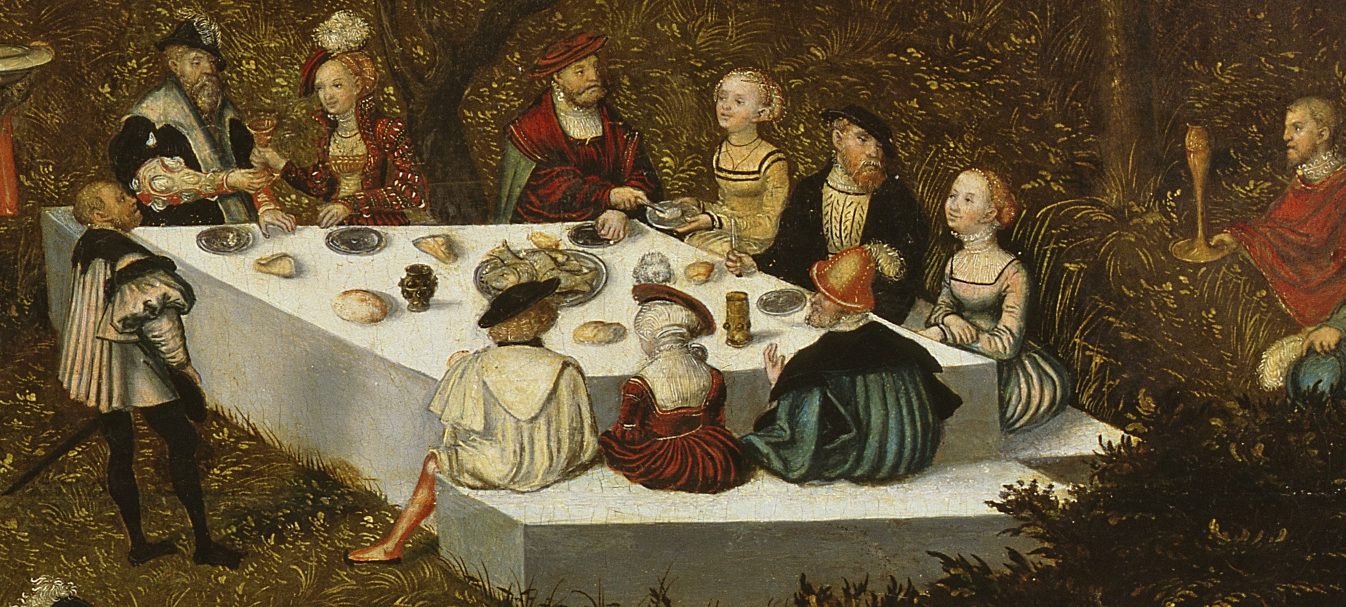
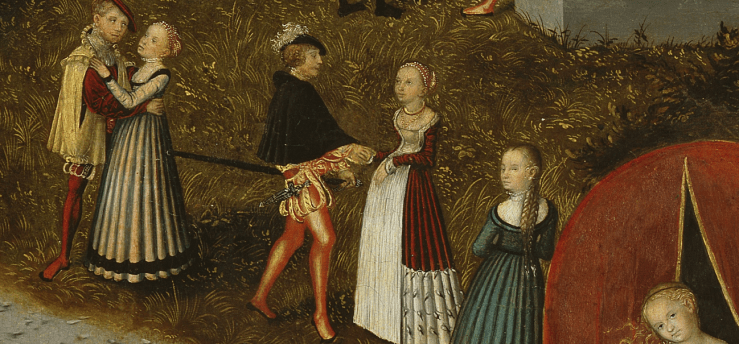
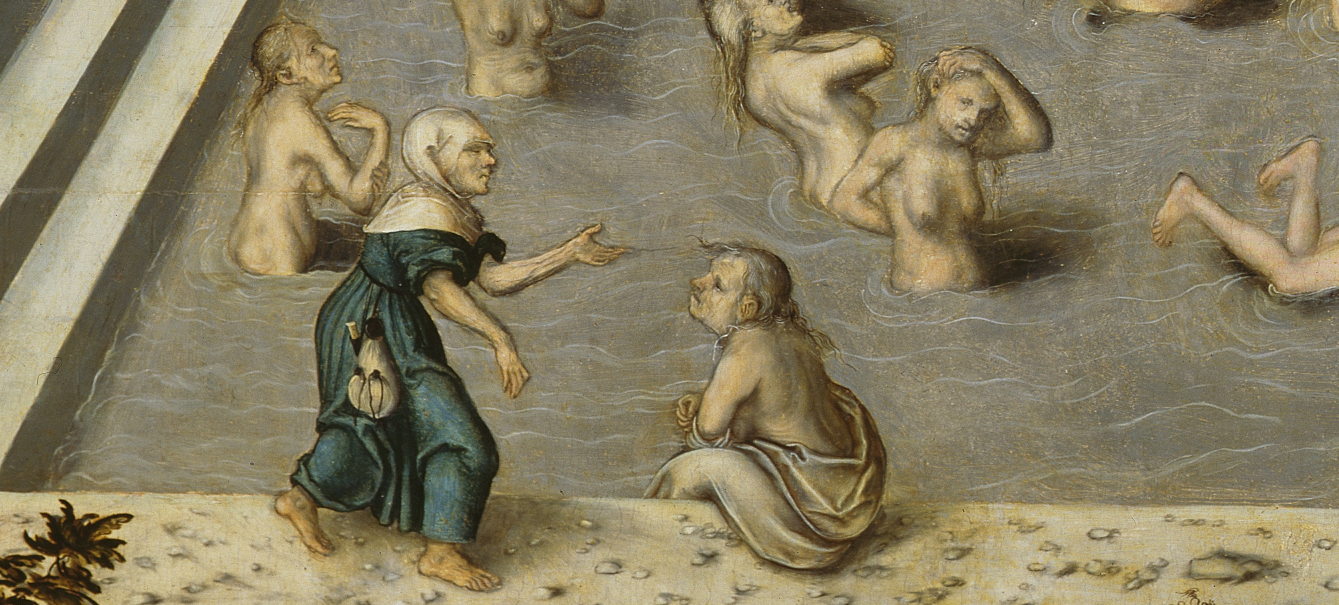
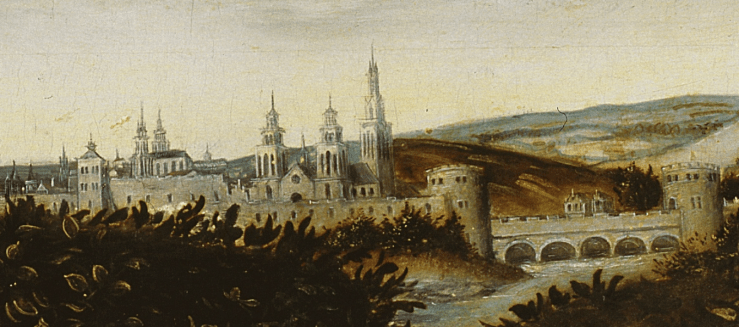
The Fountain of Youth (Detail) — Lucas Cranach the Elder

Screenshot 2017-06-20 at 2.42.41 PM

Detail from Der Jungbrunnen (The Fountain of Youth), 1546 by Lucas Cranach the Elder (c. 1472–1553)

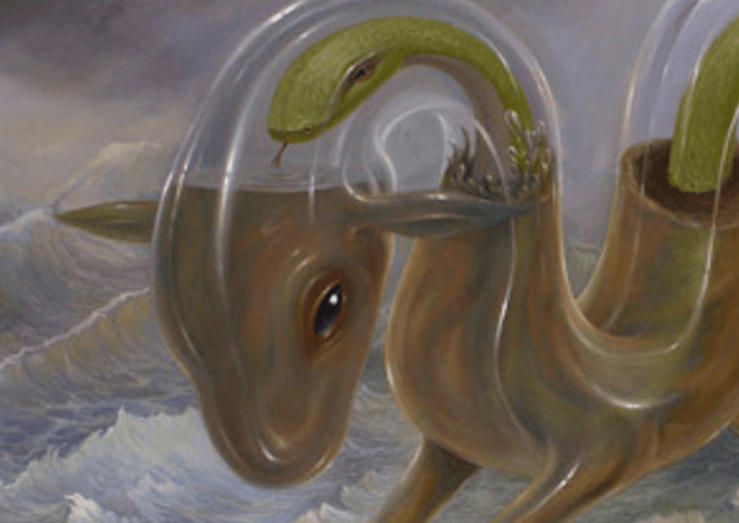
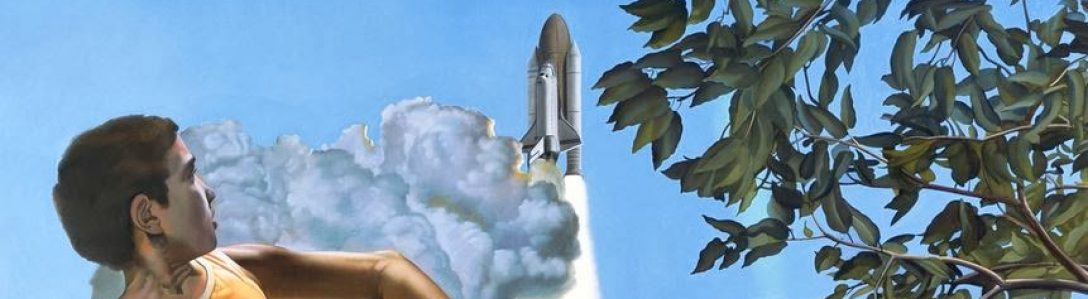
Guess What Series — Yasuaki Okamoto

Guess What Series, 2016 by Yasuaki Okamoto (b. 1980)

Why melancholy?

Possibly it is a purely subjective impression, but I seldom face a masterpiece in art without suffering a slight melancholy, and this feeling is never influenced by the subject. The pastoral peace that hovers like a golden benison about Giorgione’s Concert at the Louvre, the slow, widowed smile of the Mona Lisa, the cross-rhythms of Las Lanzas, most magnificent of battle-pieces, in the Velasquez Sala at the Prado, even the processional poplars of Hobbema at the National Gallery, or the clear cool daylight which filters through the window of the Dresden Vermeer—these and others do not always give me the buoyant sense of self-liberation which great art should. It is not because I have seen too often the bride Saskia and her young husband Rembrandt, in Dresden, that in their presence a tinge of sadness colours my thoughts. I have endeavoured to analyse this feeling. Why melancholy? Is great art always slightly morbid? Is it because of their isolation in the stone jails we call museums? Or that their immortality yields inch by inch to the treacherous and resistless pressure of the years? Or else because their hopeless perfection induces a species of exalted envy? And isn’t it simply the incommensurable emotion evoked by the genius of the painter or sculptor? One need not be hyperæsthetic to experience something akin to muffled pain when listening to certain pages of Tristan and Isolde, or while submitting to the mystic ecstasy of Jan Van Eyck at Ghent. The exquisite grace of the Praxiteles Hermes or the sweetness of life we recognise in Donatello may invade the soul with messages of melancholy, and not come as ministers of joy.

From James Huneker’s “The Melancholy of Masterpieces.” Collected in Ivory, Apes and Peacocks (1915).
Johannes_Vermeer_-_Girl_Reading_a_Letter_by_an_Open_Window_-_Google_Art_Project
Girl Reading a Letter at an Open Window, Johannes Vermeer

The Fountain of Youth (Detail) — Lucas Cranach the Elder

Detail from Der Jungbrunnen (The Fountain of Youth), 1546 by Lucas Cranach the Elder (c. 1472–1553)

Sunday Comics

darrow-sc-totoromouth

Shaolin Cowboy and Totoro by Geof Darrow.

I got to see Hayao Miyazaki’s 1988 film Totoro in the theater today. I’ve seen it dozens of times by now—some times paying less attention than others, hey, I’ve got young children—but it was like seeing it anew. The theater was full, the audience laughed, clapped at the end, and stayed through the credit. Totoro is, in my estimation, a perfect film. It’s also one of only a handful of films I can think of that doesn’t have anything approaching a villain. Anyway, I loved seeing it today on a very big screen in the dark surrounded by other people.

The Fountain of Youth (Detail) — Lucas Cranach the Elder

Detail from Der Jungbrunnen (The Fountain of Youth), 1546 by Lucas Cranach the Elder (c. 1472–1553)

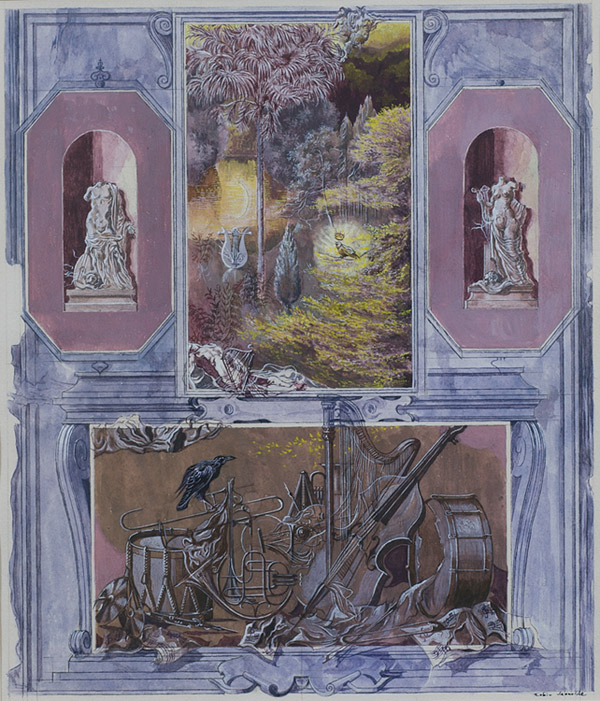
The Nightingale Victorious over Musical Instruments — Robin Ironside

11_lg

The Nightingale Victorious over Musical Instruments, 1949 by Robin Ironside (1912-1965)

The Fountain of Youth (Detail) — Lucas Cranach the Elder

Detail from Der Jungbrunnen (The Fountain of Youth), 1546 by Lucas Cranach the Elder (c. 1472–1553)

Did You Think I Was Immortal — Scott Musgrove

art-scott-musgrove-08Screenshot 2017-06-24 at 10.52.19 AM

Did You Think I Was Immortal by Scott Musgrove

The Squeaky Wheel — Mike Davis

Τα κεραμίδια στάζουν-the squeaky wheel-Mike Davis

The Squeaky Wheel, 2014 by Mike Davis

The Fountain of Youth (Detail) — Lucas Cranach the Elder

Detail from Der Jungbrunnen (The Fountain of Youth), 1546 by Lucas Cranach the Elder (c. 1472–1553)

Old Woman Frying Eggs — Diego Velázquez

Vieja friendo huevos (Old Woman Frying Eggs), 1618 by Diego Velázquez (1599-1660)

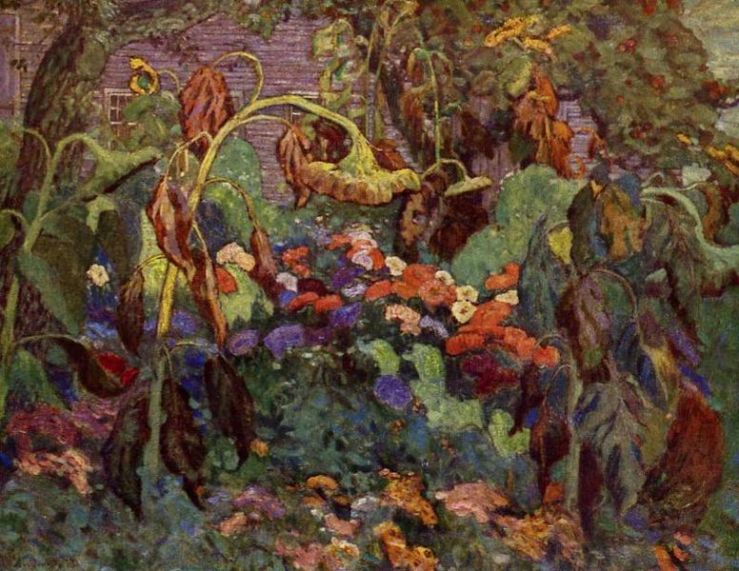
The Tangled Garden — J. E. H. MacDonald

the-tangled-garden-1916

The Tangled Garden, 1916 by J. E. H. MacDonald (1872-1932)

The Fountain of Youth (Detail) — Lucas Cranach the Elder

Screenshot 2017-06-20 at 2.41.43 PM

Detail from Der Jungbrunnen (The Fountain of Youth), 1546 by Lucas Cranach the Elder (c. 1472–1553)

The Fountain of Youth (Detail) — Lucas Cranach the Elder

Detail from Der Jungbrunnen (The Fountain of Youth), 1546 by Lucas Cranach the Elder (c. 1472–1553)

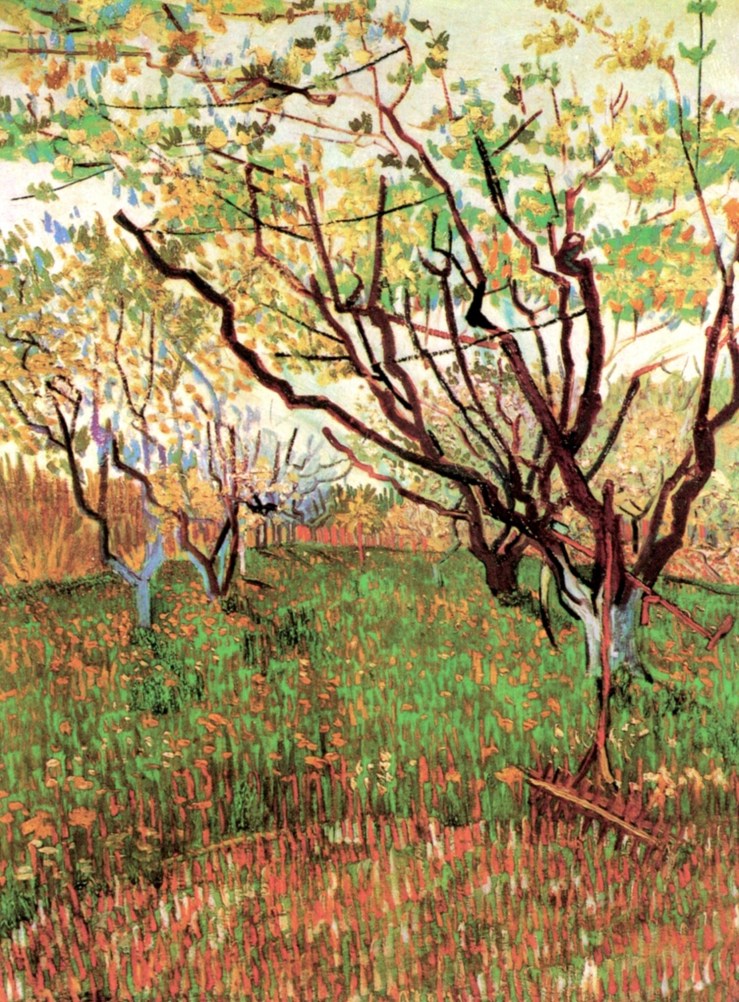
Orchard in Blossom — Vincent van Gogh

orchard-in-blossom-1888

Orchard in Blossom, 1888 by Vincent van Gogh (1853-1890)