Simulated stag | From Gene Wolfe’s novel Peace

And so will I search now for my knife, thus getting the exercise Dr. Van Ness prescribes. It was large, and stamped with the words “Boy Scout.” The scales were of simulated black staghorn, bringing to mind (at least to mine) the image of a simulated stag, his horns held proudly as those of any elm-deer, ranging the forest among the now-waking trees, trees whose leaves are dying with the summer in every color, like bruises, but bruises beautiful as the skins of races unborn, withheld from us because God, or destiny, or the bland chance of the scientists (whose blind, piping ape-god, idiot-god, we have met before; we know you, troubler of Babylon) has denied us the sight of all these scarlet and yellow—truly red, orange, russet-brown—races on our sidewalks, and all the wonderful richness of stereotypes we might have entertained ourselves with if only they had been permitted us: the scarlet people with tight fists and loose women, gobbling dialects, a talent for paintings done with chalk upon the sides of newspaper kiosks, and high abilities in the retail merchandising of hobby supplies such as tiny-toy jet engines, and model garbage trucks whose hungry rumps, trundled about the wooden tops of retired dining-room tables in basements, will devour the dross of train-station quick-eat restaurants; the orange people with their weird religion demanding the worship of sundials (as our own seems to others that of telephone poles), so that in friendly locker-room conversations, when we have at last and at the threat of certain legal pressures admitted them to Pinelawn and are discussing the round now past, they out with strange oaths. What is a wabe?

And all of them, since all the lands of this earth are occupied, must be from strange and farther countries, from Hi Brasil and the Islands of the Sun, from the Continental Islands and the Isles of the Tethys Sea. Only the rarest, the russet browns, belong here, native to St. Brendan’s land, and they are dying; the things they are famous for are not strange oaths, or ability at any art, or cunning in a trade, but alcoholism and gonorrhea and dwindling. They make good soldiers and that is fatal, just as is the bravery of the simulated stag, which will bring him to death, answering the call of the simulated war cry to meet bullets in the dry autumn woods and fall, his lungs hemorrhaging substitute blood at the edge of the potato fields. The imitation huntsman shouts and dances for joy, and then, having learned very well to shoot, but never to butcher, and being, in his own opinion, no longer of an age to carry heavy burdens, leaves him to rot and stink, the bait of plastic flies with fishhooks in their bellies. In time his flesh, torn by such fur-like foxes as remain, and by the teeth of curs, falls away, and only his horns and his celluloid bones remain, the prey of the boys’-knife maker.

A passage from Gene Wolfe’s 1975 novel Peace.

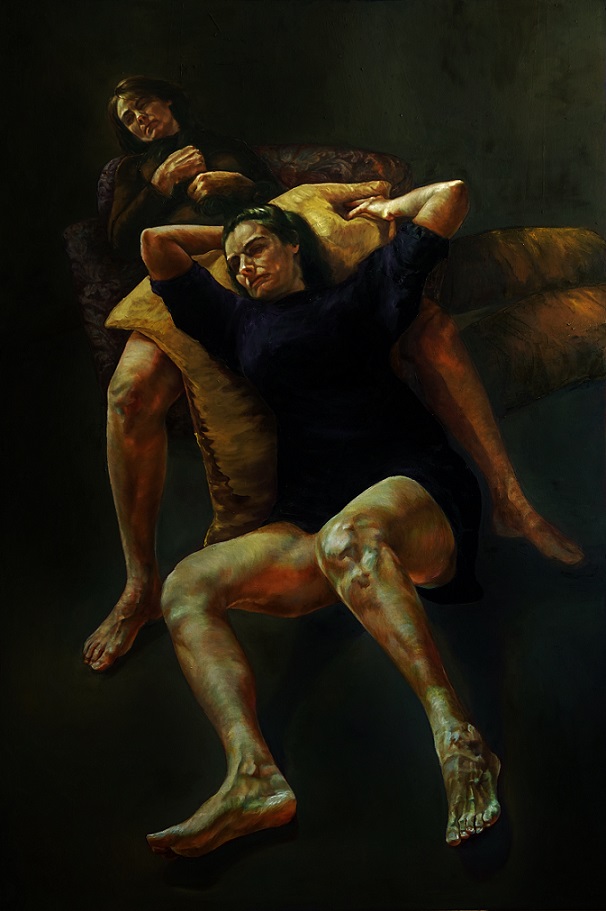
Loyal Retainer: Final Chapter —  Mu Pan

kong_lee_seamless

Loyal Retainer: Final Chapter, 2018 by Mu Pan (b. 1976)


Satyrs — Cima da Conegliano

Öèôðîâàÿ ðåïðîäóêöèÿ íàõîäèòñÿ â èíòåðíåò-ìóçåå Gallerix.ru

Satyrs, ca. 1505-1510 by Cima da Conegliano (ca. 1459 – ca. 1517)

Lot and His Daughters — Lucas van Leyden

lucas_van_leyden_-_lot_and_his_daughters_-_wga12932

Lot and His Daughters, 1520 by Lucas van Leyden (1494-1533)

Endymion — George Frederick Watts

endymion

Endymion, c. 1872 by George Frederick Watts (1817-1904)

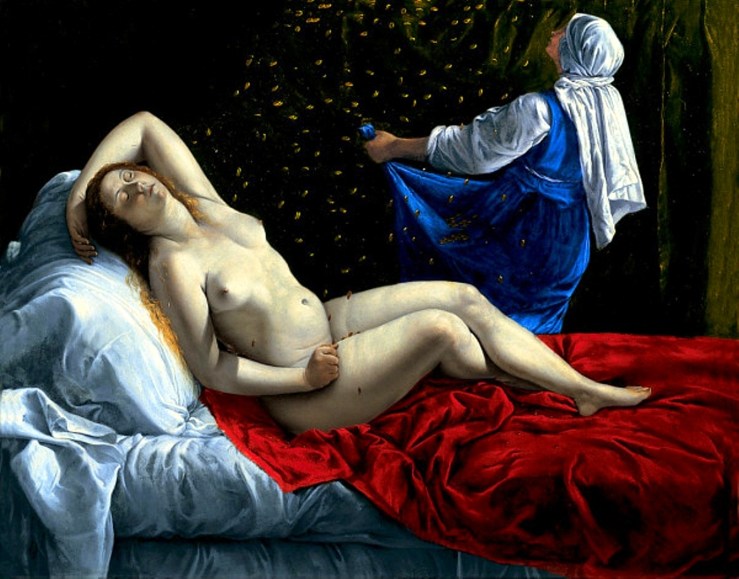
Danae — Artemisia Gentileschi

artemisia_gentileschi_-_danac3ab

Danae, 1612 by Artemisia Gentileschi (1610-1656)

Venus, Mars, and Cupid — Riccardo Tommasi Ferroni

venere_marte_amore_jpg

Venus, Mars, and Cupid, 1972 by Riccardo Tommasi Ferroni (1934-2000)

Cain and Abel — Frederic Leighton

Cain and Abel published 1881 by Frederic, Lord Leighton 1830-1896

Cain and Abel, 1881 by Frederic Leighton, (1830–1896)

Deimos — Dragan Bibin

Dragan+Bibin+-+Deimos

Deimos, 2015 by Dragan Bibin (b. 1984)

Kronos and Kairos — Carmen Chami

carmen_chami-_khronos_y_kair__s-___leo_sobre_tela-_150_x_105cm

Kronos and Kairos by Carmen Chami (b. 1974)

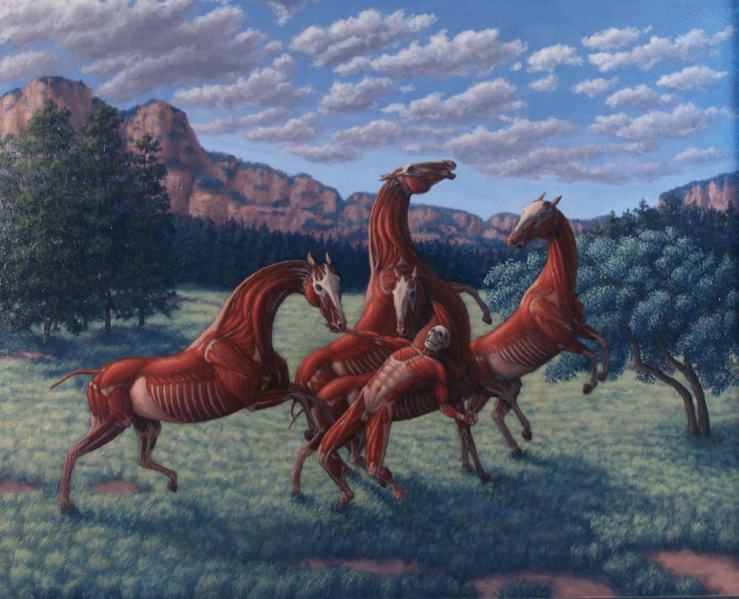
Diomedes Devoured by His Horses (After Moreau) — Sandra Yagi

Diomedes Devoured by His Horses (after Moreau), 2009 by Sandra Yagi

Diomedes Devoured by His Horses — Gustave Moreau

Diomedes Devoured by His Horses (1865) by Gustave Moreau (1826 – 1898)

Susanna and the Elders — Thomas Hart Benton

86695664adbcb2fc1ed212a4667afcc9

Susanna and the Elders, 1938 by Thomas Hart Benton (1889–1975)

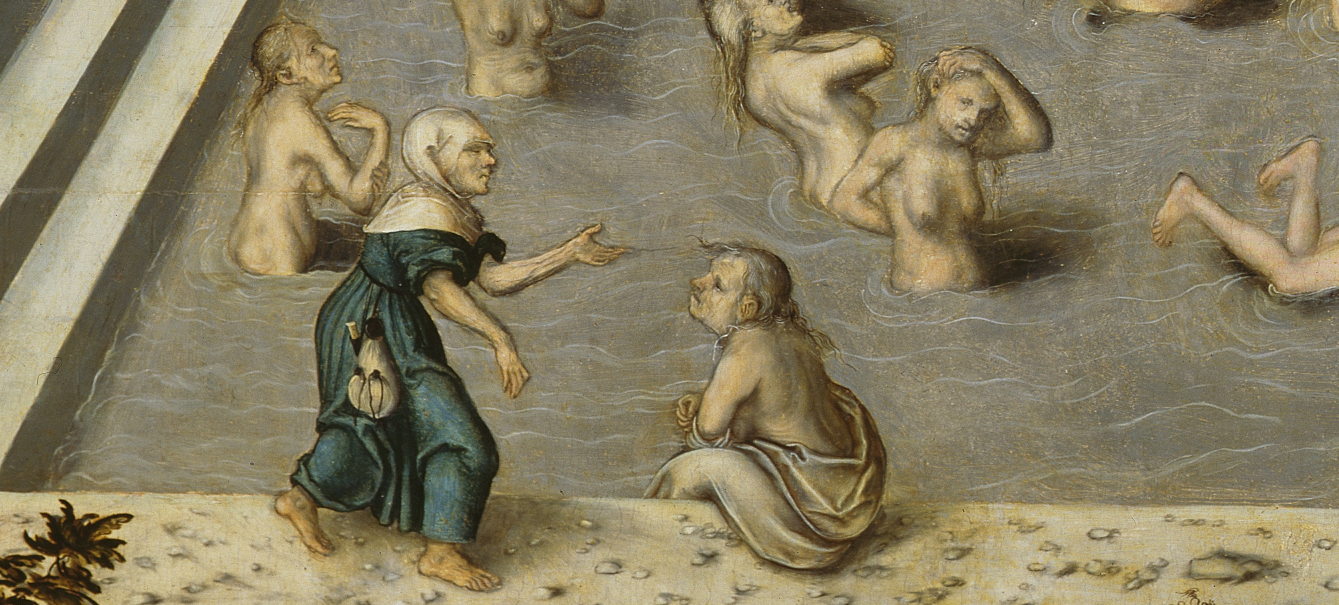
The Fountain of Youth (Detail) — Lucas Cranach the Elder

Detail from Der Jungbrunnen (The Fountain of Youth), 1546 by Lucas Cranach the Elder (c. 1472–1553)

The Fountain of Youth (Detail) — Lucas Cranach the Elder

Detail from Der Jungbrunnen (The Fountain of Youth), 1546 by Lucas Cranach the Elder (c. 1472–1553)

“The Frog Prince,” a very short story by Robert Coover

“The Frog Prince” by Robert Coover 

At first, it was great. Sure. It always is. She cuddled a frog, wishing for more, and—presto! A handsome prince who doted on her. It meant the end of her marriage, of course, but her ex was something of a toad himself, who had a nasty habit of talking with his mouth full and a tongue good for nothing but licking stamps.

The prince was adorable—all the girls at the bridge club, squirming with envy, said so—though you could still see the effects his previous residence had had on him. He had heavy-lidded eyes and a wide mouth like a hand puppet’s, his complexion was a bit off, and his loose-fitting skin was thin and clammy. His semen had a muddy taste, like the pond he came from, and his little apparatus was disappointing, but his tongue was amazing. It could reach the deepest recesses, triggering sensations she’d never known before. His crown was not worn like a hat—it grew out of his head like horns and sometimes got in the way—but his tongue was long enough for detours and tickled other parts on the path in. It gave him not so much a lisp as a consonantal slurp, making gibberish out of his sweet nothings, but talking was never the main thing between them.

Read the rest of Robert Coover’s “The Frog Prince” at The New Yorker

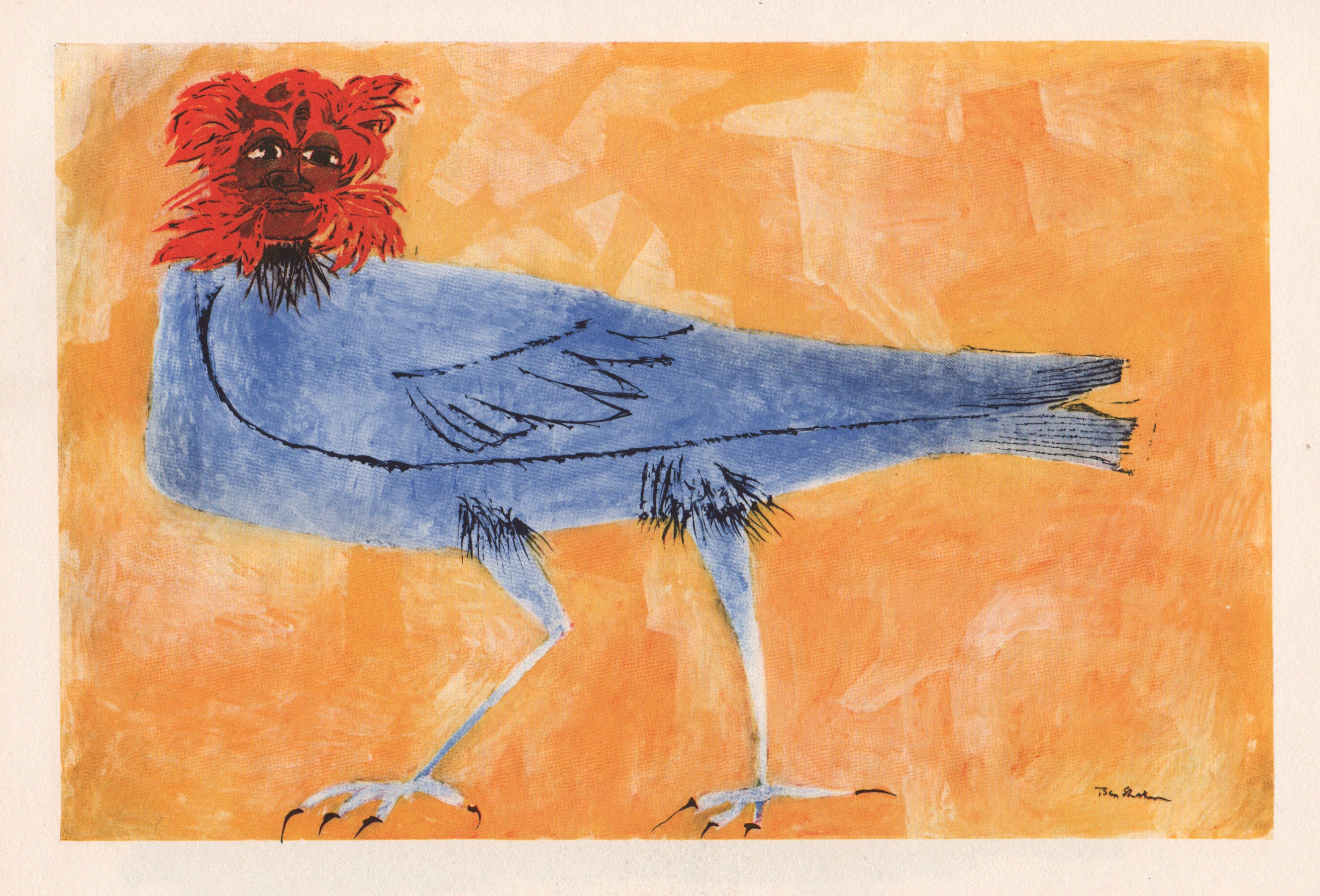
Harpie — Ben Shahn

Harpie, 1951 by Ben Shahn (1898–1969). From Ben Shahn: His Graphic Art, George Braziller, Inc., NY 1957.