Annotations on a list of books I read in full in 2020

2d27b454-7e45-4ffc-8faf-1c2ba9bda56a


Flight to Canada, Ishmael Reed

A frenetic, zany achronological satire of the American Civil War. I wrote about it here.

We Have Always Lived in the Castle, Shirley Jackson

Jackson gives us a quasi-idyllic-but-also-dystopian world delivered through narrator Merricat, an insane witch whom I adored. Merricat hates with beautiful intensity. The novel’s premise, prose, and mood are more important than its plot, which is littered with trapdoors, smoke and mirrors, and gestures toward some kind of greater gothic paranoia. It’s a slim novel that feels like 300 pages of exposition have been cut away, leaving only mystery, aporia, ghostly traces of maybe-answers.

Titus Groan, Mervyn Peake

The first of Mervyn Peake’s strange castle (and then not-castle trilogy (not really a trilogy, really)), Titus Groan is weird wonderful grotesque fun. Inspirited by the Machiavellian antagonist Steerpike, Titus Groan can be read as a critique of the empty rituals that underwrite modern life. It can also be read for pleasure alone.

926 Years, Tristan Foster and Kyle Coma-Thompson

The blurb on the back of 926 Years describes the book as “twenty-two linked stories,” but it read it not so much as a collection of connected tales, but rather as a kind of successful experimental novel, a novel that subtly and reflexively signals back to its own collaborative origin. My review is here.

Anasazi, Mike McCubbins and Matt Bryan

One of the best books I read (and reread) all year. The joy of Anasazi is sinking into its rich, alien world, sussing out meaning from image, color, and glyphs. This graphic novel has its own grammar. Bryan and McCubbins conjure a world reminiscent of Edgar Rice Burroughs’ Martian novels, Charles Burns’ Last Look trilogy, Kipling’s Mowgli stories, as well as the fantasies of Jean Giraud.

Machines in the Head, Anna Kavan

I have a longish review here.

Machines in the Head was the first book I was able to write about after the onset of the Great Quarantine of 2020.

Gormenghast, Mervyn Peake

Probably the best novel in Peake’s trilogy, Gormenghast is notable for its psychological realism, surreal claustrophobia, and bursts of fantastical imagery. We finally get to know Titus, who is a mute infant in the first novel, and track his insolent war against tradition and Steerpike. The novel’s apocalyptic diluvian climax is amazing.

Gringos, Charles Portis

Gringos was the last of Portis’s five novels. I read the other four greedily last year, and pulled them all out when he passed away in February. I started in on Gringos, casually, then just kept reading. Sweet and cynical, spiked with strange heroism, strange grace, and very, very funny, Gringos might just be my favorite Portis novel. But I’d have to read them all again to figure that out.

Titus Alone, Mervyn Peake

A beautiful mess, an episodic, picaresque adventure that breaks all the apparent rules of the first two books. The rulebreaking is fitting though, given that Our Boy Titus (alone!) navigates the world outside of Gormenghast—a world that doesn’t seem to even understand that a Gormenghast exists (!)—Titus Alone is a scattershot epic. Shot-through with a heavy streak of Dickens, Titus Alone never slows down enough for readers to get their bearings. Or to get bored. There’s a melancholy undercurrent to the novel. Does Titus want to get back to his normal—to tradition and the meaningless lore and order that underwrote his castle existence? Or does he want to break quarantine? 

The Wig, Charles Wright

Hilarious stuff. I read most of it on a houseboat in Jekyll Island, right before lockdown.

Nog, Rudolph Wurlitzer

 Rudolph Wurlitzer’s 1969 cult novel Nog is druggy, abject, gross, and shot-through with surreal despair, a Beat ride across the USA. Wurlitzter’s debut novel is told in a first-person that constantly deconstructs itself, then reconstructs itself, then wanders out into a situation that atomizes that self again.

I should’ve loved it, but I didn’t.

I reviewed it here.

Herman Melville, Elizabeth Hardwick

Typee, Herman Melville

Like a lot of people I was going out of my mind in April of 2020. Elizabeth Hardwick’s lit-crit bio of Melville isn’t necessarily great, but she does work in big fat slices of his texts, making it a kind of comfort read. It also led me to read Typee for the first time, a horny and good novel.

Fade Out, Rudolph Wurlitzer

I liked it more than Nog and wrote about it here.

Welcome Home, Lucia Berlin

A slight and unfinished collection of memoir-slices that will appeal to those already familiar with Berlin’s autofiction.

Reckless Eyeballing, Ishmael Reed

Reed’s 1986 novel skewers Reaganism, but there’s a marked shift from the surreal elastic slapstick anger of Reed’s earlier novels (like 1972’s Mumbo Jumbo). That elastick anger starts to harden into something far more bitter, harder to chew on.

Lake of Urine, Guillermo Stitch

A very weird book. I felt awful that I could never muster a proper review of it. Weird book, indie press, all that. I felt less bad when Dwight Garner praised it in The New York Times. What is Lake of Urine? That was my trouble in reviewing it. The plot is, uh, wild, to say the least. Zany, elastic, slapstick, and often surreal, Stitch’s novel is all over the place. He seems to do whatever he wants on each page with a zealous energy that’s difficult to describe. Great stuff.

Mr. Pye, Mervyn Peake

I recall enjoying it but thinking, Oh, this isn’t Gormenghast stuff.

Bleeding Edge, Thomas Pynchon

I wrote about it here. What may end up being the last Pynchon novel was also the last one I read. It turned out to be much, much better than I thought it would be. It also made me very, very sad. It reminded me of our huge ideological failure after 9/11, an ideological failure we are watching somehow fail even more today.

São Bernando,Graciliano Ramos; translation by Padma Viswanathan

I enjoyed São Bernardo  mostly for the narrator’s voice (which reminded me very much of Al Swearengen of Deadwood). Through somewhat nefarious means, Paulo Honorio takes over the run-down estate he used to toil on, restores it to a fruitful enterprise, screws over his neighbors, and exploits everyone around him. He decries at one point that “this rough life…gave me a rough soul,” which he uses as part confession and part excuse for his failure to evolve to the level his younger, sweeter wife would like him to. São Bernardo is often funny, but has a mordant, even tragic streak near its end. Ultimately, it’s Honorio’s voice and viewpoint that engages the reader. He paints a clear and damning portrait of himself and shows it to the reader—but also shows the reader that he cannot see himself.

The Unconsoled, Kazuo Ishiguro

Kazuo Ishiguro’s The Unconsoled is over 500 pages but somehow does not read like a massive novel, partly, I suppose, because the novel quickly teaches you how to read the novel. The key for me came about 100 pages in, when the narrator goes to a showing of 2001: A Space Odyssey starring Clint Eastwood and Yul Brynner. There’s an earlier reference to a “bleeper” that stuck out too, but it’s at the precise moment of this alternate 2001 that The Unconsoled’s just-slightly-different universe clicked for me. Following in the tradition of Kafka’s The CastleThe Unconsoled reads like a dream-fever set of looping deferrals. Our narrator, Ryder, is (apparently) a famous pianist who arrives at an unnamed town, where he is to…do…something?…to help restore the town’s artistic and aesthetic pride. (One way we know that The Unconsoled takes place in an alternate reality is that people care deeply about art, music, and literature.) However, Ryder keeps getting sidetracked, entangled in promises and misunderstanding, some dark, some comic, all just a bit frustrating. There’s a great video game someone could make out of The Unconsoled—a video game consisting of only side quests perhaps. Once the reader gives in to The Unconsoled’s looping rhythms, there’s an almost hypnotic pleasure to the book. Its themes of family disappointment, artistic struggle, and futility layer like musical motifs, ultimately suggesting that the events of the novel could take place entirely in Ryder’s consciousness, where he orchestrates all the parts himself. Under the whole thing though is a very conventional plot though—think a Kafka fanfic version of Waiting for Guffman.

The Counterfeiters, Hugh Kenner

I wanted to like it a lot more than I did.

Animalia, Jean-Baptiste Del Amo; translation by Frank Wynne

Animalia begins in rural southwest France at the end of the nineteenth century, and ends at the end of the twentieth century, chronicling the hardships of a family farm. The preceding sentence makes the novel sound possibly hokey: No, Animalia is a visceral, naturalistic, and very precise rendering of humans as animals. I had to read Animalia in stages, essentially splitting its four long chapters into novellas. Animalia made me physically ill at times. It’s an excellent novel.

The Prime of Miss Jean Brodie, Muriel Spark

Loved it! Can’t believe I hadn’t read Spark until 2020. Went on a binge.

The Girls of Slender Means, Muriel Spark

I liked it even more than PrimeSlender Means unself-consciously employs postmodern techniques to paint a vibrant picture of what the End of the War might feel like. The climax coincides with the bombings of Hiroshima and Nagasaki, the title takes on a whole new meaning, and the whole thing unexpectedly ends in a negative religious epiphany.

Loitering with Intent, Muriel Spark

My favorite of the four I read by Spark this year: funny, mean, angry postmodern perfection.

Memento Mori, Muriel Spark

A novel that about aging, memory, loss, and coming to terms with death. I was surprised to learn that this was Spark’s third novel, and that she would’ve been around 41—my age—when it was published. Most of the characters are over seventy, and Spark inhabits their consciousnesses with a level of acuity that surprised me. The weakest of the four I read, but still good.

Cherry, Nico Walker

I initially liked Walker’s war-drug-crime-romance-autoficition Cherry–the sentences are zappers and the wry, deadpan delivery approximates an imitation of Denis Johnson. Halfway through the charm starts to wear off; its native ugliness fails to compel, even Walker keeps pushing for the sublime in each chapter, only to puncture it in some way. I probably would’ve liked it at 20.

Skin Folk, Nalo Hopkinson

A mixed bag of fantasy and sci-fi stories based on Caribbean myth, some more successful than others. “A Habit of Waste” and “Slow Cold Chick” are standouts.

Zeroville, Steve Erickson

An excellent novel about film. Does in fiction what Peter Biskind’s history of New Hollywood, Easy Riders, Raging Bulls could not. Zeroville’s unexpectedly-poignant ending transcends the novel’s parodic parameters. It makes you want to go to the movies.

Citizen, Claudine Rankine

A discursive prose-poem-memoir-essay on racism, erasure, bodies, and more. I read it in two afternoons. Highly recommended.

The Divers’ Game, Jesse Ball

I kept waiting for the chapters of Ball’s “novel” to explicitly tangle together, but they never did. One of the very few cases where I feel there should be more pages in a book.

Nova, Samuel R. Delany

I couldn’t make it through Delany’s cult favorite Dhalgren a few years back, but Nova was easier sledding. The book is a riff on Moby-Dick, tarot, monoculture, and the grail quest. It’s jammed with ideas and characters, and if it never quite coheres into something transcendent, it’s a fun quick read (even if the ending, right from the postmodern metatextual playbook is too clever by half).

Zac’s Drug Binge, Dennis Cooper

I don’t know if Dennis Cooper’s gif novels are really novels or something else. I’m not sure if putting this gif novel on a list of books I read is any different than adding, say, a list of paintings by Mu Pan that I viewed over the year. The inclusion of ZDB also helps highlight the artificiality of a numbered list of books read in a year. (I know this list isn’t numbered, but it’s countable. I think it’s fifty-seven or fifty-eight.) It took me maybe 10 or 15 minutes to “read” ZBD while novels by Ishiguro, Pynchon, and Brunner are like 500 pages. The Ishiguro is actually pretty “easy” to read though, in a way that Zac’s Drug Binge is not. The Brunner is much “easier” than the many, many stories I read this year in The Complete Gary Lutz. The Lutz is 500 pages, and I read more of those pages than I did of some of the shorter works listed here like Rankine’s Citizen or Ball’s The Divers’ Game—but I didn’t “finish” the Lutz (and I don’t want to ever “finish” the Lutz), so its not on the list. Ditto Brian Dillon’s essay collection Suppose a Sentence, another collection that I’ve used to cleanse my palate between books. I could probably do a whole post on books like that (John Domini’s The Sea-God’s Herb, the Charles Portis MiscellanyThe Minus Times Collected, etc. etc.)

You can read Zac’s Drug Binge here (and, uh, careful who you’re around if you click this link!).

Oreo, Fran Ross

Loved loved loved Oreo. The novel is thoroughly overlooked as a metafictional masterpiece. In my review, I wrote:

“Fran Ross’s 1974 novel Oreo is an overlooked masterpiece of postmodern literature, a delicious satire of the contemporary world that riffs on race, identity, patriarchy, and so much more. Oreo is a pollyglossic picaresque, a metatextual maze of language games, raps and skits, dinner menus and vaudeville routines. Oreo’s rush of language is exuberant, a joyful metatextual howl that made me laugh out loud. Its 212 pages galloped by, leaving me wanting more, more, more.”

A Different Drummer, William Melvin Kelley

I read it after OreoOreo is neon zany polyglossic hijinks, crackling, zipping, and zapping. Kelley’s first novel, despite its rotating set of viewpoints (and conceit of an invented Southern state), was much more down to earth—modernist, not postmodernist—rendered in rusty oranges, dusty browns, muted greens. I enjoyed Kelley’s later novels dem and Dunfords Travels Everywheres more, but A Different Drummer could be his best book. I wrote about it here.

A Rage in Harlem, Chester Himes

Gonna read more Himes in 2021. Any tips? I loved loved loved it.

dem, William Melvin Kelley

From my review:

“As its subheading attests, dem is, like Drummer, a take on white people viewing black people, and over a half-century after its publication, many of the tropes Kelley employs here still ring painfully true. His “hero,” Mitchell Pierce is a lazy advertising executive, bored with his wife, a misogynist who occasionally longs to return to the “wars in Asia.” He’s also deeply, profoundly racist; structurally racist; the kind of racist who does not think of his racism as racism. At the same time, Kelley seems to extend little parcels of sympathy to Pierce, even as he reveals the dude to be a piece of shit, as if to say, What else could he end up being in this system but a piece of shit?

Sátántangó, László Krasznahorkai; translation by George Szirtes

Years ago I put Sátántangó on a list of books I started the most times without finishing.  This summer I listened to the audiobook version while I painted the interior of my house. The novel’s postmodern ending made me pick up the physical copy I acquired like eight years ago, making Sátántangó the only novel I re-read this year.

Edition 69, Jindřich Štyrský, Vítězslav Nezval, František Halas, and Bohuslav Brouk; translation by Jed Slast

Hey yo you like horny Czech interwar surrealism?

Lancelot, Walker Percy

The first Percy I read, and so far, my favorite–a postmodern Gothic screed against postmodernity. I reviewed it here.

The Moviegoer, Walker Percy

Percy’s first novel is probably much better than I credited in my review, but I was disappointed after the claustrophobic zany madness of Lancelot. I think if The Moviegoer were the first Percy I read it would have been the last.

Dunfords Travels Everywheres, William Melvin Kelley

My favorite of the three Kelley novels I read this year.

Edisto, Padgett Powell

 I read most of Padgett Powell’s 1984 debut Edisto in a few sittings, settling down easily into its rich evocation of a strange childhood in the changing Southern Sea Islands. I’d always been ambivalent about Powell, struggling and failing to finish some of his later novels (Mrs. Hollingsworth’s MenThe Interrogative Mood), but Edisto captured me from its opening lines. The story takes two simple tacks–it’s a coming of age tale as well as a stranger-comes-to-town riff. Powell’s sentences are lively and invigorating; they show refinement without the wearing-down of being overworked. The book is fresh, vital.

When I finished Edisto, I thought I’d go for some more early Padgett. I picked up his second novel, A Woman Named Drown, started it that afternoon, and put it down 70 pages later the following afternoon. There wasn’t a single sentence that made me want to read the next sentence. Worse, it was turning into an ugly slog, a kind of attempt to refine Harry Crews’s dirty south into something closer to grimy eloquence. I like gross stuff, but this wasn’t my particular flavor.

The Orange Eats Creeps, Grace Krilanovich

I remember buying this book very clearly. The yellow spine called to me; the fact it was a Two Dollar Radio title; the title itself; and then, the blurb from Steve Erickson. From my review:

“Krilanovich’s novel is coated in brown-grey paste, an accumulation of scum and cum and blood, a vampiric solution zapped by orange bolts of sex, pain, drugs, and rocknroll. It’s a riot grrrl novel, a psychobilly novel, a crustgoth novel. It’s a fragmented, ugly, revolting mess and I loved it. The Orange Eats Creeps is ‘A vortex of a novel,’ as Steve Erickson puts it in his introduction, that will alternately suck in or repel readers.”

The Silence, Don DeLillo

In my unkind review, I wrote:

“The Silence is a slim disappointment, a scant morality play whose thinly-sketched characters speak at (and not to) each other liked stoned undergrads. At least it’s short.”

Motorman, David Ohle

David Ohle’s lean mean mutant Motorman is a dystopia carved from strange stuff. Ohle’s cult novel leaves plenty of room for the reader to wonder and wander around in. Abject, spare, funny, and depressing, Motorman sputters and jerks on its own nightmare logic. Its hapless hero Moldenke anti-quests through an artificial world, tumbling occasionally into strange moments of agency, but mostly lost and unillusioned in a broken universe. I loved it.

Two Stories, Osvaldo Lamborghini; translation by Jessica Sequeira

Not sure if I found a book so baffling all year.

Stand on Zanzibar, David Brunner

John Brunner’s big fat dystopian novel Stand on Zanzibar frankly overwhelmed me and then sorta underwhelmed me there at the end. This sci-fi classic is a big weird shaggy dog that managed to predict the future in all kinds of ways, and it’s mean and funny, but it’s also bloated and booming, the kind of novel that sucks all the air out of the room. It’s several dozen essays dressed up as sci-fi adventure—not a bad deal in and of itself—but there’s very little space left for the reader

Fat City, Leonard Gardner

Fat City is about an “old” boxer (he’s not thirty) on the way out of his career and a young boxer on the rise. (Rise here is a really suspect term.) I really can’t believe I was 41 when I read this. I should’ve read it at 20. I wouldn’t have understood it the same way, of course, and the biggest sincerest compliment I can pin on the novel is that I would’ve loved it at 20 but I know that I would’ve appreciated it more 20 years later. There are plenty of novels that I read and think, Hmm, would’ve loved this years ago, but now, nah, but Fat City is wonderful. It’s a boxing story, sure, but it’s really a book about bodies breaking down, aging, getting stuck in dreams and fantasies. Gardner’s only novel (!) is simultaneously mock-tragic and real tragic, pathetic and moving, and very very moving. Great stuff.

Dog Soldiers, Robert Stone

I read Robert Stone’s Dog Soldiers on the late David Berman’s recommendation) and loved it. Set at the end of the Vietnam War, Dog Soldiers is about a heroin deal going sideways. The CIA is involved, some twisted Hollywood folks, and a fallen cult leader. Everyone’s a bit grimy. I guess it comes from the Hemingway tree, or really, maybe, the Stephen Crane tree—Denis Johnson’s tree, Leonard Gardner’s tree, Raymond Carver’s tree, etc. It reminded me a lot of Johnson’s Angels (and, to some extent, Tree of Smoke), but also Russell Banks’s 1985 novel Continental Drift—and Gardner’s Fat City.

Dog Soldiers gets better and better and ends with an ecstatic punchline—a big Fuck you to God in the whirlwind. Great stuff.

Nothing but the Music, Thulani Davis

In my review, I wrote:

Nothing but the Music cooks raw joy and raw pain into something sublime. I like poems best when they tell stories, and Davis is a storyteller. The poems here capture place and time, but most of all sound, sound, rhythm, and sound. Lovely stuff.”

Love in the Ruins, Walker Percy

Loved this one—more in line with the madness of Lancelot than the ennui of The MoviegoerLove in the Ruins posits a USA falling apart to reveal there never was a center.

The Hearing Trumpet, Leonora Carrington

From my review:

“Leonora Carrington’s novel The Hearing Trumpet begins with its nonagenarian narrator forced into a retirement home and ends in an ecstatic post-apocalyptic utopia “peopled with cats, werewolves, bees and goats.” In between all sorts of wild stuff happens. There’s a scheming New Age cult, a failed assassination attempt, a hunger strike, bee glade rituals, a witches sabbath, an angelic birth, a quest for the Holy Grail, and more, more, more.”

The Oyster, Dejan Lukic and Nik Kosieradzki

I still need to write a proper review of this one. It’s something between an essay and a prose-poem and an aesthetic object.

Heroes and Villains, Angela Carter

One of Carter’s earlier novels, Heroes and Villains takes place in a post-apocalyptic world where caste lines divide the Professors, the Barbarians, and the mutant Out People. After her Professor stronghold is raided, Marianne is…willingly abducted?…by the barbarian Jewel. Marianne goes to live with the Barbarians, and ends up in a weird toxic relationship with Jewel, marked by rape and violence. Heroes and Villains throws a lot in its pot—what is consent? what is civilization? what is language?—but it’s a muddled, psychedelic mess in the end.

Just Us, Claudia Rankine

A short, sometimes painful read, Just Us is a mix of essaying and poetry that documents the horrors of the past few years against the backdrop of the horrors of all American history, all in a personal, moving way.

Lolly Willowes, Sylvia Townsend Warner

Starts subtle and ends sharp. A mix of satire and earnestness, purely modern, wonderful stuff. Our hero surmises at the end that Satan might actually be quite stupid. I love her.


[Ed. note–some of the language of these annotations has been recycled from previous posts.]

Richard Wollheim’s Germs (Book acquired, 24 Dec. 2020)

Richard Wollheim’s memoir Germs is forthcoming from NYRB in February. Their blurb:

Germs is about first things, the seeds from which a life grows, as well as about the illnesses it incurs, the damage it sustains. Written at the end of the life of Richard Wollheim, a major British philosopher of the second half of the twentieth century, this memoir is not the usual story of growing up, but very much about childhood, that early world we all share in which we do not know either the world or ourselves for sure, and in which things—houses, clothes, meals, parents, the past—loom large around us, seeming both inevitable and uncontrollable. Richard Wollheim’s remarkable, moving, and entirely original book recovers this formative moment that makes us who we are before we really are who we are and that haunts us all our lives in lucid and lyrical prose.

“December 30” — Richard Brautigan

“December 30”

by

Richard Brautigan


At 1:03 in the morning a fart
smells like a marriage between
an avocado and a fish head.

I have to get out of bed
to write this down without
my glasses on.

Sheltering in Place — Gregory Ferrand 

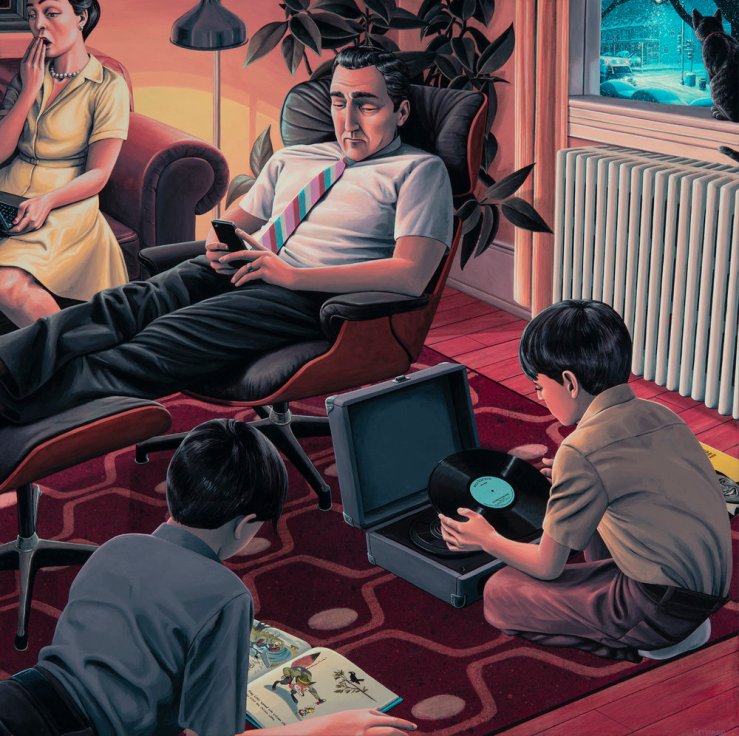
Sheltering in Place, 2019 by Gregory Ferrand (b. 1975)

Let’s Get out of Here — Victor Castillo

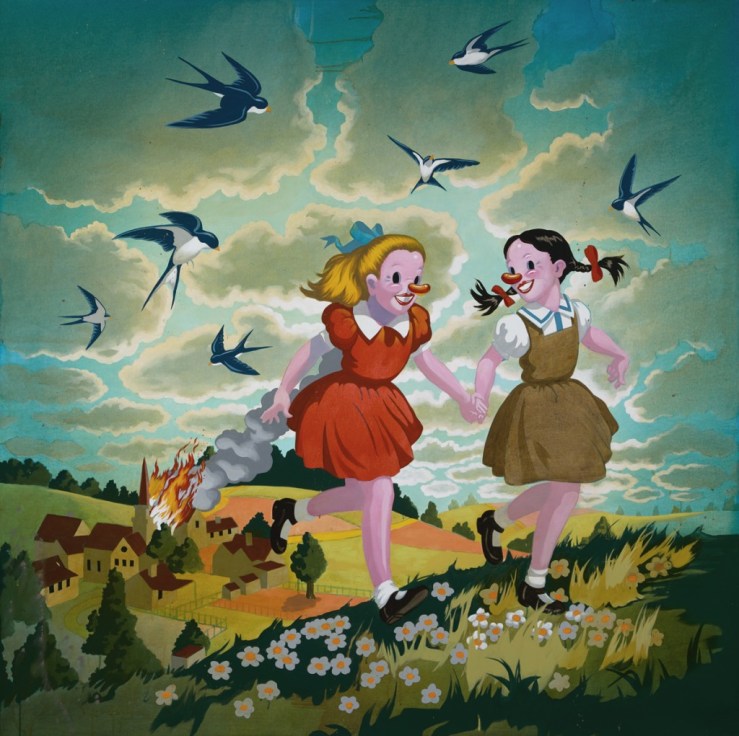
Let’s Get out of Here, 2017 by Victor Castillo (b. 1973)

Chester Himes/Azareen Van der Vliet Oloomi (Books acquired, 28 Dec. 2020)

Picked up Chester Himes’s The Real Cool Killers and Azareen Van der Vliet Oloomi’s Fra Keeler today. I did not find the novel I was looking for but I found these.

Here’s publisher Dorothy’s blurb for Fra Keeler:

 …a man purchases a house, the house of Fra Keeler, moves in, and begins investigating the circumstances of the latter’s death. Yet the investigation quickly turns inward, and the reality it seeks to unravel seems only to grow more strange, as the narrator pursues not leads but lines of thought, most often to hideous conclusions.

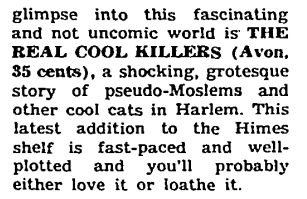
I loved the first Chester Himes novel I read, A Rage in Harlem. Here’s Anthony Bucher’s somewhat dismissive non-review in the 6 Sept. 1959 issue of The New York Times:

I think I’ll be on the loving side, but we’ll see.

Trees and Books — Samplerman

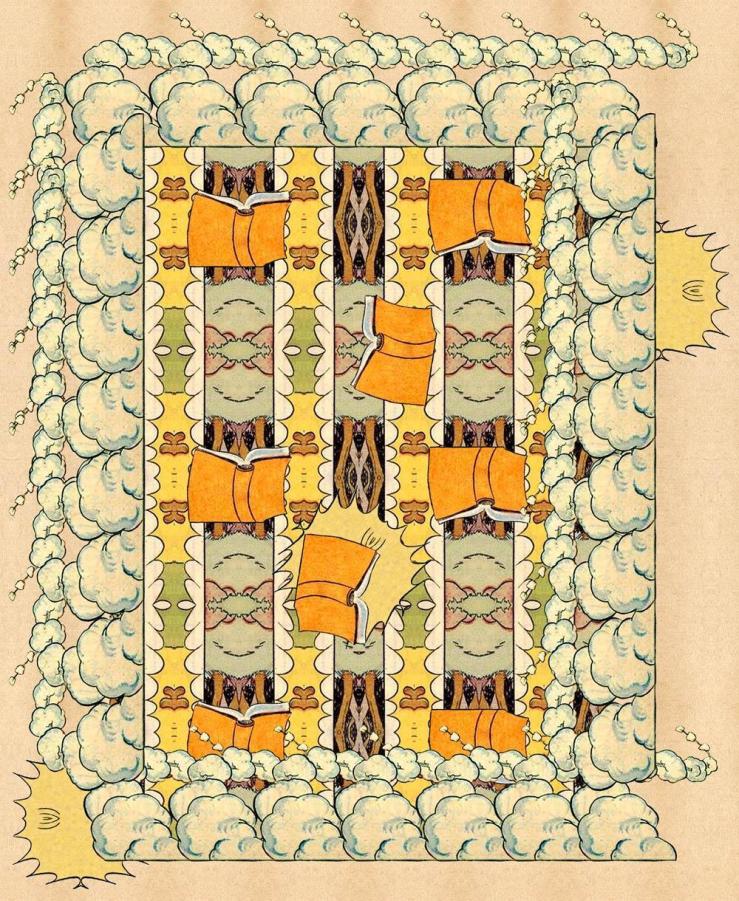
Trees and Books, 2020 by Samplerman (Yvan Guillo)

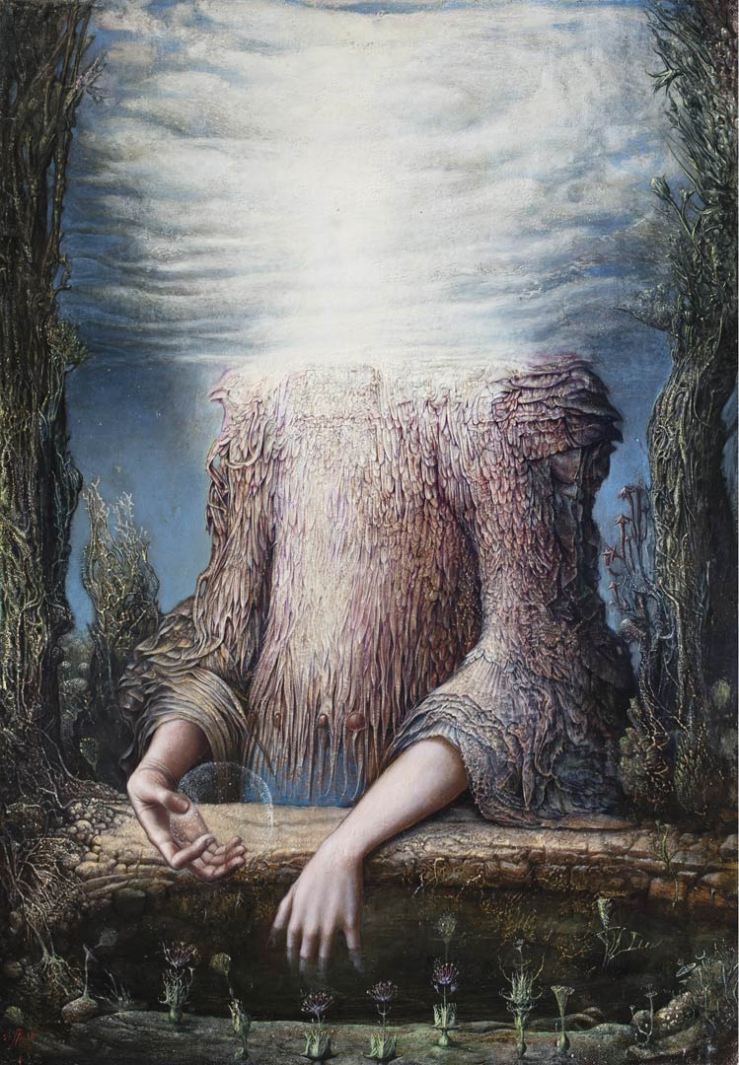
The Orb — Agostino Arrivabene

L’Orbe, 2018 by Agostino Arrivabene (b. 1967)

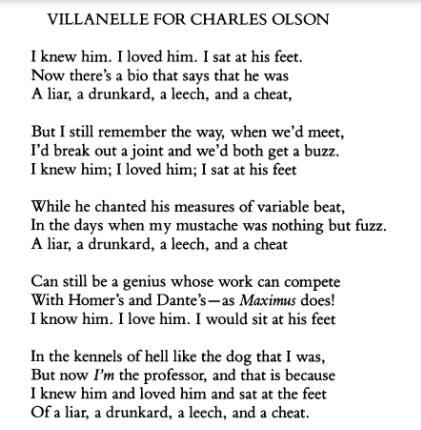
“Villanelle for Charles Olson” — Tom Disch

It’s Boxing Day (Gravity’s Rainbow)

Inside the bowl, the two goldfish are making a Pisces sign, head-to-tail and very still. Penelope sits and peers into their world. There is a little sunken galleon, a china diver in a diving suit, pretty stones and shells she and her sisters have brought back from the sea.

Aunt Jessica and Uncle Roger are out in the kitchen, hugging and kissing. Elizabeth is teasing Claire in the hallway. Their mother is in the W.C. Sooty the cat sleeps in a chair, a black thundercloud on the way to something else, who happens right now to look like a cat. It’s Boxing Day. The evening’s very still. The last rocket bomb was an hour ago, somewhere south. Claire got a golliwog, Penelope a sweater, Elizabeth a frock that Penelope will grow into.

The pantomime Roger took them all to see this afternoon was Hansel and Gretel. Claire immediately took off under the seats where others were moving about by secret paths, a flash of braid or of white collar now and then among the tall attentive uncles in uniform, the coat-draped backs of seats. On stage Hansel, who was supposed to be a boy but was really a tall girl in tights and smock, cowered inside the cage. The funny old Witch foamed at the mouth and climbed the scenery. And pretty Gretel waited by the Oven for her chance. . . .

Then the Germans dropped a rocket just down the street from the theatre. A few of the little babies started crying. They were scared. Gretel, who was just winding up with her broom to hit the Witch right in the bum, stopped: put the broom down, in the gathering silence stepped to the footlights, and sang:

Oh, don’t let it get you,

It will if they let you, but there’s

Something I’ll bet you can’t see—

It’s big and it’s nasty and it’s right over there,

It’s waiting to get its sticky claws in your hair!

Oh, the greengrocer’s wishing on a rainbow today,

And the dustman is tying his tie . . .

And it all goes along to the same jolly song,

With a peppermint face in the sky!

“Now sing along,” she smiled, and actually got the audience, even Roger, to sing:

With a peppermint face in the sky-y,

And a withered old dream in your heart,

You’ll get hit with a piece of the pie-ie,

With the pantomime ready to start!

Oh, the Tommy is sleeping in a snowbank tonight,

And the Jerries are learning to fly—

We can fly to the moon, we’ll be higher than noon,

In our polythene home in the sky. . . .

Pretty polythene home in the sky,

Pretty platinum pins in your hand—

Oh your mother’s a big fat machine gun,

And your father’s a dreary young man. . . .

(Whispered and staccato):

Oh, the, man-a-ger’s suck-ing on a corn-cob, pipe,

And the bank-ers are, eat-ing their, wives,

All the world’s in a daze, while the orchestra plays,

So turn your pockets and get your surprise—

Turn your pockets and get-your surpri-ise,

There was nobody there af-ter all!

And the lamps up the stairway are dying,

It’s the season just after the ball . . .

Oh the palm-trees whisper on the beach somewhere,

And the lifesaver’s heaving a sigh,

And those voices you hear, Boy and Girl of the Year,

Are of children who are learning to die. . . .

From Thomas Pynchon’s 1973 novel Gravity’s Rainbow.

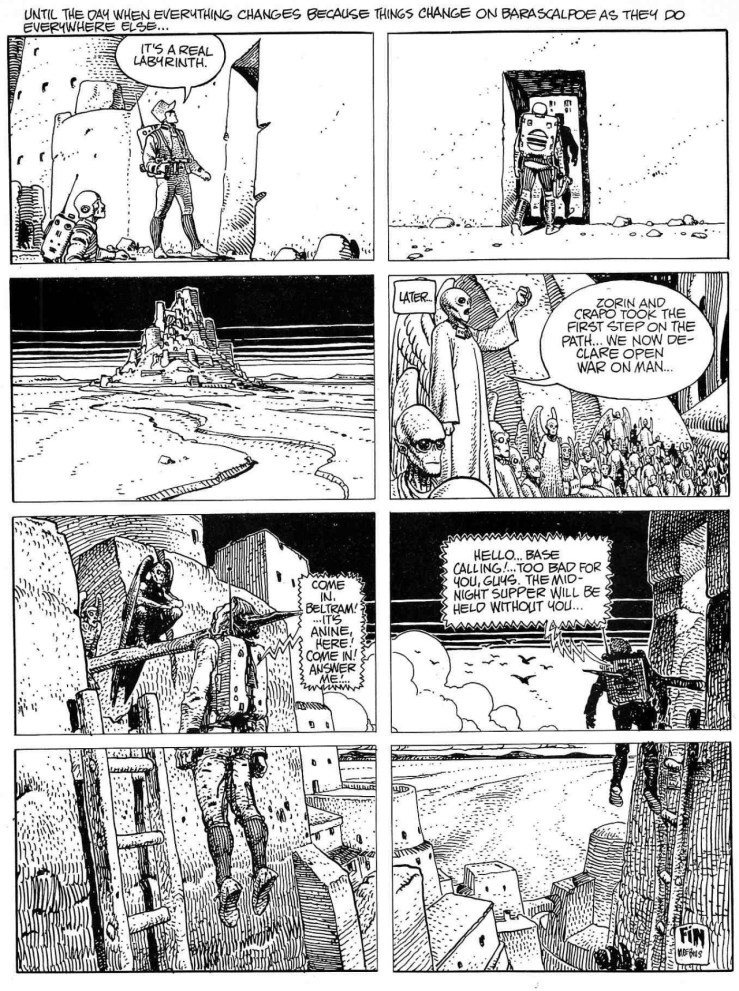
“A Tale of Christmas” — Moebius

tumblr_nh5dkjptau1rhjbado3_1280tumblr_nh5dkjptau1rhjbado2_1280tumblr_nh5dkjptau1rhjbado1_1280

“A Tale of Christmas” by Moebius. Published in Heavy Metal, December 1979. Via the Bristol Board.

On Christmas Eve the little pig is secretly killed (Frazer’s The Golden Bough)

On Christmas Eve in some parts of the Esthonian island of Oesel they bake a long cake with the two ends turned up. It is called the Christmas Boar, and stands on the table till the morning of New Year’s Day, when it is distributed among the cattle. In other parts of the island the Christmas Boar is not a cake but a little pig born in March, which the housewife fattens secretly, often without the knowledge of the other members of the family. On Christmas Eve the little pig is secretly killed, then roasted in the oven, and set on the table standing on all fours, where it remains in this posture for several days. In other parts of the island, again, though the Christmas cake has neither the name nor the shape of a boar, it is kept till the New Year, when half of it is divided among all the members and all the quadrupeds of the family. The other half of the cake is kept till sowing-time comes round, when it is similarly distributed in the morning among human beings and beasts. In other parts of Esthonia, again, the Christmas Boar, as it is called, is baked of the first rye cut at harvest; it has a conical shape and a cross is impressed on it with a pig’s bone or a key, or three dints are made in it with a buckle or a piece of charcoal. It stands with a light beside it on the table all through the festal season. On New Year’s Day and Epiphany, before sunrise, a little of the cake is crumbled with salt and given to the cattle. The rest is kept till the day when the cattle are driven out to pasture for the first time in spring. It is then put in the herdsman’s bag, and at evening is divided among the cattle to guard them from magic and harm. In some places the Christmas Boar is partaken of by farm-servants and cattle at the time of the barley sowing, for the purpose of thereby producing a heavier crop.

From Sir James George Frazer’s The Golden Bough.

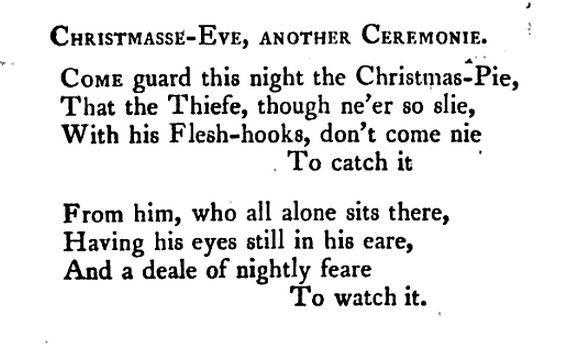
“Christmasse-Eve, Another Ceremonie” — Robert Herrick

herrick

“Christmas Guilt” — Tom Disch

Screenshot 2020-03-25 at 6.29.15 PM

“Toys” — Roland Barthes

Invented forms are very rare: a few sets of blocks, which appeal to the spirit of do-it-yourself, are the only ones which offer dynamic forms. As for the others, French toys always mean something, and this something is always entirely socialized, constituted by the myths or the techniques of modern adult life: the Army, Broadcasting, the Post Office, Medicine (miniature instrument-cases, operating theaters for dolls), School, Hair-Styling (driers for permanent-waving), the Air Force (Parachutists), Transport (trains, Citroens, Vedettes, Vespas, petrol-stations), Science (Martian toys).

The fact that French toys literally prefigure the world of adult functions obviously cannot but prepare the child to accept them all, by constituting for him, even before he can think about it, the alibi of a Nature which has at all times created soldiers, postmen and Vespas. Toys here reveal the list of all the things the adult does not find unusual: war, bureaucracy, ugliness, Martians, etc. It is not so much, in fact, the imitation which is the sign of an abdication, as its literalness: French toys are like a Jivaro head, in which one recognizes, shrunken to the size of an apple, the wrinkles and hair of an adult. There exist, for instance, dolls which urinate; they have an oesophagus, one gives them a bottle, they wet their nappies; soon, no doubt, milk will turn to water in their stomachs. This is meant to prepare the little girl for the causality of house-keeping, to ‘condition’ her to her future role as mother. However, faced with this world of faithful and complicated objects, the child can only identify himself as owner, as user, never as creator; he does not invent the world, he uses it: there are, prepared for him, actions without adventure, without wonder, without joy. He is turned into a little stay-at-home householder who does not even have to invent the mainsprings of adult causality; they are supplied to him ready-made: he has only to help himself, he is never allowed to discover anything from start to finish. The merest set of blocks, provided it is not too refined, implies a very different learning of the world: then, the child does not in any way create meaningful objects, it matters little to him whether they have an adult name; the actions he performs are not those of a user but those of a demiurge. He creates forms which walk, which roll, he creates life, not property: objects now act by themselves, they are no longer an inert and complicated material in the palm of his hand. But such toys are rather rare: French toys are usually based on imitation, they are meant to produce children who are users, not creators.

The bourgeois status of toys can be recognized not only in their forms, which are all functional, but also in their substances. Current toys are made of a graceless material, the product of chemistry, not of nature. Many are now moulded from complicated mixtures; the plastic material of which they are made has an appearance at once gross and hygienic, it destroys all the pleasure, the sweetness, the humanity of touch. A sign which fills one with consternation is the gradual disappearance of wood, in spite of its being an ideal material because of its firmness and its softness, and the natural warmth of its touch. Wood removes, from all the forms which it supports, the wounding quality of angles which are too sharp, the chemical coldness of metal. When the child handles it and knocks it, it neither vibrates nor grates, it has a sound at once muffled and sharp. It is a familiar and poetic substance, which does not sever the child from close contact with the tree, the table, the floor. Wood does not wound or break down; it does not shatter, it wears out, it can last a long time, live with the child, alter little by little the relations between the object and the hand. If it dies, it is in dwindling, not in swelling out like those mechanical toys which disappear behind the hernia of a broken spring. Wood makes essential objects, objects for all time. Yet there hardly remain any of these wooden toys from the Vosges, these fretwork farms with their animals, which were only possible, it is true, in the days of the craftsman. Henceforth, toys are chemical in substance and color; their very material introduces one to a coenaesthesis of use, not pleasure. These toys die in fact very quickly, and once dead, they have no posthumous life for the child.

From Mythologies by Roland Barthes, translated by Annette Lavers.

A review of Leonora Carrington’s surreal novel The Hearing Trumpet

Leonora Carrington’s novel The Hearing Trumpet begins with its nonagenarian narrator forced into a retirement home and ends in an ecstatic post-apocalyptic utopia “peopled with cats, werewolves, bees and goats.” In between all sorts of wild stuff happens. There’s a scheming New Age cult, a failed assassination attempt, a hunger strike, bee glade rituals, a witches sabbath, an angelic birth, a quest for the Holy Grail, and more, more, more.

Composed in the 1950s and first published in 1974, The Hearing Trumpet is new in print again for the first time in nearly two decades from NYRB. NYRB also published Carrington’s hallucinatory memoir Down Below a few years back, around the same time as Dorothy issued The Complete Stories of Leonora Carrington. Most people first come to know Carrington through her stunning, surreal paintings, which have been much more accessible (because of the internet) than her literature. However, Dorothy’s Complete Stories brought new attention to Carrington’s writing, a revival continued in this new edition of The Hearing Trumpet.

Readers familiar with Carrington’s surreal short stories might be surprised at the straightforward realism in the opening pages of The Hearing Trumpet. Ninety-two-year-old narrator Marian Leatherby lives a quiet life with her son and daughter-in-law and her tee-vee-loving grandson. They are English expatriates living in an unnamed Spanish-speaking country, and although the weather is pleasant, Marian dreams of the cold, “of going to Lapland to be drawn in a vehicle by dogs, woolly dogs.” She’s quite hard of hearing, but her sight is fine, and she sports “a short grey beard which conventional people would find repulsive.” Conventional people will soon be pushed to the margins in The Hearing Trumpet.

Marian’s life changes when her friend Carmella presents her with a hearing trumpet, a device “encrusted with silver and mother o’pearl motives and grandly curved like a buffalo’s horn.” At Carmella’s prompting, Marian uses the trumpet to spy on her son and daughter-in-law. To her horror, she learns they plan to send her to an old folks home. It’s not so much that she’ll miss her family—she directs the same nonchalance to them that she affords to even the most surreal events of the novel—it’s more the idea that she’ll have to conform to someone else’s rules (and, even worse, she may have to take part in organized sports!).

The old folks home is actually much, much stranger than Marian could have anticipated:

First impressions are never very clear, I can only say there seemed to be several courtyards , cloisters , stagnant fountains, trees, shrubs, lawns. The main building was in fact a castle, surrounded by various pavilions with incongruous shapes. Pixielike dwellings shaped like toadstools, Swiss chalets , railway carriages , one or two ordinary bungalows, something shaped like a boot, another like what I took to be an outsize Egyptian mummy. It was all so very strange that I for once doubted the accuracy of my observation.

The home’s rituals and procedures are even stranger. It is not a home for the aged; rather, it is “The Institute,” a cult-like operation founded on the principles of Dr. and Mrs. Gambit, two ridiculous and cruel villains who would not be out of place in a Roald Dahl novel. Dr. Gambit (possibly a parodic pastiche of George Gurdjieff and John Harvey Kellogg) represents all the avarice and hypocrisy of the twentieth century. His speech is a satire of the self-important and inflated language of commerce posing as philosophy, full of capitalized ideals: “Our Teaching,” “Inner Christianity,” “Self Remembering” and so on. Ultimately, it’s Gambit’s constricting and limited patriarchal view of psyche and spirit that the events in The Hearing Trumpet lambastes.

Marian soon finds herself entangled in the minor politics and scheming of the Institute, even as she remains something of an outsider on account of her deafness. She’s mostly concerned with getting an extra morsel of cauliflower at mealtimes—the Gambits keep the women undernourished. She eats her food quickly during the communal dinner, and obsesses over the portrait of a winking nun opposite her seat at the table:

Really it was strange how often the leering abbess occupied my thoughts. I even gave her a name, keeping it strictly to myself. I called her Doña Rosalinda Alvarez della Cueva, a nice long name, Spanish style. She was abbess, I imagined, of a huge Baroque convent on a lonely and barren mountain in Castile. The convent was called El Convento de Santa Barbara de Tartarus, the bearded patroness of Limbo said to play with unbaptised children in this nether region.

Marian’s creative invention of a “Doña Rosalinda Alvarez della Cueva” soon somehow passes into historical reality. First, she receives a letter from her trickster-aid Carmella, who has dreamed about a nun in a tower. “The winking nun could be no other than Doña Rosalinda Alvarez della Cueva,” remarks Marian. “How very mysterious that Carmella should have seen her telepathically.” Later, Christabel, another member/prisoner of the Institute helps usher Marian’s fantasy into reality. She confirms that Marian’s name for the nun is indeed true (kinda sorta): “‘That was her name during the eighteenth century,’ said Christabel. ‘But she has many many other names. She also enjoys different nationalities.'”

Christabel gives Marian a book entitled A True and Faithful Rendering of the Life of Rosalinda Alvarez and the next thirty-or-so pages gives way to this narrative. This text-within-a-text smuggles in other texts, including a lengthy letter from a bishop, as well as several ancient scrolls. There are conspiracies afoot, schemes to keep the Holy Grail out of the hands of the feminine power the Abbess embodies. There are magic potions and an immortal bard. There is cross-dressing and a strange monstrous pregnancy. There are the Knights Templar.

Carrington’s prose style in these texts-within-texts diverges considerably from the even, wry calm of Marian’s narration. In particular, there’s a sly control to the bishop’s letter, which reveals a bit-too-keen interest in teenage boys. These matryoshka sections showcase Carrington’s rhetorical range while also advancing the confounding plot. They recall The Courier’s Tragedy, the play nested in Thomas Pynchon’s 1965 novel The Crying of Lot 49. Both texts refer back to their metatexts, simultaneously explicating and confusing their audiences while advancing byzantine plot points and arcane themes.

Indeed, the tangled and surreal plot details of The Hearing Trumpet recall Pynchon’s oeuvre in general, but like Pynchon’s work, Carrington’s basic idea can be simplified to something like—Resistance to Them. Who is the Them? The patriarchy, the fascists, the killers. The liars, the cheaters, the ones who make war in the name of order. (One resister, the immortal traveling bard Taliesin, shows up in both the nested texts and later the metatext proper, where he arrives as a postman, recalling the Trystero of The Crying of Lot 49.)

The most overt voice of resistance is Marian’s best friend Carmella. Carmella initiates the novel by giving Marian the titular hearing trumpet, and she acts as a philosophical foil for her friend. Her constant warning that people under seventy and over seven should not be trusted becomes a refrain in the novel. Before Marian is shipped off to the Institution, Carmella already plans her escape, a scheme involving machine guns, rope, and other implements of adventure. Although she loves animals, Carmella is even willing to kill any police dogs that might guard the Institution and hamper their escape:

Police dogs are not properly speaking animals. Police dogs are perverted animals with no animal mentality. Policemen are not human beings so how can police dogs be animals?

Late in the novel, Carmella delivers perhaps the most straightforward thesis of The Hearing Trumpet:

It is impossible to understand how millions and millions of people all obey a sickly collection of gentlemen that call themselves ‘Government!’ The word, I expect, frightens people. It is a form of  planetary hypnosis, and very unhealthy. Men are very difficult to understand… Let’s hope they all freeze to death. I am sure it would be very pleasant and healthy for human beings to have no authority whatever. They would have to think for themselves, instead of always being told what to do and think by advertisements, cinemas, policemen and parliaments.

Carmella’s dream of an anarchic utopia comes to pass.

How?

Well, there’s a lot to it, and I’d hate to spoil the surrealist fun. Let’s just say that Marian’s Grail quest scores a big apocalyptic win for the Goddess, thanks to “an army of bees, wolves, seven old women, a postman, a Chinaman, a poet, an atom-driven Ark, and a werewoman.” No conventional normies who might find Marian’s beard repulsive here.

With its conspiracy theories within conspiracy theories and Templar tales, The Hearing Trumpet will likely remind many readers of Umberto Eco’s 1988 novel Foucault’s Pendulum (or one of its ripoffs). The Healing Trumpet’s surreal energy also recalls Angela Carter’s 1972 novel The Infernal Desire Machines of Doctor Hoffman. And of course, the highly-imagistic, ever-morphing language will recall Carrington’s own paintings, as well as those of her close friend Remedios Varo (who may have been the basis for Carmella), and their surrealist contemporaries (like Max Ernst) and forebears (like Hieronymus Bosch).

This new edition of The Hearing Trumpet includes an essay by the novelist Olga Tokarczuk (translated by Antonia Lloyd-Jones) which focuses on the novel as a feminist text. (Tokarczuk also mentions that she first read the novel without knowing who Carrington was). The new edition also includes black and white illustrations by Carrington’s son, Pablos Weisz Carrington (I’ve included a few in this review). As far as I can tell, these illustrations seem to be slightly different from the illustrations included in the 2004 edition of The Hearing Trumpet published by Exact Change. That 2004 edition has been out of print for ages and is somewhat hard (or really, expensive) to come by (I found a battered copy few years ago for forty bucks). NYRB’s new edition should reach the wider audience Carrington deserves.

Some readers will find the pacing of The Hearing Trumpet overwhelming, too frenetic. It moves like a snowball, gathering images, symbols, motifs into itself in an ever-growing, ever-speeding mass. Other readers may have difficulty with its ever-shifting plot. Nothing is stable in The Hearing Trumpet; everything is liable to mutate, morph, and transform. Those are my favorite kinds of novels though, and I loved The Hearing Trumpet—in particular, I loved its tone set against its imagery and plot. Marian’s narration is straightforward, occasionally wry, but hardly ever astonished or perplexed by the magical and wondrous events she takes part in. There’s a lot I likely missed in The Hearing Trouble—Carrington lards the novel with arcana, Jungian psychology, magical totems, and more more more—but I’m sure I’ll find more the next time I read it. Very highly recommended.

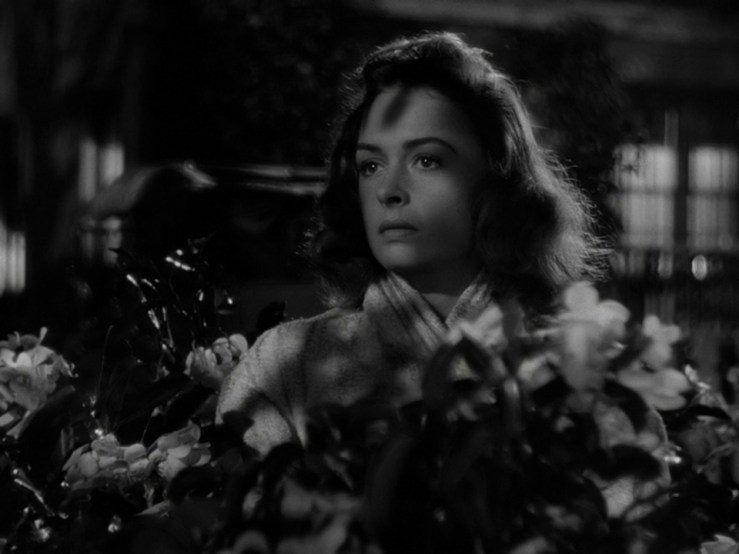
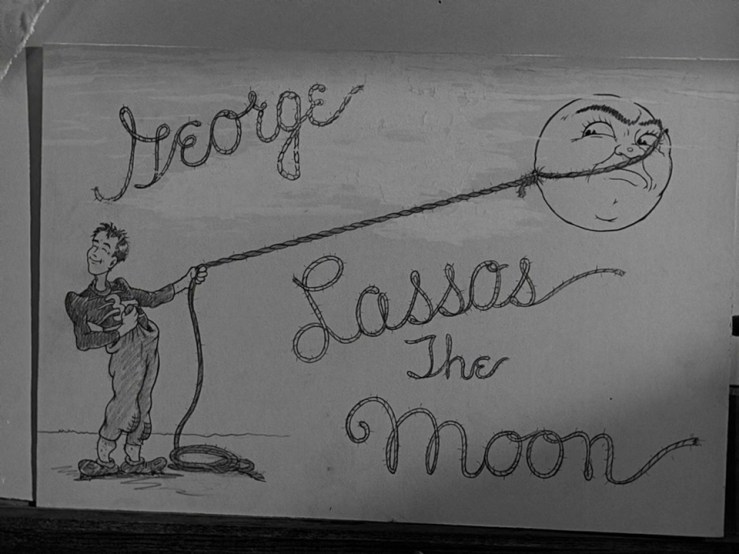
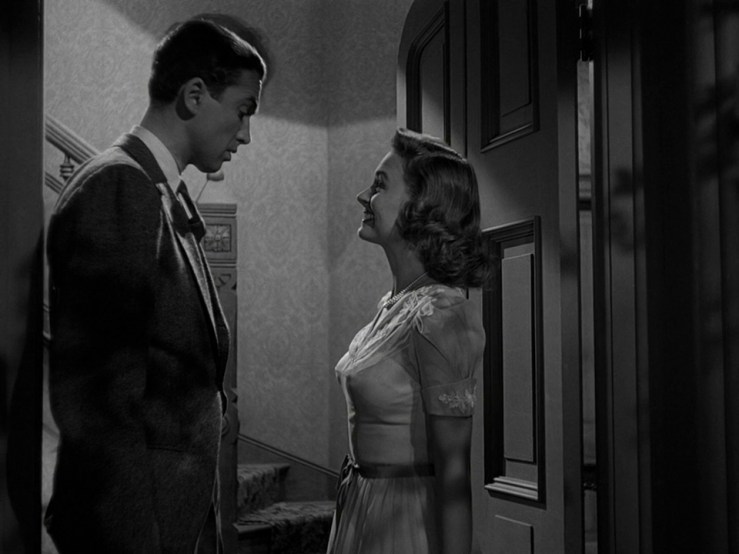
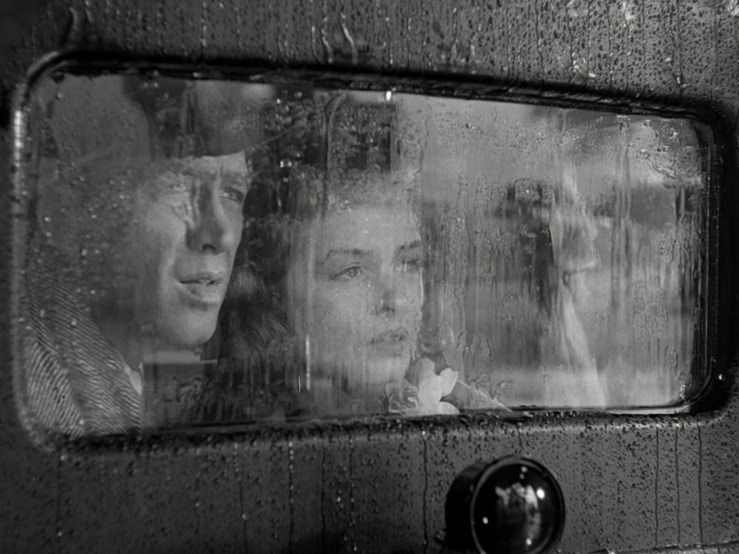
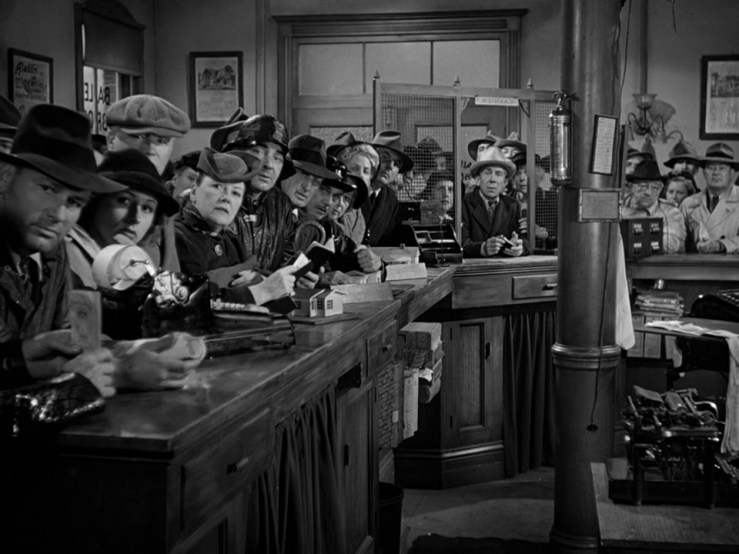
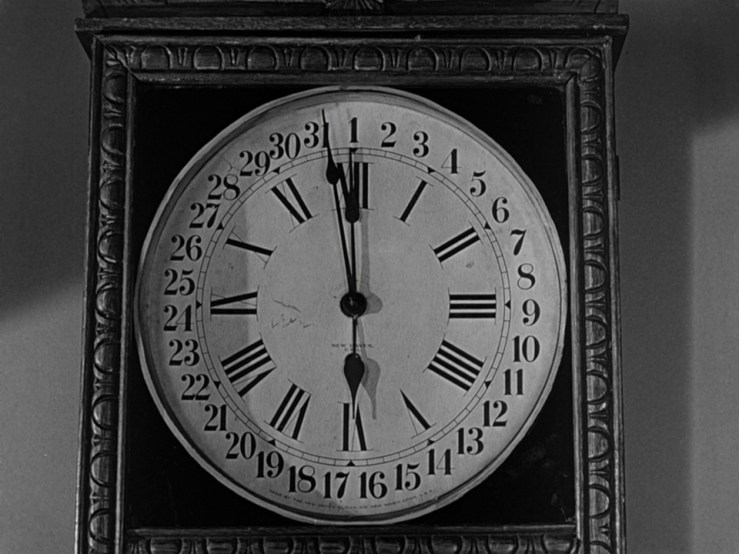
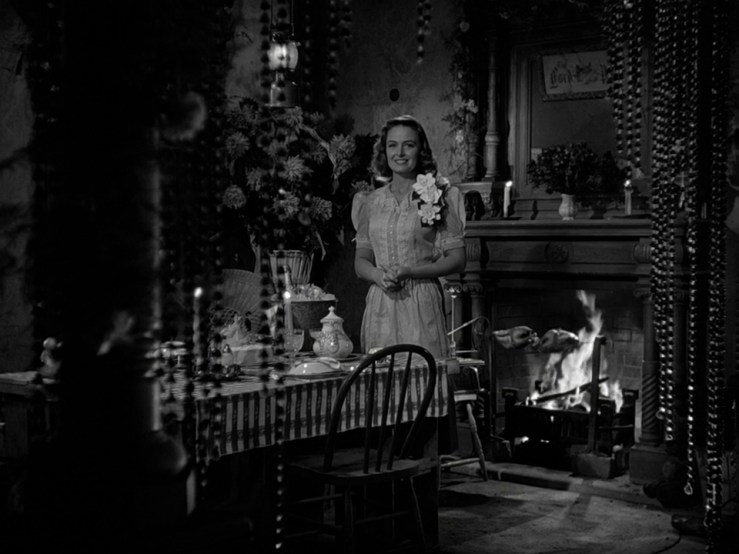
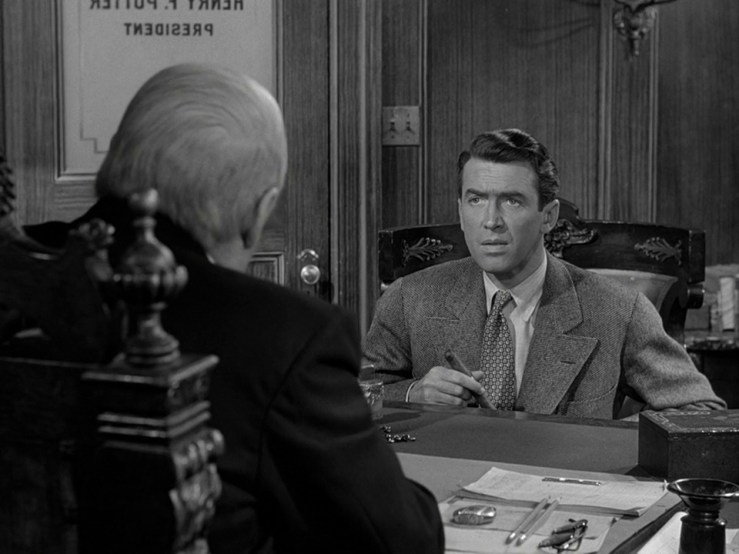
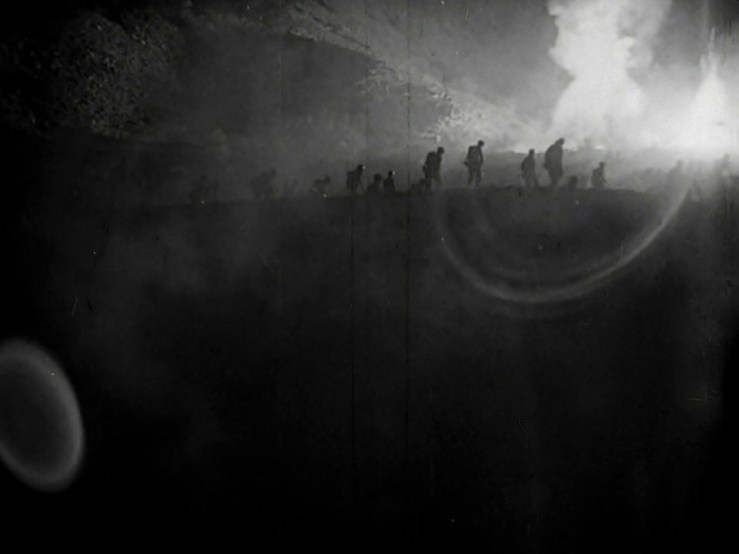
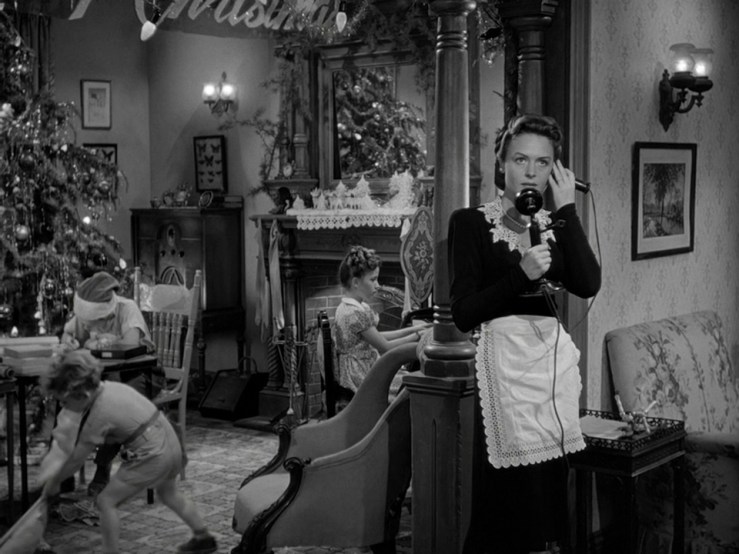
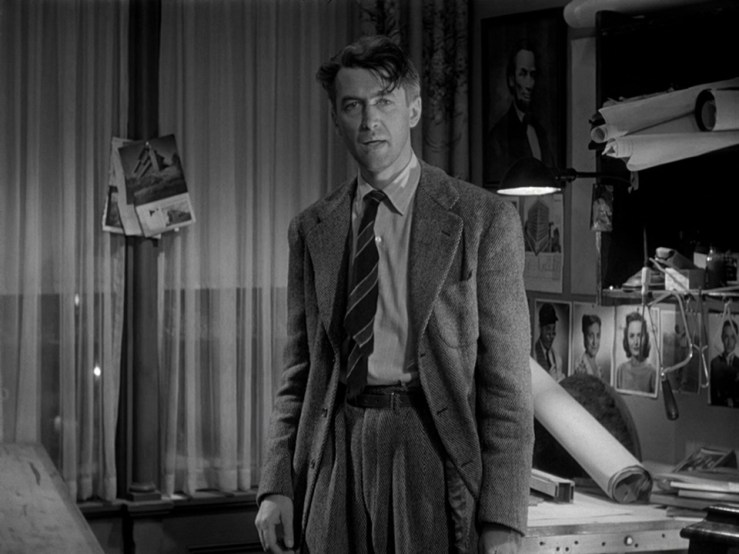
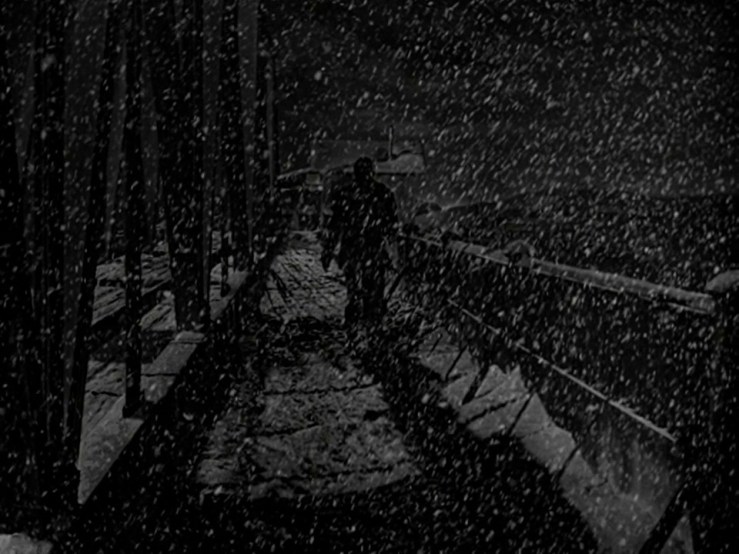
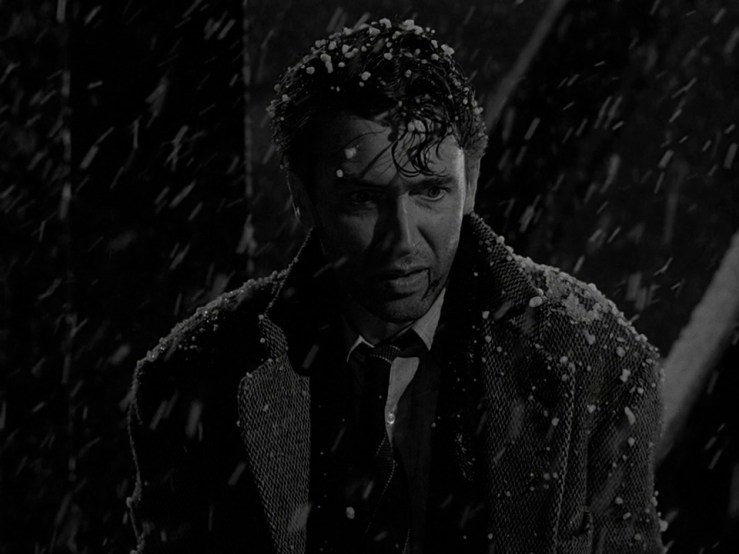
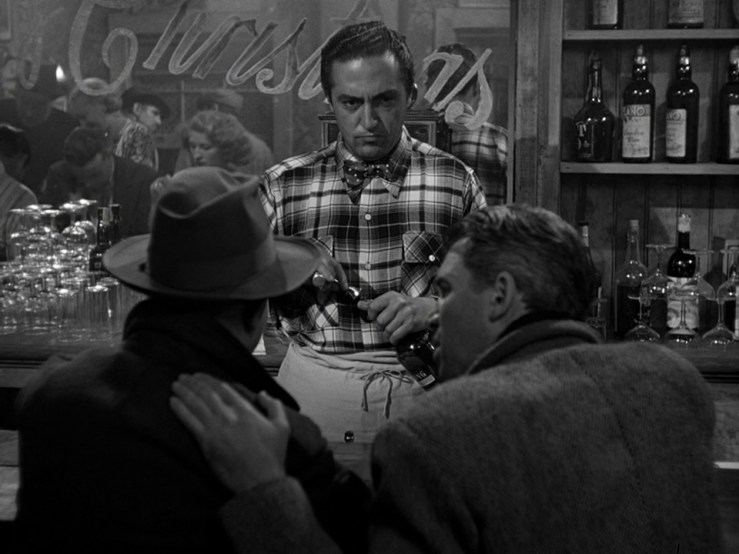
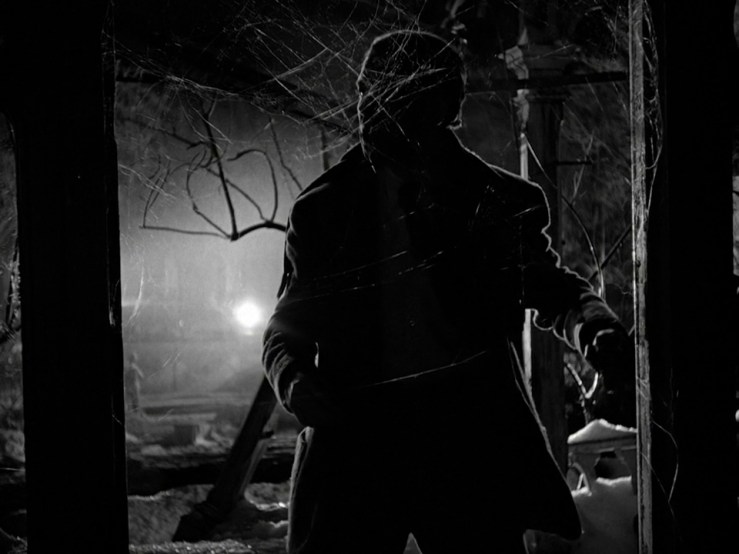
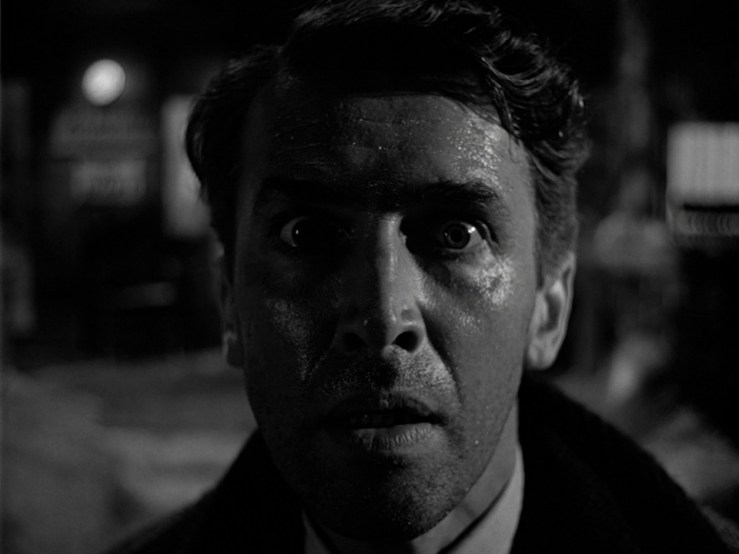
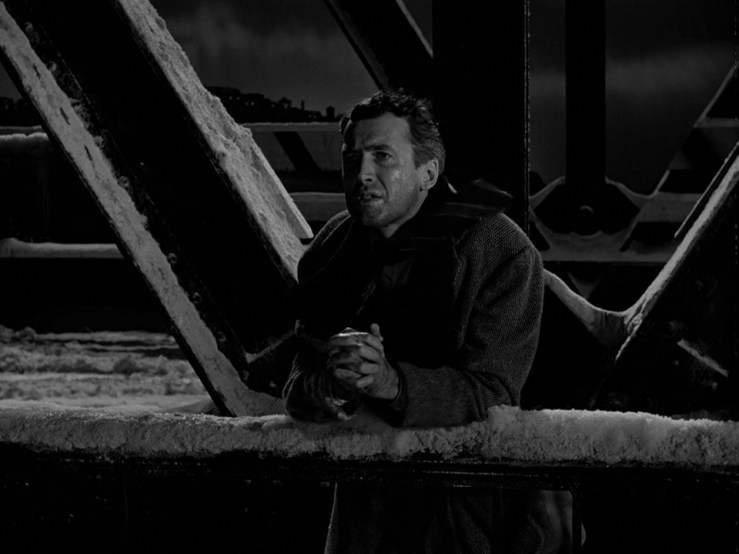
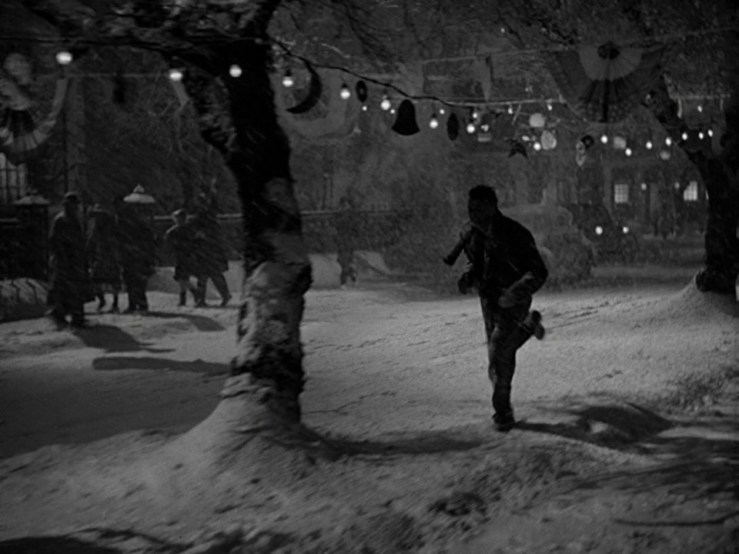
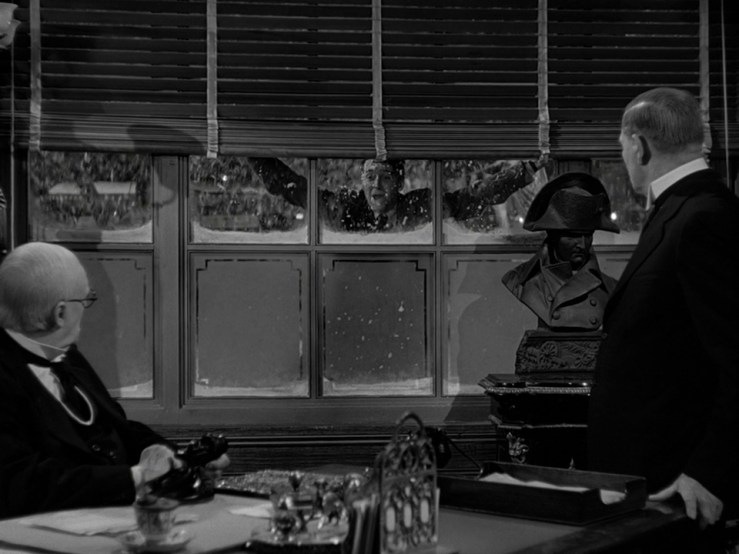
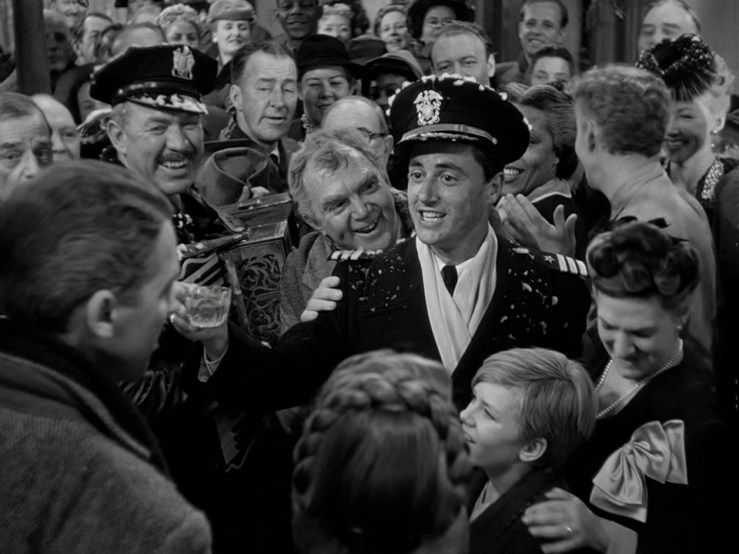
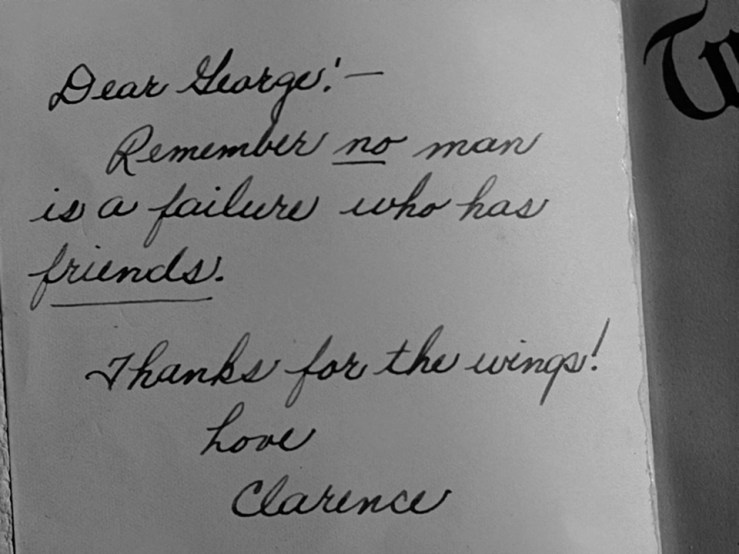
35 still frames from Frank Capra’s It’s a Wonderful Life

From It’s a Wonderful Life, 1946. Directed by Frank Capra; cinematography by Joseph Walker and Joseph Biroc. Via FilmGrab.