Bret Easton Ellis Disses David Foster Wallace

At a in a reading in Hackney, England, two days ago, Bret Easton Ellis dissed the late great David Foster Wallace:

Question: David Foster Wallace – as an American writer, what is your opinion now that he has died?

Answer: Is it too soon? It’s too soon right? Well I don’t rate him. The journalism is pedestrian, the stories scattered and full of that Mid-Western faux-sentimentality and Infinite Jest is unreadable. His life story and his battle with depression however is really quite touching . . .

Via HTMLGIANT, via The Howling Fantods. The discussion at HTMLGIANT’s comment section is pretty great right now (see our own comment thread below for comments detailing HTMLGIANT readers who claim that BEE’s quote is misrepresented/mistranscribed), with a few commentators bringing up an interview in which DFW said the following about BEE:

I think it’s a kind of black cynicism about today’s world that Ellis and certain others depend on for their readership. Look, if the contemporary condition is hopelessly shitty, insipid, materialistic, emotionally retarded, sadomasochistic, and stupid, then I (or any writer) can get away with slapping together stories with characters who are stupid, vapid, emotionally retarded, which is easy, because these sorts of characters require no development. With descriptions that are simply lists of brand-name consumer products. Where stupid people say insipid stuff to each other. If what’s always distinguished bad writing—flat characters, a narrative world that’s cliched and not recognizably human, etc.—is also a description of today’s world, then bad writing becomes an ingenious mimesis of a bad world. If readers simply believe the world is stupid and shallow and mean, then Ellis can write a mean shallow stupid novel that becomes a mordant deadpan commentary on the badness of everything. Look man, we’d probably most of us agree that these are dark times, and stupid ones, but do we need fiction that does nothing but dramatize how dark and stupid everything is? In dark times, the definition of good art would seem to be art that locates and applies CPR to those elements of what’s human and magical that still live and glow despite the times’ darkness. Really good fiction could have as dark a worldview as it wished, but it’d find a way both to depict this world and to illuminate the possibilities for being alive and human in it. You can defend “Psycho” as being a sort of performative digest of late-eighties social problems, but it’s no more than that.
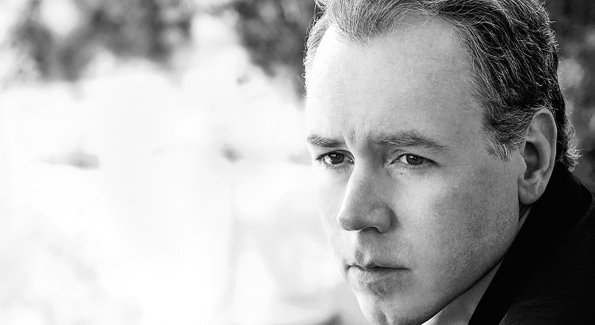
Vice Interviews Bret Easton Ellis

Vice interviews Bret Easton Ellis at length. Topics include troublesome editors, that “Cranky old bastard” J.D. Salinger (“who hated us all, by the way”), the weirdness of L.A., and his forthcoming novel Imperial Bedrooms, the sequel to his first big hit Less Than Zero. Here’s a taste of the interview, where BEE talks (mild smack) about Jonathan Franzen, Michael Chabon, and former classmate Jonathan Lethem:

Vice: [I]t seems like people will never get tired of probing you about how much of your fiction is autobiographical.
BEE: I wonder why? No other authors, when I read about them, get asked this. Michael Chabon doesn’t get asked this. Jonathan Franzen doesn’t get asked this. Jonathan Lethem doesn’t get asked this. I get asked this. Maybe because I’m just not as good a writer as they are.

Vice: No. You’re as good or better than all of them. But I don’t know, I don’t want to get off topic too much. Never mind.
BEE: I want you to just briefly get off topic. You can say anything you want to me. I really don’t know any of them. I mean, I know them kind of, but I’m not friends with any of them.

Vice: I like Chabon, but I get this weird sense that I wouldn’t like him as a person. Not that that matters, of course.
BEE: No, it doesn’t matter. Always look at the art, not the artist.

Vice: But it’s difficult for me sometimes. I think there’s something kind of too cute about Lethem, or at least something too cute about his last novel, Chronic City.
BEE: I really like The Fortress of Solitude. That’s the only book of his I’ve liked. And the only book of Michael Chabon’s that I really liked was Kavalier & Clay.

Vice: That was great.
BEE: And I really don’t like anything by Jonathan Franzen but The Corrections, which I think is a great American novel.

Vice: Those are kind of their inarguable books I guess, those three.
BEE: Yeah, but everything else by those three is just, you know, I go, “Grrrrrr.” You know, I went to school with Jonathan Lethem.

Vice: Oh, really?
BEE: We were in the same class at Bennington.

Vice: I didn’t know that. What was he like in school?
BEE: Nice. He was a nice guy. I had no idea that he wanted to be a writer. He wasn’t in any of the main workshops. Like Donna Tartt would be in there, and Jill Eisenstadt. You know, the people who really wanted to write were the people who always managed to get into the major workshop that term. And Jonathan never got into any of them. And then I got a galley in the mail a long time after we graduated, and it was for a novel by Jonathan Lethem about talking animals or something. And I was like, “What the hell is this?”